Loading video…


 11 Concepts
 118.4K views

Video Summary: Chebyshevs Theorem to Interpret Explained
Did you know that 75% of data points in any dataset-whether it's SAT scores, patient recovery times, or stock prices-must fall within two standard deviations of the mean? Chebyshev's theorem to interpret provides this powerful guarantee for understanding data spread, unlike the empirical rule which only works for normal distributions. This statistical tool helps interpret standard deviation across all distribution types, making it invaluable for analyzing real-world data like hospital patient lengths of stay or manufacturing quality control metrics. Watch the full video on JoVE Coach to master this concept with expert-led visuals and step-by-step explanations.
Chebyshev's theorem to interpret standard deviation represents one of statistics' most versatile tools, providing guaranteed bounds for data distribution regardless of the underlying shape. Named after Russian mathematician Pafnuty Chebyshev, this theorem states that for any dataset with finite mean and standard deviation, at least (1 - 1/k²) × 100% of observations must fall within k standard deviations of the mean, where k > 1.
The core formula (1 - 1/k²) yields powerful insights: for k = 2, at least 75% of data falls within two standard deviations; for k = 3, at least 89% falls within three standard deviations. This universality makes Chebyshev's theorem invaluable for AP Statistics students and college undergraduates encountering non-normal distributions in real-world applications.
Consider analyzing standardized test scores across diverse US school districts. While individual district scores might follow skewed distributions due to demographic factors, Chebyshev's theorem guarantees that at least 75% of all scores fall within two standard deviations of the overall mean, providing administrators reliable bounds for policy planning.
Healthcare quality metrics exemplify Chebyshev's theorem in action. Hospital administrators use it to analyze patient length-of-stay data, which often follows right-skewed distributions. If the average stay is 5.2 days with a standard deviation of 2.1 days, Chebyshev's theorem guarantees at least 75% of patients stay between 1.0 and 9.4 days, helping with resource allocation and capacity planning.
Manufacturing quality control also relies heavily on this concept. When production data doesn't follow normal distributions-common in complex processes-Chebyshev's bounds provide conservative estimates for defect rates and process capability assessments.
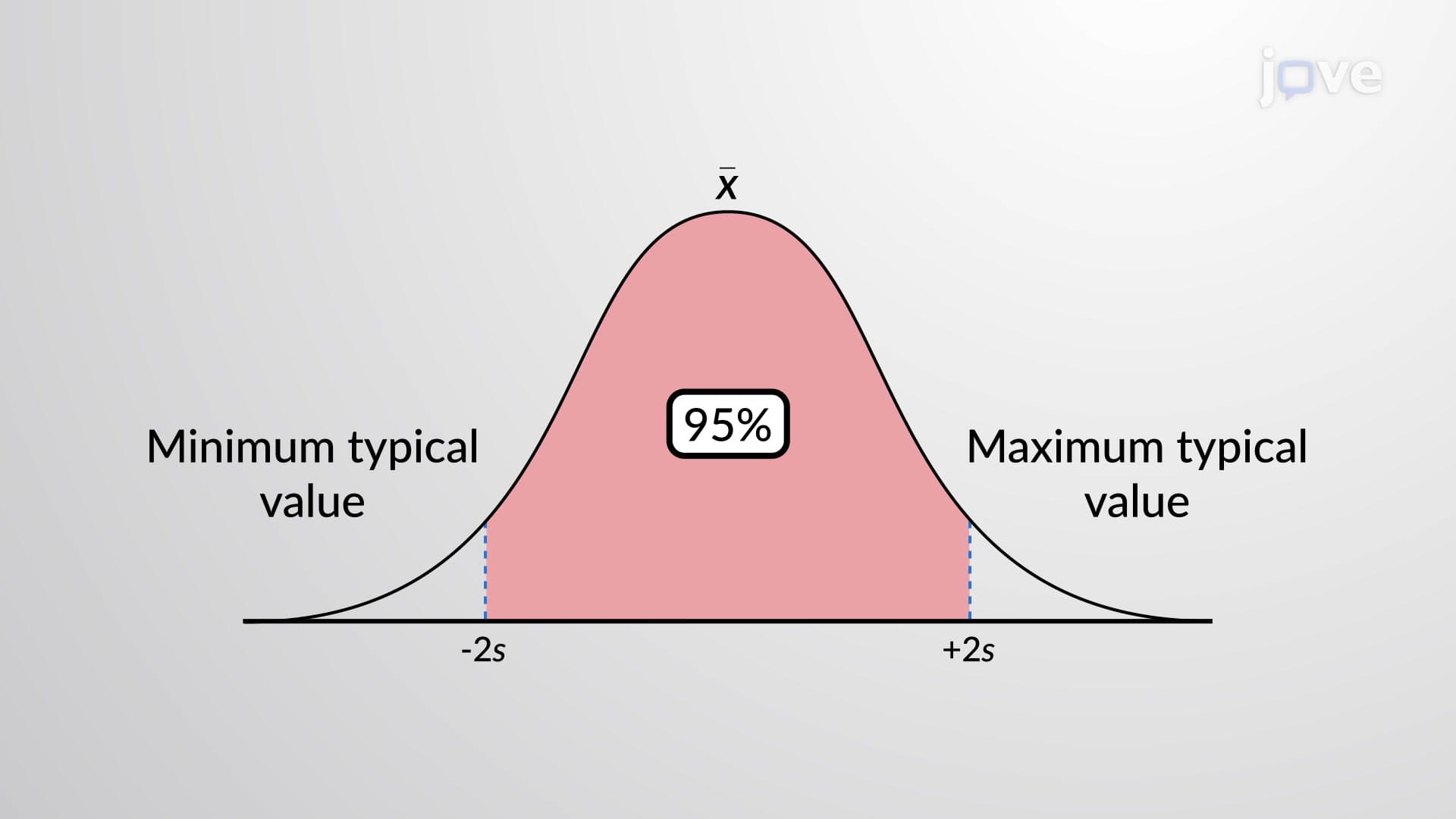
For students preparing for AP Statistics exams or college statistics courses, understanding when to apply Chebyshev's theorem versus the empirical rule becomes crucial. The empirical rule (68-95-99.7) only applies to normal distributions but provides exact percentages, while Chebyshev's theorem works universally but gives only minimum bounds. This distinction frequently appears in multiple-choice questions and free-response problems, making mastery essential for academic success.
Related Micro-courses