Loading video…


 17 Concepts
 11.7K views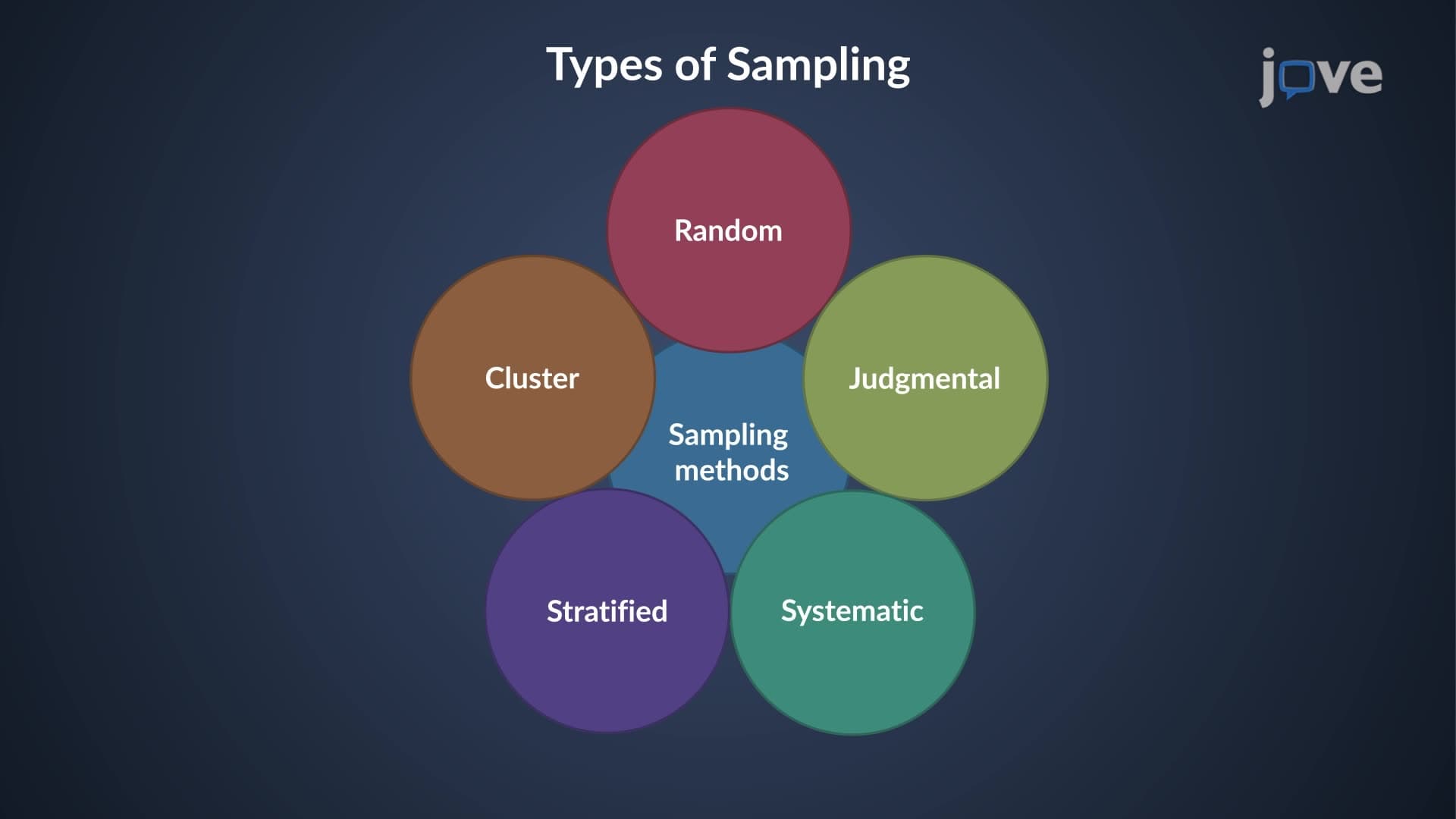

Video Summary: What are Sampling Methods
Ever wondered how the FDA ensures a single pill from millions contains the right drug dose? Sampling methods chemistry forms the backbone of quality control in pharmaceutical manufacturing, where selecting representative portions from bulk materials determines product safety. The Environmental Protection Agency uses these same analytical sampling methods to monitor water quality across thousands of US municipalities. What are sampling methods? They're systematic approaches for selecting small, representative portions from larger materials to ensure accurate analysis and reliable results. Watch the full video on JoVE Coach to master this concept with expert-led visuals and step-by-step explanations.
Sampling methods chemistry represents the systematic approaches used to select representative portions from bulk materials for analysis. These methods ensure that small samples accurately reflect the composition and properties of much larger quantities, making them fundamental to quality control in industries from pharmaceuticals to food production.
The process involves multiple stages of sample reduction. Initially, analysts collect a gross sample by combining several incremental samples from different locations within heterogeneous materials. This gross sample then undergoes reduction to create a laboratory sample-a homogeneous subset suitable for analytical procedures. Finally, the analysis sample represents the specific portion actually tested in instruments.
Material composition significantly influences sampling strategy selection. Homogeneous materials-such as purified pharmaceutical compounds or distilled water-require only simple grab sampling since composition remains uniform throughout. However, heterogeneous materials like soil samples, food products, or industrial waste streams demand more sophisticated approaches.
For solid materials, the random sampling technique ensures every portion has equal selection probability, while systematic sampling follows predetermined intervals or patterns. Stratified sampling divides materials into distinct layers or regions, particularly useful for geological samples or layered pharmaceutical tablets.
Real-world applications demonstrate these methods' importance. The FDA requires pharmaceutical manufacturers to use specific analytical sampling procedures when testing drug batches. For a 10,000-tablet production run, companies might employ stratified sampling by selecting tablets from the beginning, middle, and end of production, then use random sampling within each stratum.
Environmental laboratories analyzing contaminated soil sites use cluster sampling to group nearby locations, reducing analysis costs while maintaining statistical validity. The EPA's Superfund program relies heavily on these methods when characterizing pollution at sites like the Berkeley Pit in Montana.
Proper sample collection methods minimize bias and ensure analytical reliability. Chain-of-custody procedures, storage conditions, and contamination prevention become critical factors. Students preparing for AP Chemistry or college analytical chemistry courses should understand how sampling errors propagate through calculations, affecting final results and regulatory decisions.
Modern analytical chemistry emphasizes the sampling strategy chemistry concept-matching sampling methods to specific analytical goals, material properties, and regulatory requirements. This systematic approach ensures that analytical results provide meaningful information for decision-making in research, quality control, and regulatory compliance.
Related Micro-courses