Loading video…

 8 Concepts
 3K views

Video Summary: Calculation of Volume of Solids by Integration Explained
How do engineers calculate the exact amount of concrete needed to build a massive dam like the Hoover Dam? The answer lies in the calculation of volume of solids by integration, a technique that makes measuring irregular shapes precise and practical. Using the slicing method, even the most complex 3D structures can be broken into thin cross-sections and integrated for an exact volume. Watch the full video on JoVE Coach to master this concept with expert-led visuals and step-by-step explanations.
The calculation of volume of solids by integration is a calculus-based method for finding the volume of three-dimensional objects whose cross-sections are not uniform. While simple rectangular boxes are measured by multiplying length × width × height, most real-world structures, curved machine parts, geological formations, architectural domes, have continuously changing cross-sections. Integration is what makes these problems solvable with precision.
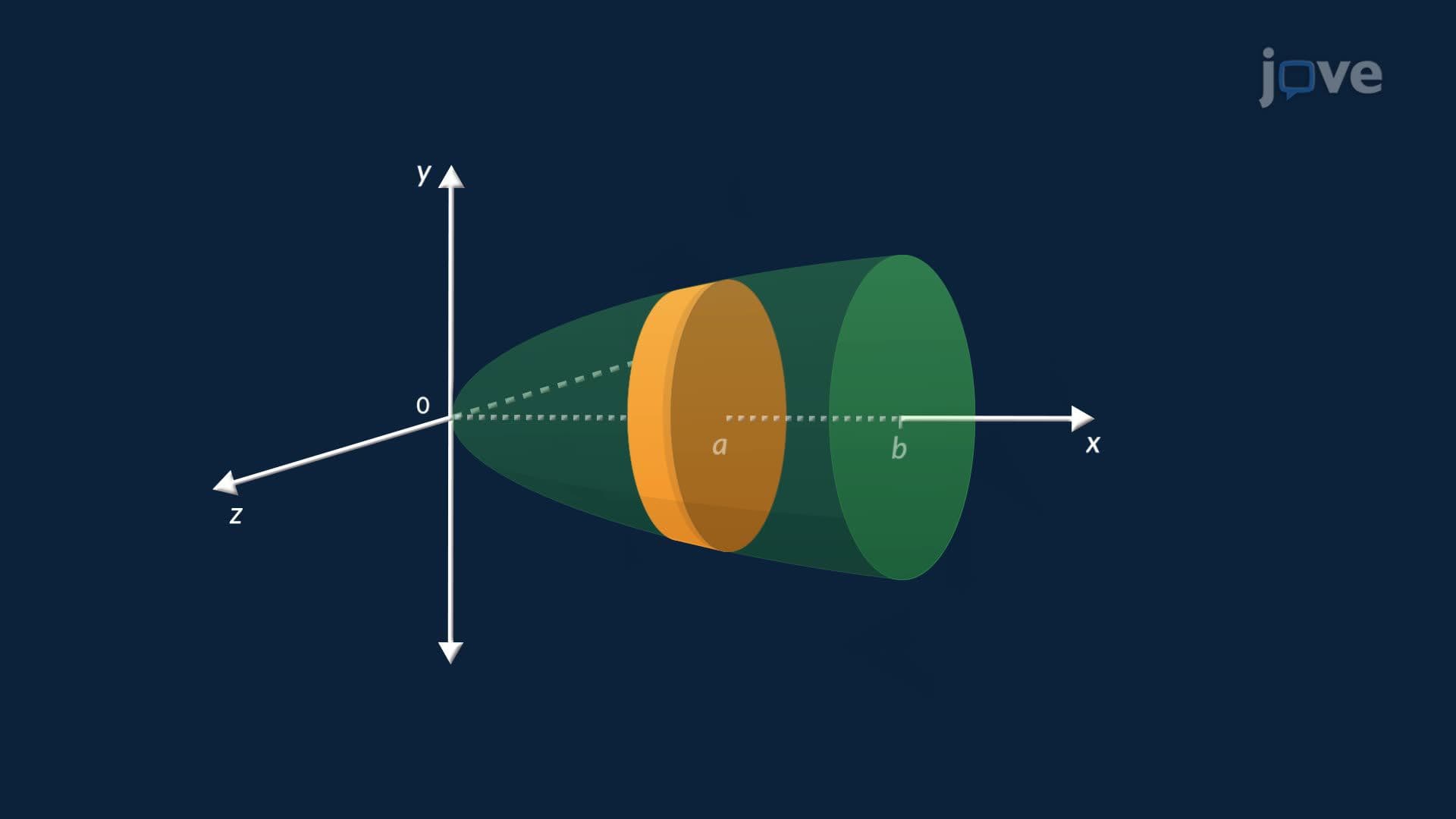
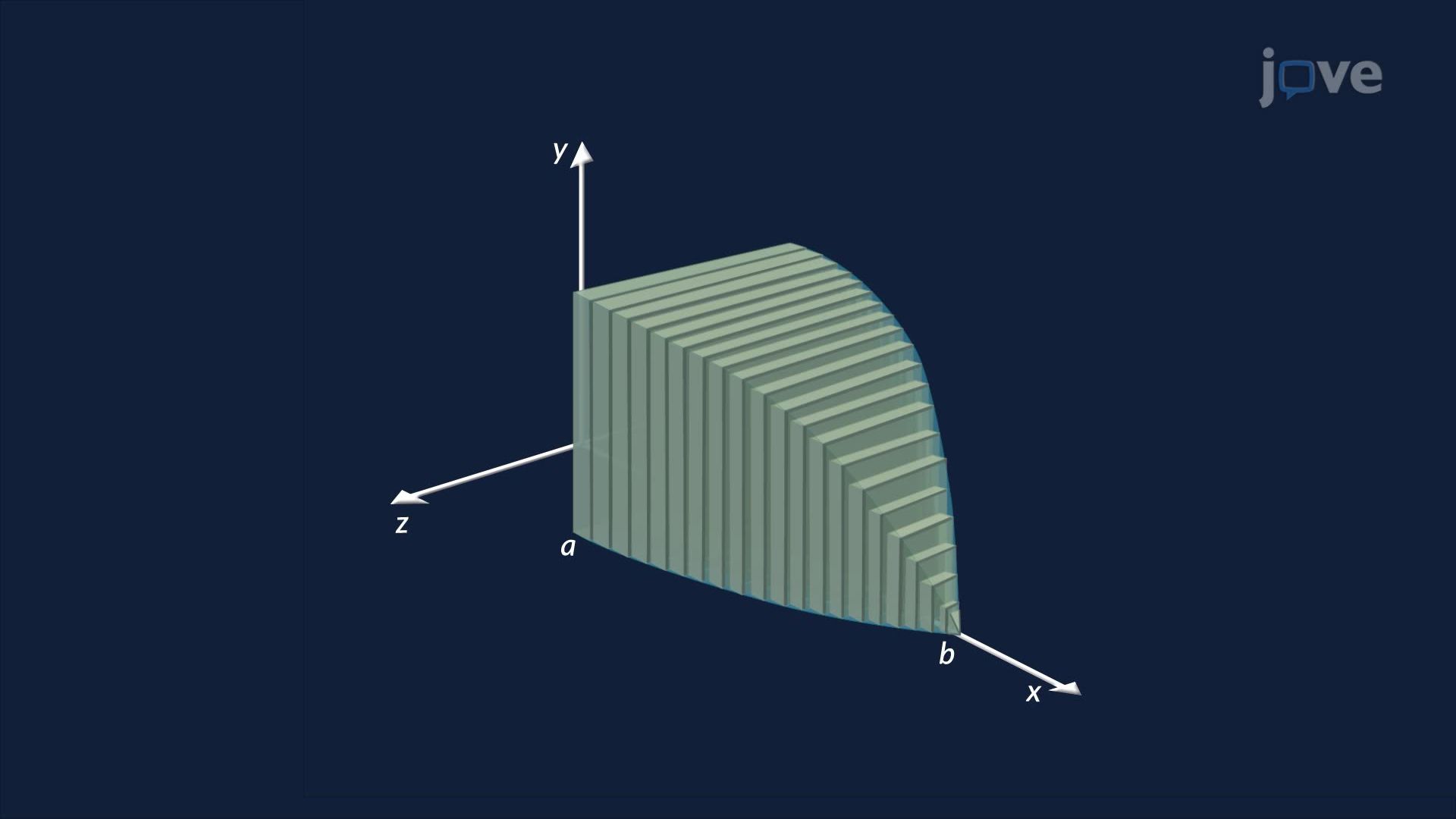
The core idea behind volume by slicing is elegant: imagine cutting a solid into an infinite number of paper-thin slices, each perpendicular to a chosen axis (typically the x-axis). Each slice has a cross-sectional area described by a function A(x), and an infinitesimally thin thickness written as dx. The volume of one slice is approximately A(x) · dx.
To find the total volume, you add up the contributions of every slice from one end of the solid (x = a) to the other (x = b). This sum is expressed as the definite integral:
V = integral from a to b of A(x) dx
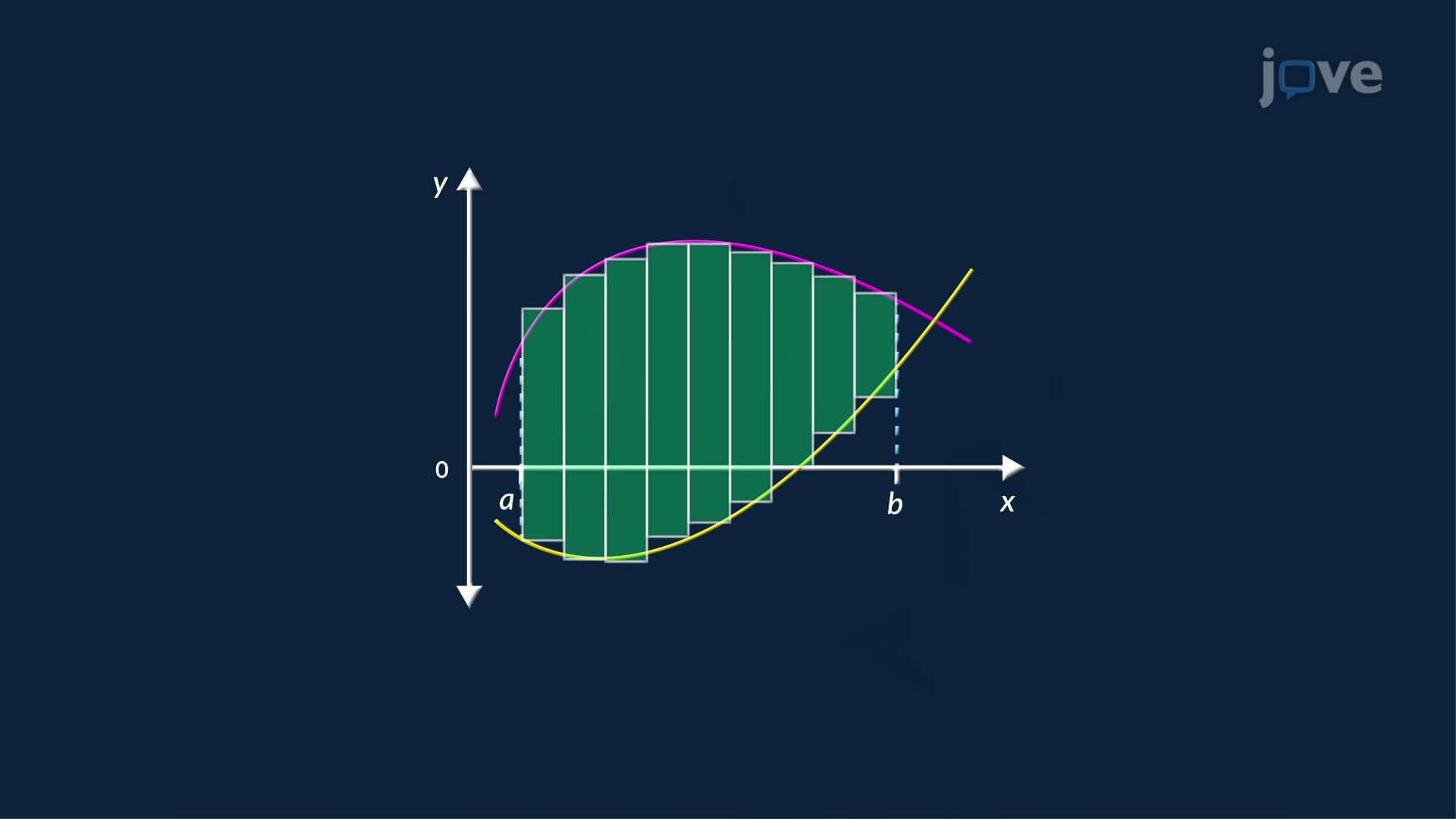
This is the same mathematical logic behind Riemann sums, you start with a finite approximation and refine it by making slices thinner and thinner until the sum converges to an exact value.
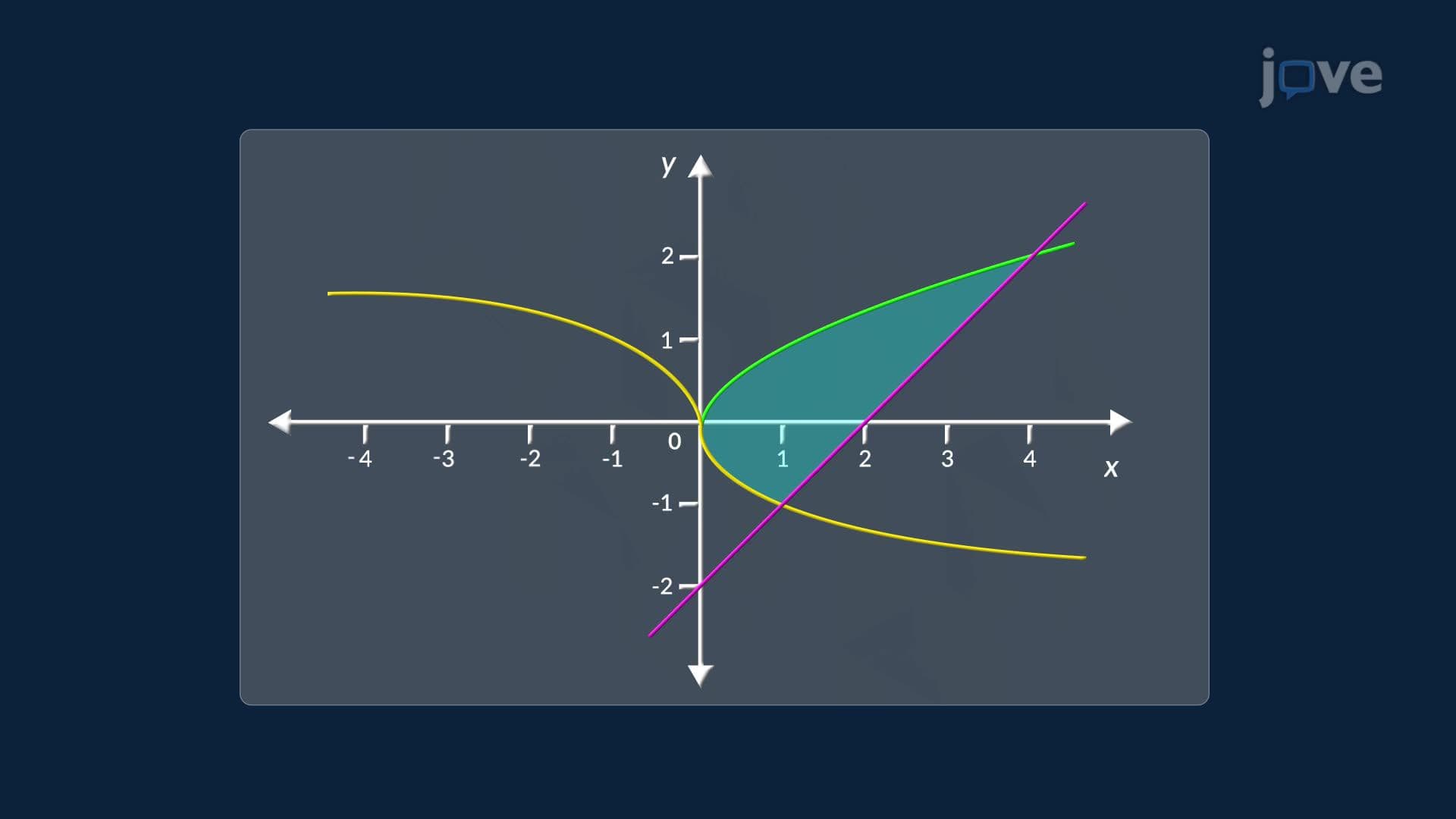
Standard geometry formulas, for cubes, cylinders, cones, and spheres, only work when the shape is perfectly regular. As soon as you introduce curvature or taper, those formulas break down. This is where integration earns its place. For example, solids of revolution, objects formed by rotating a curve around an axis, appear in manufacturing and engineering constantly. The disk and washer methods, which are special cases of volume by slicing, use circular cross-sections where A(x) = π · [r(x)]² to compute volume precisely.
Similarly, when cross-sections are squares, triangles, or semicircles rather than circles, the same integral framework applies, only the formula for A(x) changes. This flexibility is what makes the slicing method universally powerful.
In AP Calculus AB and BC, volume by integration is a heavily tested topic. Students are expected to set up and evaluate integrals representing volumes of solids with described cross-sections, as well as solids of revolution. These appear consistently on free-response sections of the AP exam and in college midterms across the country.
In engineering and architecture programs at US universities, this concept is applied to calculate material volumes for real structures. Civil engineers designing a retaining wall or a concrete spillway use numerical integration, the computational extension of this same principle, when cross-sections are defined by survey data rather than clean equations.
The concept also connects directly to other physical applications of integration: work and fluid forces, center of mass, arc length, and surface area of revolution all follow the same pattern of integrating a well-defined function over an interval. Mastering volume by slicing gives students a strong conceptual framework for tackling all of these related topics.
Related Micro-courses