Loading subject page…

3,009 views

Video Summary: Volumes of Solids of Revolution Explained
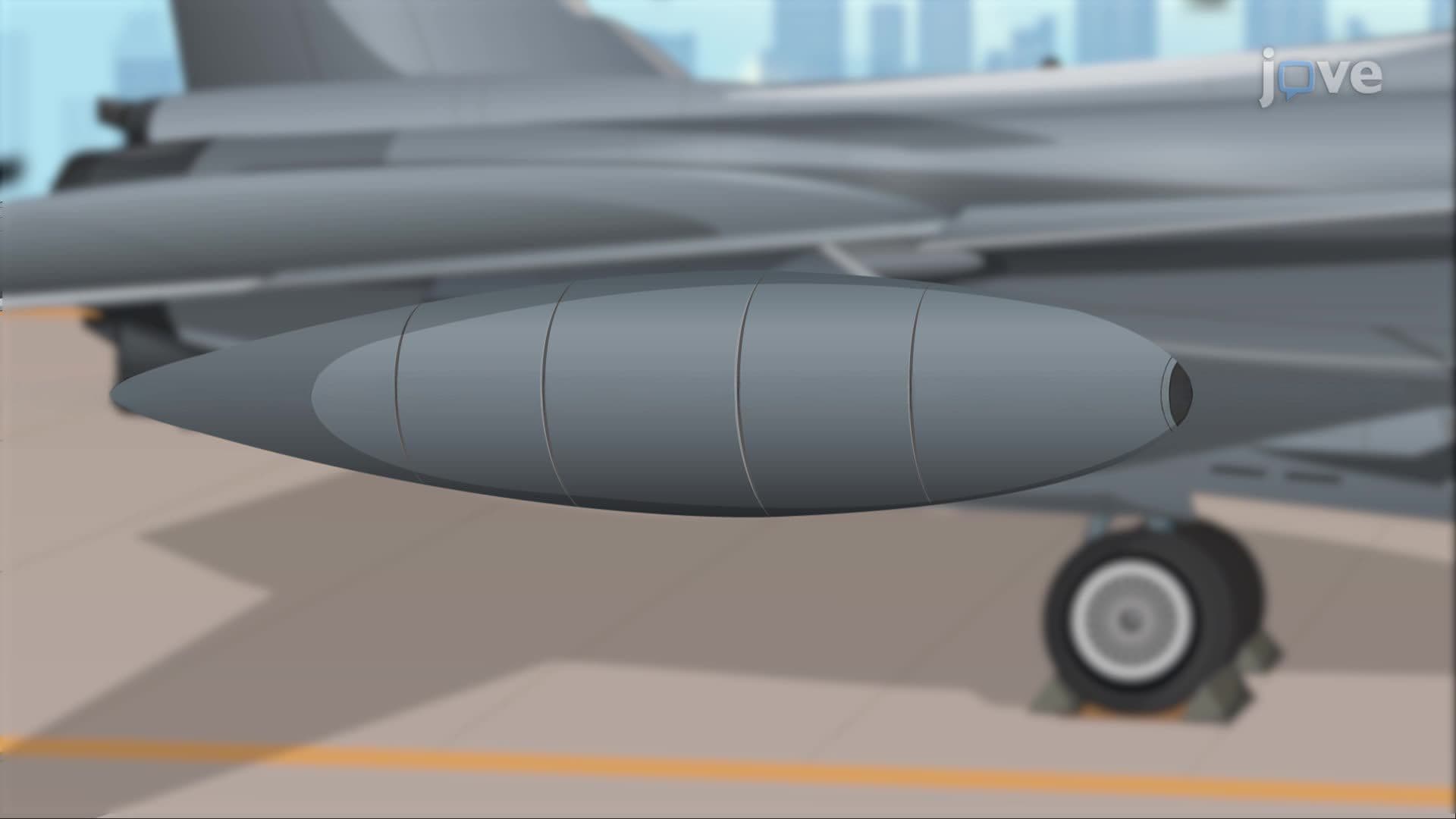
How do engineers design perfectly symmetrical rocket nose cones or NASA fuel tanks? The answer lies in volumes of solids of revolution. This powerful calculus concept transforms a flat, curved region into a three-dimensional solid by rotating it around an axis, then calculates its exact volume using the disk method and definite integrals. Watch the full video on JoVE Coach to master this concept with expert-led visuals and step-by-step explanations.
When a two-dimensional curve or region is rotated around a fixed line called the axis of revolution, it sweeps out a perfectly symmetrical three-dimensional object. This object is called a solid of revolution, and calculating its volume is one of the most important and visually intuitive applications of integral calculus. From manufacturing precision parts to modeling the shape of a water tower, the ability to compute these volumes connects abstract math to measurable, real-world geometry.
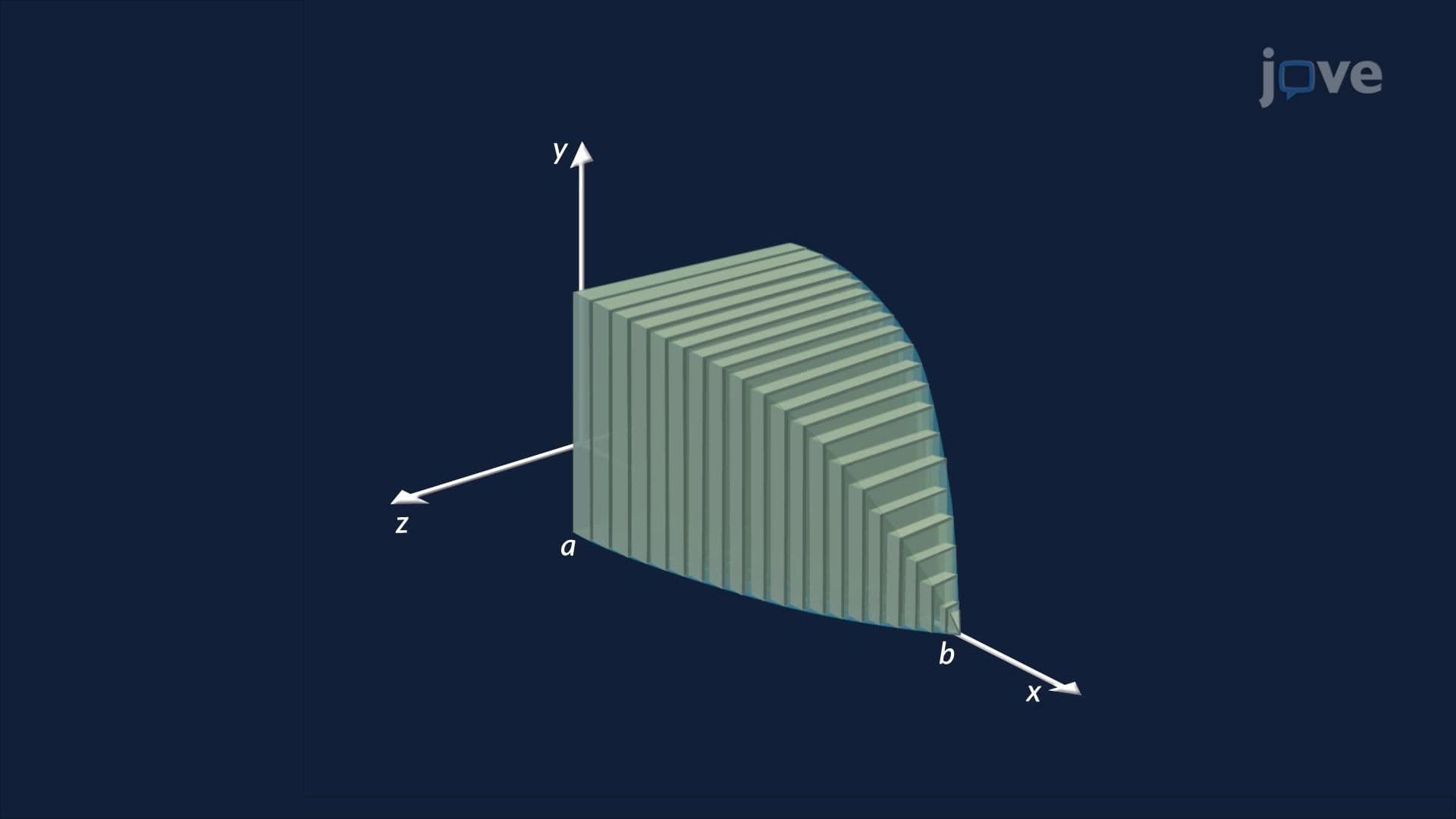
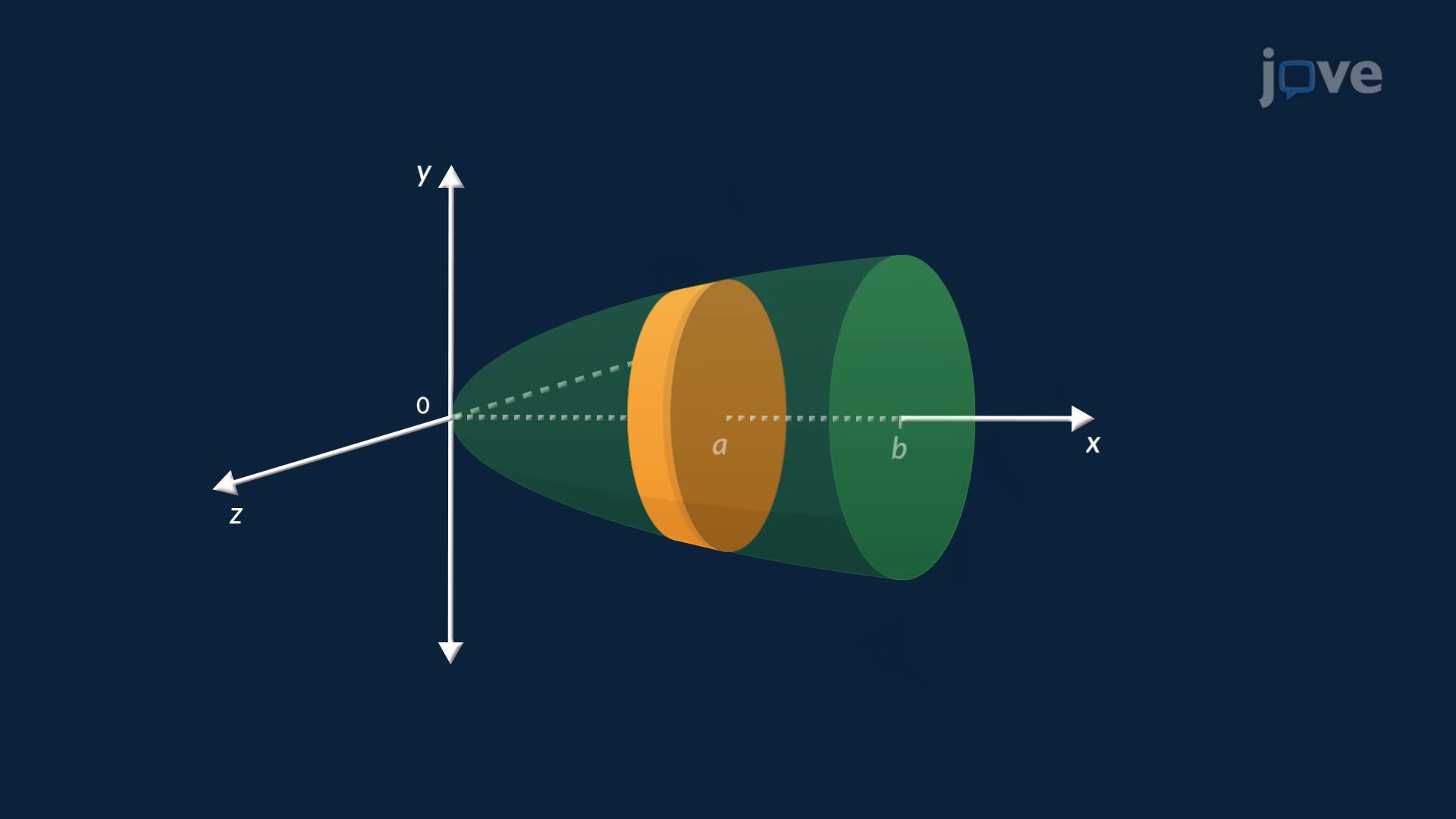
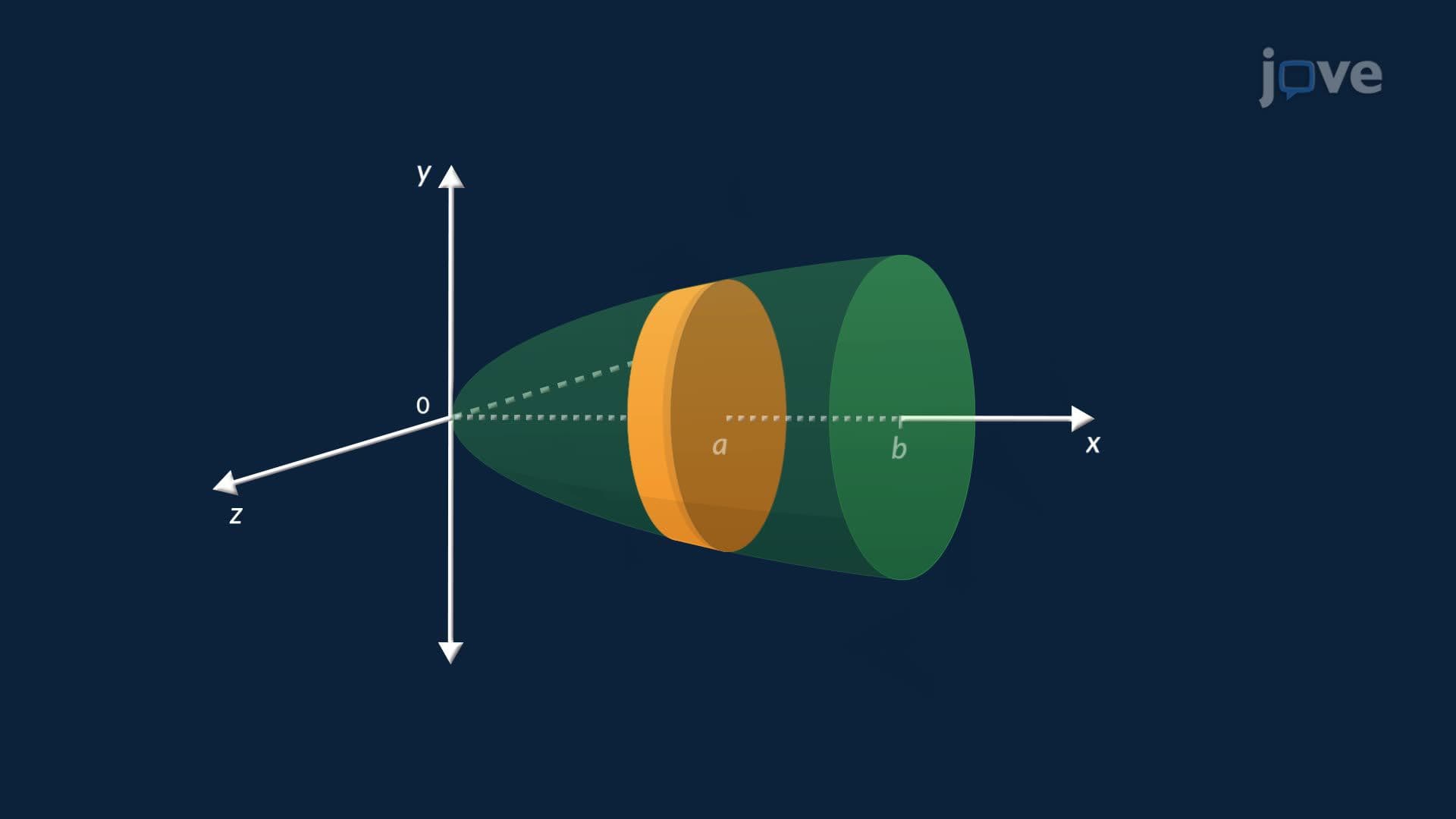
The most fundamental approach for volumes of solids of revolution is the disk method. Imagine cutting the three-dimensional solid into infinitely thin slices perpendicular to the axis of revolution. Each slice resembles a flat circular disk. Its radius equals the distance from the axis to the boundary curve at that point, and its thickness is an infinitesimally small width, written as dx (or dy, depending on orientation).
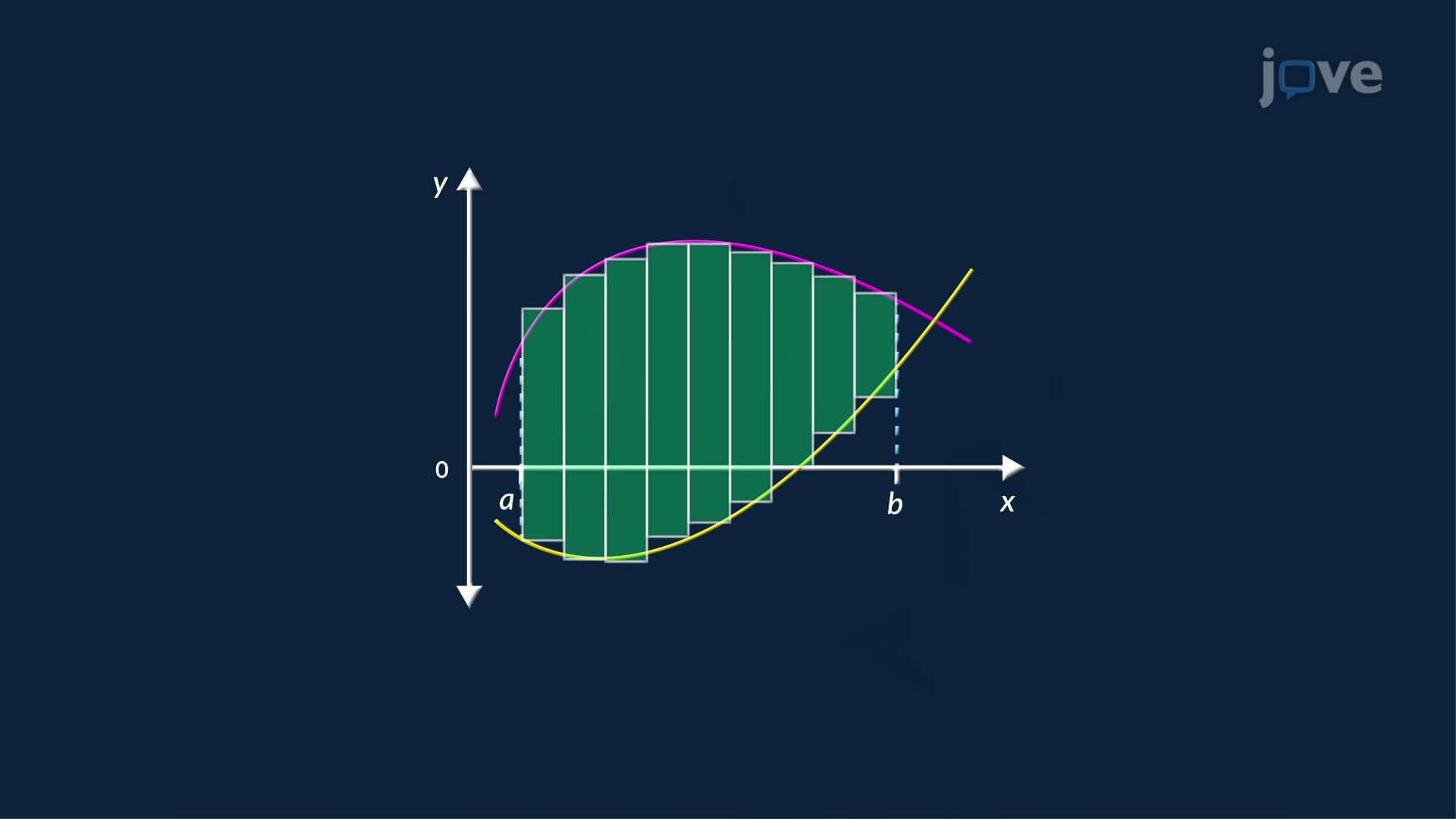
The area of one circular disk is π · [r(x)]², where r(x) is the radius function. Multiplying this area by the small thickness dx gives the volume of one disk. Summing all these disk volumes across the interval [a, b] produces a Riemann sum. As the number of slices approaches infinity and each thickness shrinks toward zero, this sum converges to a definite integral:
V = π · ∫[a to b] [r(x)]² dx
This formula is the backbone of the disk method and appears regularly on AP Calculus AB and BC exams, college midterms, and even select MCAT quantitative reasoning sections.
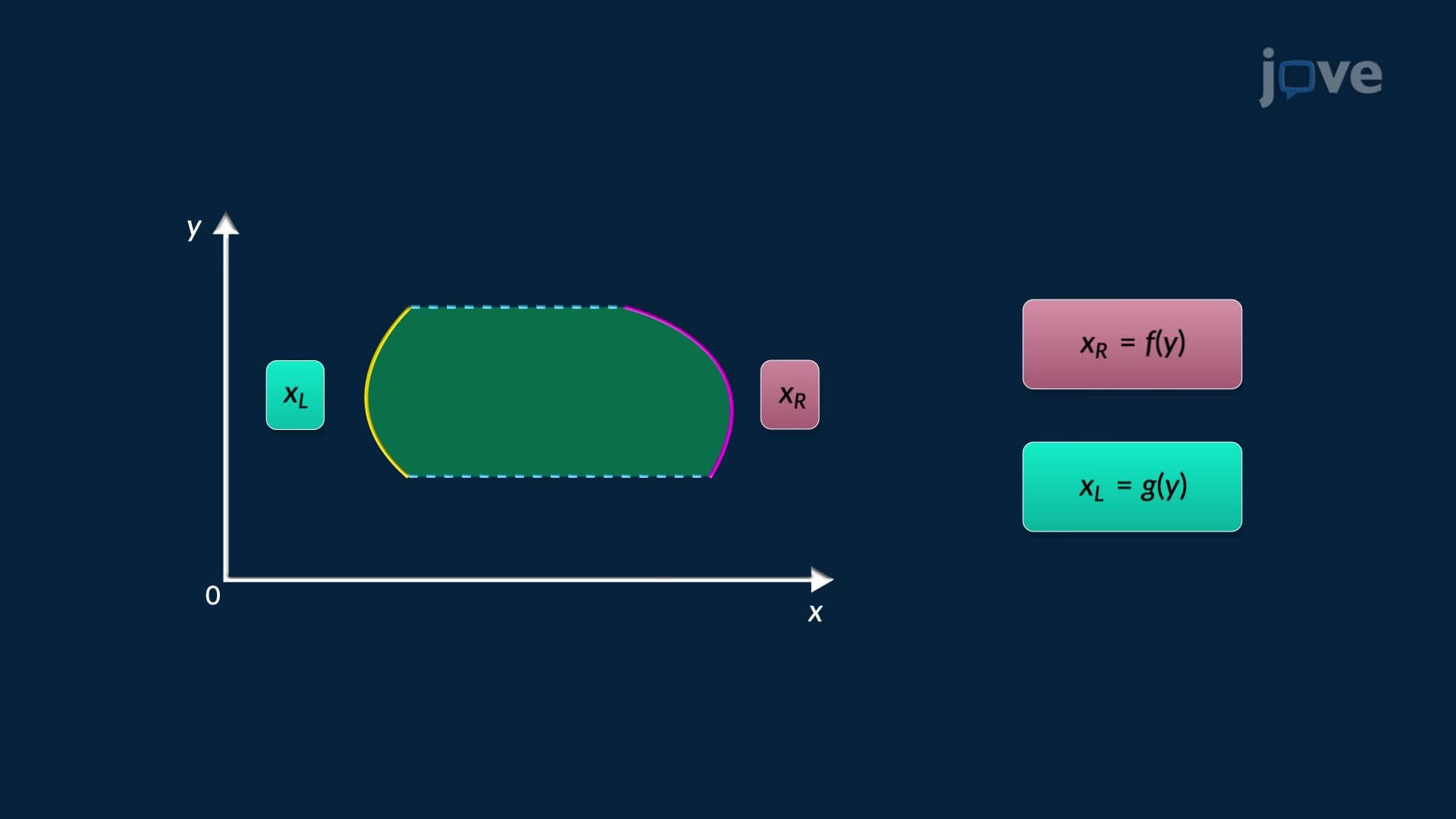
The axis of revolution does not have to be the x-axis. When a region is rotated around the y-axis, the variable of integration switches to y, and the radius must be expressed as a function of y. This flexibility is critical because many real-world solids, like a vase spun on a pottery wheel or a machined bolt, are best modeled by rotating around a vertical axis.
For example, consider a curve like y = √x rotated around the x-axis between x = 0 and x = 4. The radius at any x is simply √x, so the volume becomes V = π · ∫[0 to 4] x dx = 8π cubic units. US engineering programs at schools like MIT and Georgia Tech introduce this exact setup in first-year calculus courses.
Mastering volumes of solids of revolution builds a strong foundation for several related topics. Volume by slicing generalizes the disk method to non-circular cross-sections such as squares or triangles. The washer method extends it to regions with a hole at the center, produced when the region does not touch the axis of revolution. Beyond volume, the same integration framework powers calculations for arc length, surface area of revolution, center of mass, and work and fluid forces, all standard topics in AP Calculus BC and college Calculus II curricula.
Understanding the disk method also deepens your intuition about what integration is used for: it is not just area under a curve, but a universal tool for accumulating infinitesimally small quantities into a meaningful whole.
Related Micro-courses