Loading video…


 8 Concepts
 3K views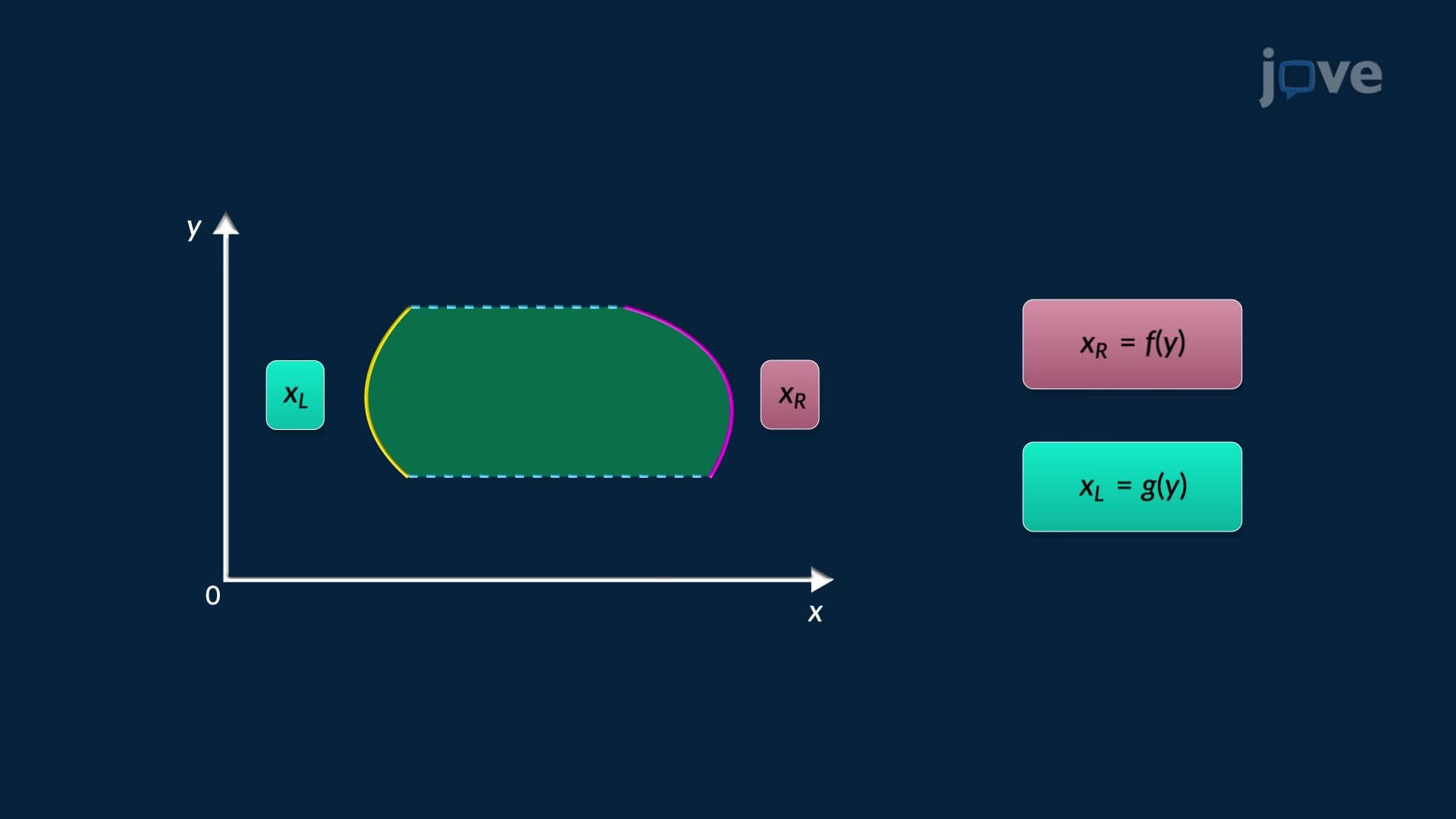

Video Summary: Integrating with Respect to Y in Area Between Curves
Did you know that chemical engineers at US refineries use calculus to predict how efficiently they can separate fuel components? Integrating with respect to y in area between curves is the key technique that makes this possible. This approach uses horizontal strips instead of vertical ones, making it ideal when curves are expressed as functions of y. Watch the full video on JoVE Coach to master this concept with expert-led visuals and step-by-step explanations.
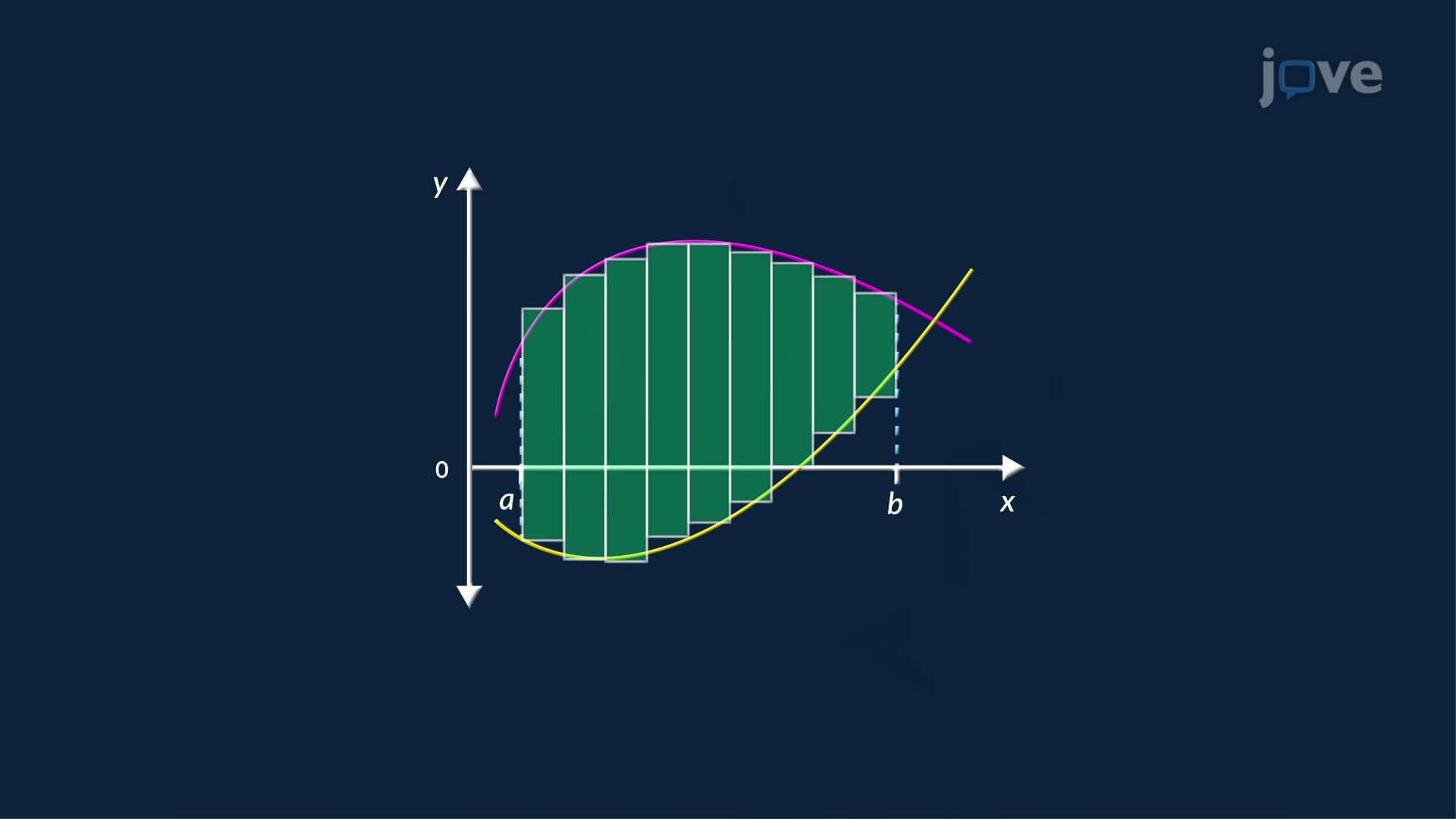
Most calculus students first learn to find area by integrating with respect to x, stacking vertical rectangles from left to right. But what happens when curves are more naturally described horizontally, or when a single x-value maps to multiple y-values? That's exactly where integrating with respect to y in area between curves becomes the cleaner, more efficient strategy.
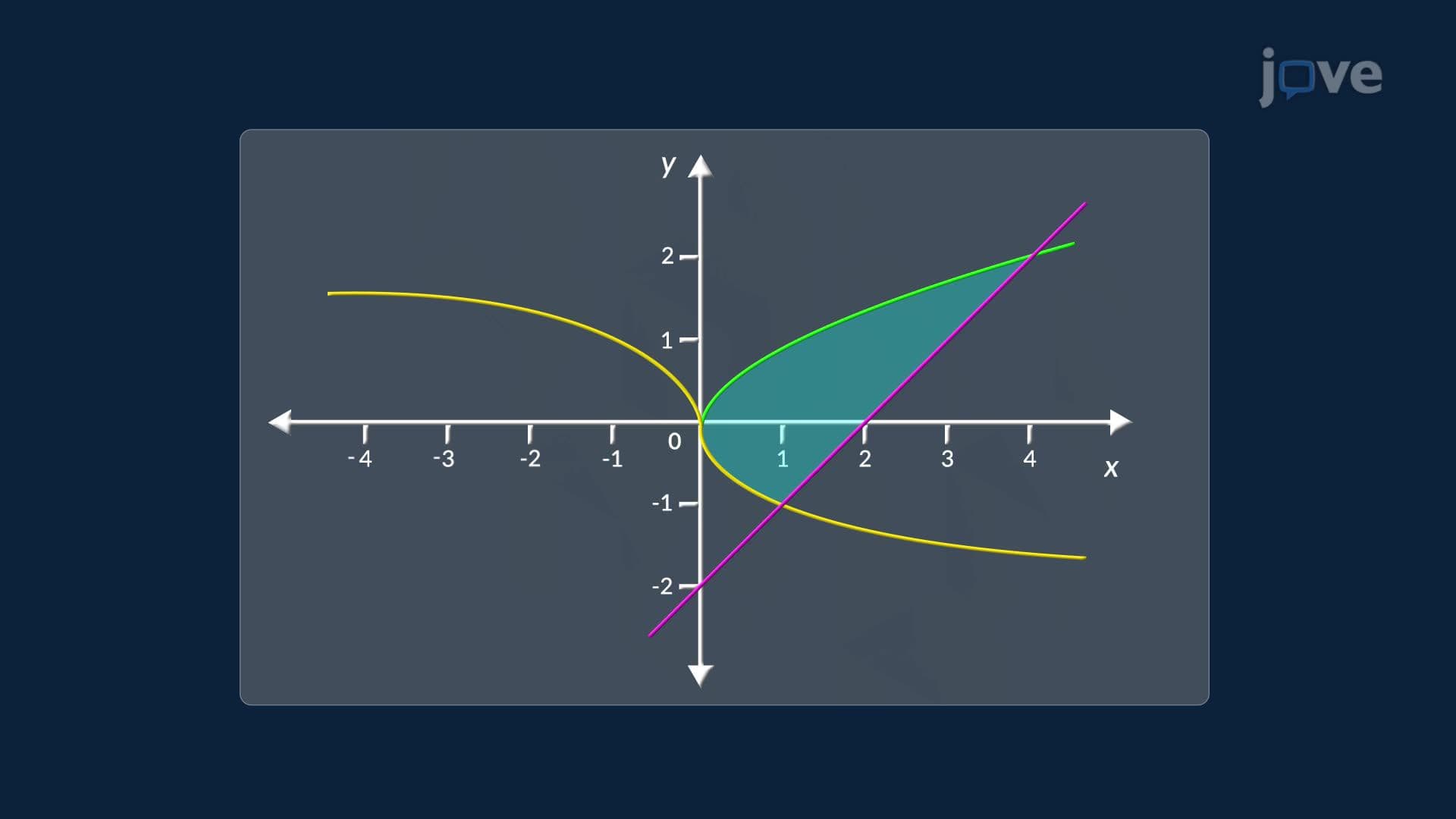
Instead of vertical slices, this method partitions the region into thin horizontal rectangles. Each strip has a height of dy and a width equal to the horizontal distance between the right boundary curve, x = f(y), and the left boundary curve, x = g(y). The area of each strip is approximately [f(y) - g(y)] dy. Summing these strips across the interval from y = c to y = d and taking the limit as dy approaches zero produces the definite integral:
Area = integral from c to d of [f(y) - g(y)] dy
The limits c and d are horizontal lines that mark the vertical extent of the region, found by identifying where the two curves intersect or where the region begins and ends.
This method is particularly useful in three situations. First, when both boundaries are already expressed as functions of y, rewriting them in terms of x would be unnecessarily complex. Second, when the region has a left-right boundary structure rather than a top-bottom one. Third, when the curve is not a function in terms of x, for example, a sideways parabola like x = y², but IS a function in terms of y.
On the AP Calculus AB and BC exams, problems frequently test whether students can recognize which axis of integration to choose. Selecting y-integration in the right context can reduce algebraic steps significantly and minimize errors.
A compelling US industry example comes from petroleum refining and chemical process design. Engineers plot vapor-liquid equilibrium (VLE) diagrams where the liquid composition (x-axis) and vapor composition (y-axis) define two curves: the diagonal reference line and the equilibrium curve. The enclosed area between these curves, calculated by integrating with respect to y, represents the total separability area, a direct measure of how effectively components like ethanol and water can be separated across all compositions. This concept is used extensively in distillation column design at facilities operated by companies like ExxonMobil and Dow Chemical.
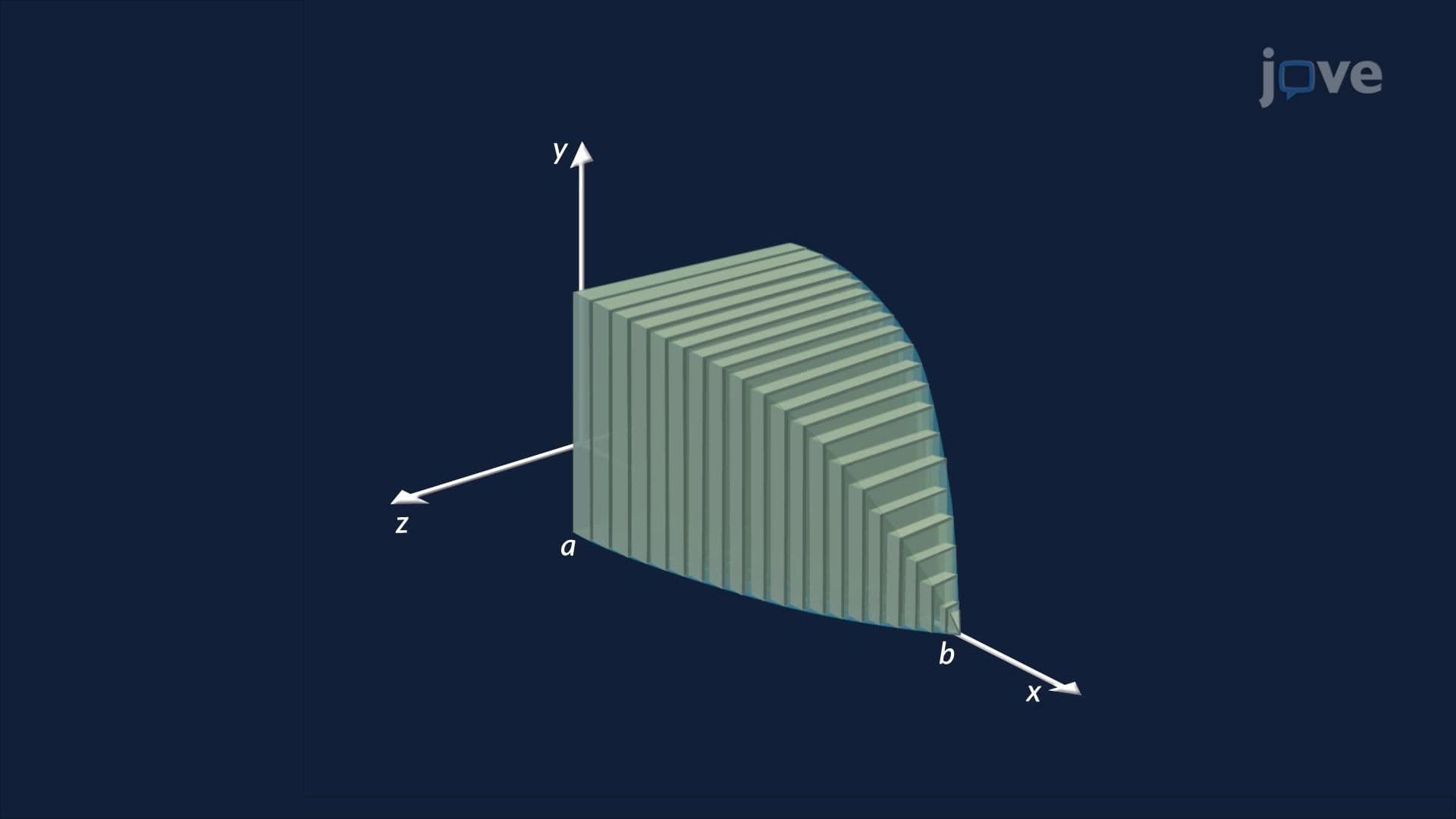
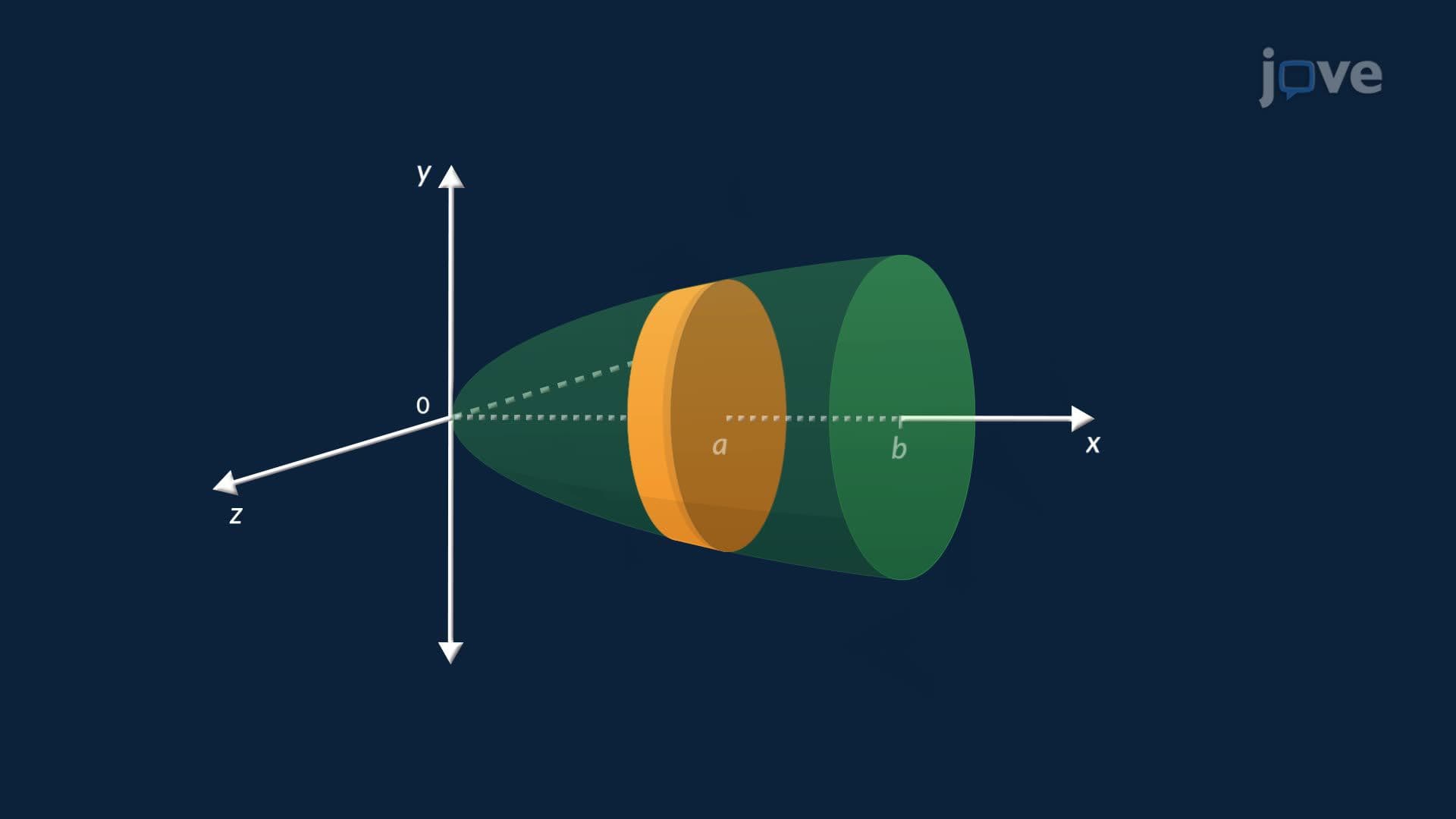
Mastering this technique is not just about one exam problem. It builds the spatial reasoning needed for volume by slicing (where cross-sectional areas are integrated), surface area of revolution, arc length calculations, and finding a system's center of mass. In college-level courses such as Calculus II at universities including MIT OpenCourseWare-aligned programs, y-integration appears across multiple units. Understanding it deeply means you're not just solving one formula, you're developing a flexible integration mindset that adapts to the geometry of any problem.
Related Micro-courses