Loading video…


 13 Concepts
 29.6K views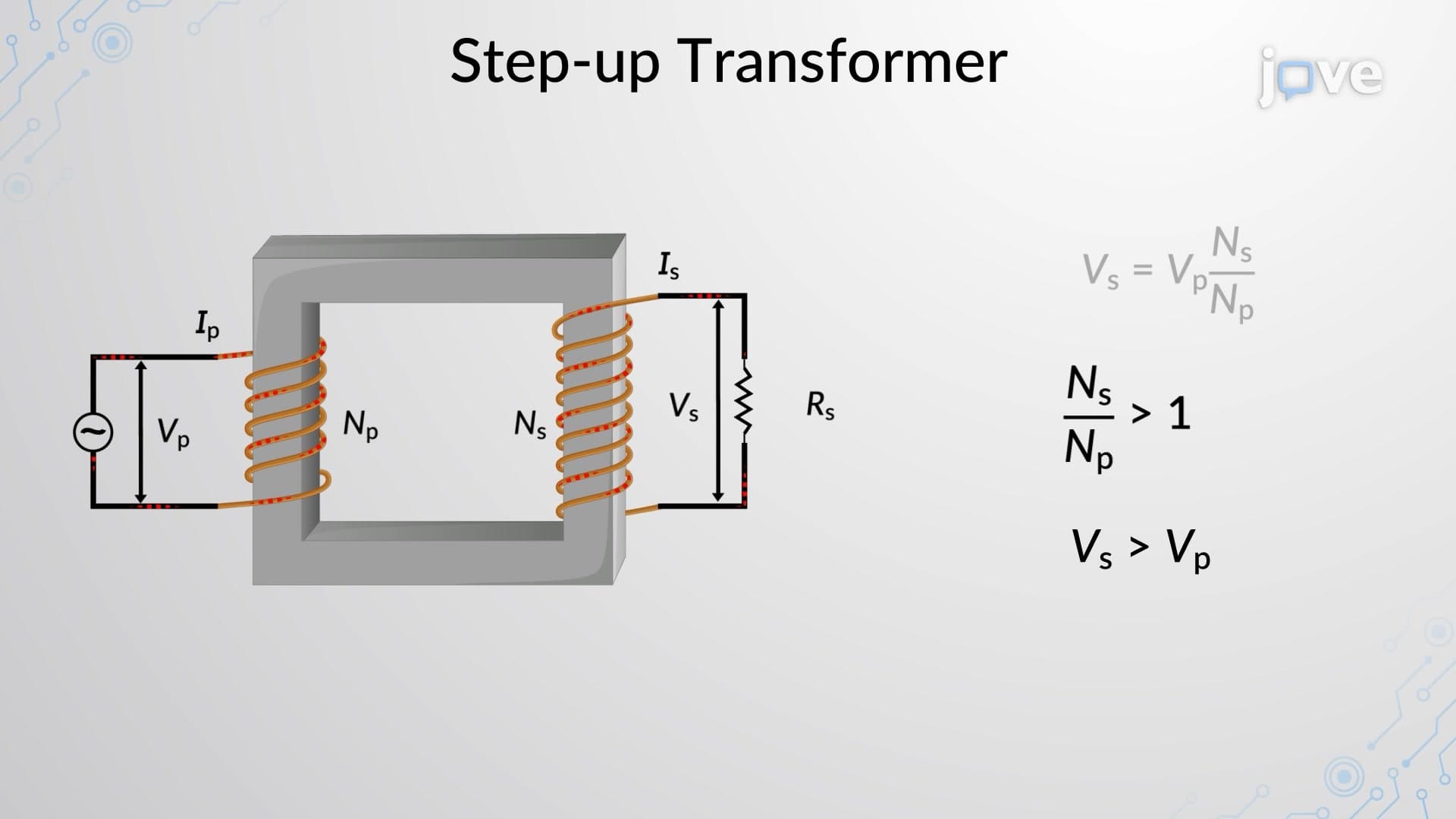

Video Summary: What are Types of Transformers
Ever wonder how your phone charger converts wall outlet voltage to safely charge your device? Understanding the types of transformers is crucial for electrical engineering students, as these devices power everything from household electronics to massive power grids across the United States. Step-up transformers increase voltage for long-distance power transmission, while step-down transformers reduce voltage for safe home use. These electrical devices operate on electromagnetic induction principles and follow energy conservation laws to transform not only voltages and currents, but also resistances. Watch the full video on JoVE Coach to master this concept with expert-led visuals and step-by-step explanations.
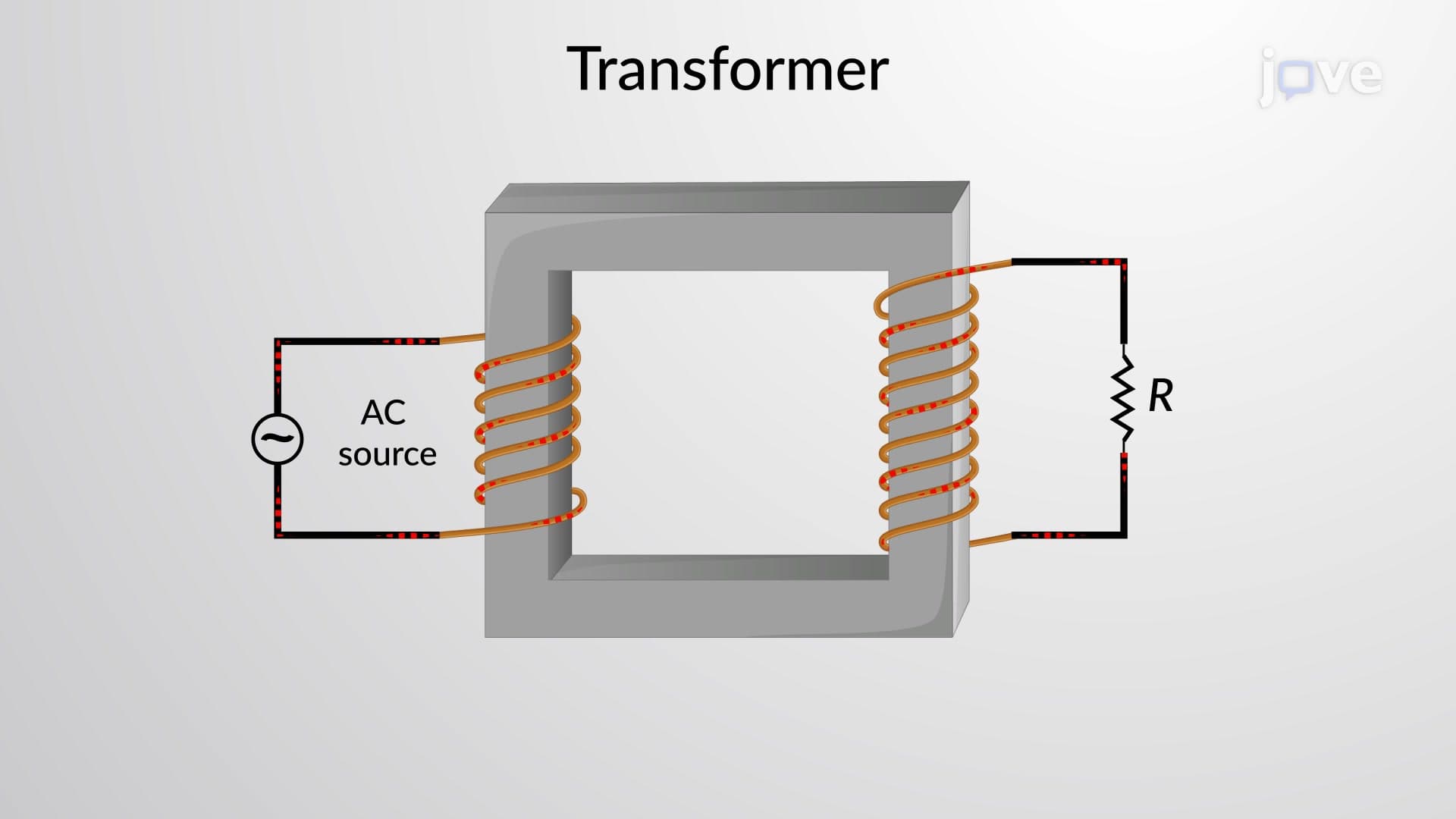
Transformers are categorized primarily based on their voltage transformation characteristics, determined by the turn ratio between primary and secondary windings. This fundamental classification system helps engineers and students understand how these devices manipulate electrical energy in practical applications.
Step-up transformers feature turn ratios greater than one, meaning the secondary winding has more turns than the primary winding. These transformers increase output voltage above input levels, making them essential for power transmission systems. In the United States, power plants use massive step-up transformers to boost generated voltage from approximately 25,000 volts to transmission levels of 500,000 volts or higher. This voltage increase reduces current flow, minimizing power losses during long-distance transmission across interstate power grids. Students encounter these concepts in AP Physics courses and college-level electrical engineering programs.
Step-down transformers operate with turn ratios less than one, featuring fewer secondary turns than primary turns. These devices reduce dangerous transmission voltages to safe household levels. Distribution transformers mounted on utility poles across American neighborhoods step down 7,200-volt distribution lines to standard 240/120-volt service entering homes. Your laptop charger contains a step-down transformer converting 120-volt AC to low-voltage DC for safe device operation.
Transformer operation follows fundamental energy conservation principles, where input power equals output power in ideal conditions. When voltage increases in step-up transformers, current decreases proportionally, maintaining constant power transfer. This relationship, expressed as P(primary) = P(secondary), leads to the inverse relationship between voltage and current transformations. Understanding these relationships proves crucial for SAT Physics Subject Tests and college circuit analysis coursework.
Transformers also transform apparent resistance values between primary and secondary circuits. This resistance transformation follows the square of the turn ratio, affecting impedance matching in audio equipment, radio frequency circuits, and power systems. Engineering students studying for the Fundamentals of Engineering (FE) exam must master these calculations for professional licensure. The mathematical relationships governing transformer operation provide foundation knowledge for advanced topics in electromagnetic field theory and power systems analysis taught in accredited engineering programs nationwide.
Related Micro-courses