Loading subject page…

3,311 views
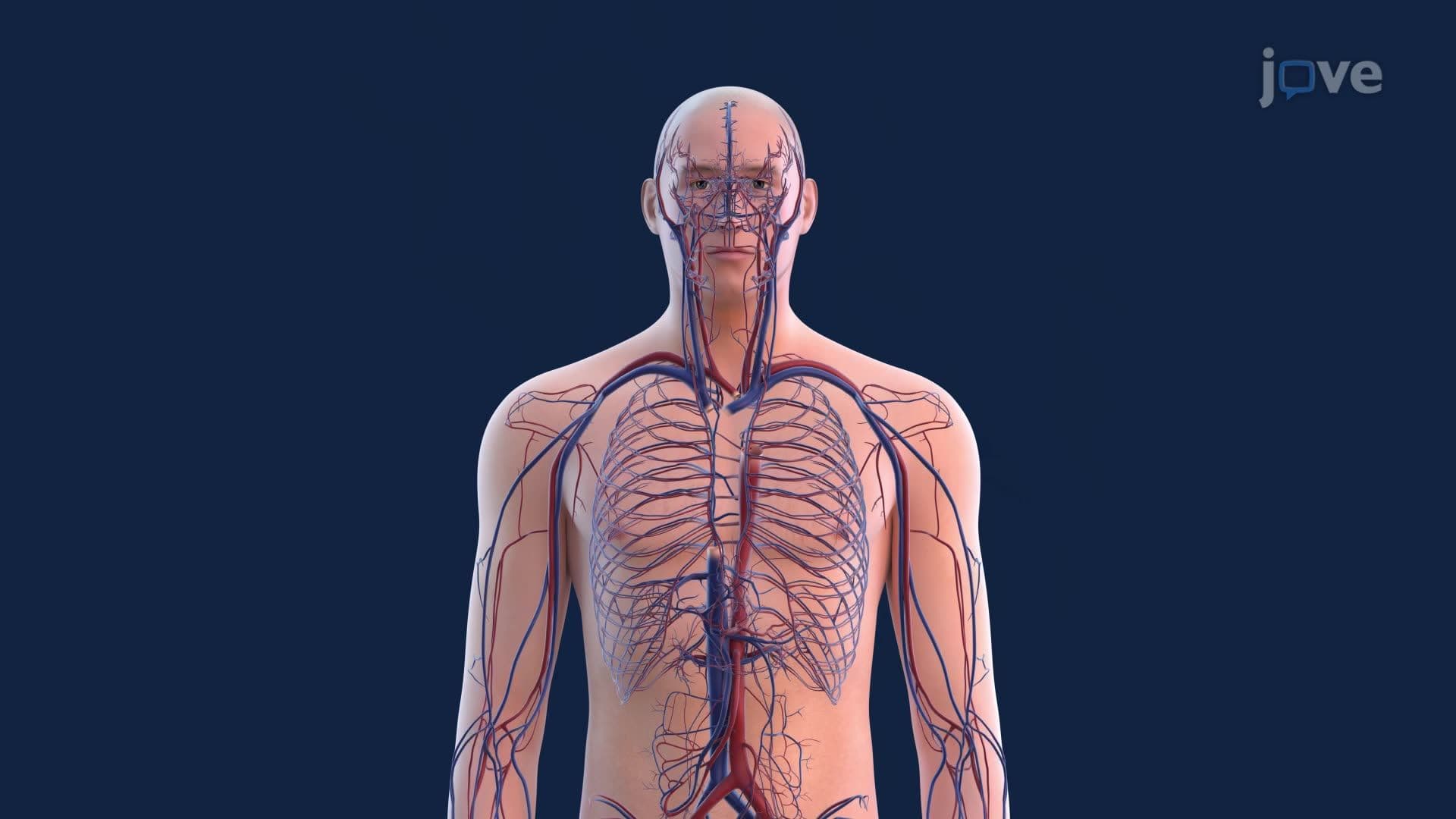

Video Summary: Applications of Integration to Find Blood Flow Explained
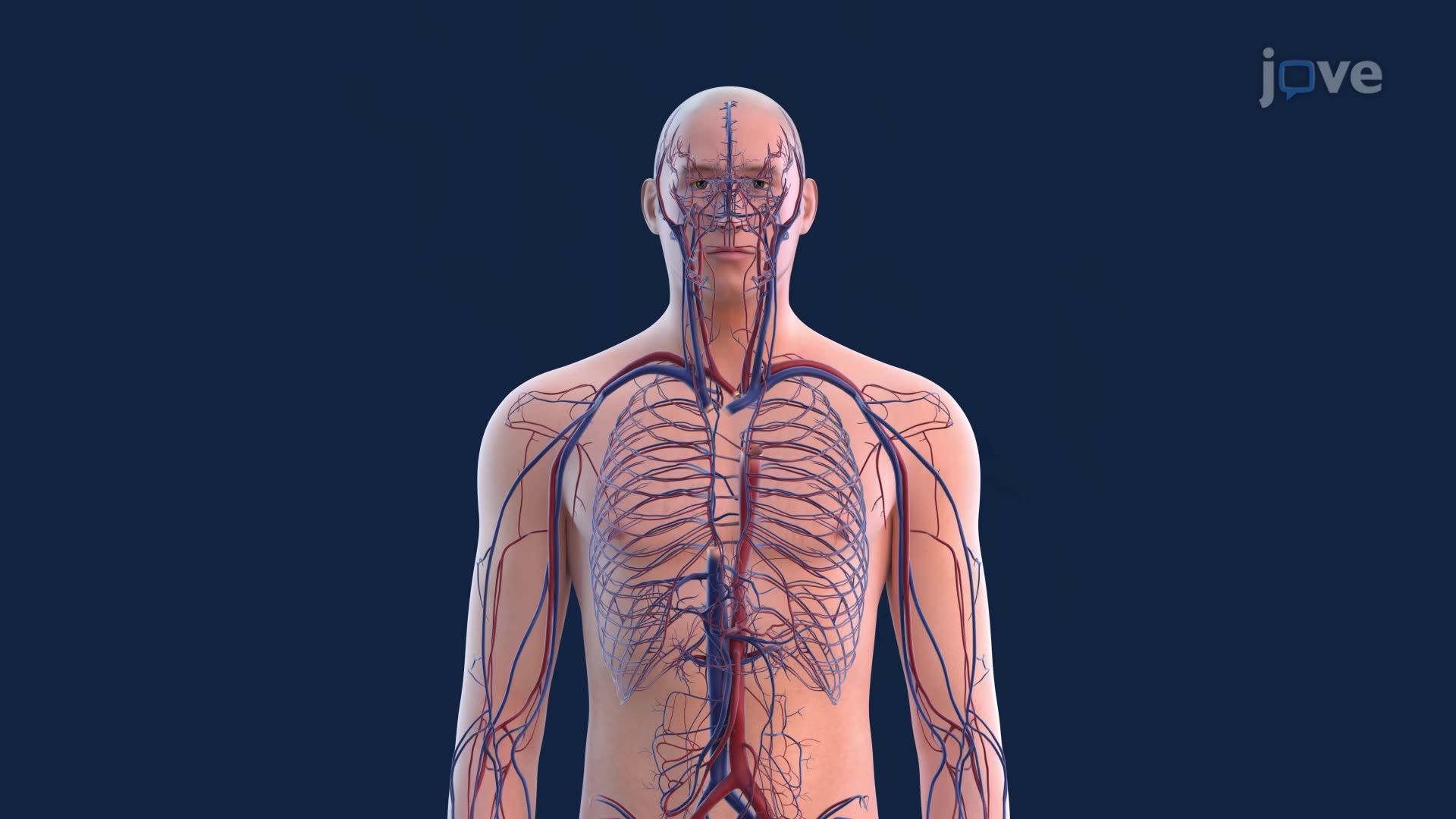
Why does a tiny blockage in a coronary artery cause such a dramatic drop in blood flow? The applications of integration to find blood flow reveal the answer through Poiseuille's Law, a result derived entirely using calculus. By slicing a vessel's cross-section into infinitely thin rings and summing their contributions, a definite integral produces exact flow rates. US cardiology clinics rely on this principle daily. Watch the full video on JoVE Coach to master this concept with expert-led visuals and step-by-step explanations.
Few topics demonstrate the power of calculus more vividly than the applications of integration to find blood flow. When blood moves through a vessel, it does not travel at a uniform speed. Instead, it follows a parabolic velocity profile, fastest at the center, slowest near the vessel wall, a behavior described by the Law of Laminar Flow. Turning this physical reality into a precise, measurable quantity requires integration, making this one of the most compelling real-world applications of integration techniques covered in AP Calculus BC and college-level Calculus II courses.
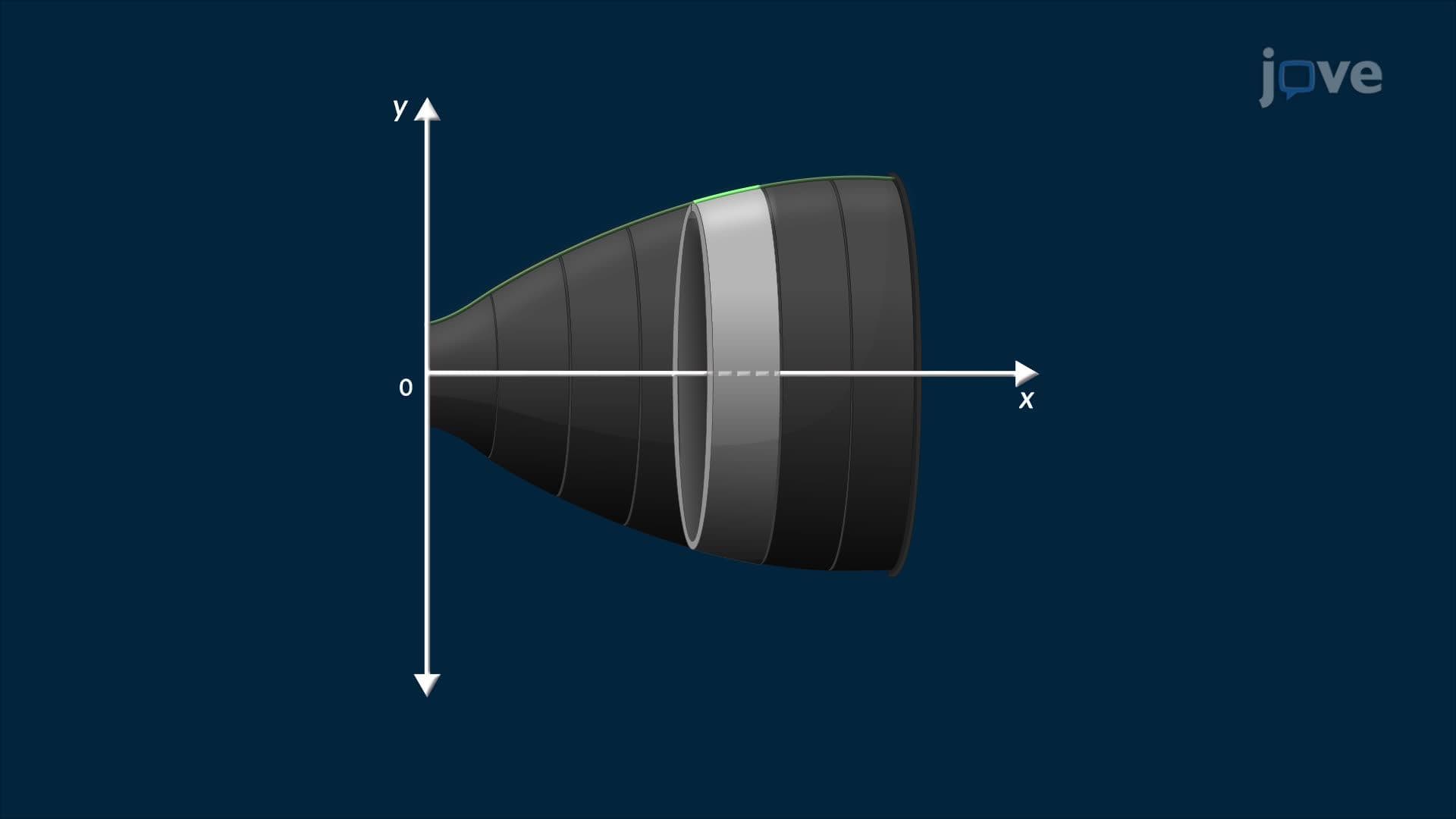
Imagine slicing a cylindrical blood vessel's circular cross-section into many thin concentric rings, each at a different radial distance *r* from the center. Each ring has an approximate area equal to its circumference (2πr) multiplied by its small thickness (Δr). The blood flow through each ring is the product of that area and the velocity v(r) at that radius. Adding the contributions of all rings produces a Riemann sum, the same foundational concept students encounter on AP Calculus exams and college midterms.
As the ring thickness shrinks toward zero and the number of rings approaches infinity, the Riemann sum converges to a definite integral:
F = integral from 0 to R of 2π · r · v(r) dr
This transition from discrete summation to continuous integration is one of the central ideas in understanding what applications of integration to find blood flow actually means mathematically.
Substituting the laminar flow velocity expression, which accounts for pressure difference (ΔP), fluid viscosity (η), and vessel length (L), into the integral and evaluating it yields Poiseuille's Law:
F = (π · ΔP · R^4) / (8 · η · L)
The most striking feature of this result is the R⁴ dependence. Because flow scales with the fourth power of the radius, even a modest reduction in vessel diameter has an outsized effect on flow. For example, if plaque buildup in a coronary artery reduces its radius by just 20%, blood flow drops by nearly 60%. This is why cardiologists at institutions like the Cleveland Clinic or Mayo Clinic treat arterial narrowing as a medical emergency, even before symptoms become severe.
This application naturally connects to a family of integration strategies students encounter across AP and college coursework. Numerical integration methods like Simpson's Rule are used when the velocity profile is experimentally measured rather than algebraically defined, a common scenario in biomedical engineering research. Trigonometric integrals and integration by parts appear in more complex fluid dynamics models. Improper integrals arise when modeling flow in vessels of theoretically infinite length or when analyzing boundary behavior near vessel walls.
Understanding how to apply integration to find volume and flow prepares students not only for calculus exams but for the quantitative reasoning sections of the MCAT, where fluid dynamics in the cardiovascular system is frequently tested. Whether you're a high school student encountering Riemann sums for the first time or a pre-med undergraduate building toward the MCAT, mastering this application of integration builds both mathematical fluency and scientific intuition.
Related Micro-courses