Loading video…

 11 Concepts
 3.3K views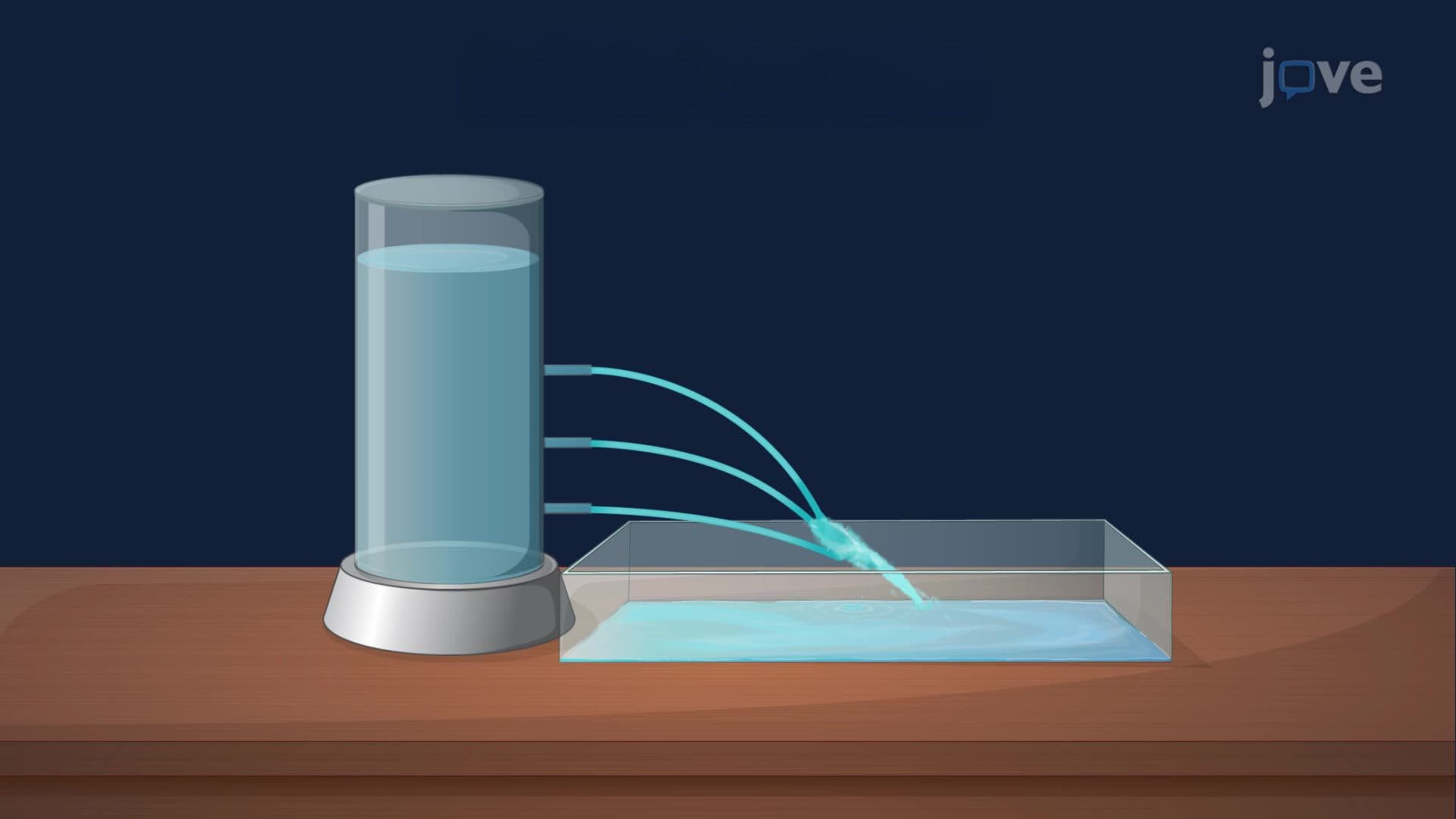

Video Summary: Applications of Integration to Find Hydrostatic Pressure Explained
Why does a dam hold back millions of gallons of water without bursting at the top, but risks failure at the base? The applications of integration to find hydrostatic pressure explain exactly why pressure builds unevenly across submerged vertical surfaces. Engineers at the Hoover Dam rely on this very principle. Applications of integration to find hydrostatic pressure basics show how thin horizontal strips and definite integrals turn a physics problem into a precise calculation. Watch the full video on JoVE Coach to master this concept with expert-led visuals and step-by-step explanations.
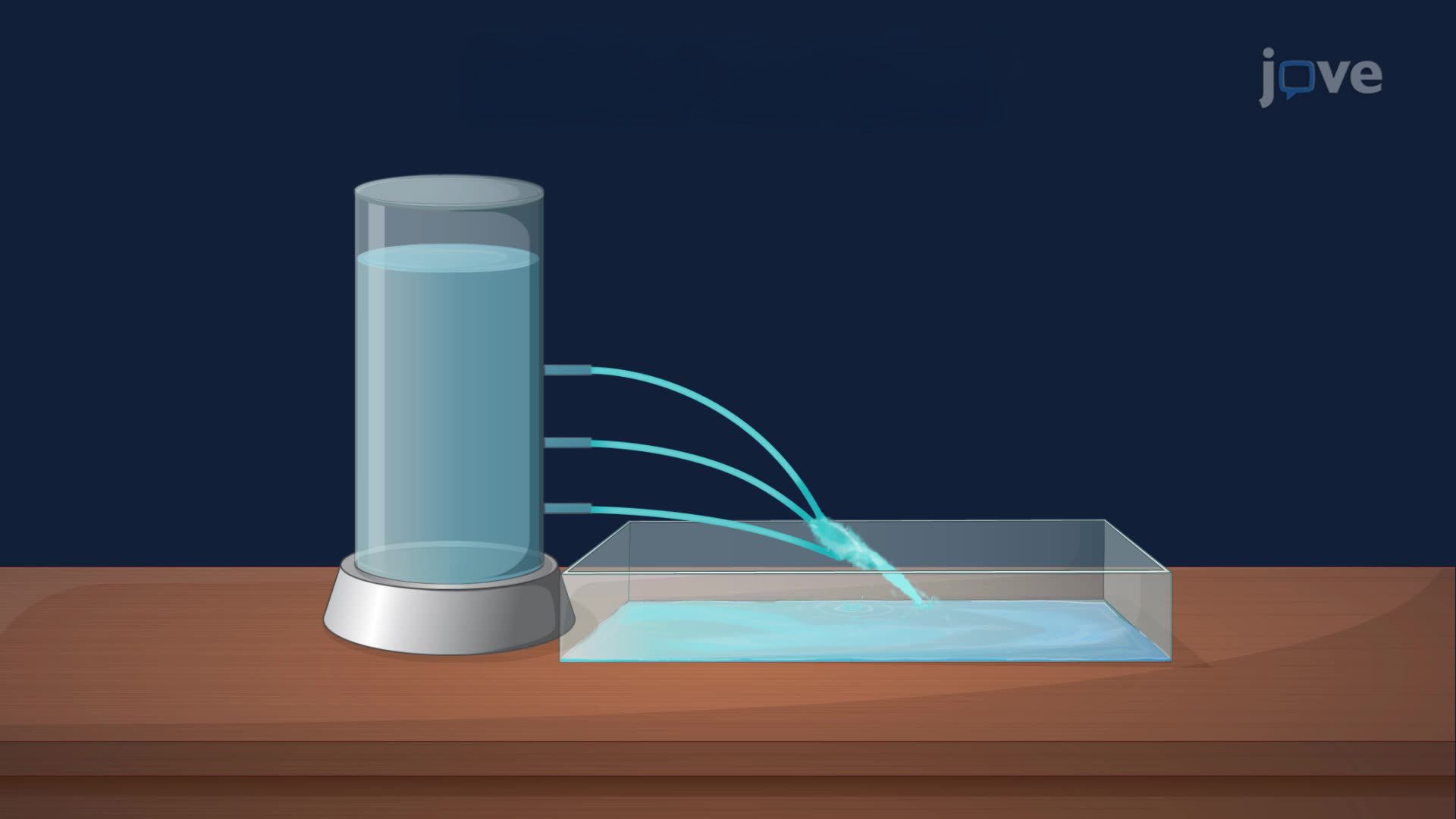
Hydrostatic pressure is the force per unit area exerted by a stationary fluid on any surface it contacts. The deeper you go beneath a fluid's surface, the greater the weight of fluid above, and the higher the pressure. For a horizontal surface sitting at a single fixed depth, pressure is uniform and calculating force is straightforward: multiply pressure by area. Vertical surfaces, however, are far more interesting and far more challenging, because every point along the surface sits at a different depth. This is precisely where calculus, specifically definite integration, becomes indispensable.
Consider a rectangular dam face holding back a reservoir. The very top of the submerged face is near the waterline, where pressure is low. The base may sit 50 or more feet underwater, where pressure is dramatically higher. No single constant pressure value can represent the entire surface. Instead, the pressure varies continuously with depth according to the relationship: P = w · d, where w is the fluid's weight density (for water, approximately 62.4 pounds per cubic foot in US customary units) and d is depth below the surface. Because force equals pressure times area, and pressure changes at every depth, adding up all the tiny forces across the face requires integration.
The standard approach mirrors the logic behind all Riemann sums. The submerged vertical surface is sliced into thin horizontal strips. Each strip spans the full width of the surface at that depth and has a small vertical thickness, written as Δd. Because each strip is thin, the depth, and therefore the pressure, is approximately constant across it. The force on a single strip is:
F(strip) = w · d · L(d) · Δd
where L(d) is the width of the surface at depth d. Summing these forces across all strips from the top of the submerged surface (depth = a) to the bottom (depth = b) produces a Riemann sum. As strip thickness shrinks toward zero, this sum converges to the definite integral:
F = integral from a to b of [w · d · L(d)] dd
This integral is the backbone of every hydrostatic force problem encountered in AP Calculus BC, college-level Calculus II, and engineering statics courses across the US.
This concept moves well beyond the classroom. Civil and structural engineers at firms designing flood control systems along the Mississippi River, retaining walls in California's coastal developments, or underwater viewing panels at facilities like the Georgia Aquarium all apply hydrostatic force integration. When the width function L(d) is a clean algebraic expression, such as a linear or quadratic function, the integral can be evaluated analytically, sometimes using techniques like partial fractions or trigonometric integrals for more complex geometries. When width data comes from surveys or irregular shapes, numerical integration methods such as Simpson's rule provide accurate approximations without a closed-form formula.
On the AP Calculus BC exam and college midterms, hydrostatic pressure problems typically test whether students can correctly set up the integral, identifying the correct depth variable, expressing width as a function of depth, and choosing the right limits of integration. Errors in setup, not computation, are the most common point of failure. Practicing the strip method deliberately and checking units (pounds, feet, and pounds per square foot in US customary, or Newtons, meters, and Pascals in SI) builds the precision these exams reward. Understanding hydrostatic pressure also reinforces adjacent integration applications, such as finding the volume of solids of revolution and calculating work done by a variable force, all high-value topics in any calculus course.
Related Micro-courses