Loading…
Loading video…

53,059 views
Ever wonder why NMR spectra of molecules like ibuprofen show complex splitting patterns? Two bond coupling NMR creates these intricate spectral fingerprints when protons separated by exactly two chemical bonds interact magnetically. In pharmaceutical analysis at companies like Pfizer, understanding Spin Spin Coupling Two Bond Explained helps chemists identify drug purity and structure. This geminal coupling occurs even when the central atom isn't NMR-active, transmitting spin information through electron polarization effects. Watch the full video on JoVE Coach to master this concept with expert-led visuals and step-by-step explanations.
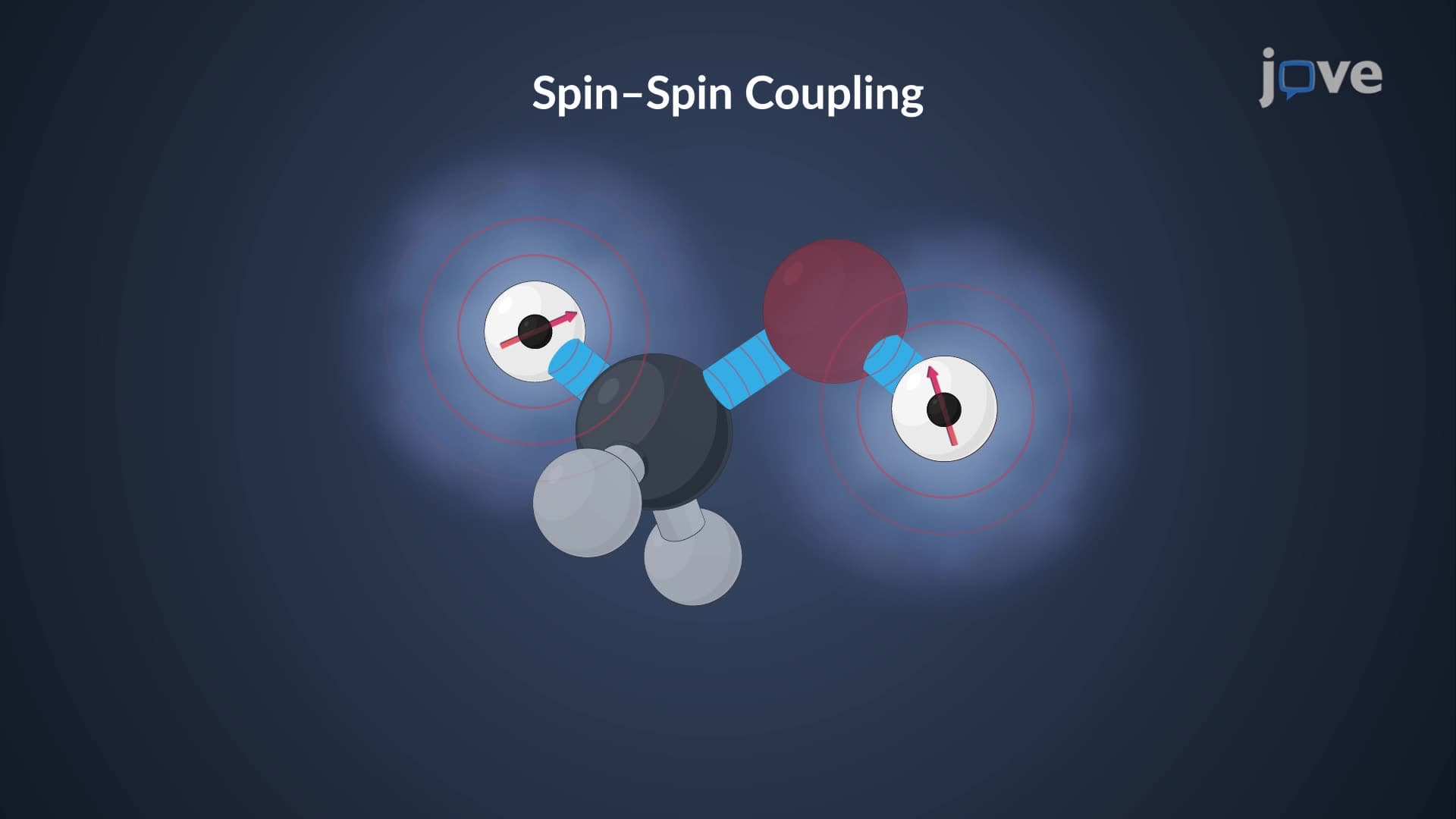
Two bond coupling NMR, also known as geminal coupling, occurs when two NMR-active nuclei are separated by exactly two chemical bonds through a central atom. Unlike direct one-bond coupling, this interaction relies on electron polarization effects rather than direct nuclear contact. The central atom acts as a magnetic mediator, even when it's not NMR-active itself, transmitting spin information between the coupled nuclei through its electron cloud.
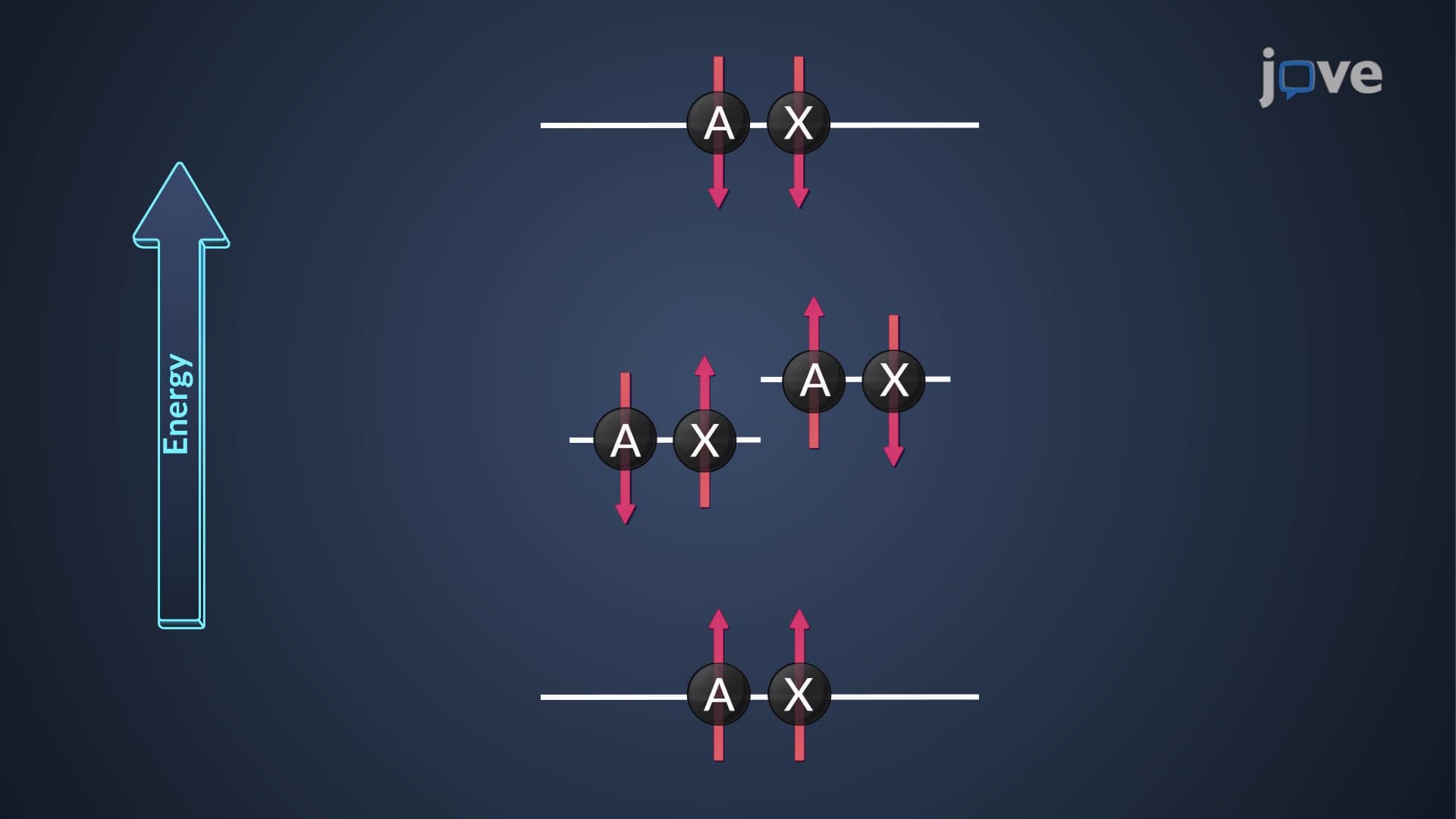
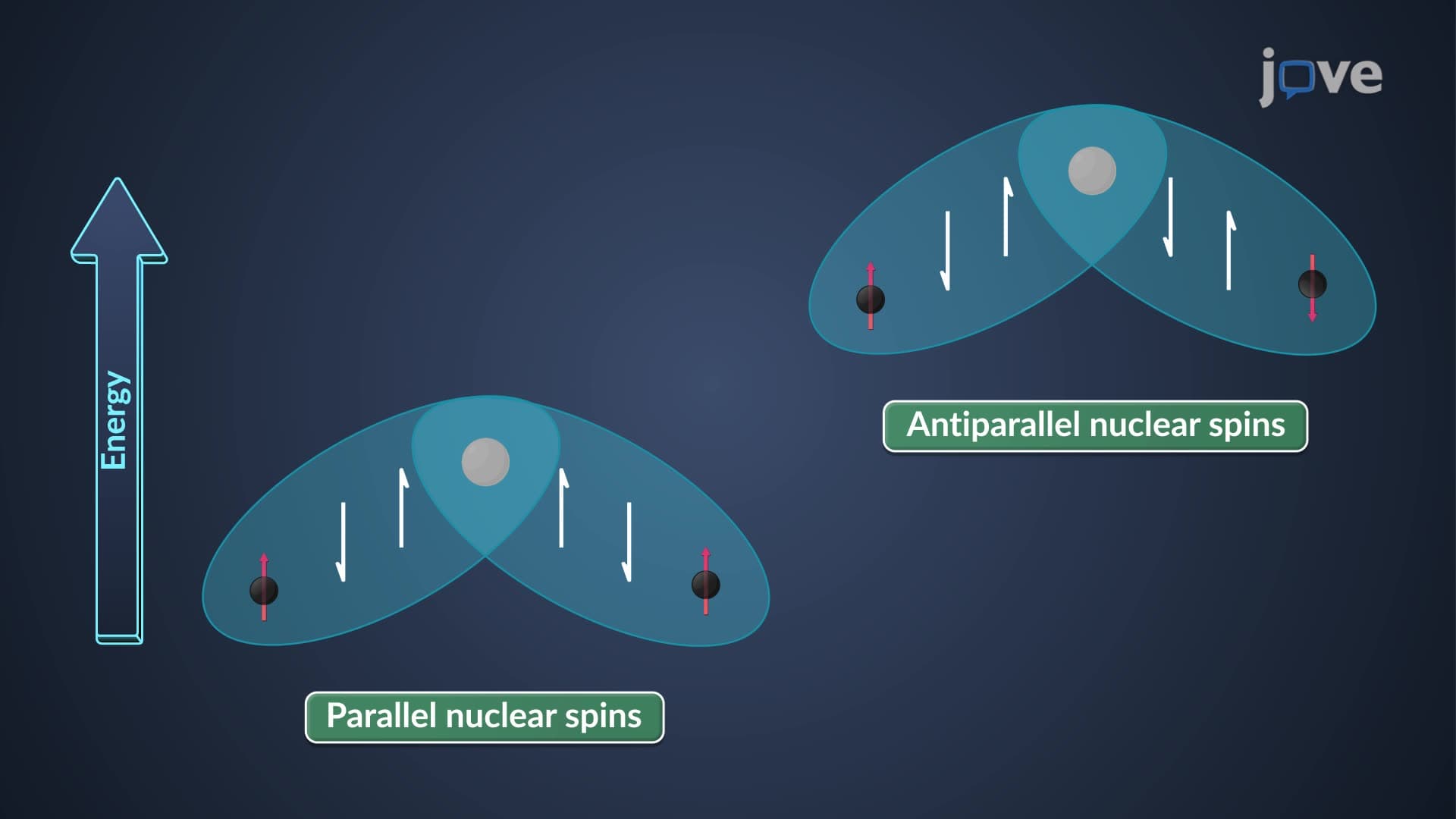
The geminal coupling constant NMR values (2J) typically range from -20 to +5 Hz for proton-proton interactions, significantly weaker than their one-bond counterparts. This reduced strength reflects the indirect nature of the coupling mechanism. Interestingly, 2J values often exhibit negative signs, indicating that parallel nuclear spins are energetically favored over antiparallel arrangements. However, standard NMR spectra cannot reveal coupling constant signs directly—this information requires specialized experiments.
The magnitude of two bond H-H coupling depends critically on molecular geometry and electronic environment. In cycloalkanes, as the H-C-H bond angle approaches the tetrahedral value of 109.5°, 2J coupling becomes increasingly negative (stronger). This geometric dependence makes geminal coupling a valuable probe of molecular conformation. Students preparing for AP Chemistry or organic chemistry midterms should remember that smaller, more strained rings exhibit stronger geminal coupling due to compressed bond angles.
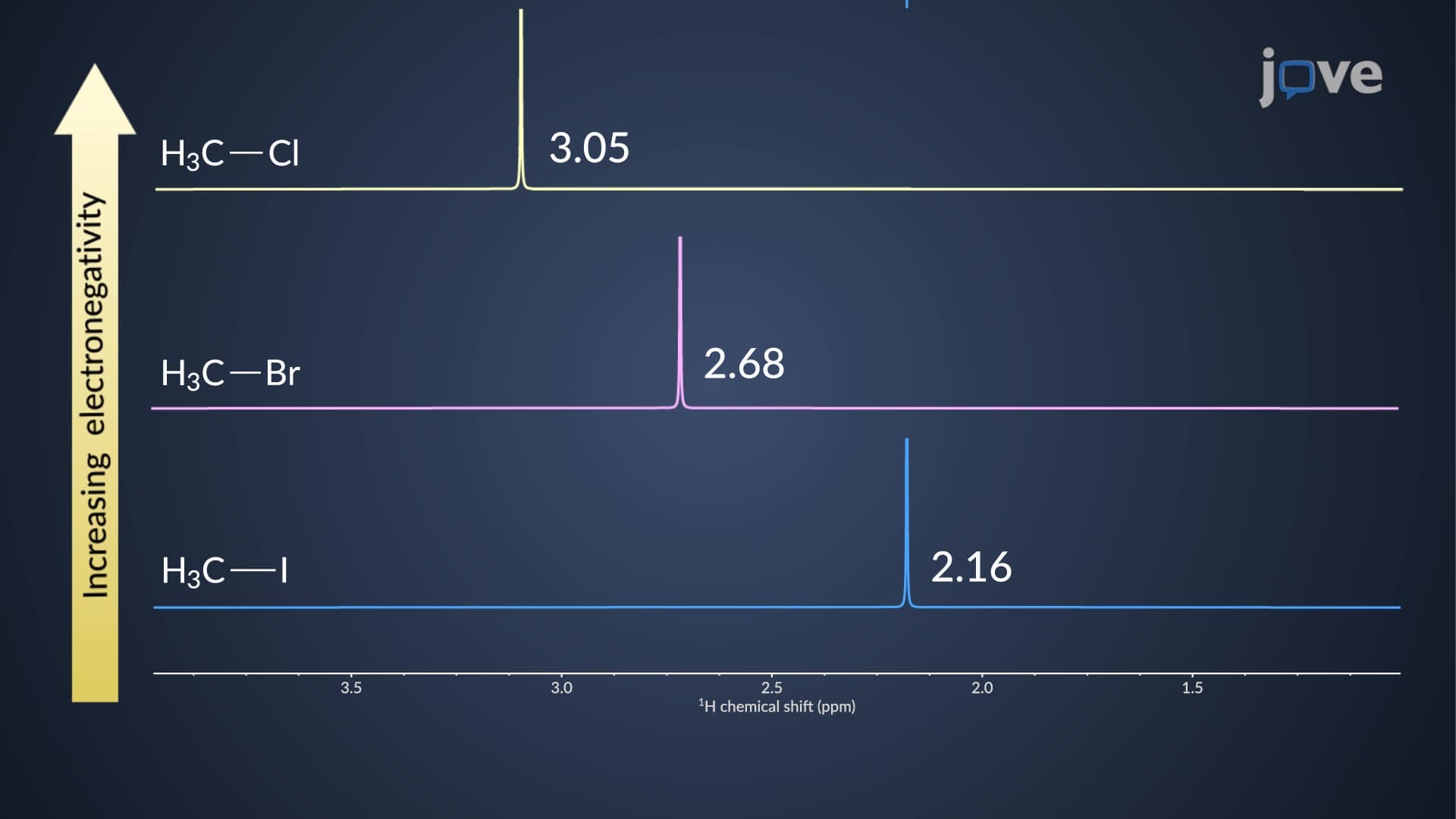
Electronegative substituents dramatically influence 2JHH coupling NMR patterns. When electron-withdrawing groups like halogens or carbonyl carbons are attached to the central atom, they make 2J values more positive (weaker coupling). Classic examples include iodomethane (CH3I) and formaldehyde (H2CO), where the electronegative iodine and oxygen atoms reduce coupling strength. This effect proves crucial for structural determination in pharmaceutical chemistry, where companies like Johnson & Johnson use NMR coupling patterns to verify synthetic intermediates.
For MCAT preparation, understanding what is two bond spin spin coupling NMR provides essential insight into spectroscopic structure determination, a recurring theme in biological chemistry passages.
Frequently Asked Questions
Two bond coupling (geminal coupling) occurs when two NMR-active nuclei interact magnetically across exactly two chemical bonds through a central atom. The coupling happens through electron polarization effects rather than direct nuclear interaction, making it weaker than one-bond coupling but still observable in high-resolution NMR spectra.
MCAT passages often test geminal coupling in biological molecule analysis, particularly in amino acid and steroid structure determination problems. AP Chemistry exams may include geminal coupling in organic spectroscopy units, requiring students to interpret splitting patterns and coupling constant magnitudes to deduce molecular structure.
Absolutely! Most college organic chemistry courses dedicate significant time to NMR spectroscopy, and geminal coupling frequently appears in structure determination problems. Mastering 2J coupling concepts gives you a competitive advantage in spectral interpretation questions worth 15-20% of typical midterm grades.
Pharmaceutical companies like Merck routinely use geminal coupling analysis for drug quality control and synthetic pathway verification. Food scientists at the FDA employ 2J coupling patterns to detect adulterants in natural products, while petrochemical companies use it for gasoline composition analysis.
Not at all! While the mathematical details are complex, the core concept—that protons can "talk" to each other through chemical bonds—is accessible to any student comfortable with basic chemistry bonding. Starting with simple examples like methylene groups helps build intuitive understanding before tackling advanced applications.
Focus on trends rather than memorizing specific values. Remember that 2J is usually negative and weaker than 1J, becomes more negative with smaller H-C-H angles, and becomes more positive (less negative) with electronegative substituents. Practice with common molecules like cycloalkanes and substituted methanes.
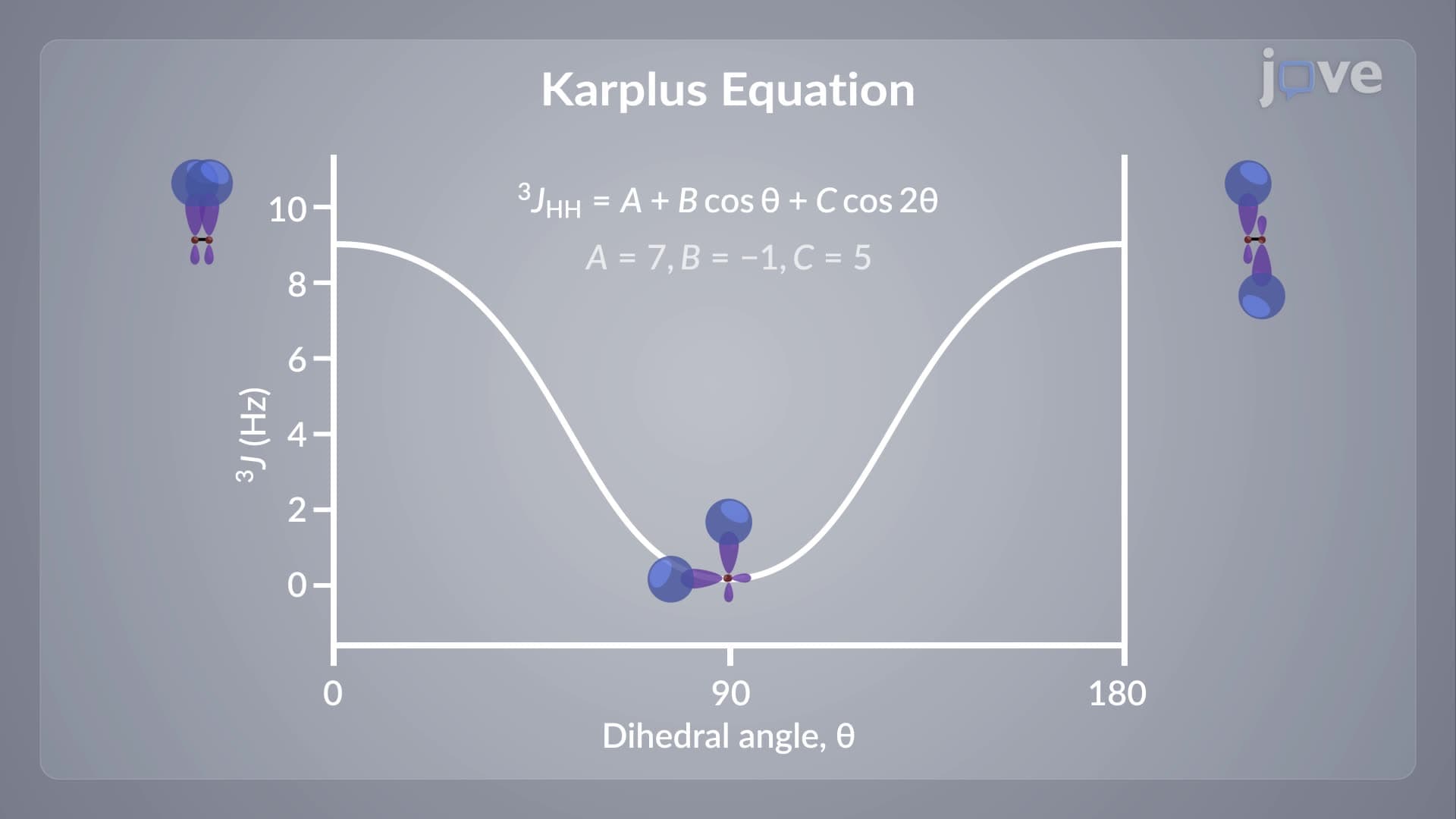
Yes! Three-bond (vicinal) coupling naturally follows geminal coupling in most organic chemistry curricula. Understanding 2J coupling provides the foundation for comprehending 3J coupling mechanisms, stereochemical relationships, and advanced topics like long-range coupling in aromatic systems.
Advanced applications use temperature-dependent geminal coupling studies to investigate conformational exchange rates and molecular flexibility. While beyond introductory courses, this connection highlights how fundamental NMR concepts extend into cutting-edge research areas like protein folding and drug-target interactions.
Related Micro-courses


Related Subjects
 Chemistry 21 micro-courses›
 Organic Chemistry 21 micro-courses›