Loading…
Loading video…

201,008 views
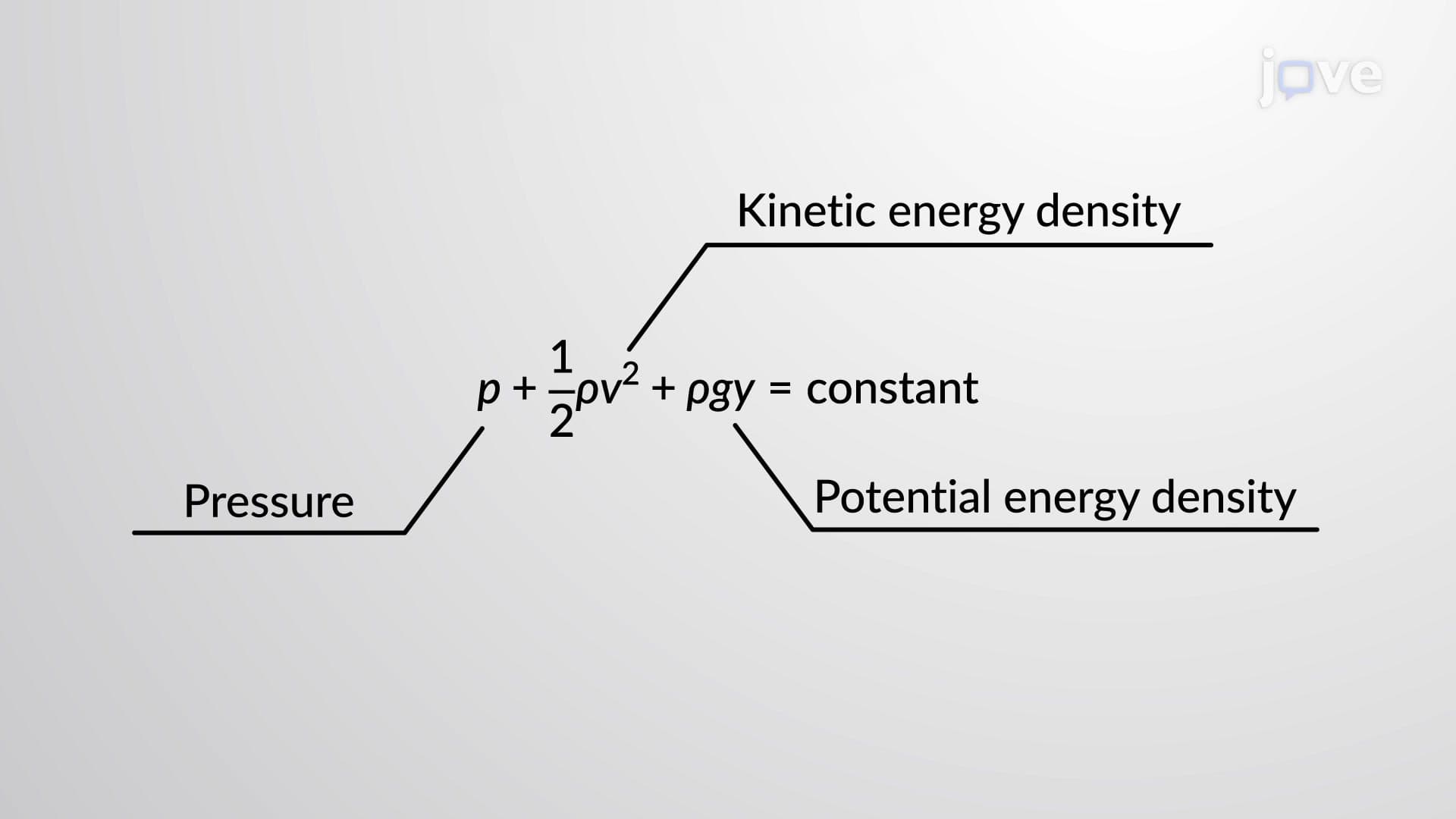
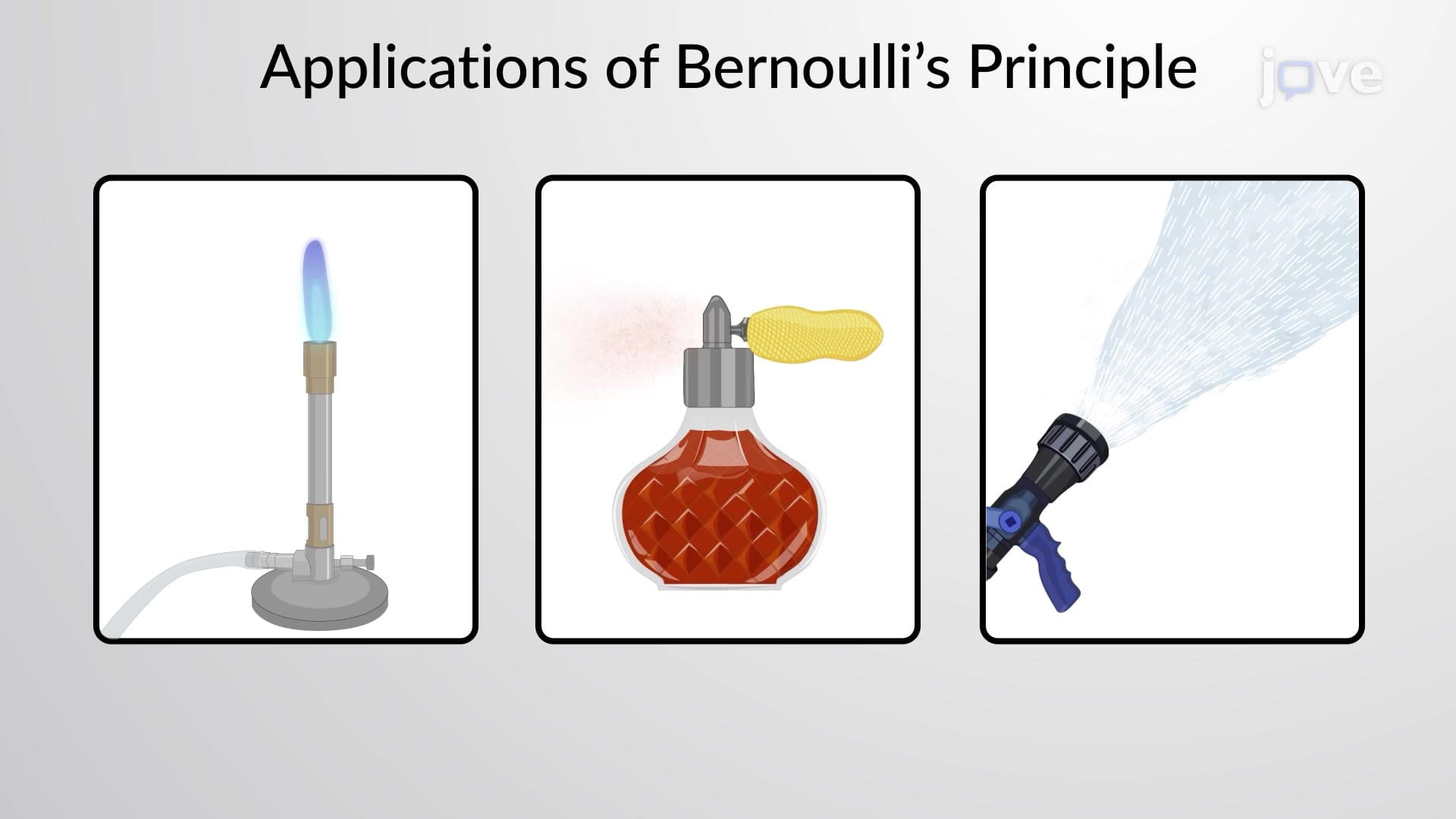
Ever wonder how airplane wings generate lift or why a curveball curves in baseball? Energy conservation and Bernoulli's equation explains these phenomena by revealing how fluid pressure drops as velocity increases. This fundamental principle governs everything from the Venturi effect in NASCAR carburetors to blood flow through arteries in cardiovascular medicine. The Energy Conservation And Bernoulli's Equation Tutorial demonstrates how mass conservation and energy principles combine to create one of fluid mechanics' most powerful equations. Watch the full video on JoVE Coach to master this concept with expert-led visuals and step-by-step explanations.
The energy conservation and Bernoulli's equation represents one of fluid mechanics' cornerstone principles, describing how energy transforms within flowing fluids. Unlike static fluids where pressure increases with depth, moving fluids exhibit complex energy exchanges between kinetic energy (motion), potential energy (elevation), and pressure energy (internal fluid forces).
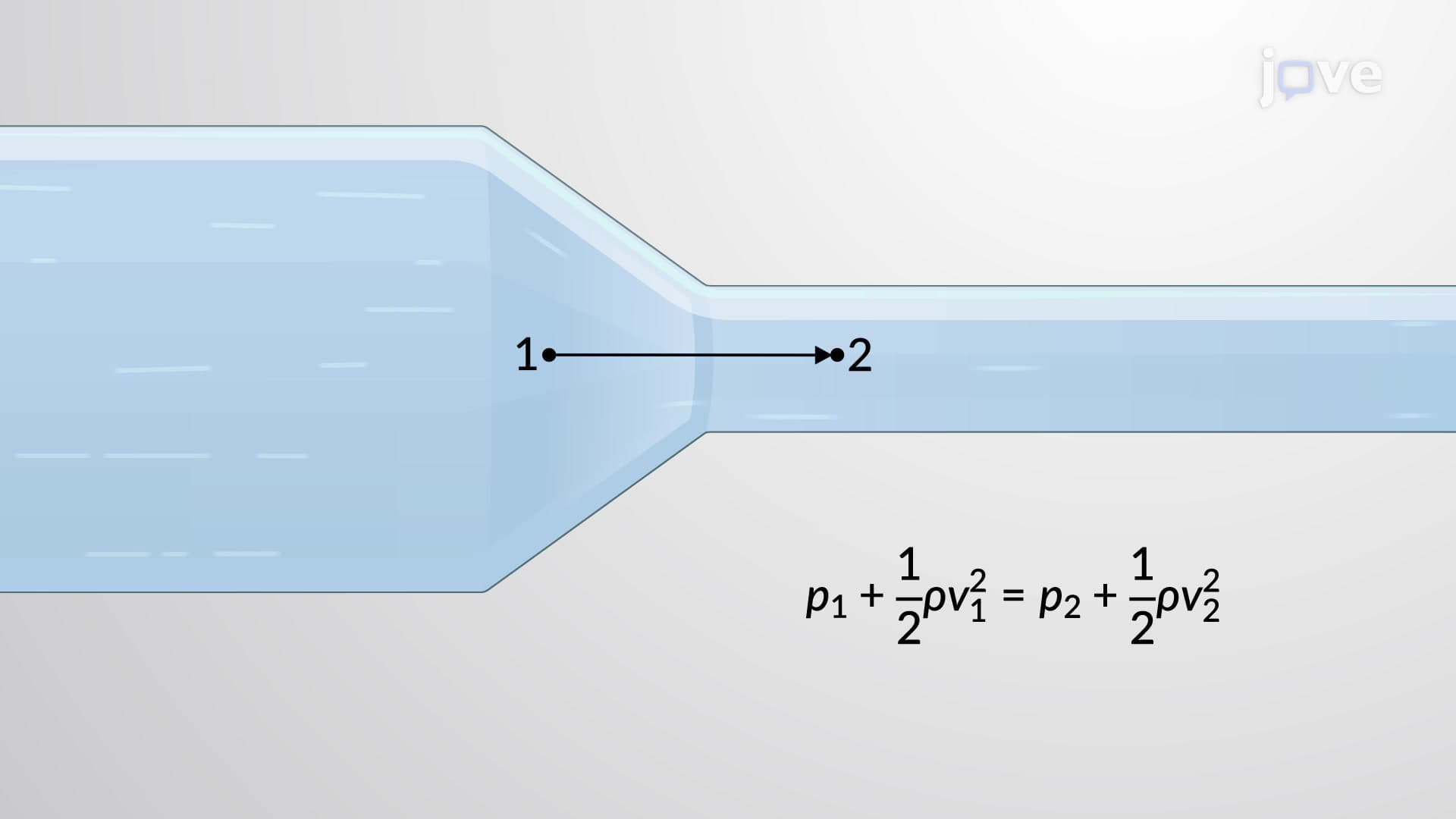
Bernoulli's equation emerges from applying the work-energy theorem to fluid elements. As incompressible fluid flows through varying cross-sections, the continuity equation (A₁v₁ = A₂v₂) ensures mass conservation. When cross-sectional area decreases, velocity increases proportionally. The work-energy theorem states that net work equals kinetic energy change: W(net) = ΔKE.
Pressure forces perform work on fluid elements during displacement. At tube entrance, pressure P₁ does positive work, while exit pressure P₂ does negative work. Net pressure work equals (P₁ - P₂)V, where V represents fluid element volume. Gravitational work during elevation changes equals -mg(h₂ - h₁), representing potential energy change.
Aviation engineering relies heavily on Bernoulli's principle for wing design. Boeing and Lockheed Martin engineers use these equations to optimize airfoil shapes, creating pressure differentials that generate lift. The faster airflow over curved wing tops creates lower pressure than slower-moving air beneath wings.
Medical applications include blood pressure monitoring and cardiovascular diagnostics. Emergency room physicians at hospitals like Mayo Clinic and Johns Hopkins use Doppler ultrasound devices based on Bernoulli's equation to detect arterial blockages. When blood flows through narrowed arteries, velocity increases while pressure drops, indicating potential cardiovascular issues.
Students encounter energy conservation and Bernoulli's equation concepts extensively in AP Physics courses, particularly AP Physics C: Mechanics. The College Board frequently includes Bernoulli's equation problems on AP exams, testing students' ability to apply conservation principles to fluid systems. MCAT preparation also emphasizes these concepts within physics passages, often linking fluid mechanics to biological systems like respiratory function and circulatory dynamics.
College-level courses at institutions like MIT, Stanford, and UC Berkeley expand upon basic Bernoulli applications, incorporating viscous effects and compressible flow theory. Engineering students use computational fluid dynamics software to model complex systems where simplified Bernoulli equations provide foundational understanding.
Frequently Asked Questions
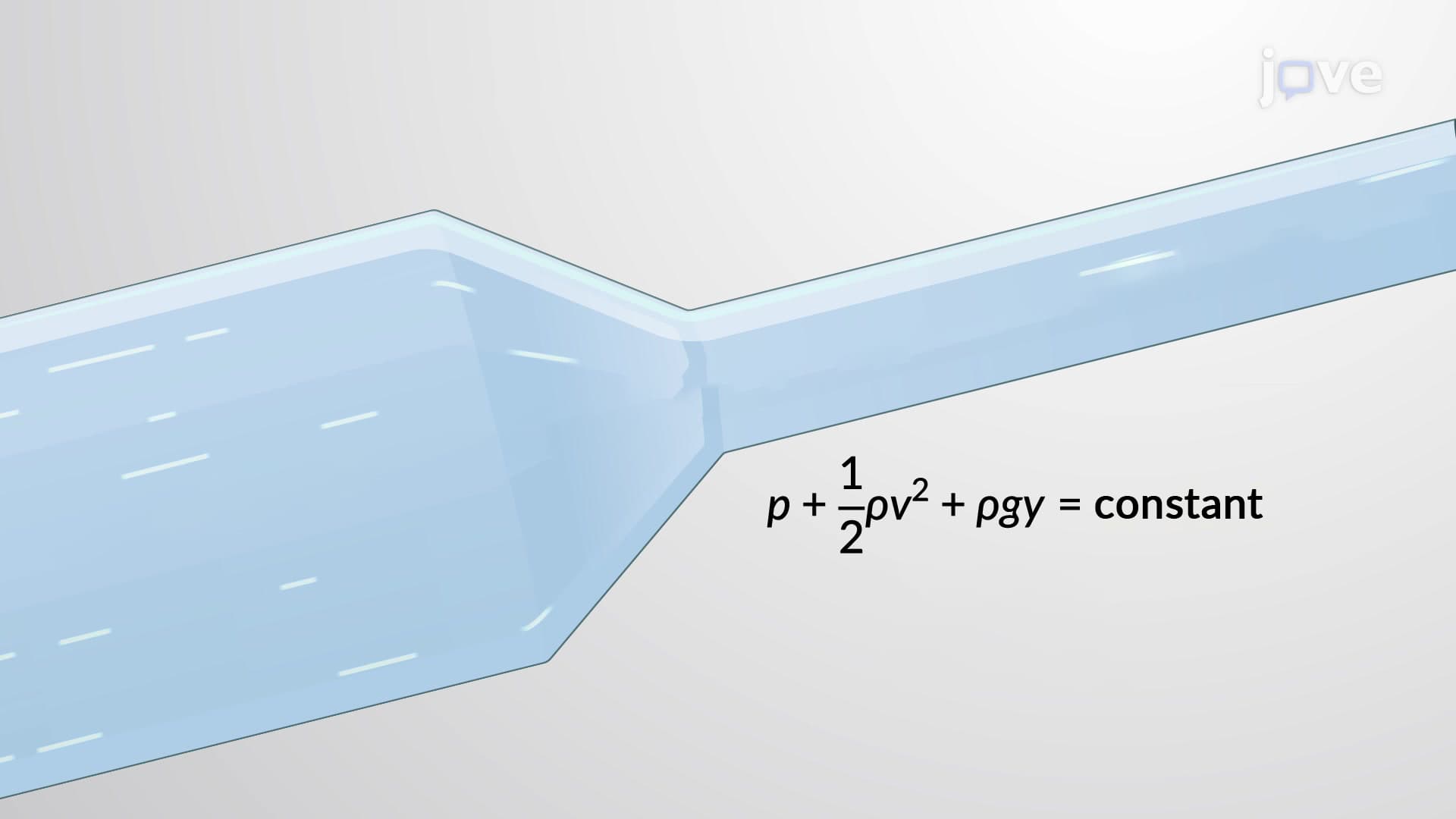
Energy conservation and Bernoulli's equation states that total mechanical energy per unit volume remains constant along a streamline in flowing fluid. It combines kinetic energy (½ρv²), potential energy (ρgh), and pressure energy (P) into one unified expression: P + ½ρv² + ρgh = constant.
AP Physics C exams frequently present scenarios involving fluid flow through pipes, nozzles, or around objects like airplane wings. Students must identify which energy terms change and apply conservation principles to solve for unknown pressures, velocities, or elevations at different points.
Yes, MCAT physics passages often incorporate Bernoulli's principle within biological contexts, such as blood flow through vessels or air movement in respiratory systems. These questions test conceptual understanding rather than complex calculations, focusing on relationships between pressure, velocity, and fluid behavior.
NASCAR racing showcases Bernoulli's principle through carburetor Venturi tubes that mix air and fuel efficiently. Additionally, Niagara Falls hydroelectric plants utilize these concepts in turbine design, where water velocity increases through narrowed channels, converting potential energy into kinetic energy for power generation.
Not necessarily - while the mathematical derivation involves calculus, the core concept builds on familiar energy conservation principles from introductory physics. Students who understand kinetic and potential energy typically grasp Bernoulli's equation with proper visual aids and step-by-step examples.
Focus on identifying energy transformations rather than memorizing formulas. Practice drawing streamlines and labeling energy components at different points. Work through aviation and plumbing examples to build intuitive understanding before tackling complex mathematical problems.
Advanced fluid mechanics topics include viscous flow effects, compressible gas dynamics, and computational fluid dynamics (CFD). Students interested in aerospace engineering might explore supersonic flow theory, while pre-med students could investigate cardiovascular fluid mechanics and respiratory physiology applications.
Related Micro-courses
Related Subjects
 Math Fundamentals 11 micro-courses›
 Statistics 17 micro-courses›