Loading…
Loading video…

201,008 views
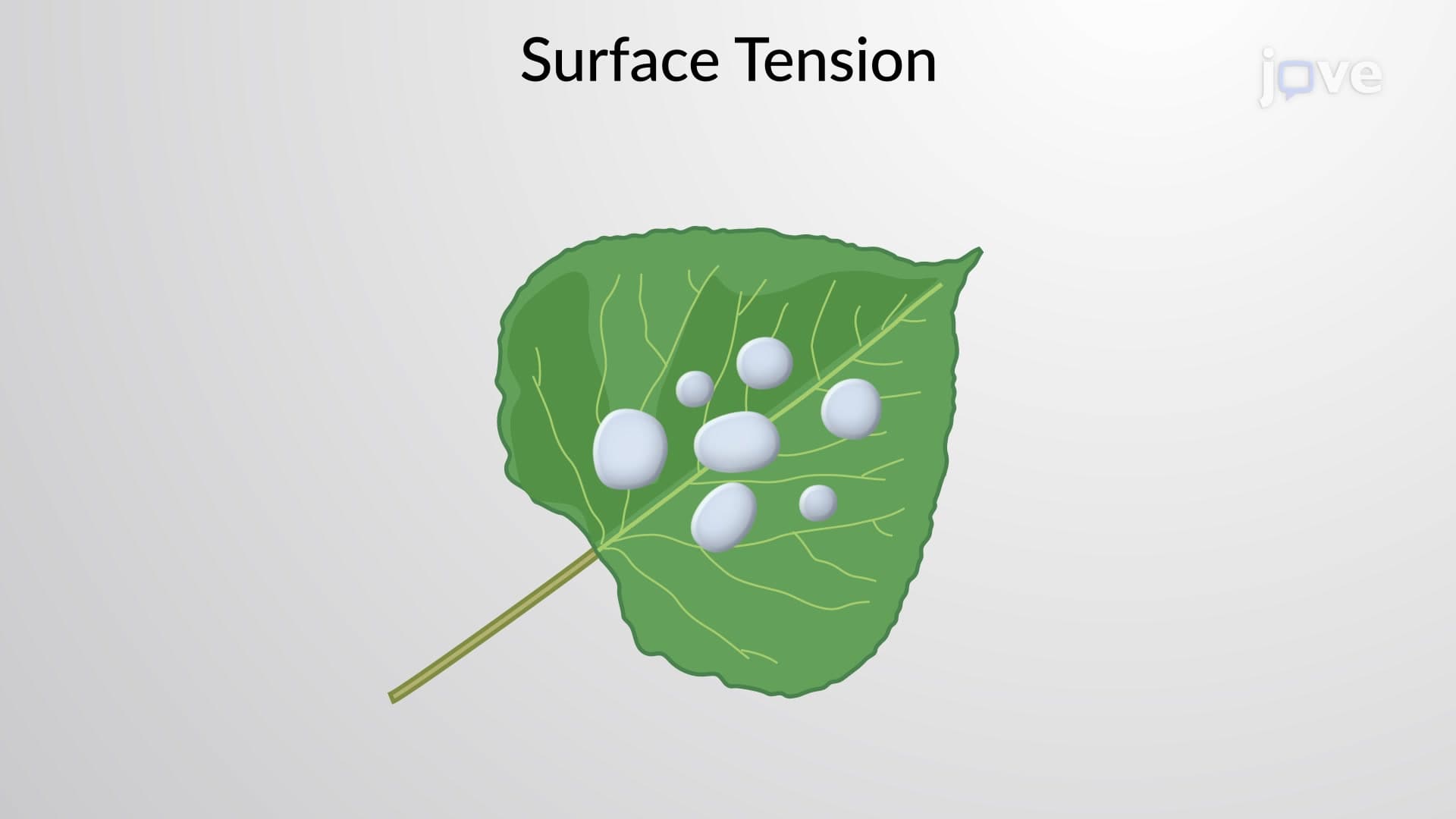
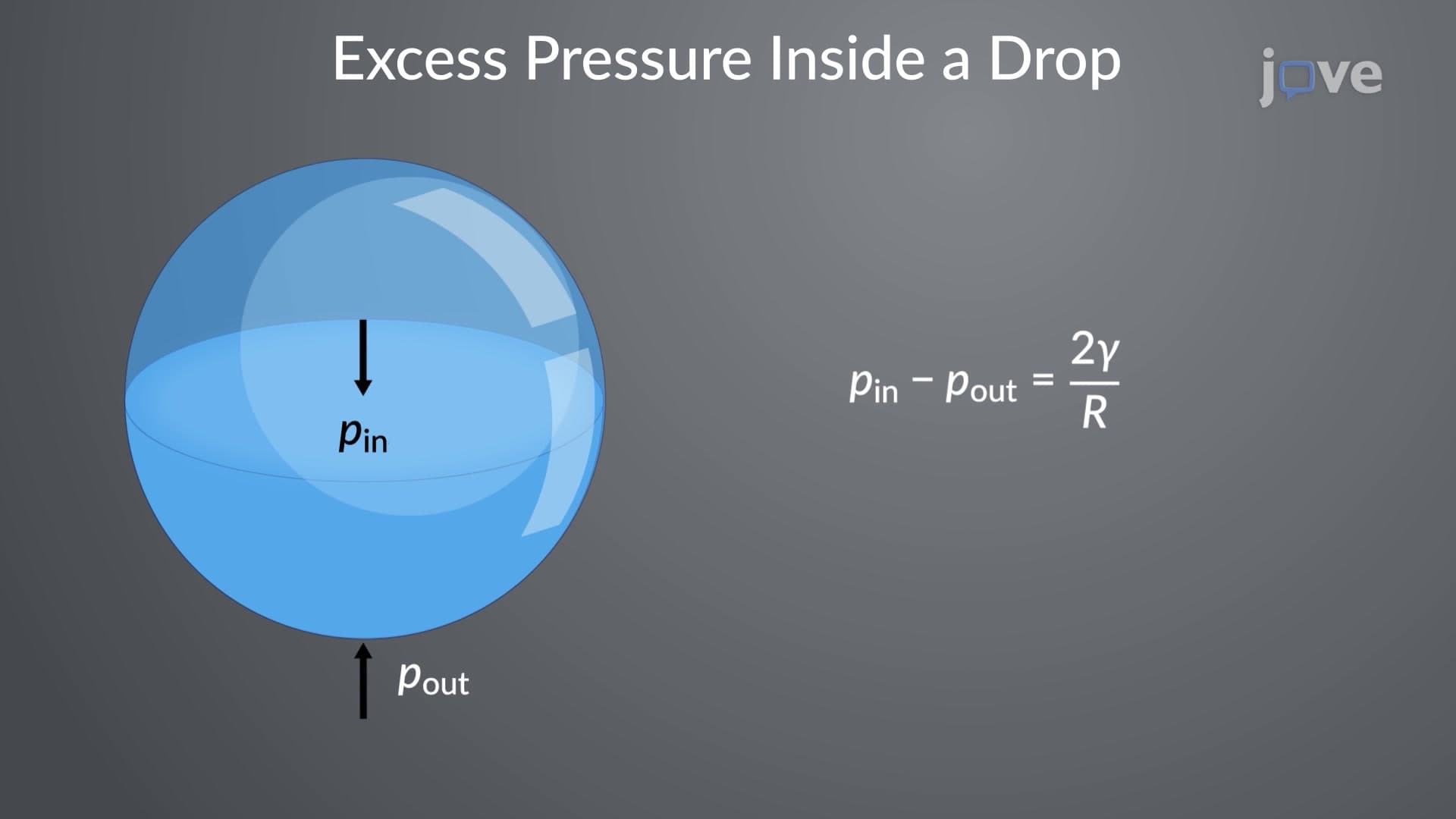
Ever wonder why raindrops form perfect spheres or how water striders walk on water? Surface tension and surface energy explain these fascinating phenomena that occur when liquid molecules at the surface experience different forces than those in the bulk. In everyday life, you see this when soap bubbles maintain their round shape or when you carefully overfill a glass and water forms a dome above the rim. Watch the full video on JoVE Coach to master this concept with expert-led visuals and step-by-step explanations.
Surface tension represents one of the most observable yet misunderstood phenomena in physics and chemistry. At the molecular level, this property emerges from the fundamental difference in how molecules behave at liquid surfaces versus within the bulk liquid. Interior molecules experience symmetric attractive forces from surrounding neighbors, creating a balanced molecular environment. However, surface molecules face an asymmetric situation—they have fewer neighboring molecules above them, creating a net inward force that pulls them toward the liquid's interior.
This asymmetric force distribution has profound energy implications. Moving molecules from the bulk liquid to the surface requires work against these attractive forces, similar to stretching a spring. This work increases the potential energy of surface molecules, creating what scientists call surface energy. The higher energy state of surface molecules explains why liquids naturally minimize their surface area—they're seeking the lowest possible energy configuration.
Students preparing for AP Chemistry or college physical chemistry courses should understand that surface energy represents stored potential energy per unit area. This concept frequently appears on standardized tests, including MCAT questions about biological membranes and AP Physics problems involving droplet formation.
Surface tension affects countless processes in American industries and daily life. In medical device manufacturing, understanding surface tension helps engineers design better drug delivery systems and diagnostic equipment. The pharmaceutical industry relies on surface tension principles for tablet coating and liquid medication formulation. Even in food science, surface tension influences how salad dressings mix and how bread dough rises.
Consider the soap bubble demonstration described in the source material. When you pull the sliding wire frame, you're performing work against surface tension forces. This work directly converts to increased surface energy as the bubble's area expands. The force required per unit length gives you a direct measurement of surface tension, typically expressed in newtons per meter or dynes per centimeter.
For students tackling college-level physics or chemistry labs, understanding the dual nature of surface tension proves crucial. It functions both as a force (measured in force per unit length) and as energy (measured in energy per unit area). These seemingly different quantities have identical numerical values, demonstrating the deep connection between mechanical and thermodynamic perspectives on surface phenomena. This relationship frequently appears in undergraduate thermodynamics courses and graduate-level materials science programs.
Frequently Asked Questions
Surface tension is the force that makes liquid surfaces behave like a stretched membrane, while surface energy is the extra energy stored in surface molecules. These molecules experience unequal forces compared to interior molecules, creating a net inward pull. This explains why water forms droplets and why you can slightly overfill a glass without spilling.
AP Chemistry tests often include surface tension in intermolecular forces units, asking students to predict relative surface tensions based on molecular structure. MCAT passages frequently connect surface tension to biological membranes and drug delivery mechanisms. College organic chemistry exams commonly test how molecular polarity affects surface properties.
Physical chemistry, materials science, and fluid mechanics courses extensively cover these concepts. Students typically encounter mathematical treatments in thermodynamics classes and practical applications in chemical engineering coursework. Many undergraduate research programs explore surface phenomena in nanotechnology and biotechnology applications.
Surface tension influences everything from dishwashing soap effectiveness to contact lens comfort and paint application smoothness. Cosmetic companies manipulate surface tension to create better makeup formulations, while automotive manufacturers use it to improve windshield wiper performance and paint adhesion.
Not at all! While the molecular explanations require some chemistry background, the basic concepts are very intuitive since you observe surface tension daily. Starting with familiar examples like water droplets and soap bubbles makes the underlying science much more accessible.
Focus on connecting molecular behavior to observable phenomena, practice unit conversions between different measurement systems, and work through quantitative problems involving surface area calculations. Create concept maps linking surface tension to intermolecular forces, thermodynamics, and real-world applications.
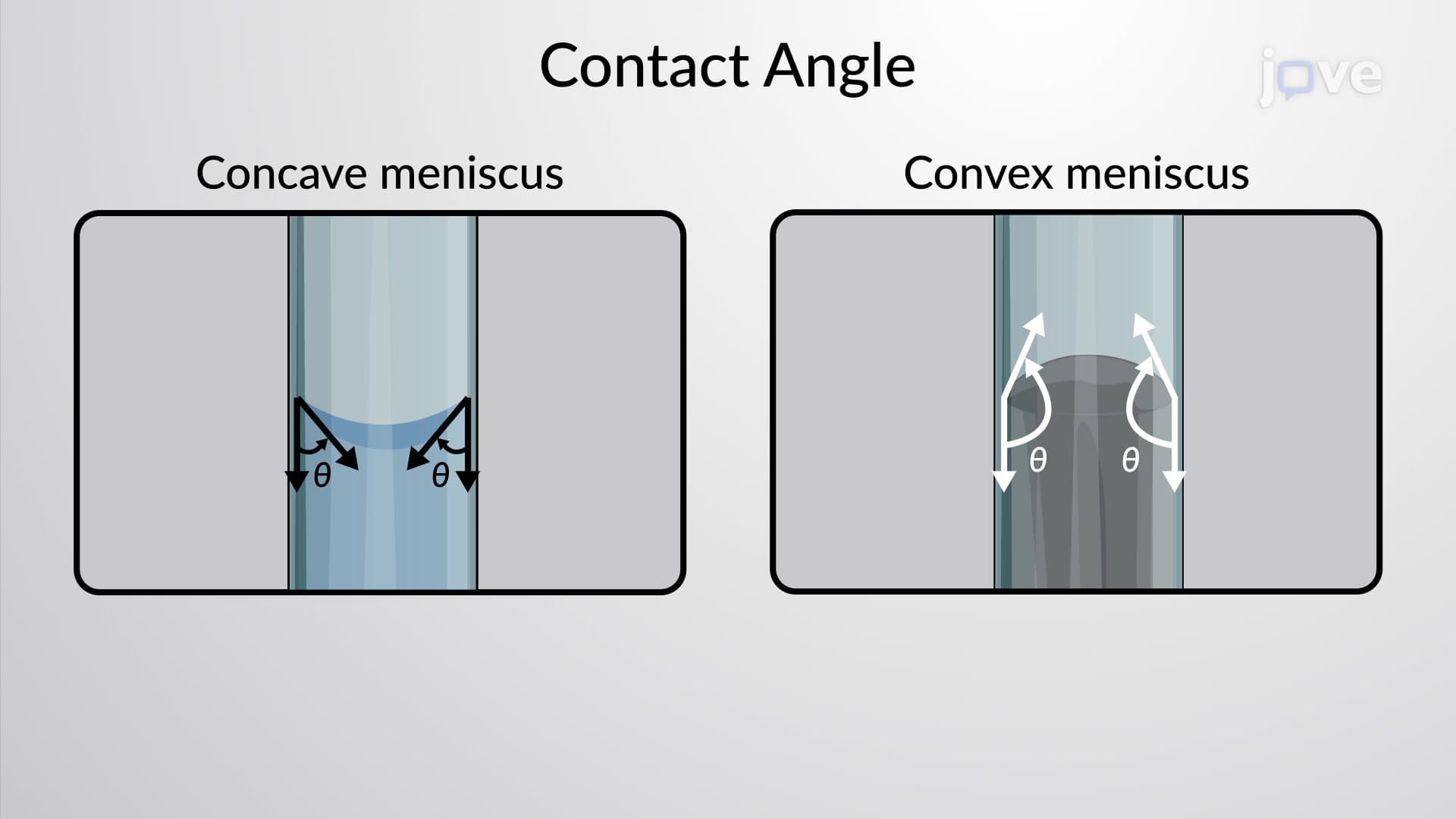
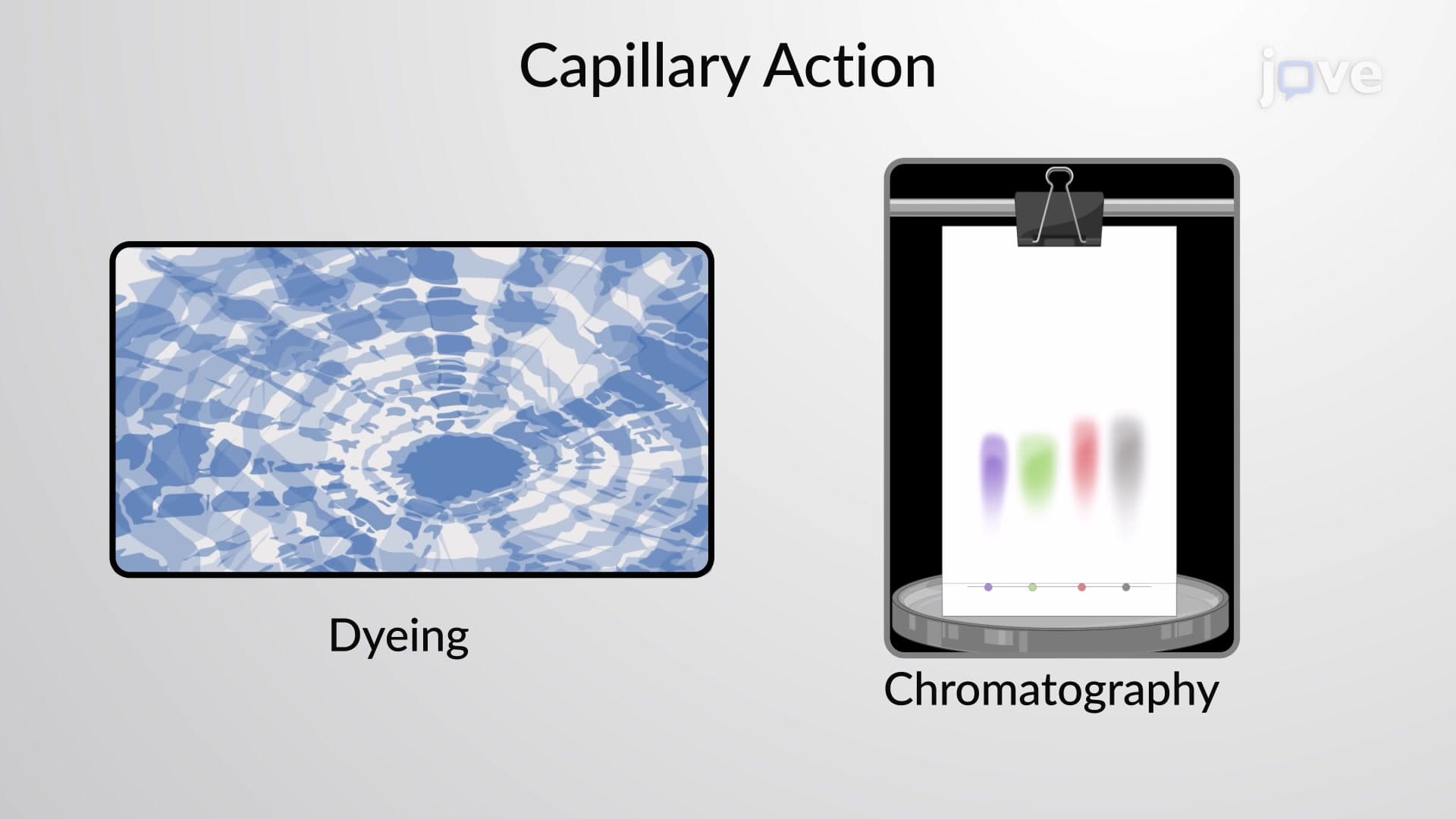
Capillary action, wetting phenomena, and adhesion/cohesion lead naturally from basic surface tension. Advanced students often explore surfactant chemistry, membrane biophysics, and materials science applications. These concepts prove essential for pre-medical students and engineering majors.
American manufacturing uses tensiometers, pendant drop methods, and Wilhelmy plate techniques for precise measurements. Quality control in pharmaceutical, food, and cosmetics industries relies on surface tension specifications to ensure product consistency and performance.
Related Micro-courses
Related Subjects
 Math Fundamentals 11 micro-courses›
 Statistics 17 micro-courses›