Loading…
Loading video…

201,008 views
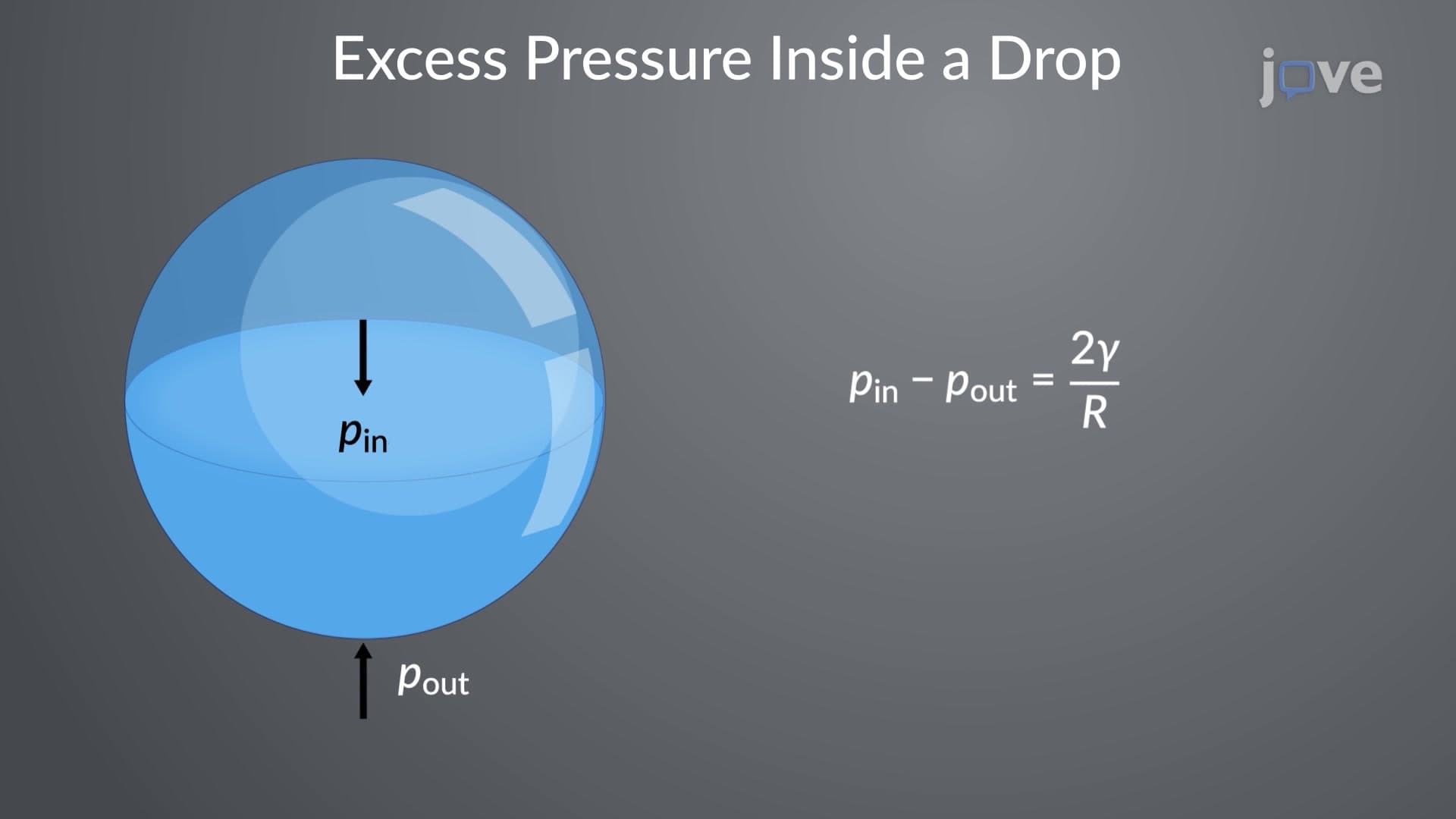
Ever wonder why raindrops hold their perfect spherical shape as they fall from Seattle's cloudy skies? The excess pressure inside a drop creates a fascinating balance of forces that keeps liquid drops intact despite gravity and air resistance. This pressure difference occurs when surface tension forces compete with internal liquid pressure and external air pressure in droplets ranging from morning dew to pharmaceutical aerosols used in US hospitals. Watch the full video on JoVE Coach to master this concept with expert-led visuals and step-by-step explanations.
The physics behind excess pressure inside a drop reveals why tiny liquid spheres maintain their shape against external forces. When we examine a spherical drop, we discover that the pressure inside exceeds the external air pressure by a measurable amount. This pressure difference, known as excess pressure, results from surface tension acting along the curved liquid-air interface.
Surface tension creates an inward force that attempts to minimize the drop's surface area, naturally forming a sphere—the shape with the minimum surface area for a given volume. Consider two hemispheres of a liquid drop: surface tension forces pull these hemispheres together, while internal liquid pressure pushes outward and external air pressure pushes inward. At equilibrium, these competing forces balance perfectly.
The mathematical expression for this balance leads to the Young-Laplace equation: ΔP = 2γ/R, where ΔP represents excess pressure, γ is surface tension, and R is the drop radius. This fundamental relationship appears frequently on AP Physics exams and college-level thermodynamics courses, making it essential for students preparing for standardized tests.
Two primary variables control excess pressure magnitude in liquid drops. First, surface tension strength directly influences pressure difference—mercury drops exhibit much higher excess pressure than water drops of identical size due to mercury's superior surface tension properties. This principle explains why mercury forms nearly perfect spheres on glass surfaces in laboratory settings across US universities.
Second, drop radius inversely affects excess pressure. Smaller drops experience dramatically higher internal pressures, which explains why fine mist sprayers used in agricultural applications across states like California create more uniform coatings than larger droplet systems. Medical nebulizers exploit this same principle to deliver medications efficiently to patients' respiratory systems.
The excess pressure concept extends beyond simple drops to air bubbles and soap bubbles. Air bubbles trapped in liquids follow identical principles, with higher internal pressure than surrounding liquid pressure. Soap bubbles present more complex scenarios because they possess two surfaces—inner and outer—each contributing to total excess pressure, resulting in ΔP = 4γ/R for soap bubbles versus 2γ/R for simple drops.
Frequently Asked Questions
Excess pressure inside a drop is the pressure difference between the liquid inside and air outside due to surface tension forces. Surface tension creates inward forces along the curved interface, requiring higher internal pressure to maintain equilibrium. This phenomenon occurs in all spherical liquid drops, from raindrops to industrial spray applications.
AP Physics C exams frequently test the Young-Laplace equation (ΔP = 2γ/R) in fluid mechanics problems. Students must calculate pressure differences, compare drops of different sizes or liquids, and analyze bubble formation scenarios. These problems often combine with thermodynamics concepts in comprehensive exam questions.
MCAT Physical Sciences sections include surface tension and pressure concepts, particularly in biological contexts like lung surfactant function and cellular membrane physics. Understanding excess pressure helps explain how alveolar stability depends on surfactant reducing surface tension. This knowledge connects to respiratory physiology questions.
Medical nebulizers and inhalers rely on excess pressure principles to create optimal droplet sizes for drug delivery. Smaller droplets (higher excess pressure) penetrate deeper into lungs, while larger droplets deposit in upper airways. US hospitals use this physics to customize treatments for asthma and COPD patients.
The basic concept requires only algebra and understanding of pressure, surface tension, and equilibrium forces. High school students can grasp the qualitative relationships, while college students apply calculus for derivations. The key insight—curved surfaces create pressure differences—builds on familiar concepts like tire pressure.
Start with qualitative understanding of why curved interfaces create pressure differences, then practice the Young-Laplace equation with various scenarios. Focus on identifying whether problems involve drops (one surface) or bubbles (two surfaces). Create comparison charts showing how radius and surface tension affect excess pressure.
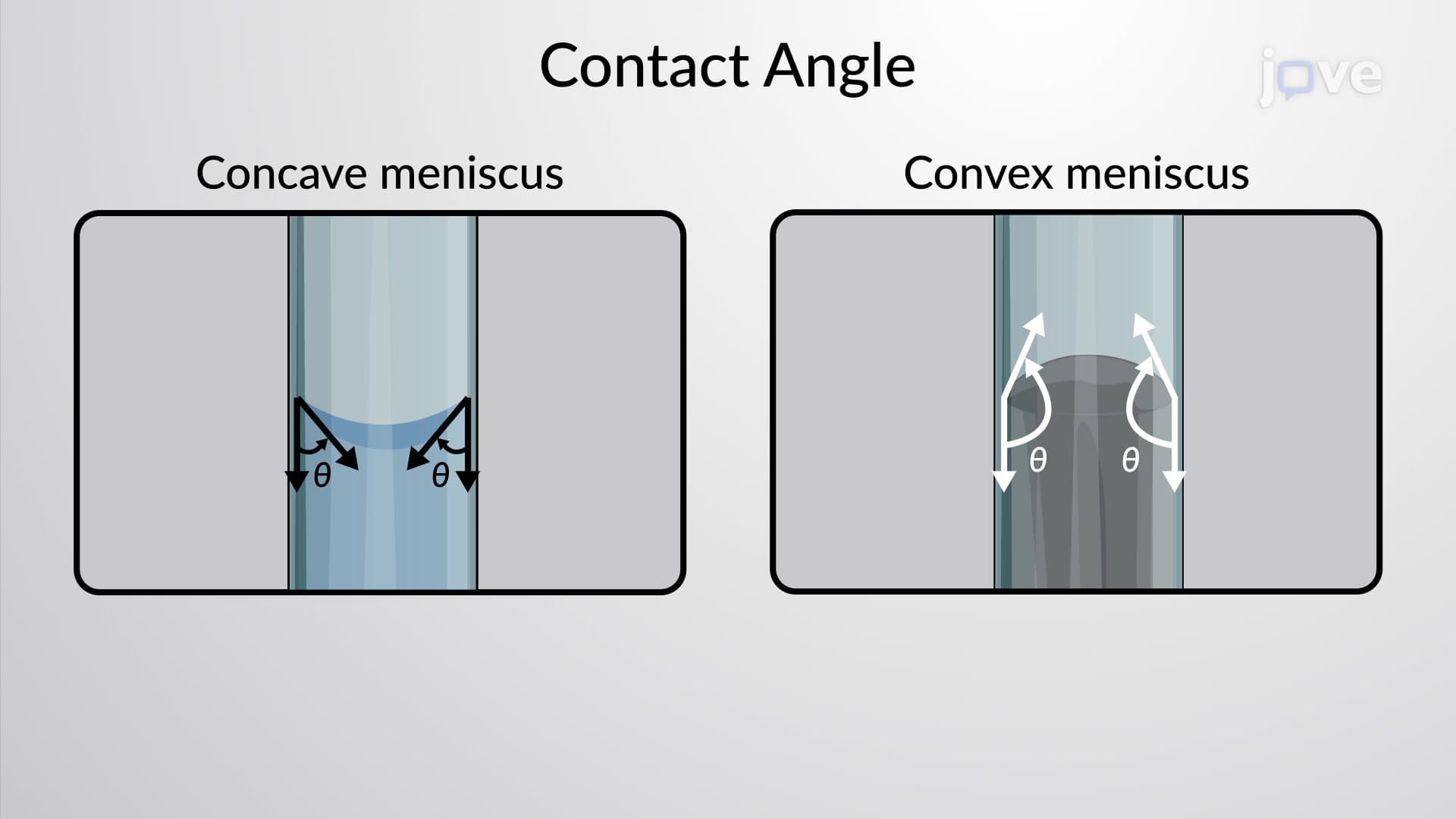
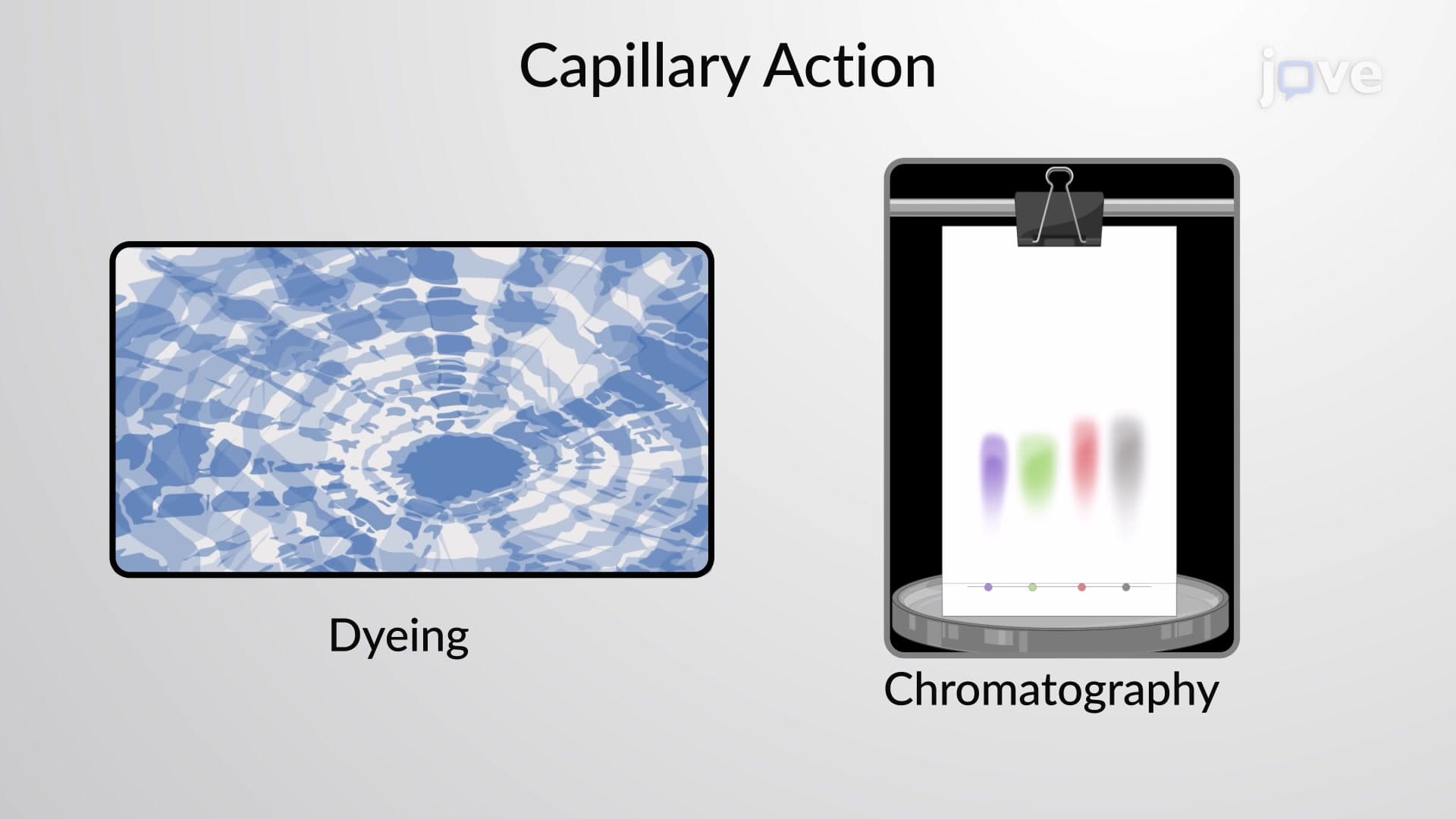
Advanced fluid mechanics explores contact angles, wetting behavior, and capillary action building on excess pressure concepts. Materials science examines how surface tension affects nanoparticle formation and stability. Biophysics applies these principles to cell membrane mechanics and protein folding studies in graduate-level coursework.
Use the "surface counting" method: simple drops have one liquid-air interface (ΔP = 2γ/R), while soap bubbles have two surfaces—inner and outer—doubling the effect (ΔP = 4γ/R). Air bubbles in liquids follow the single-surface rule like drops, maintaining consistency across applications.
Related Micro-courses
Related Subjects
 Math Fundamentals 11 micro-courses›
 Statistics 17 micro-courses›