Loading video…

 9 Concepts
 2K views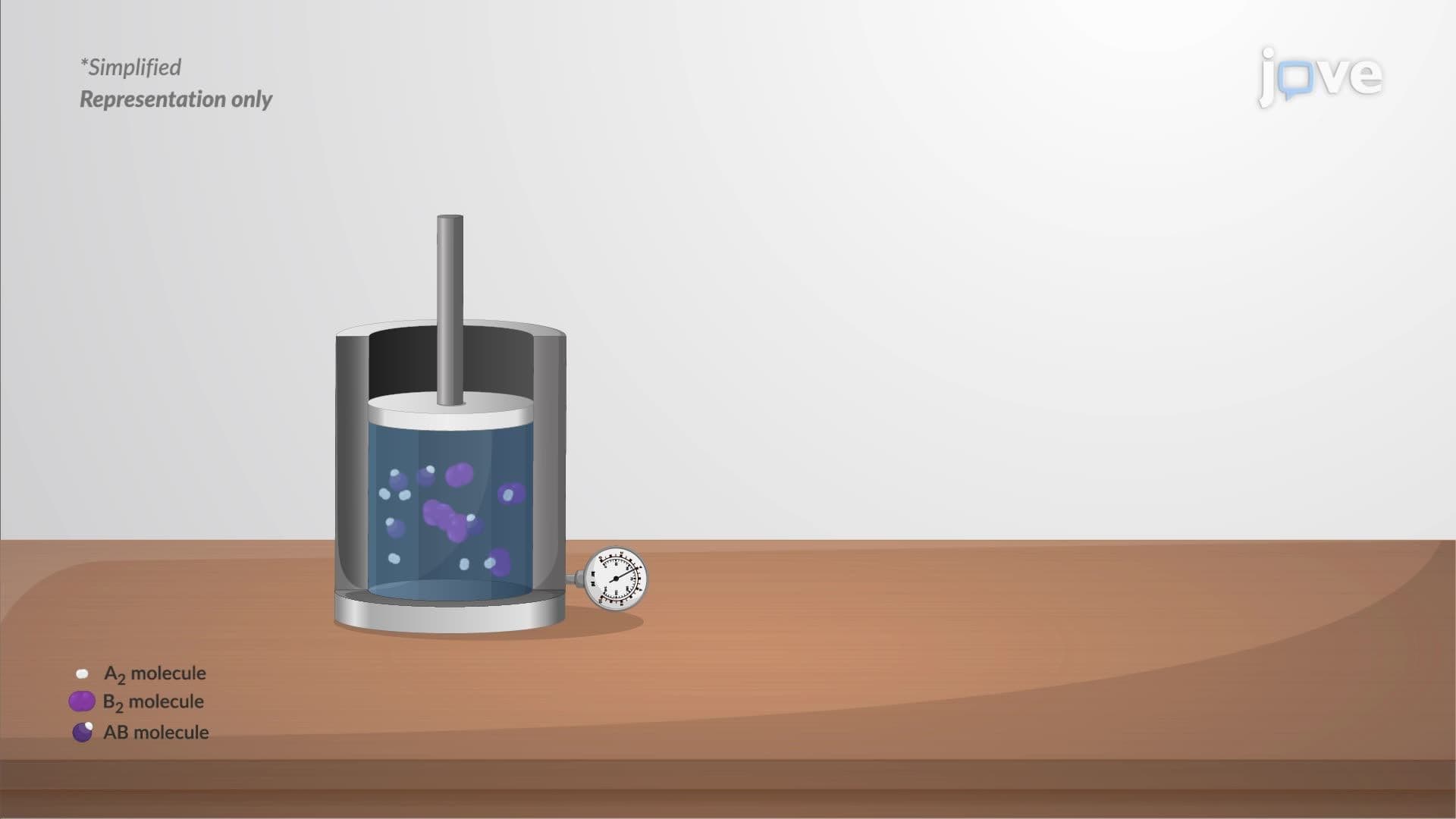

Video Summary: Reactions at Equilibrium and the Equilibrium Constant Explained
Did you know that even reactions that appear "stopped" are actually happening continuously in both directions? Understanding reactions at equilibrium and the equilibrium constant is essential for explaining everything from industrial ammonia production in US chemical plants to how your blood maintains pH. The equilibrium constant K and the reaction quotient Q reveal whether a reaction favors products or reactants under any condition. Watch the full video on JoVE Coach to master this concept with expert-led visuals and step-by-step explanations.
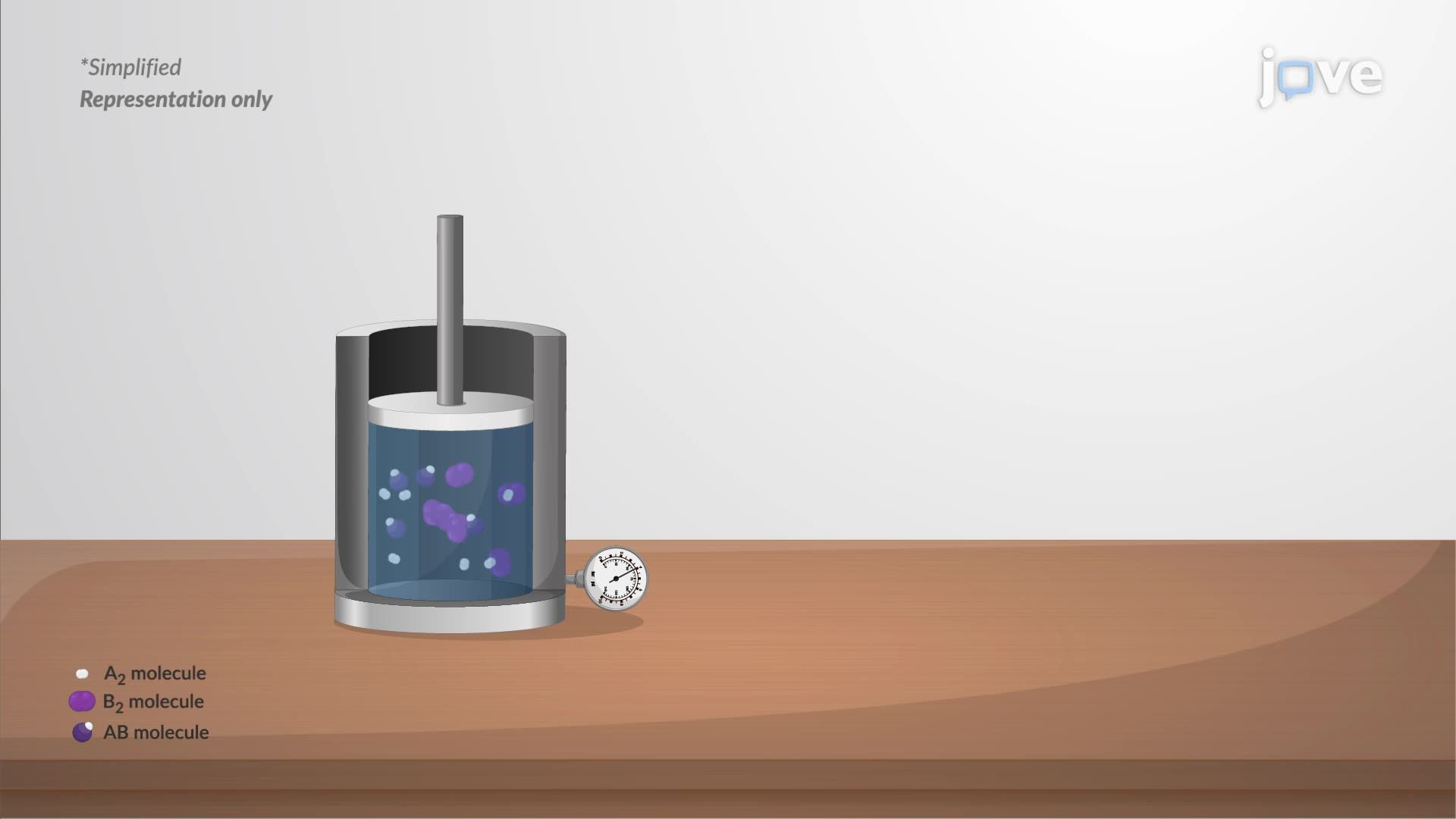
Most students first encounter equilibrium thinking about a tug-of-war, two equal and opposing forces resulting in no net movement. Chemical equilibrium works similarly, but at the molecular level. At equilibrium, the forward and reverse reactions occur at equal rates, so the macroscopic concentrations of reactants and products remain constant. This does NOT mean the reaction has stopped. Understanding reactions at equilibrium and the equilibrium constant is a cornerstone of general chemistry, tested extensively on the AP Chemistry exam and college-level courses across the US.
The equilibrium constant K is mathematically defined using the concentrations (or pressures) of products divided by those of reactants, with each term raised to the power of its coefficient in the balanced chemical equation. For a general reaction aA + bB ⇌ cC + dD, this expression is written as:
K = [C]^c [D]^d / [A]^a [B]^b
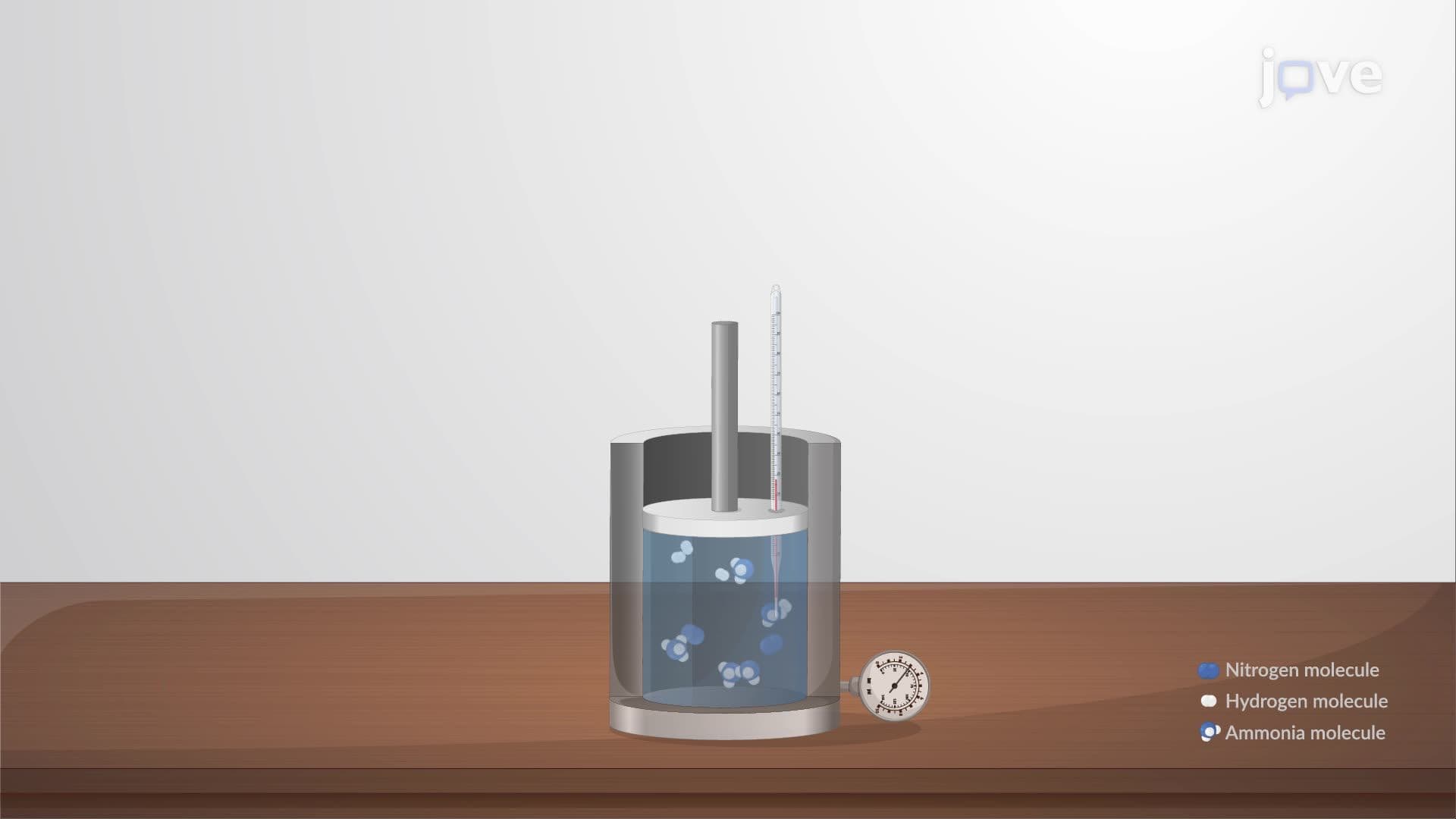
A large K value (K >> 1) means the equilibrium position lies far to the right, products dominate at equilibrium. A small K value (K << 1) indicates the reaction barely proceeds and reactants dominate. When K ≈ 1, both reactants and products are present in comparable amounts. For example, the Haber process used in US fertilizer manufacturing to synthesize ammonia (N2 + 3H2 ⇌ 2NH3) is carefully optimized around K values at specific temperatures to maximize yield.
While K describes the system at equilibrium, the reaction quotient Q has the same mathematical form as K but can be calculated at *any* point during a reaction. Comparing Q to K tells chemists exactly what the system will do next:
This comparison is a highly testable concept on AP Chemistry free-response questions and college midterms. Think of Q as a GPS "current location" and K as the "destination."
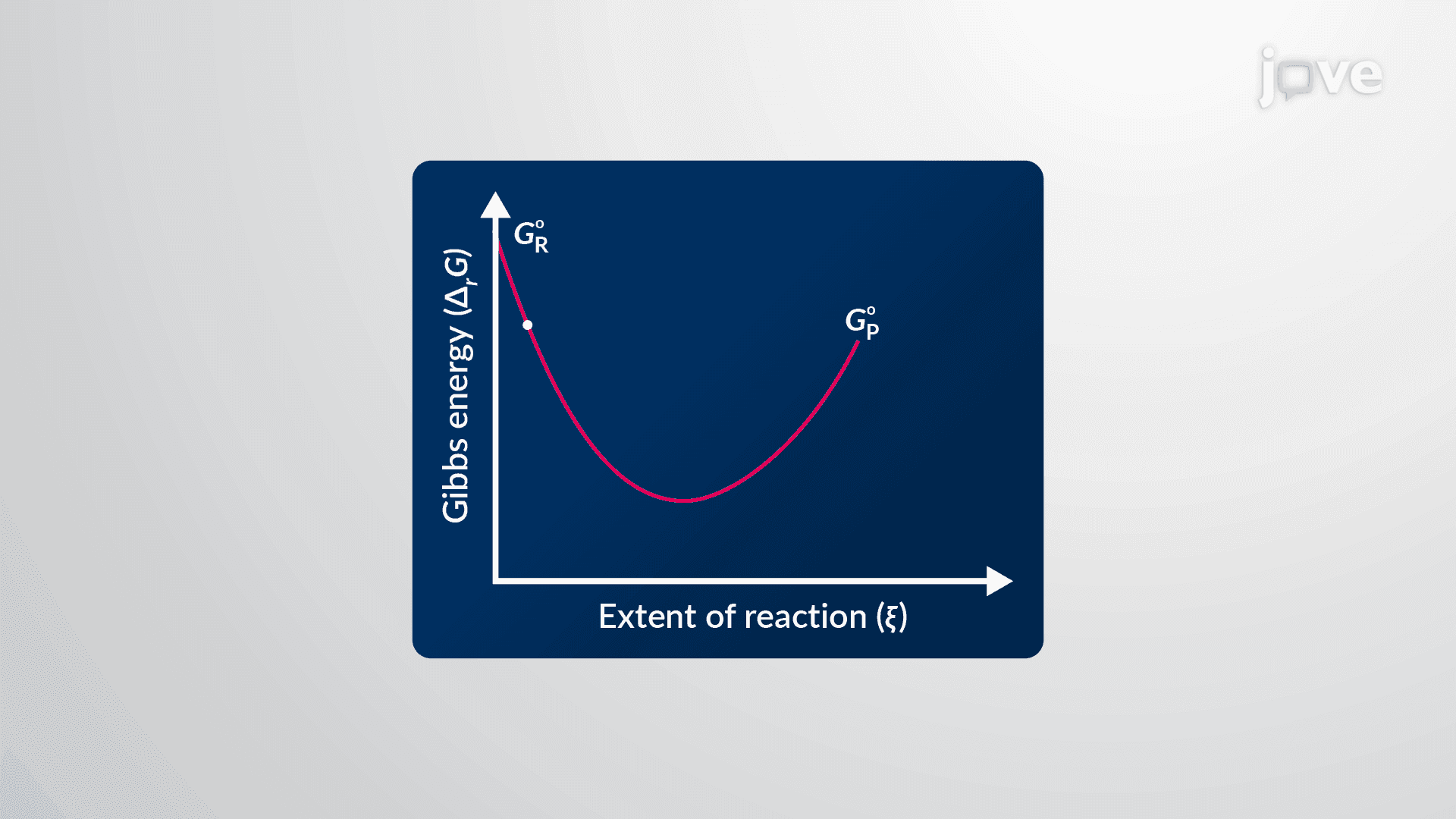
The deeper thermodynamic story lies in the relationship between Gibbs free energy and the equilibrium constant. The standard Gibbs free energy change ΔrG° describes spontaneity under standard conditions (1 M concentration, 1 atm pressure), while ΔrG describes the system under *actual* current conditions. These two quantities are linked by:
ΔrG = ΔrG° + RT ln Q
At equilibrium, ΔrG = 0 and Q = K, which simplifies to the powerful equation:
ΔrG° = −RT ln K
This equation directly connects chemical thermodynamics to equilibrium position. A negative ΔrG° corresponds to K > 1 (products favored), while a positive ΔrG° corresponds to K < 1 (reactants favored). This relationship is tested on the MCAT's biochemistry and general chemistry sections, as well as in college physical chemistry and biochemistry courses throughout the US. Understanding it conceptually, not just mathematically, is what separates high-scoring students from the rest.
Related Micro-courses