Loading video…


 9 Concepts
 2K views

Video Summary: What Is the Reaction Gibbs Energy
Did you know a single sugar molecule powers nearly every process in your body, and it all comes down to Gibbs energy? The reaction Gibbs energy basics explain why some chemical reactions release usable energy while others require it. In US biology and chemistry classrooms, cellular respiration is the classic example: carbohydrate oxidation drives life itself. Understanding What is the Reaction Gibbs Energy unlocks how chemists predict spontaneity, equilibrium, and energy flow. Watch the full video on JoVE Coach to master this concept with expert-led visuals and step-by-step explanations.
The reaction Gibbs energy (abbreviated rG) is one of the most powerful tools in chemistry and biochemistry. It tells you whether a reaction will proceed spontaneously, require an energy input, or has reached equilibrium. Unlike simply asking "does this reaction release heat?", a question answered by enthalpy alone, rG accounts for both energy and entropy simultaneously, giving a more complete thermodynamic picture. For students in AP Chemistry or college-level general chemistry, mastering this concept is non-negotiable.
When rG is negative, a reaction is classified as exergonic, it releases free energy and proceeds spontaneously in the forward direction. Think of cellular respiration: when your body oxidizes glucose and other carbohydrates in your cells, the process is strongly exergonic. American biochemistry textbooks routinely cite this as the cell's primary energy strategy, producing ATP to power muscle contractions, nerve signals, and protein synthesis.
When rG is positive, the reaction is endergonic, it requires an energy input to proceed. The conversion of glucose to glucose-6-phosphate (the first step of glycolysis) is a textbook endergonic reaction. On its own, it won't happen spontaneously. Cells cleverly couple this reaction to ATP hydrolysis, an exergonic process, making the overall combined reaction spontaneous. This coupling strategy is central to understanding bioenergetics in MCAT preparation and college biochemistry courses.
For a general reversible reaction where a moles of A and b moles of B produce c moles of C and d moles of D, the standard reaction Gibbs energy is calculated as:
rG° = [c × G°(C) + d × G°(D)] − [a × G°(A) + b × G°(B)]
Each species contributes its standard molar Gibbs energy of formation, weighted by its stoichiometric coefficient. This formula appears directly on AP Chemistry free-response sections and college midterms nationwide. Standard conditions typically mean 298 K, 1 atm pressure, and 1 M concentration for solutions.
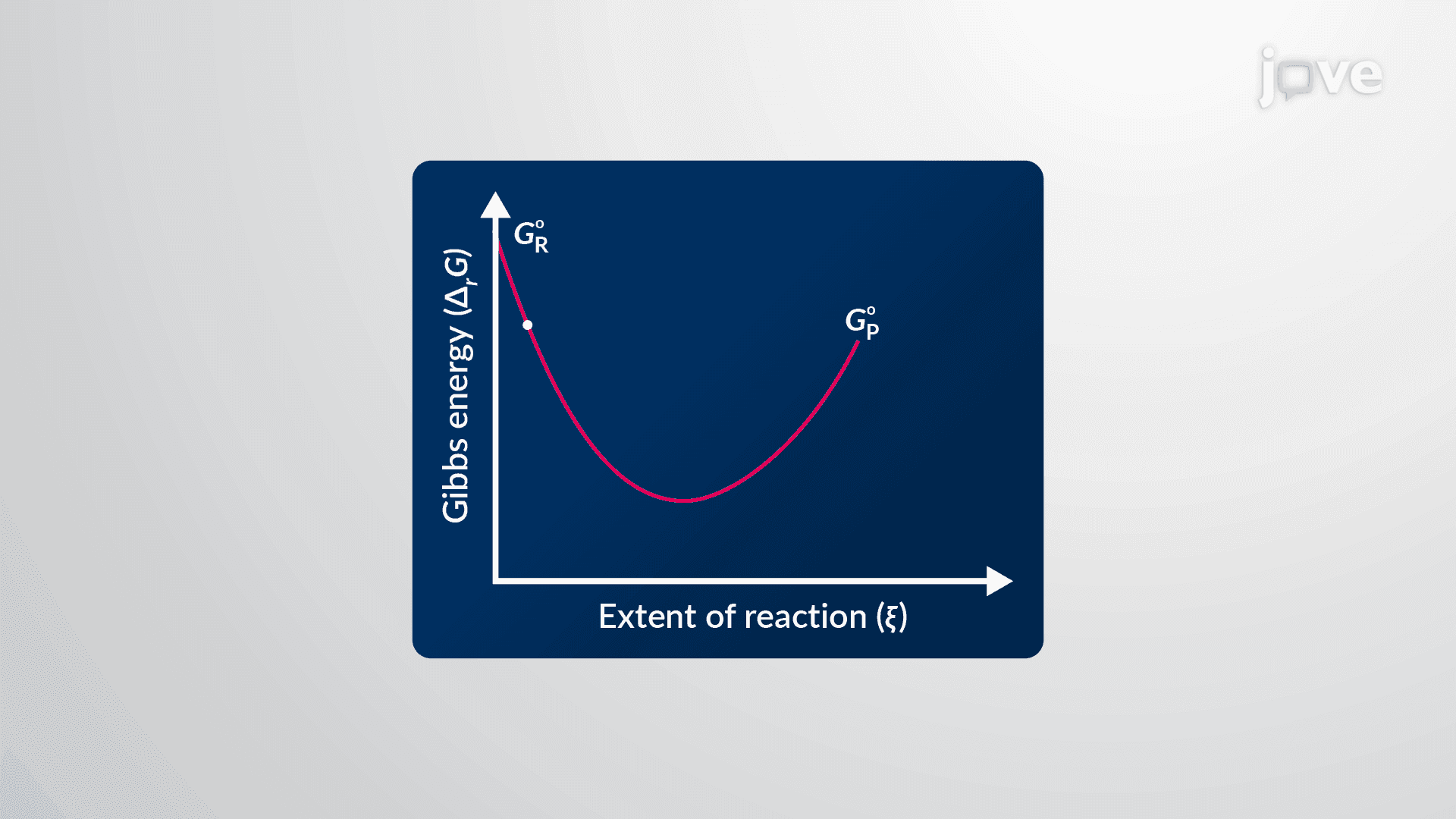
A critically important insight: rG equals zero at equilibrium. This condition defines the point where neither the forward nor reverse reaction is thermodynamically favored. Away from equilibrium, rG is related to the reaction quotient Q, which compares current concentrations of products and reactants to their equilibrium values. The full relationship is:
rG = rG° + RT ln(Q)
Where R is the gas constant and T is temperature in Kelvin. When Q is less than the equilibrium constant K, rG is negative and the reaction proceeds forward. When Q exceeds K, rG is positive and the reaction reverses. This relationship is heavily tested on the MCAT and in college physical chemistry courses, as it bridges thermodynamics with kinetics and equilibrium.
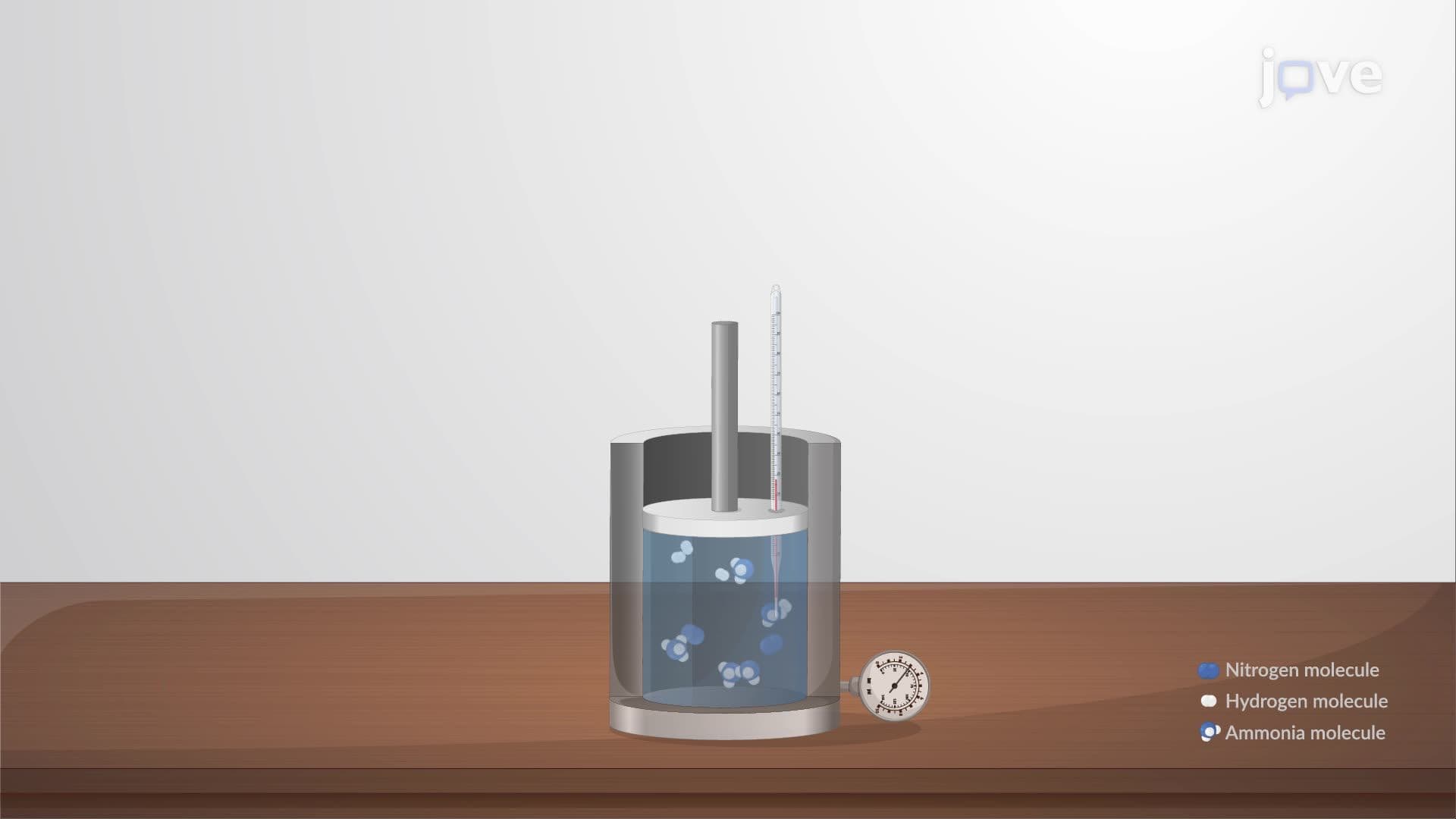
The reaction Gibbs energy isn't just a theoretical tool, pharmaceutical companies across the US use it to design drug-enzyme interactions, and chemical engineers apply it to optimize industrial synthesis of compounds like ammonia in the Haber process. Understanding rG gives students a genuine lens into how energy governs the molecular world, from the food you digest to the medicines you take.
Related Micro-courses