Loading video…


 18 Concepts
 52.4K views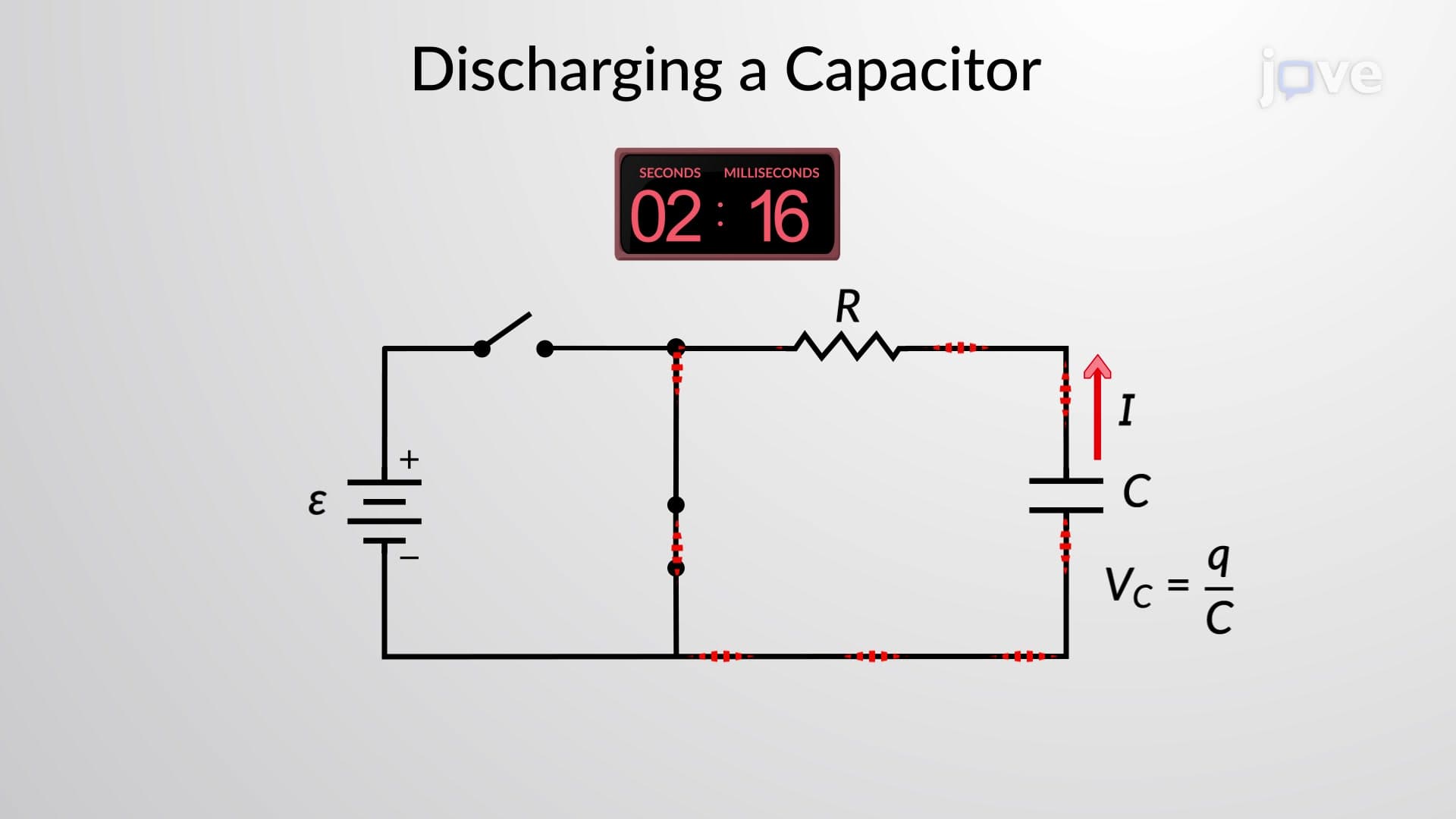

Video Summary: Rc Circuits Discharging a Capacitor Explained
Did you know that the flash in your smartphone camera relies on a capacitor that must discharge in milliseconds? Understanding rc circuits discharging a capacitor reveals how stored electrical energy powers everything from camera flashes to emergency backup systems in hospitals across the United States. When a charged capacitor disconnects from its power source, it releases energy in a predictable exponential pattern governed by fundamental physics laws. Watch the full video on JoVE Coach to master this concept with expert-led visuals and step-by-step explanations.
When a fully charged capacitor disconnects from its voltage source, it begins releasing stored energy through the connected resistor. This process follows predictable mathematical patterns that electrical engineers use to design everything from camera flash units to defibrillators used in American emergency rooms. The discharge process represents a fundamental concept tested on AP Physics exams and introductory college circuits courses.
Applying Kirchhoff's voltage law to a discharging RC circuit yields the fundamental equation: V_C + V_R = 0, where the capacitor voltage V_C = Q/C and resistor voltage V_R = IR. Since current represents the rate of charge leaving the capacitor, I = -dQ/dt (negative because charge decreases). Substituting these relationships produces the differential equation: Q/C - R(dQ/dt) = 0, which integrates to the exponential solution Q(t) = Q₀e^(-t/RC).
This mathematical framework appears frequently on MCAT physics sections and college-level electrical engineering midterms across universities like MIT, Stanford, and UC Berkeley. Students must understand both the derivation and practical applications of these equations.
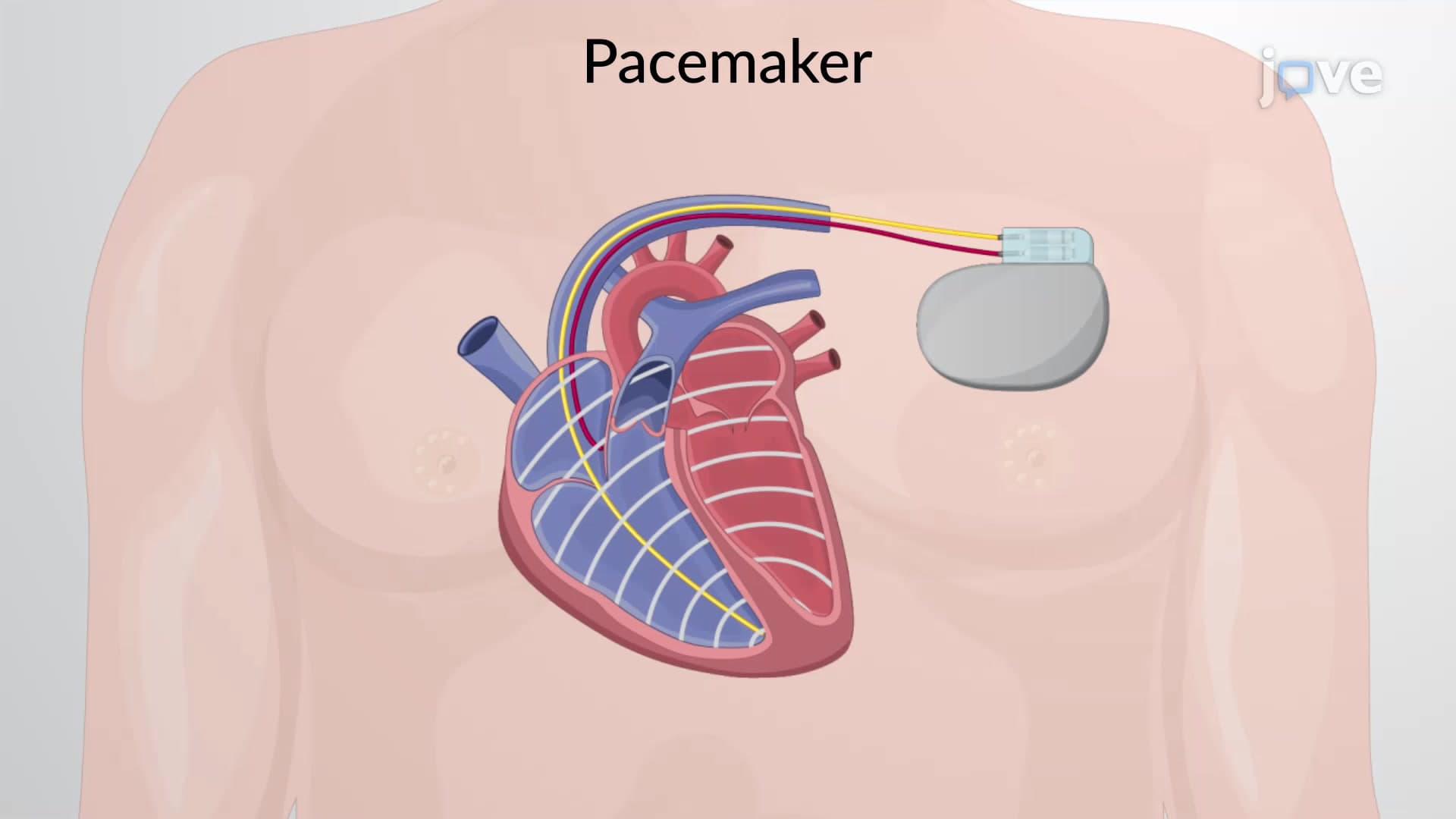
The RC time constant (τ = RC) determines how quickly a capacitor discharges. After one time constant, the charge drops to approximately 37% of its initial value. After five time constants, less than 1% remains-effectively complete discharge. American medical device manufacturers exploit this predictable behavior when designing automated external defibrillators (AEDs) found in schools, airports, and shopping centers nationwide.
The current during discharge follows I(t) = -(Q₀/RC)e^(-t/RC), where the negative sign indicates current flows opposite to the charging direction. This reversed current direction often confuses students on AP Physics C exams, making it a popular test question topic.
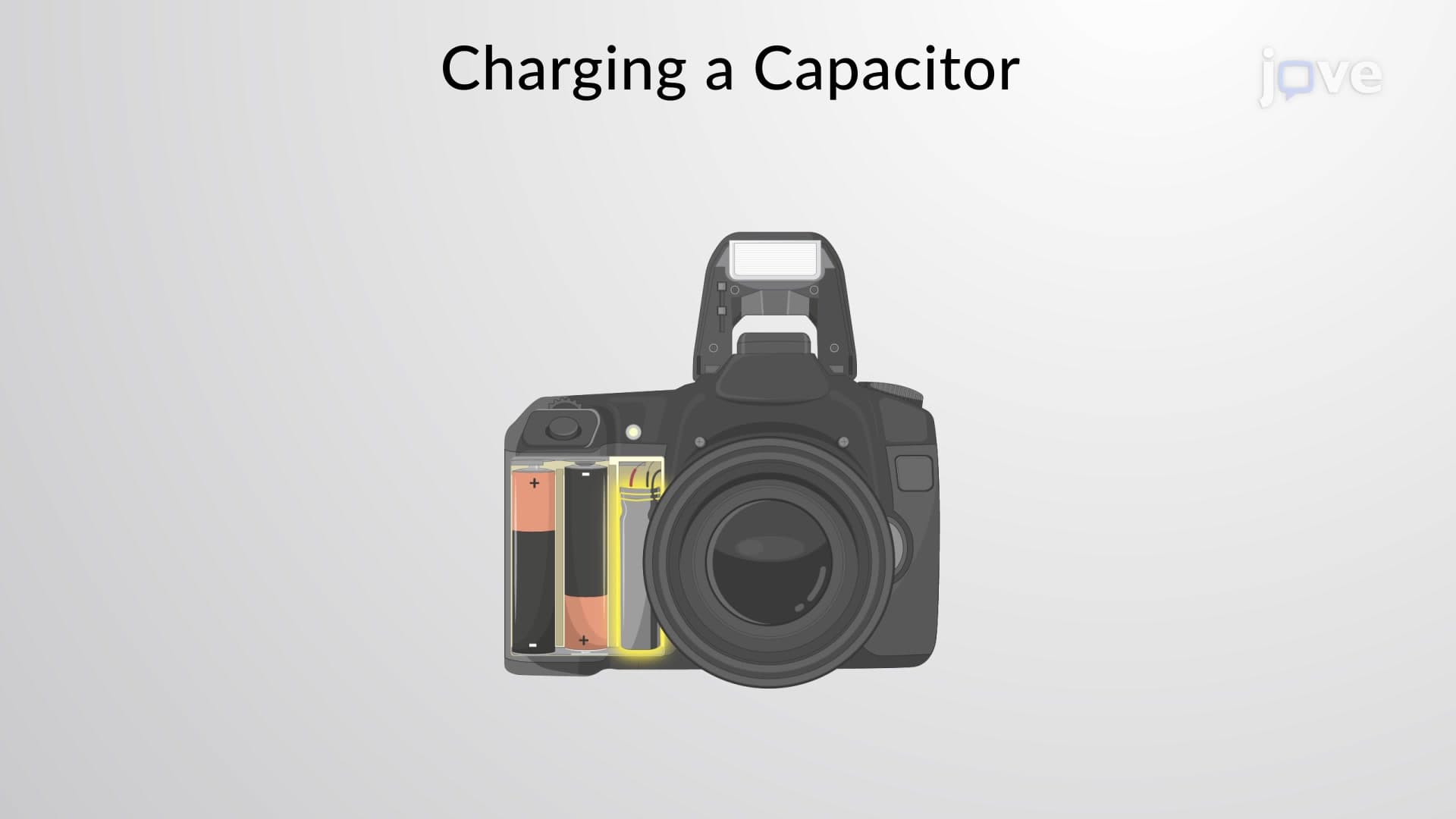
Camera flash circuits demonstrate practical capacitor discharge applications. When you press your smartphone's camera button, a charged capacitor rapidly discharges through a xenon flash tube, converting stored electrical energy into intense light in microseconds. Similarly, emergency lighting systems in American hospitals and office buildings use controlled capacitor discharge to provide backup illumination during power outages, as required by National Fire Protection Association codes.
Related Micro-courses