Loading video…


 16 Concepts
 6K views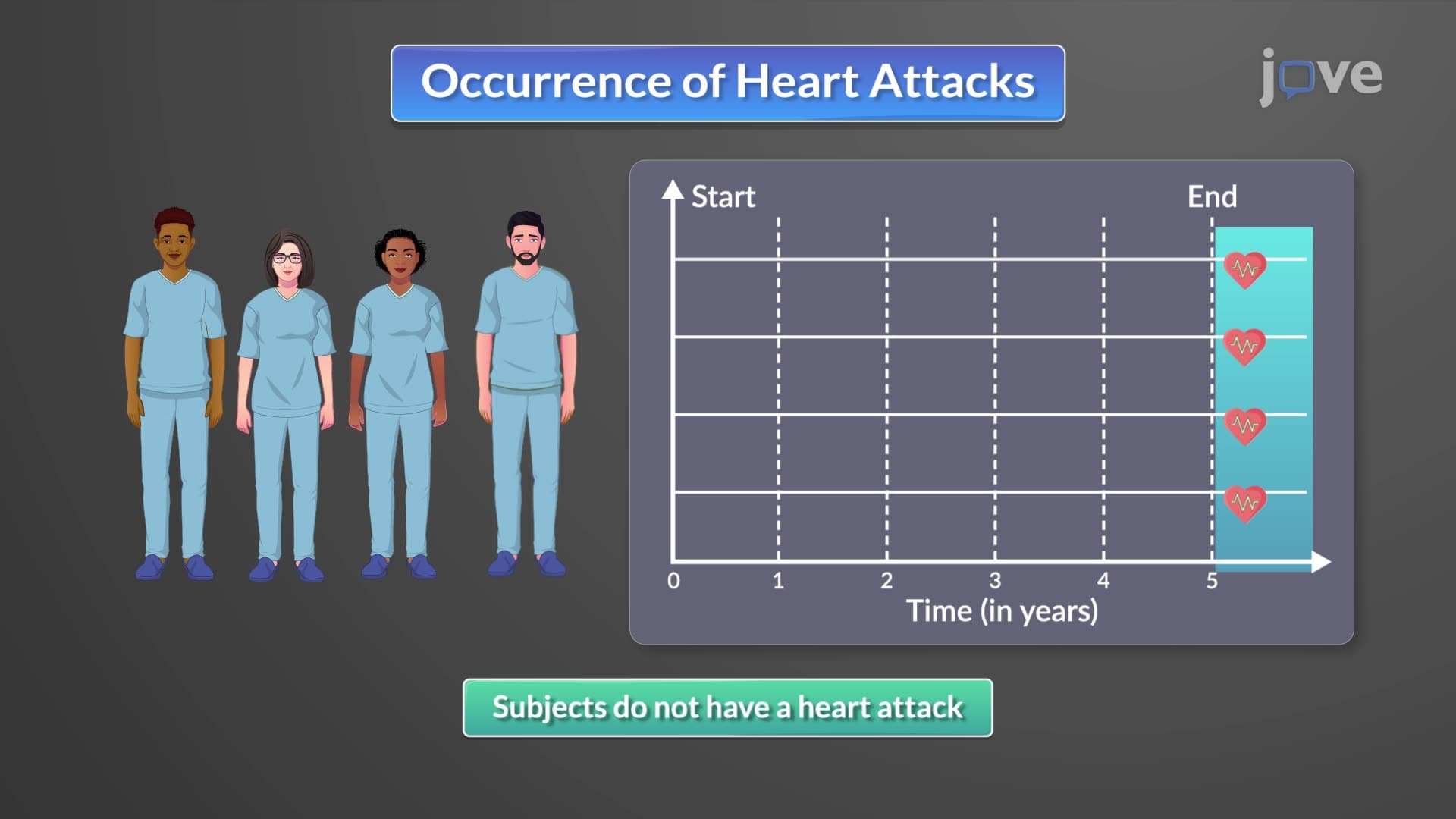

Video Summary: What Is Censoring Survival Data
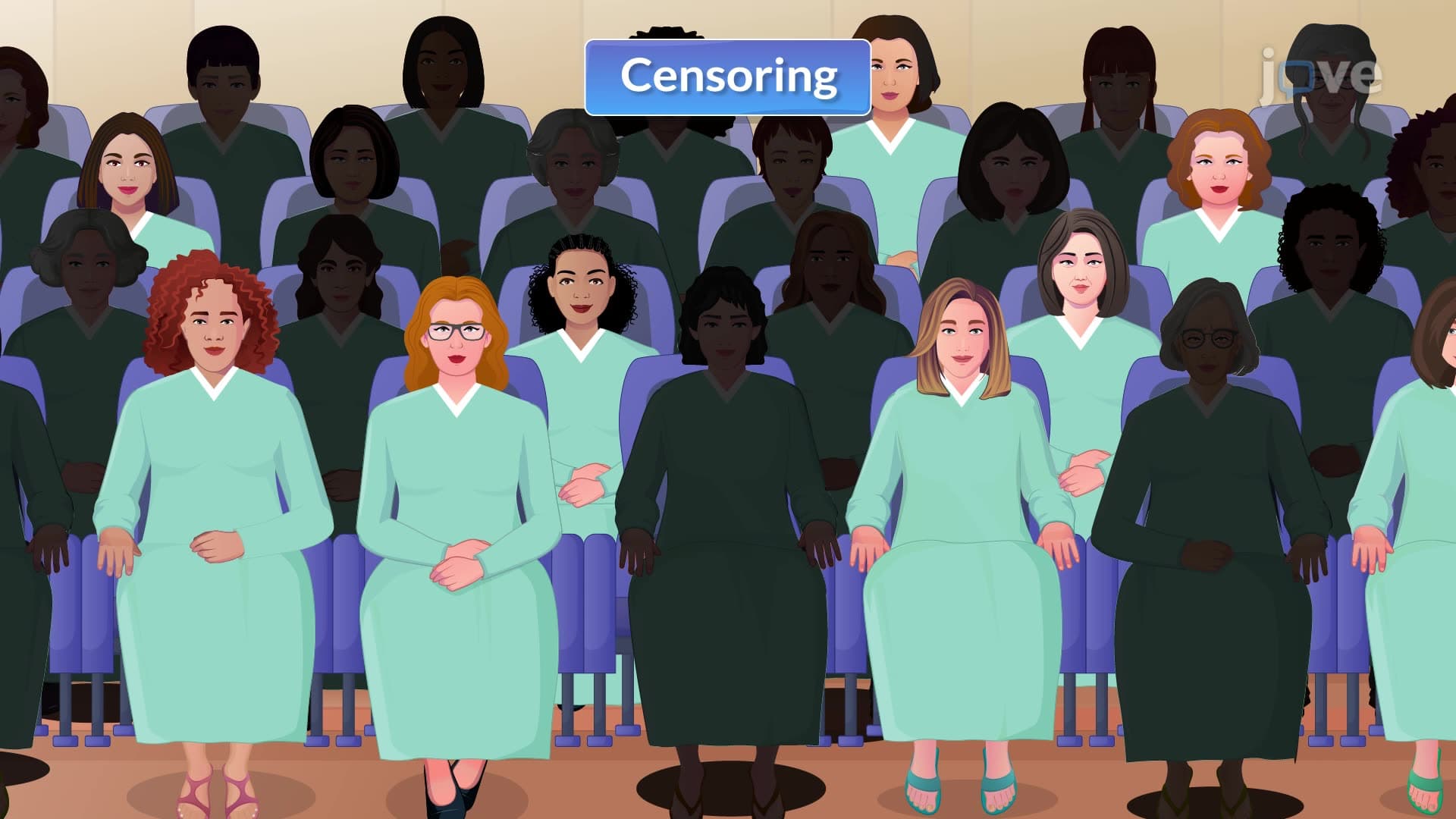
Did you know that in a 10-year heart disease study at Johns Hopkins, researchers can still draw meaningful conclusions even when 30% of patients move away before the study ends? Censoring survival data is a fundamental statistical concept that allows researchers to handle incomplete information when tracking events over time. This occurs when we don't observe the complete "survival time" for all subjects-whether it's patients in a clinical trial or equipment in an engineering study. What is censoring survival data becomes crucial when analyzing real-world scenarios where perfect data collection is impossible. Watch the full video on JoVE Coach to master this concept with expert-led visuals and step-by-step explanations.
Censoring survival data represents one of the most important challenges in longitudinal research, where scientists track subjects over extended periods to observe specific events. Unlike complete datasets where every outcome is known, censored data contains incomplete information-yet this doesn't render the study useless. Instead, sophisticated statistical methods extract valuable insights from these "incomplete" observations.
The censoring survival data definition encompasses any situation where the exact timing of an event cannot be determined for all study participants. This concept is fundamental in biostatistics, reliability engineering, and social sciences, making it essential knowledge for students preparing for AP Statistics, pre-med coursework, or MCAT preparation.
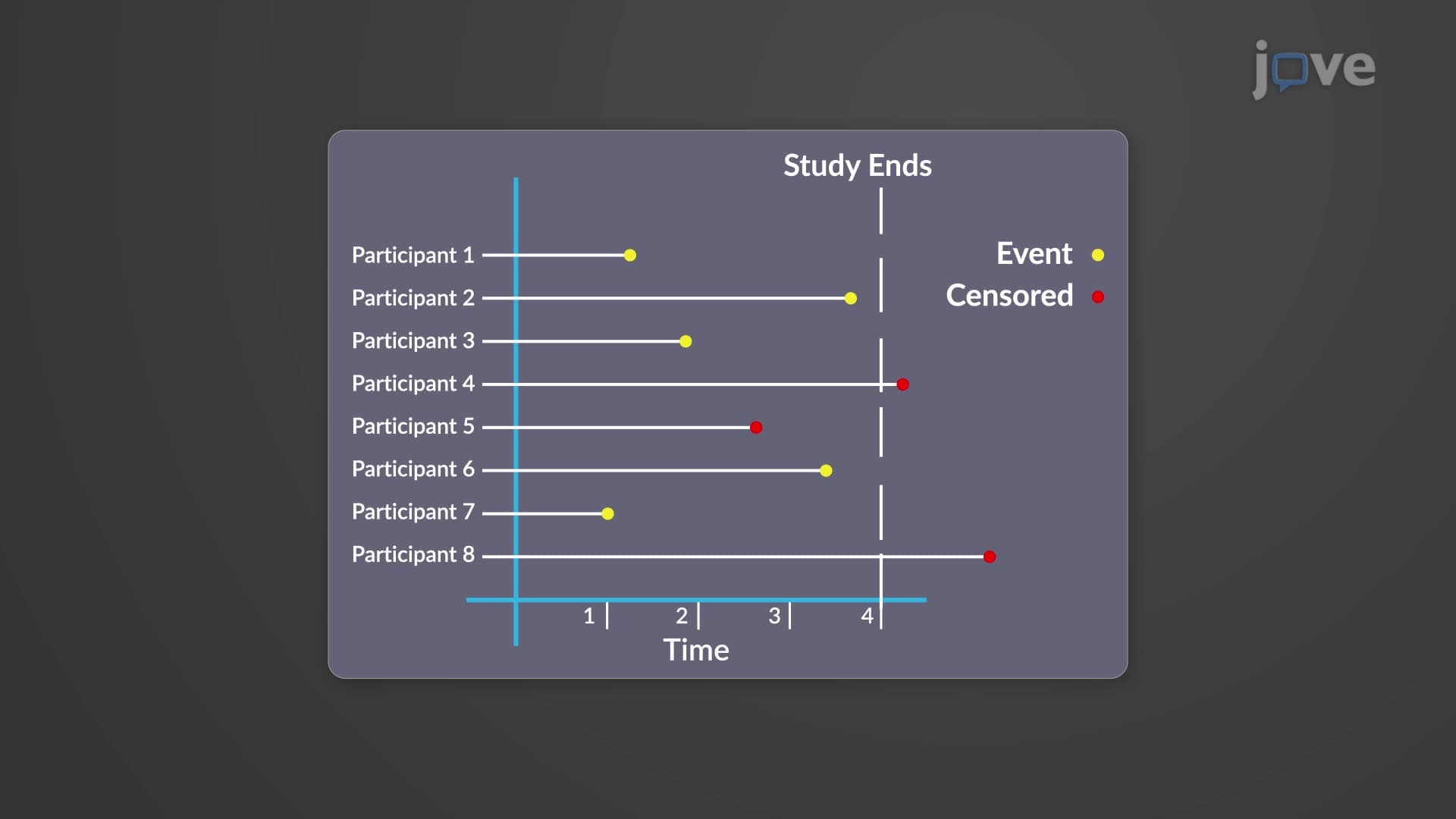
Right-censoring dominates survival analysis and occurs when observation ends before the event happens. Consider the landmark Framingham Heart Study, which has followed Massachusetts residents since 1948. When participants relocate or the study period concludes, researchers know these individuals survived at least until their last observation-valuable information even without knowing their ultimate survival time.
In engineering applications, right-censoring appears when testing product durability. If General Electric tests lightbulb lifespans for 1,000 hours and some bulbs still function, those observations are right-censored. The censoring survival data study guide principles apply whether analyzing medical treatments at Mayo Clinic or equipment reliability for Boeing aircraft components.
Left-censoring, though less frequent, occurs when the event's onset precedes observation. In HIV research conducted by the CDC, if patients test positive at their first clinic visit, the actual infection date remains unknown-creating left-censored data. This scenario challenges researchers studying disease progression timelines.
Interval censoring emerges when events occur between scheduled observations. University of Michigan researchers studying depression recurrence might examine patients quarterly. If someone experiences a depressive episode between March and June visits, the exact timing falls within that interval, creating censoring survival data overview complexity that requires specialized analytical approaches.
Understanding these censoring survival data basics proves crucial for college students entering research fields, whether pursuing medical school, graduate studies in biostatistics, or careers in pharmaceutical research where survival analysis determines drug efficacy and safety profiles.
Related Micro-courses