Loading video…


 16 Concepts
 6K views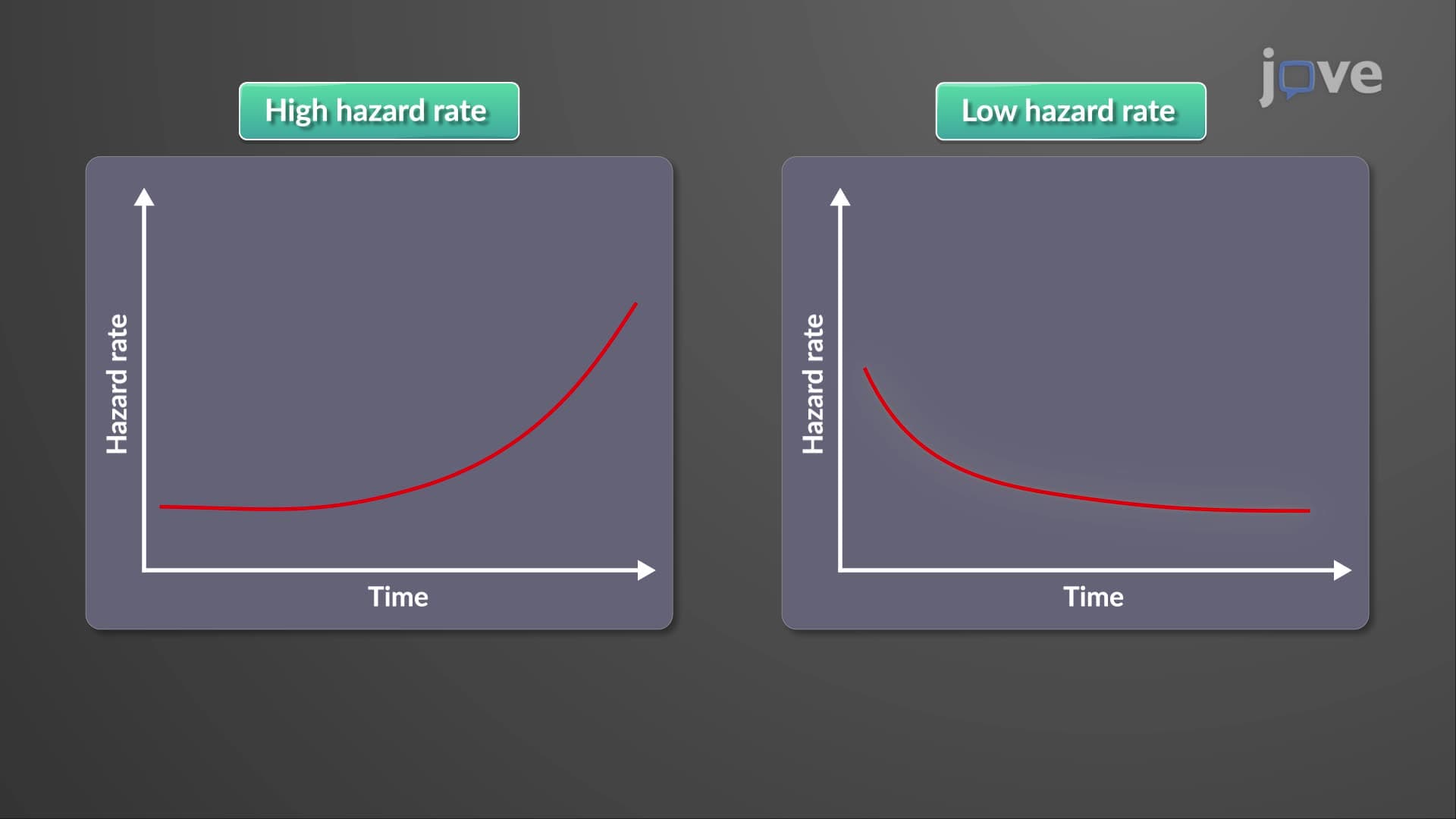

Video Summary: What Is Hazard Rate
Ever wondered why medical researchers can predict patient survival rates with mathematical precision? The hazard rate serves as a critical statistical measure that quantifies the probability of an event-like death or disease recurrence-occurring within a specific time interval for individuals who have survived up to that point. For instance, FDA clinical trials for cancer drugs rely heavily on hazard rate calculations to determine treatment effectiveness. Understanding what is hazard rate enables researchers to make data-driven decisions about patient care and treatment protocols. Watch the full video on JoVE Coach to master this concept with expert-led visuals and step-by-step explanations.
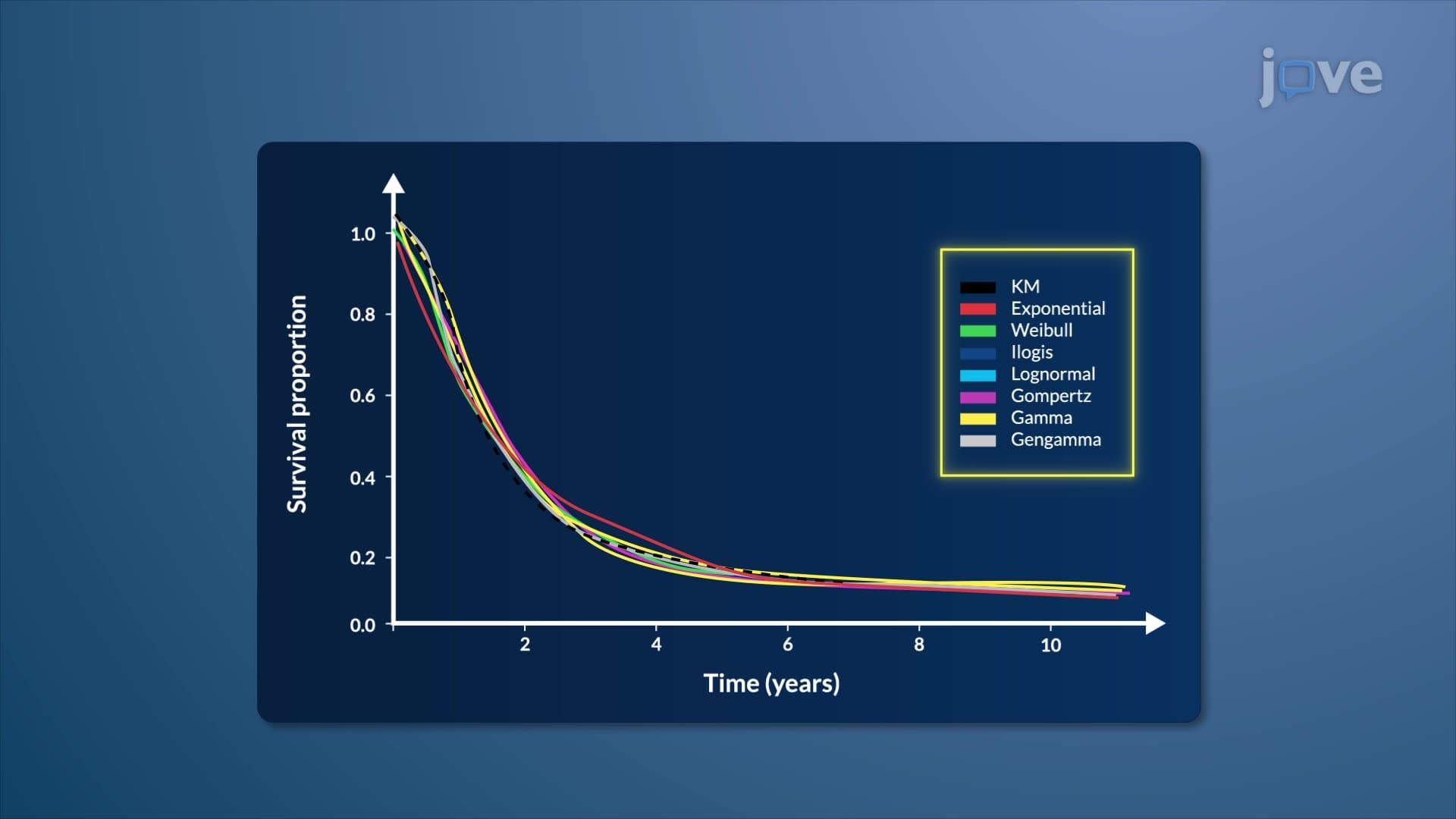
The hazard rate definition centers on measuring instantaneous risk-specifically, the probability that an event will occur in the next small time interval, given that an individual has survived up to the current time. Unlike simple mortality rates, hazard rates provide dynamic insights into how risk changes over time, making them invaluable for medical professionals and researchers.
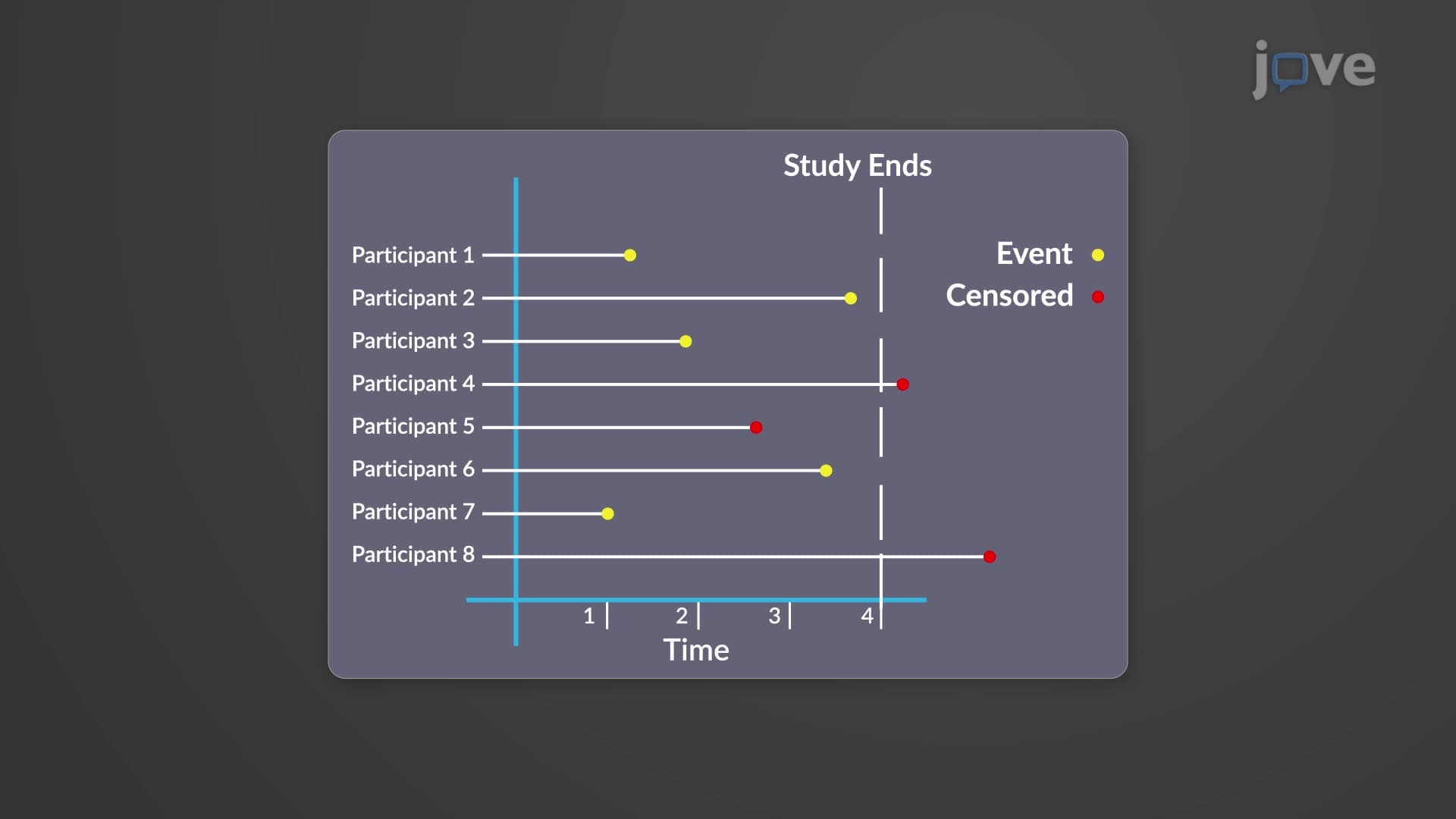
When examining what is hazard rate in detail, we must consider its mathematical structure. The calculation involves tracking participants from their entry point (B_i) through either their event occurrence (D_i) or censoring time (C_i). The time each individual remains "at risk" forms the denominator, while observed events comprise the numerator. This approach ensures accurate risk assessment even when participants enter studies at different times or leave before completion.
The Poisson distribution approximation becomes crucial when dealing with rare events across large populations. This statistical property allows researchers to model complex survival scenarios with confidence intervals and predictive power essential for clinical decision-making.
Major US medical institutions utilize hazard rate concepts extensively. The Mayo Clinic employs hazard rate analysis in cardiovascular studies, while Johns Hopkins uses these calculations for cancer prognosis models. FDA drug approval processes require comprehensive hazard rate documentation, particularly for Phase III clinical trials comparing new treatments against established standards.
For students preparing for advanced coursework, understanding hazard rate basics proves essential for AP Statistics, pre-med requirements, and undergraduate biostatistics courses. Medical school applicants encounter hazard rate questions on the MCAT, particularly in biological and biochemical foundations sections. Nursing students studying for NCLEX examinations must grasp these concepts for evidence-based practice questions.
Hazard rate study guides typically emphasize practical interpretation over complex mathematical derivations. Students should focus on understanding when hazard rates increase (indicating higher risk over time) versus decrease (suggesting improved survival chances), as these patterns directly influence clinical protocols and patient counseling approaches in US healthcare settings.
Related Micro-courses