Loading video…


 16 Concepts
 6K views

Video Summary: What Is Hazard Ratio
Did you know that the hazard ratio helped determine whether COVID-19 vaccines reduced hospitalization risk during the pandemic? This crucial statistical measure compares how quickly an event (like death or disease progression) occurs between two groups at any given time. For instance, when the FDA evaluated Pfizer's vaccine data, they used hazard ratio calculations to show a 95% reduction in severe COVID-19 cases compared to placebo groups. Watch the full video on JoVE Coach to master this concept with expert-led visuals and step-by-step explanations.
The hazard ratio serves as a cornerstone statistic in survival analysis and clinical trials, providing researchers with a powerful tool to compare treatment effectiveness over time. Unlike simple risk ratios that look at outcomes at a fixed endpoint, the hazard ratio examines the instantaneous risk of an event occurring at each moment throughout a study period.
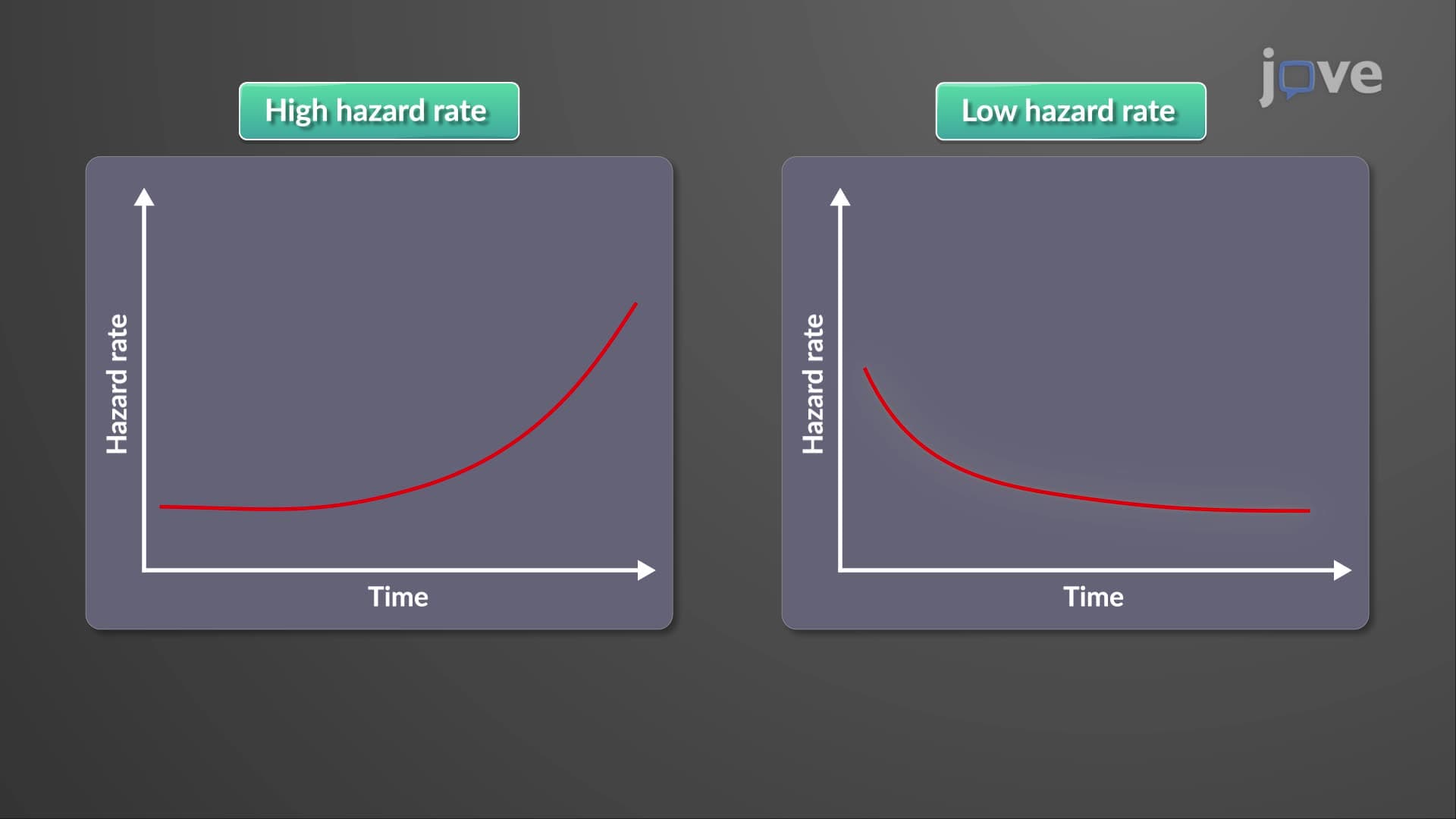
At its core, the hazard ratio definition involves comparing hazard rates between two groups. The hazard rate λ(t) represents the probability that an individual who has survived until time t will experience the event (such as death, disease recurrence, or treatment failure) in the next instant. When we have a control group A with hazard rate λA(t) and an experimental group B with hazard rate λB(t), the hazard ratio equals λB(t)/λA(t).
This ratio provides immediate interpretation: a hazard ratio of 0.5 means the experimental group has half the instantaneous risk of the control group at any given time, while a hazard ratio of 2.0 indicates double the risk. The beauty of this measure lies in its time-independence-assuming proportional hazards, this ratio remains constant throughout the study period.
Consider the landmark Women's Health Initiative study conducted across 40 clinical centers in the United States. Researchers used hazard ratios to evaluate hormone replacement therapy's effects on cardiovascular disease and breast cancer. The study revealed a hazard ratio of 1.26 for coronary heart disease, meaning women on hormone therapy faced a 26% higher instantaneous risk compared to those on placebo.
Similarly, the National Cancer Institute frequently publishes survival data using hazard ratios. In prostate cancer trials, treatments showing hazard ratios of 0.7 for overall survival indicate a 30% reduction in the risk of death at any given time compared to standard care.
Students preparing for the MCAT will encounter hazard ratios in passages about clinical trials and epidemiological studies. The concept frequently appears in AP Statistics courses when covering survival analysis basics. College biostatistics courses often require students to interpret hazard ratios from Cox proportional hazards models, making this fundamental understanding crucial for academic success.
Related Micro-courses