Loading video…


 16 Concepts
 6K views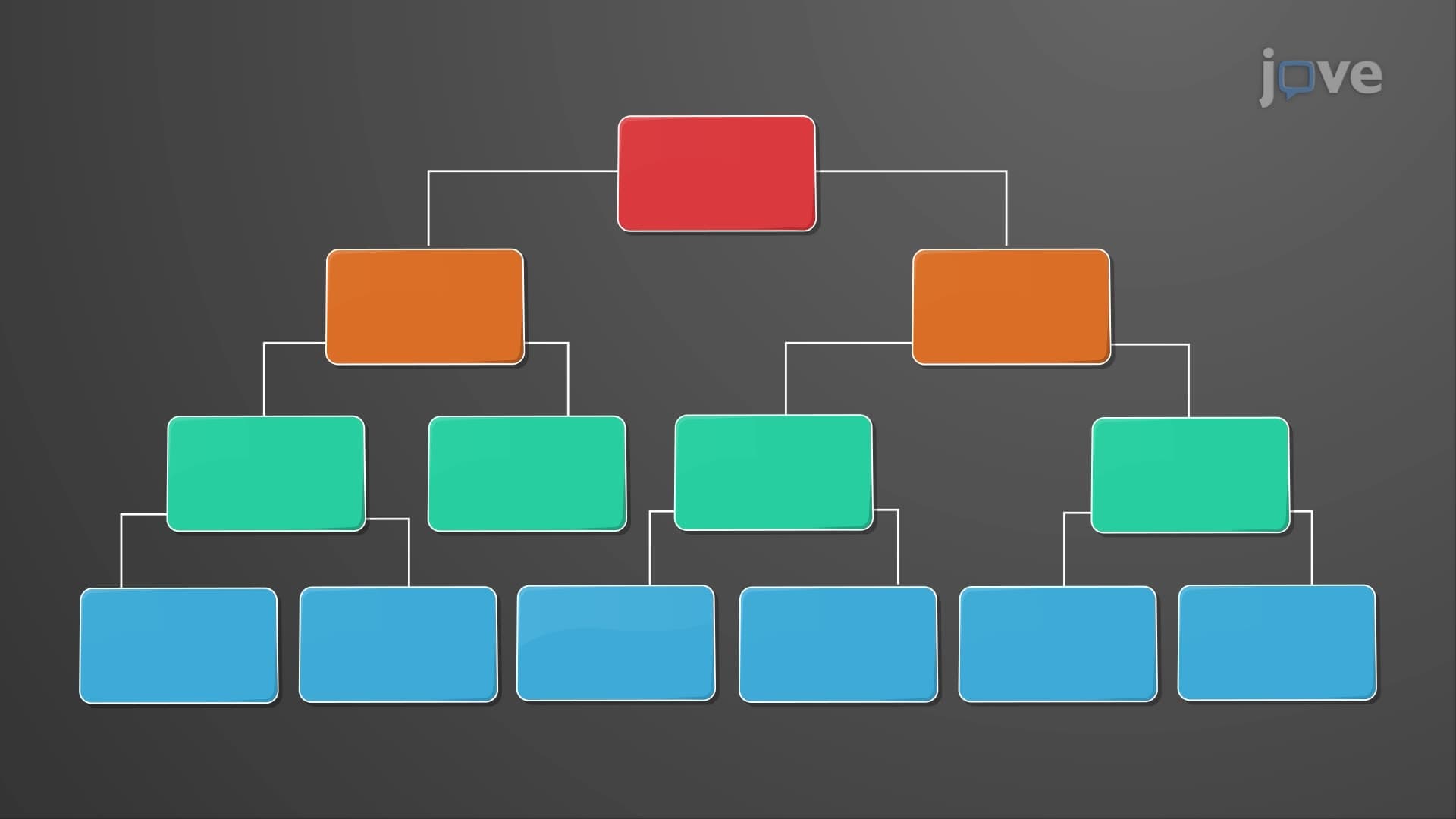

Video Summary: What Is Survival Tree
Did you know that survival trees help predict patient outcomes in major US hospitals like Johns Hopkins and Mayo Clinic? A survival tree is a statistical model that visualizes how different factors influence the time until a specific event occurs, such as disease recurrence or equipment failure. This powerful analytical tool uses recursive partitioning to create decision branches, making complex survival data easier to interpret for medical researchers and biostatisticians. Watch the full video on JoVE Coach to master this concept with expert-led visuals and step-by-step explanations.
What is survival tree methodology represents a breakthrough in survival analysis that combines the interpretability of decision trees with the power of time-to-event modeling. Unlike traditional regression approaches, survival trees create intuitive visual representations that healthcare professionals and researchers can easily interpret. The method excels at identifying complex interactions between variables that might be missed by linear models, making it particularly valuable in personalized medicine and risk stratification.
The survival tree construction process begins with the entire dataset at the root node, then systematically splits the data based on covariate values that best separate survival outcomes. Each split creates two child nodes with more homogeneous survival patterns than the parent node. This recursive process continues until stopping criteria are met, typically involving minimum node size or statistical significance thresholds. The resulting tree structure reveals natural groupings within the data, with terminal nodes representing distinct risk profiles.
Building effective survival trees requires careful attention to four critical parameters. Covariates serve as the splitting variables and can include patient demographics, biomarkers, or treatment protocols commonly seen in US clinical trials. Splitting criteria determine the optimal cut-points, often using log-rank statistics or other survival-specific measures. Minimum node size prevents overfitting by ensuring each terminal node contains sufficient observations for reliable predictions. Pruning thresholds help balance model complexity with predictive accuracy, crucial for applications in FDA regulatory submissions.
Survival tree methodology appears frequently in advanced statistics courses at US universities and professional exams like the MCAT and USMLE Step 1. Medical schools including Harvard and Stanford incorporate these concepts into biostatistics curricula, emphasizing applications in cancer research and clinical trial design. Students preparing for AP Statistics or college-level biostatistics should understand how survival trees complement Cox proportional hazards models and Kaplan-Meier curves. The method's interpretability makes it particularly valuable for communicating research findings to clinical teams and regulatory agencies like the FDA.
Related Micro-courses