Loading subject page…

3,734 views

Video Summary: What Is Abc Analysis
ABC analysis is the inventory prioritization skill managers often overlook until stockouts and cost overruns force the conversation. What is ABC Analysis? It's a structured method for classifying inventory by value, separating high-impact items from low-priority ones so your team focuses effort where it actually drives results. Mismanaged inventory quietly bleeds budget and erodes operational credibility. Watch the full video on JoVE Coach to master this concept with expert-led visuals and step-by-step explanations.
Picture this: your team is managing a product portfolio of nearly one hundred SKUs. Everyone is putting in the hours, monitoring reorders, chasing suppliers, updating spreadsheets, but costs keep creeping up and high-priority items keep running short. The problem isn't effort. It's misallocated effort. That's exactly the operational trap ABC analysis is designed to break.
Most managers default to treating all inventory items with roughly equal attention, a natural instinct when you're new to the role and trying to demonstrate thoroughness. But this approach is operationally expensive and strategically blind. It's the management equivalent of a flat org chart: everyone gets the same resource investment regardless of the value they generate.
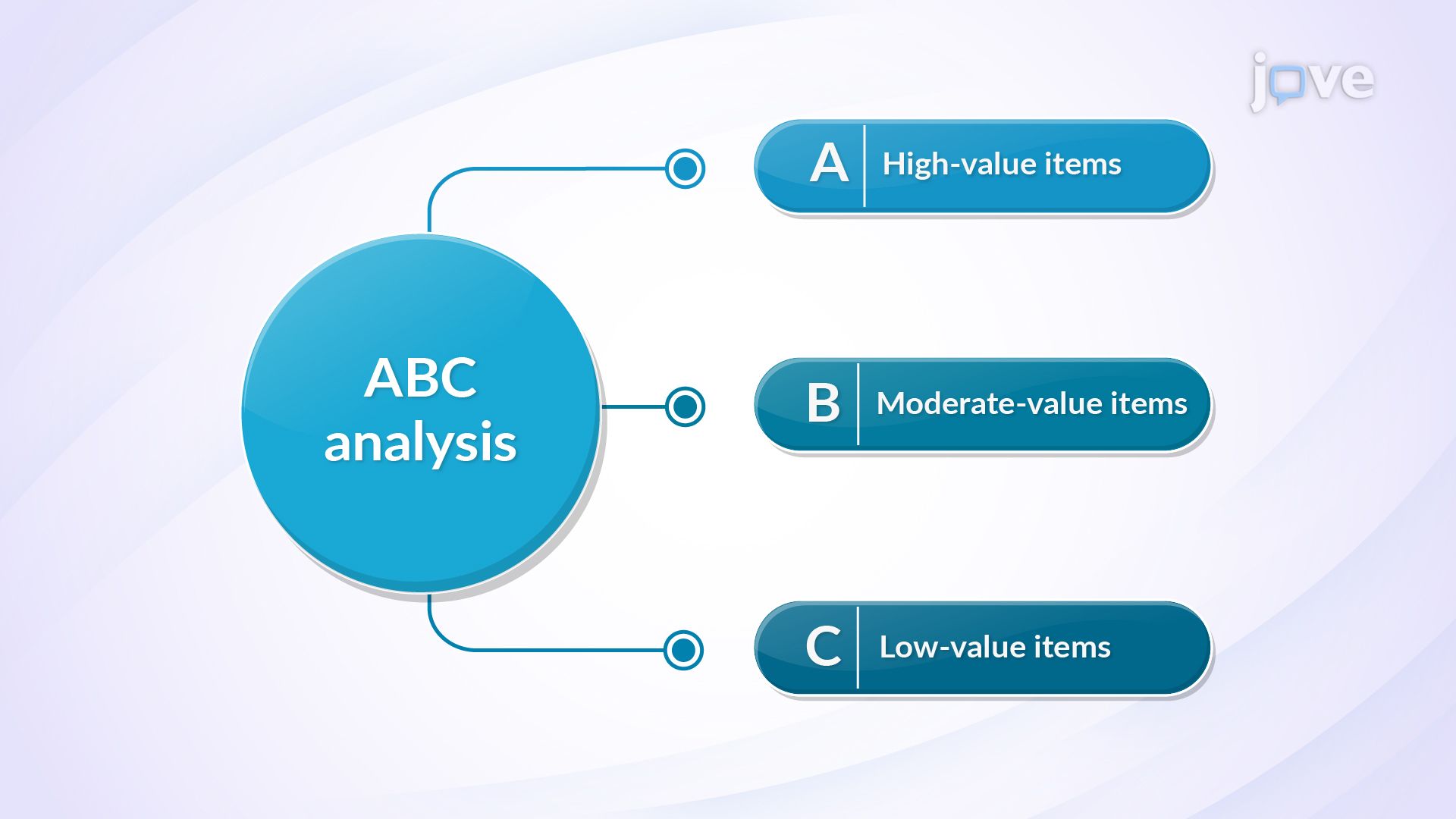
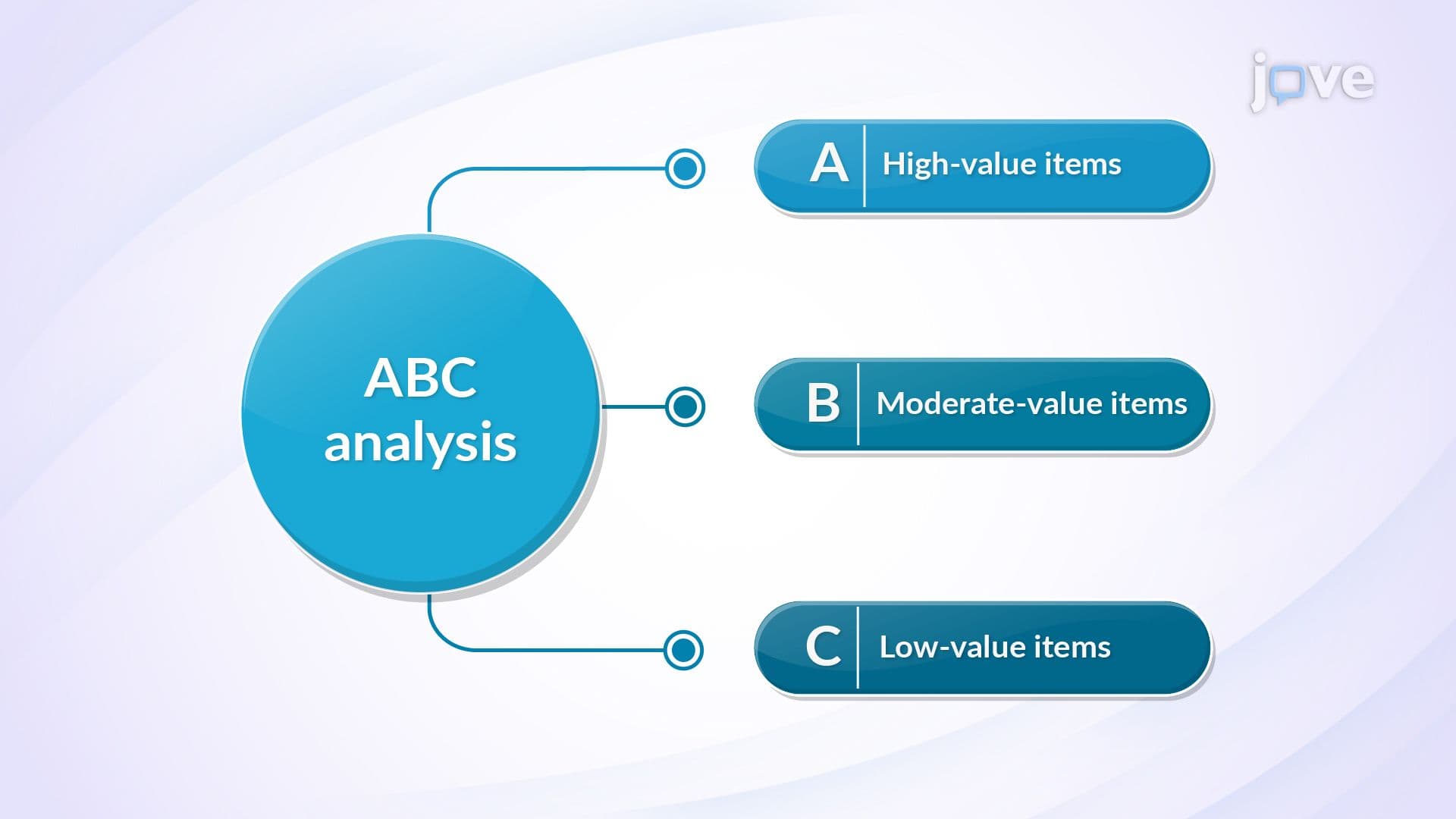
ABC analysis reframes the problem by applying the Pareto Principle, the well-established observation that roughly 20% of inputs drive 80% of outcomes. In inventory terms, a small number of high-value items (Category A) typically account for the lion's share of total inventory value, while the largest group of items (Category C) contributes the least. Treating all three tiers identically means your best attention is constantly being diluted.
The classification logic is straightforward and immediately applicable:
A practical next step is to run a value-frequency matrix with your team, listing all inventory items, assigning each a monthly or quarterly value contribution, and then rank-ordering them. The natural breakpoints in that ranked list define your A, B, and C tiers. This exercise works equally well in physical goods environments and in service contexts where "inventory" might mean vendor contracts, project resources, or tool licenses.
Once categories are defined, the real management leverage comes from building differentiated operating rhythms around them. Consider using a RACI model alongside your ABC tiers: Category A items should have a clearly accountable owner (usually a senior team member or the manager directly), while Category C items can have responsibility delegated more broadly with lighter accountability checks.
In performance conversations, ABC analysis gives you concrete data to coach against. If a team member is spending disproportionate time on Category C items at the expense of Category A, that's a coaching conversation grounded in business impact, not vague feedback about "priorities." Use the SBI (Situation-Behavior-Impact) framework to make it specific: describe the situation, the observed behavior, and its measurable impact on inventory value or service levels.
For managers stepping into leadership of an existing team, ABC analysis is also a powerful onboarding tool. It gives you a fast, structured way to understand what your team is managing, where the real value sits, and where attention has historically been misaligned, all within your first 30 days.
Related Micro-courses