Loading video…


 11 Concepts
 3.7K views

Video Summary: What Is Just in Time Inventory
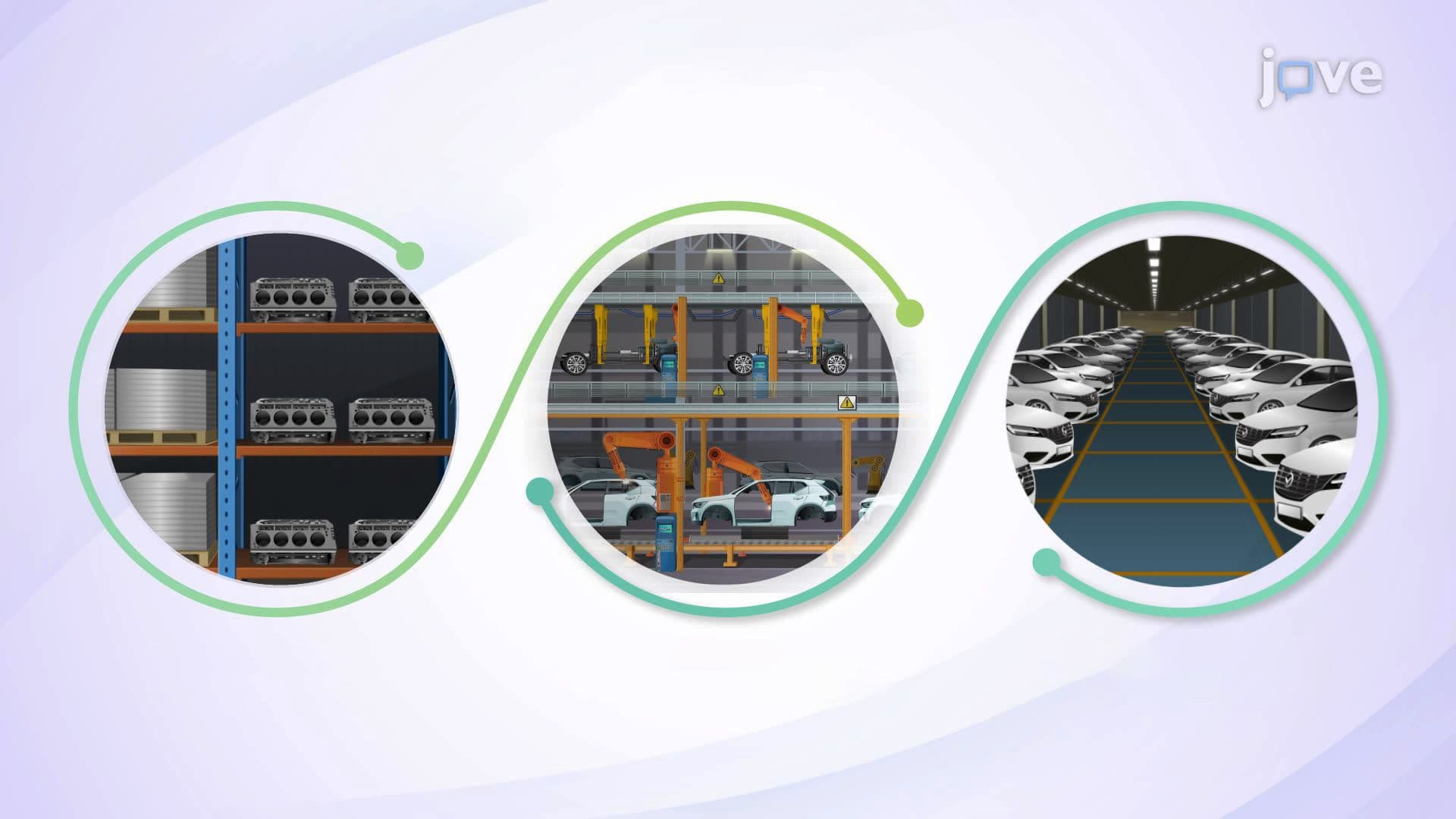
Just-in-time inventory puts pressure on every link in your supply chain, and when one breaks, your entire operation stalls. Understanding the just-in-time inventory system helps operations managers and team leads make smarter procurement decisions, reduce waste, and protect cash flow without creating dangerous supply gaps. The JIT inventory system demands precision, supplier trust, and accurate demand forecasting. Watch the full video on JoVE Coach to master this concept with expert-led visuals and step-by-step explanations.
Picture this: your production team is mid-cycle and a critical component hasn't arrived. The line goes cold. Workers are idle. Deadlines shift. Customers feel it downstream. This is the operational nightmare that just-in-time inventory is designed to prevent, but also, paradoxically, the risk it can create when poorly implemented. For any manager responsible for production flow, procurement, or supply chain performance, understanding the JIT inventory system isn't optional. It's foundational.
The appeal of JIT manufacturing is obvious: less warehouse space, lower holding costs, healthier cash flow. But the execution gap is wide. Most managers underestimate how much organizational discipline JIT demands. It's not simply "order less, order later." It requires synchronized communication across departments, near-perfect demand forecasting, and supplier relationships built on accountability, not just price.
The most common failure point is treating JIT as a procurement tactic rather than an operating philosophy. When demand signals are inaccurate or supplier lead times are unreliable, the entire model collapses. Managers who implement JIT without auditing their supply chain first are essentially building a high-performance engine with no safety margin.
Before rolling out lean inventory management practices, assess your operation against four readiness pillars:
1. Demand Stability, Is your product demand consistent and foreseeable? JIT thrives in predictable environments. High variability environments require a hybrid approach with calculated safety stock. 2. Supplier Reliability, Can your key suppliers meet tight delivery windows with consistent quality? Use a supplier scorecard (on-time delivery rate, defect rate, lead time variance) to quantify this before committing to JIT timelines. 3. Internal Coordination, Are your procurement, warehouse, and production teams working from the same real-time data? Apply a RACI model to clarify who is responsible, accountable, consulted, and informed at each stage of the inventory cycle. 4. Forecasting Capability, Are you using historical sales data, seasonal patterns, and customer signal data to drive ordering decisions? If forecasting is informal or siloed, JIT will amplify those gaps rather than correct them.
Mapping your operation against these four pillars gives you an honest picture of where JIT can be implemented immediately and where investment in process maturity is needed first.
Over-relying on a single supplier. JIT creates supplier dependency by design. The risk management counter-move is dual-sourcing critical components, maintaining a primary supplier for efficiency and a secondary supplier for resilience. This adds a small cost buffer but dramatically reduces exposure to production stoppages.
Ignoring ordering cost increases. Smaller, more frequent orders reduce inventory but increase transaction costs. Run a total cost analysis before committing: compare holding cost savings against increased ordering frequency costs to find your optimal order point.
Skipping the cross-functional alignment conversation. JIT fails when procurement makes decisions in isolation. Facilitate a monthly supply chain review meeting with representatives from procurement, operations, and finance. Use this forum to review supplier performance data, flag emerging risks, and recalibrate ordering parameters as demand shifts.
When JIT is implemented with the right infrastructure, it becomes a competitive lever, not just a cost-cutting measure. Managers who master it don't just run leaner operations. They build teams that are more responsive, more disciplined, and better positioned to scale.
Related Micro-courses