Loading subject page…


1,429 views


Video Summary: What Is Rapid Identification of Pathogens
Every minute matters when a patient arrives in a US hospital with a life-threatening infection, and rapid identification of pathogens can mean the difference between the right antibiotic and a fatal delay. MALDI-TOF mass spectrometry makes this possible by reading a microbe's unique protein fingerprint in minutes, not days. At hospitals like Mayo Clinic, this technology has transformed how clinical labs diagnose bacterial and fungal infections. Watch the full video on JoVE Coach to master this concept with expert-led visuals and step-by-step explanations.
Rapid identification of pathogens refers to the fast, accurate detection of disease-causing microorganisms, bacteria, fungi, or other microbes, from clinical specimens. In infectious disease diagnostics, speed is everything. When a patient in the ICU is septic, clinicians cannot afford to wait 48-72 hours for traditional microbial culture results. Technologies like MALDI-TOF mass spectrometry have revolutionized diagnostic microbiology techniques by delivering accurate pathogen identification within minutes, enabling early, targeted antimicrobial therapy that saves lives and reduces unnecessary antibiotic exposure.
MALDI-TOF stands for Matrix-Assisted Laser Desorption/Ionization Time-of-Flight mass spectrometry. The process begins after specimen collection and transport, when a small amount of extracted microbial protein is mixed with a chemical matrix and applied to a metal target plate. As the matrix crystallizes, it traps the microbial proteins. Inside the analyzer, a laser strikes the sample, causing desorption and ionization of proteins, primarily abundant ribosomal proteins, with minimal fragmentation.
These ionized proteins then travel through a vacuum tube called a time-of-flight analyzer. Lighter ions travel faster; heavier ones travel slower. Their arrival times, based on mass-to-charge ratios, generate a spectral pattern, essentially a protein fingerprint unique to each microbial species. This spectrum is automatically matched against a reference database containing thousands of known microbial profiles. The entire process, from sample to identification, typically takes fewer than 30 minutes.
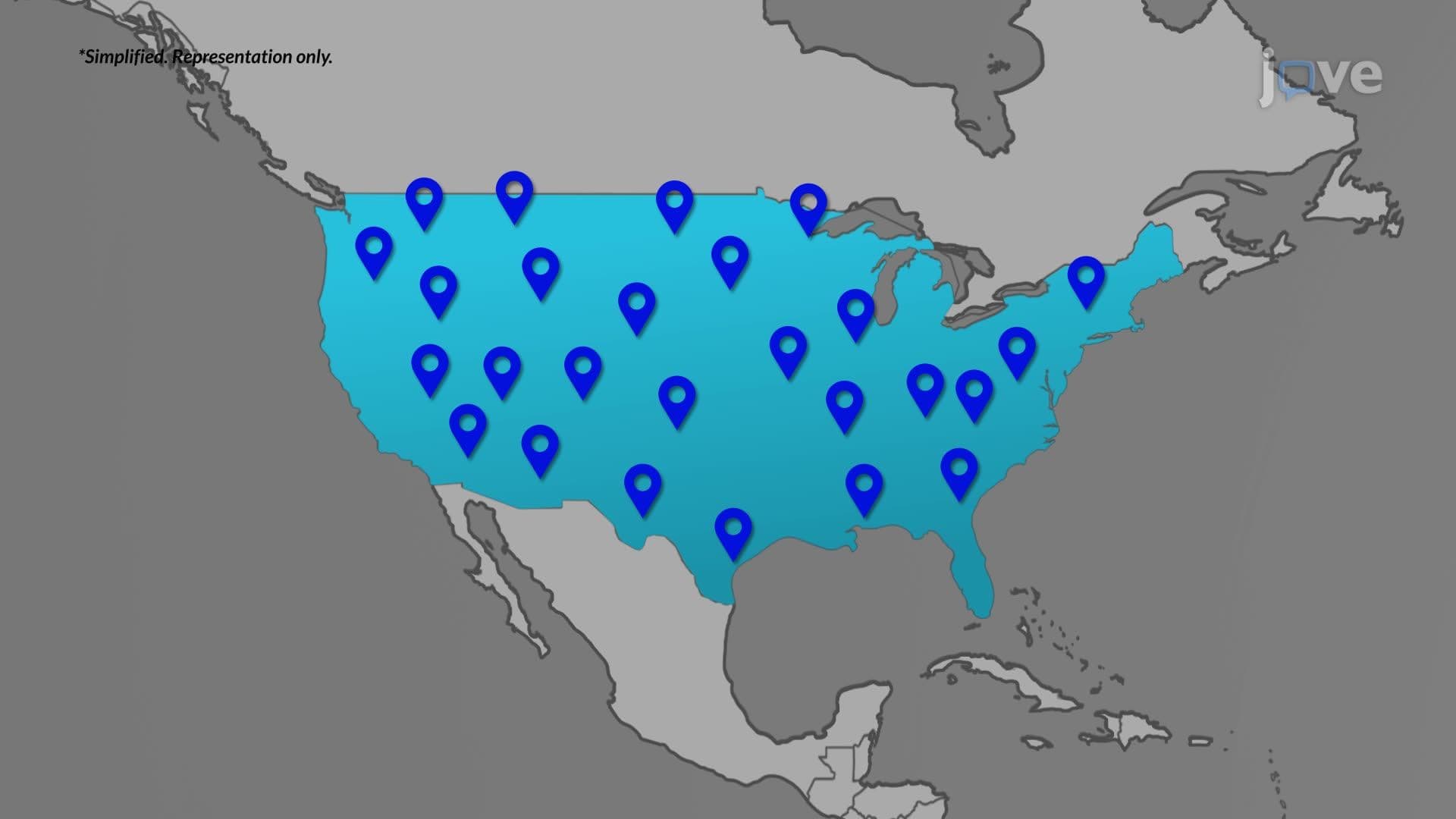
In the United States, clinical microbiology laboratories at institutions like Johns Hopkins Hospital and the Cleveland Clinic routinely use MALDI-TOF systems, most commonly the Bruker Biotyper or bioMérieux VITEK MS platforms, to identify pathogens isolated from blood cultures, urine, wound specimens, and respiratory samples. This directly informs antibiotic susceptibility testing decisions and antimicrobial stewardship programs, helping clinicians de-escalate from broad-spectrum to targeted antibiotics faster and more confidently.
Understanding what a clinical microbiologist does becomes clearer in this context: these professionals oversee how clinical specimens are processed, select appropriate diagnostic methods, and interpret results that directly guide patient treatment. Rapid identification is central to that role.
For high school students taking AP Biology, rapid pathogen identification is a compelling real-world application of protein structure and function. For college undergraduates in microbiology or pre-med programs, this topic often appears in coursework on molecular diagnostics and infectious disease. On the MCAT, questions may test your understanding of how mass spectrometry works or how molecular-level differences between organisms can be exploited for identification. USMLE Step 1 candidates are expected to understand how clinical microbiology laboratories operate and how diagnostic methods like MALDI-TOF fit into the broader workflow of infectious disease diagnosis, from specimen collection to treatment decisions.
Connecting rapid identification to concepts like antibiotic susceptibility testing, microbial culture limitations, and molecular diagnostics will give you a more complete and exam-ready understanding of modern clinical microbiology.
Related Micro-courses