Loading video…

 11 Concepts
 1.7K views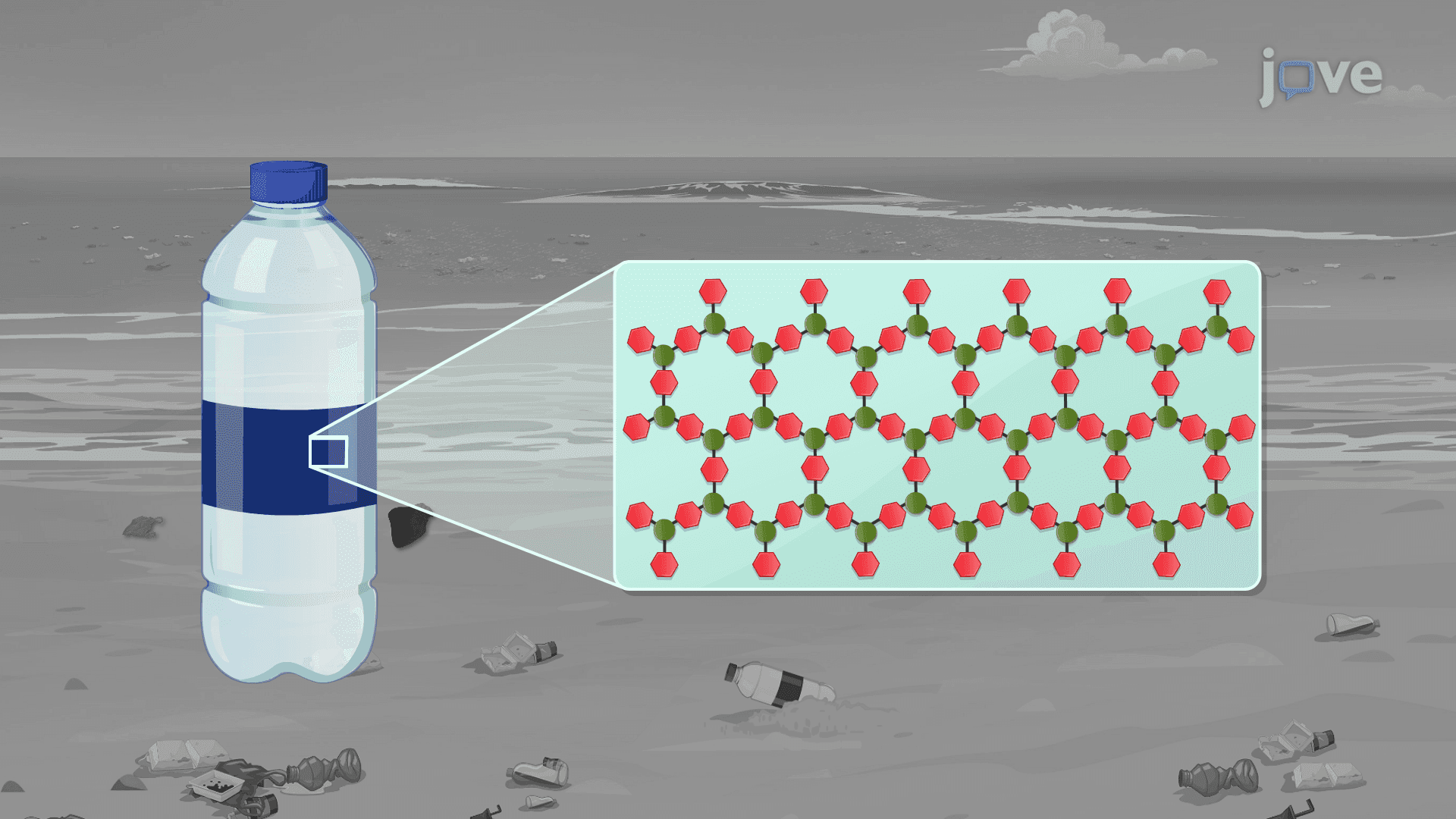

Video Summary: What Is Microbial Bioremediation of Plastics
A single plastic bottle can take over 400 years to decompose, but certain bacteria may change that. Microbial bioremediation of plastics is a cutting-edge solution to one of America's most urgent environmental crises. The bacterium *Ideonella sakaiensis* uses specialized enzymes to break down PET plastic into reusable monomers, offering a biological alternative to landfill accumulation. Watch the full video on JoVE Coach to master this concept with expert-led visuals and step-by-step explanations.
Microbial bioremediation of plastics refers to the use of naturally occurring or engineered microorganisms to degrade synthetic plastic polymers into simpler, less harmful compounds. Unlike physical or chemical waste treatment, bioremediation harnesses microbial metabolism, the same biological machinery that drives decomposition in soil and water, to attack the molecular backbone of plastics. This field sits at the intersection of environmental microbiology, biochemistry, and sustainability science, making it highly relevant in both academic study and real-world environmental policy.
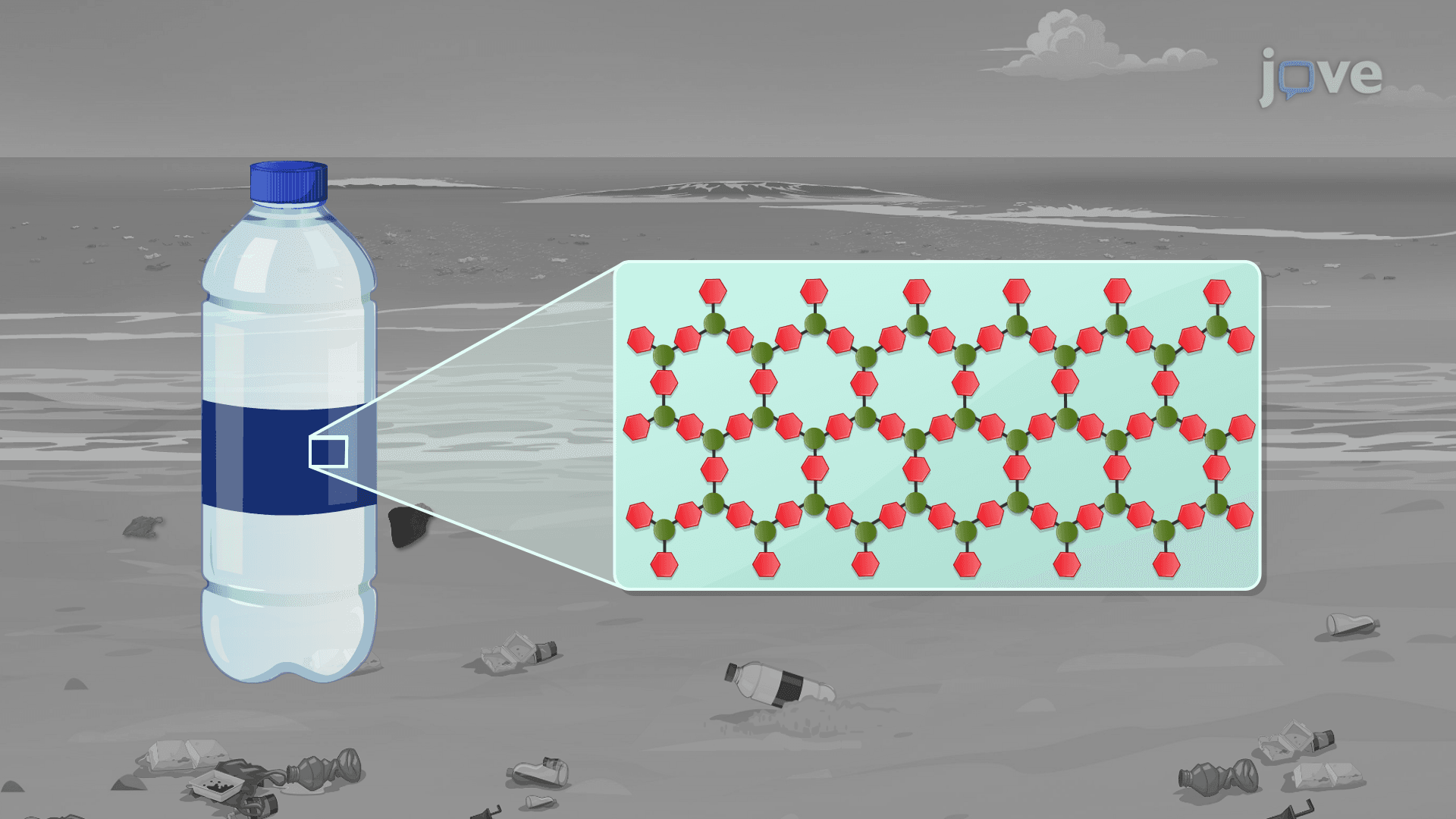
Polyethylene terephthalate (PET) is one of the most widely produced plastics in the United States, found in water bottles, food packaging, and synthetic textiles. Its persistence stems from its molecular architecture: repeating ester bonds linking terephthalic acid and ethylene glycol create a semi-crystalline polymer that resists most natural degradation processes. Hydrolysis of these ester bonds requires specific enzymatic activity that most organisms simply do not possess. This chemical stability is what makes PET valuable for manufacturing, and what makes it an environmental liability when discarded.
Discovered in Japan in 2016 and now a central subject of US-based biotechnology research, *Ideonella sakaiensis* is the first bacterium confirmed to use PET as its primary carbon and energy source. It accomplishes this through a two-enzyme system. PETase initiates degradation by hydrolyzing the ester bonds within the PET polymer, producing the intermediate compound mono(2-hydroxyethyl) terephthalic acid (MHET). A minor byproduct, bis(2-hydroxyethyl) terephthalate (BHET), is also occasionally released and can be further processed by PETase back into MHET. MHETase then cleaves MHET into two monomers, ethylene glycol and terephthalic acid, which the bacterium absorbs and metabolizes for energy. This pathway connects directly to concepts in biogeochemical cycling: carbon locked in synthetic polymers re-enters biological systems through microbial assimilation.
In practice, *Ideonella sakaiensis* degrades PET extremely slowly, it can take years to partially break down a single plastic bottle under natural conditions. This inefficiency limits its direct industrial use. However, US research institutions including universities and national laboratories have been engineering enhanced versions of PETase with improved thermal stability and catalytic speed. In 2018, scientists at the University of Portsmouth and the National Renewable Energy Laboratory (NREL) in Colorado accidentally engineered a mutant PETase that outperforms the natural enzyme. These advances point toward future applications in US wastewater treatment plants and contaminated soil remediation programs.
For students, this topic appears in AP Environmental Science (APES) under pollution and human impact units, in AP Biology within the context of enzymes and metabolism, and in college-level microbiology and environmental science courses. MCAT test-takers should connect microbial bioremediation to enzyme kinetics, metabolic pathways, and ecological roles of microorganisms, all high-yield content areas. Understanding the rate-limiting steps in PET degradation also reinforces core biochemistry concepts like enzyme-substrate specificity and Michaelis-Menten kinetics.
Related Micro-courses