Loading subject page…


61,792 views

Video Summary: What are Types of Superconductors
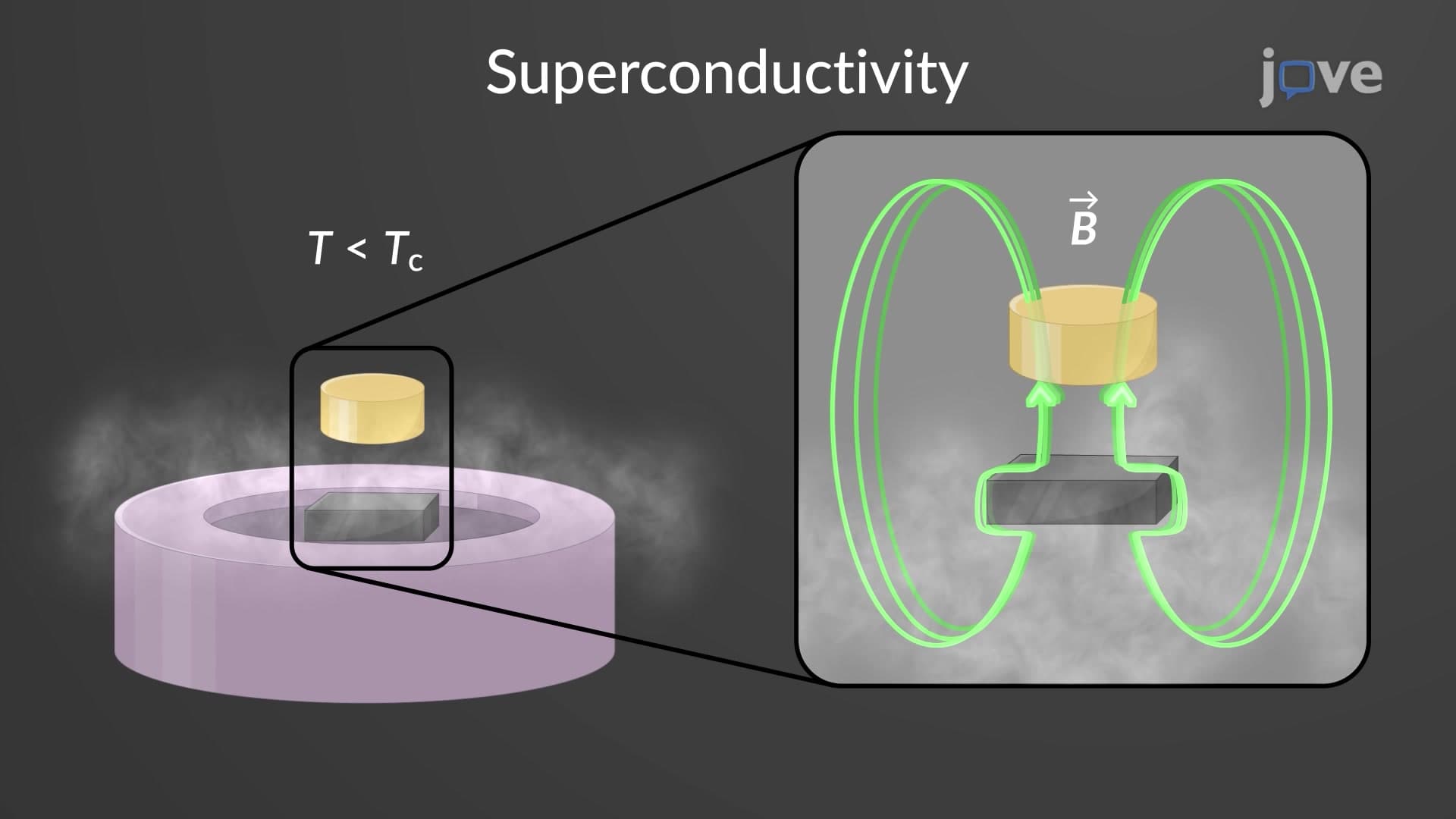
Ever wondered how bullet trains in Japan float above their tracks without touching? The types of superconductors make this magnetic levitation possible through the remarkable Meissner effect. These extraordinary materials, categorized as Type I and Type II superconductors, lose all electrical resistance when cooled below critical temperatures. Companies like American Superconductor Corporation use these materials in power grid applications across the United States. Watch the full video on JoVE Coach to master this concept with expert-led visuals and step-by-step explanations.
Superconductors represent one of physics' most fascinating phenomena, where materials exhibit zero electrical resistance and expel magnetic fields below specific critical temperatures. The classification system dividing these materials into distinct types helps scientists and engineers predict behavior and select appropriate materials for technological applications.
Type I superconductors, primarily composed of pure elemental metals like mercury, lead, aluminum, and zinc, demonstrate complete adherence to the Meissner effect. When cooled below their critical temperature (Tc), these materials expel all magnetic fields from their interior, creating perfect diamagnetism. The General Electric Research Laboratory first discovered superconductivity in mercury at 4.2 Kelvin in 1911, establishing the foundation for understanding these materials.
These superconductors exhibit a single critical magnetic field (Hc) beyond which superconductivity abruptly disappears. For aluminum, this critical field reaches approximately 100 gauss at absolute zero. Type I superconductors typically operate at extremely low temperatures, making them suitable for specialized laboratory applications but limiting their commercial viability.
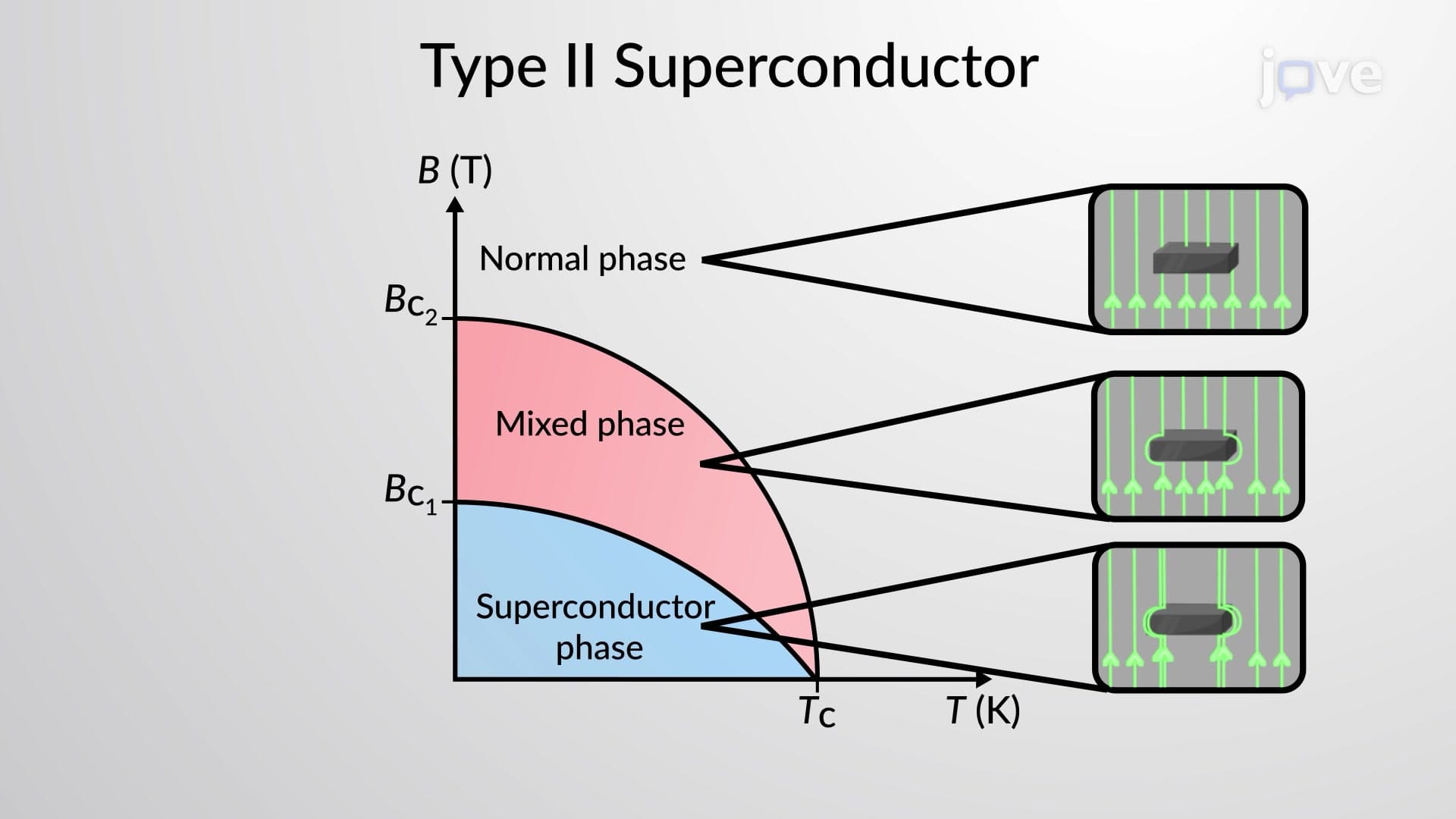
Type II superconductors, including niobium, vanadium, and complex ceramic compounds like yttrium barium copper oxide (YBCO), exhibit more complex magnetic behavior. These materials feature two critical magnetic fields: the lower critical field (Hc1) where flux begins penetrating the material, and the upper critical field (Hc2) where superconductivity completely vanishes.
Between these fields exists the mixed state, where magnetic flux partially penetrates in quantized vortices while maintaining superconducting properties in surrounding regions. This unique characteristic makes Type II superconductors ideal for high-field applications like MRI machines used in American hospitals, where magnetic fields exceed 1.5 Tesla.
Understanding superconductor types proves crucial for AP Physics students and college undergraduates studying condensed matter physics. The Massachusetts Institute of Technology and Stanford University extensively research high-temperature superconductors for power grid applications. Companies like Superconductor Technologies Inc. develop Type II superconductor-based filters for cellular communication networks across the United States.
Related Micro-courses