Loading video…

 14 Concepts
 3.5K views

Video Summary: Analysis of Accounts Payable Turnover Explained
Analysis of accounts payable turnover basics gives finance-adjacent managers a precise tool for diagnosing how efficiently an organization settles supplier obligations. When cash flow tightens unexpectedly or supplier relationships show strain, understanding this metric reveals whether payment cycles are working against your operational goals. Strong working capital management starts with knowing your numbers at this level. Watch the full video on JoVE Coach to master this concept with expert-led visuals and step-by-step explanations.
Picture this: a mid-level operations manager walks into a quarterly business review and hears that supplier relationships are deteriorating. Payments are delayed, trade credit terms are being tightened, and the procurement team is fielding uncomfortable calls. Nobody in the room is looking at a single metric that could explain it all. That metric is the accounts payable turnover ratio, and understanding its analysis is one of the most underrated financial skills a manager in any function can carry into a leadership role.
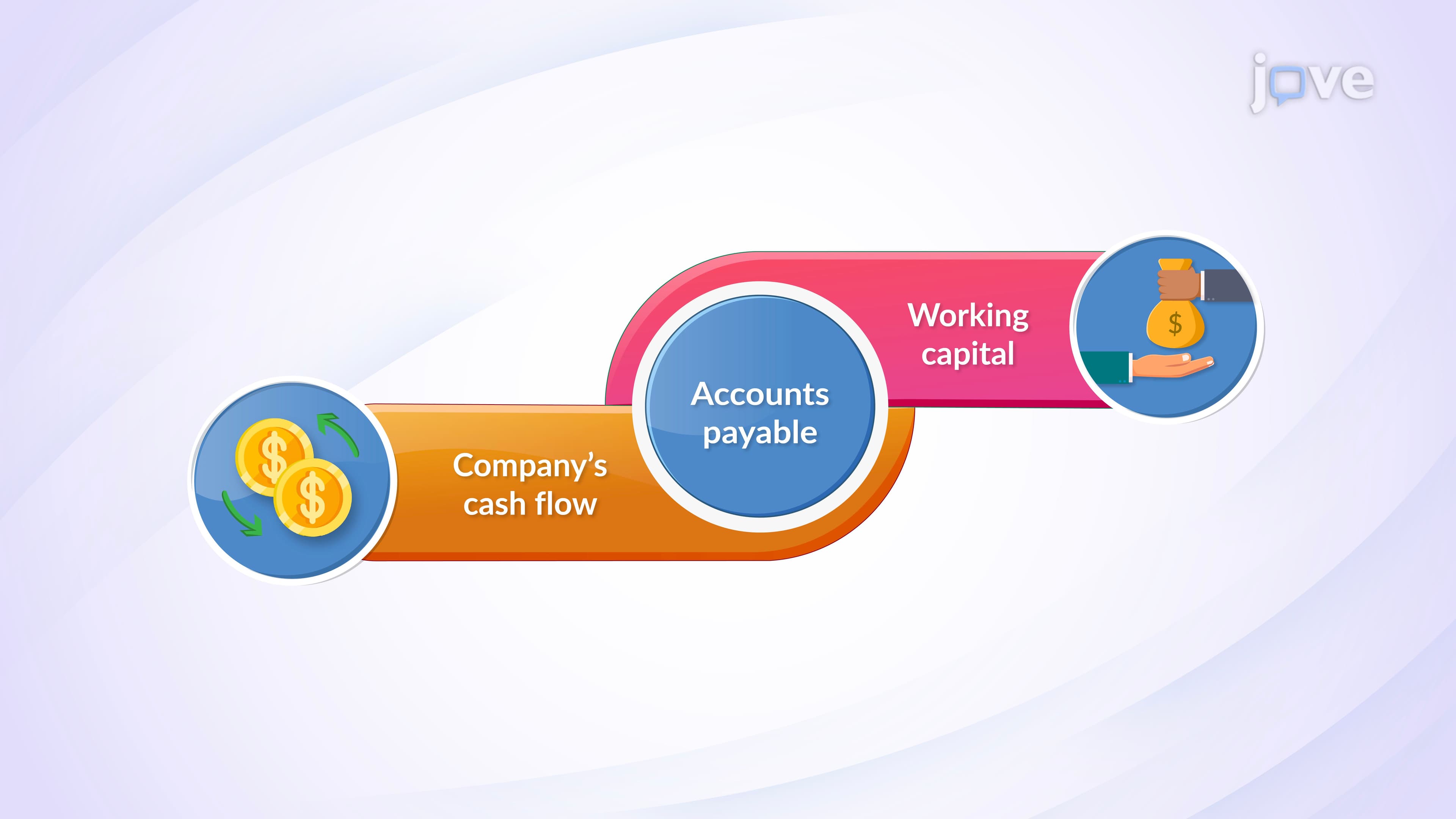
Most managers operating outside of pure finance assume the accounts payable process belongs entirely to the accounting team. That assumption creates blind spots. When you manage budgets, approve purchase orders, or have any influence over vendor relationships, you are a direct stakeholder in how payables move. The accounts payable turnover ratio, calculated by dividing the cost of goods sold by the average accounts payable balance, tells you how many times in a given period your organization is cycling through its supplier obligations. A result of 7.5, for example, means suppliers are being paid roughly every 49 days. That number has consequences for cash flow, supplier trust, and your team's procurement leverage.
Use a simple three-lens framework when analyzing this ratio in a management context:
1. Liquidity Lens, A low turnover ratio may indicate the organization is conserving cash strategically or, more worryingly, struggling to meet obligations. Cross-reference with days sales outstanding (DSO) to see whether slow inflows are driving slow outflows. If receivables collection is lagging and payables are also slow, you have a compounding working capital problem.
2. Relationship Lens, Suppliers extend trade credit based on trust. A declining turnover ratio signals slower payments, which erodes that trust over time. Managers who influence purchasing decisions should treat this ratio as a relationship health indicator, not just a financial one.
3. Benchmark Lens, Ratios only become meaningful in context. Compare against industry norms and your organization's own historical trend. A ratio that has dropped from 10 to 6 over two years tells a very different story than one that has held steady at 6 for five years.
If you lead a team that interacts with procurement, finance, or vendor management, bring this metric into your next planning conversation using the RACI model as a guide. Clarify who is *responsible* for monitoring payables cycles, who is *accountable* when ratios slip outside acceptable ranges, who should be *consulted* on payment timing decisions, and who needs to be *informed* when the ratio signals risk. This transforms a passive financial figure into an active management tool.
When reviewing team performance against operational KPIs, use the payable turnover ratio alongside accounts receivable collection data to build a complete cash flow narrative. Strong managers do not wait for finance to flag problems, they read these signals early and bring solutions to the table before liquidity pressure becomes a leadership crisis.
The most frequent mistake managers make is treating a high turnover ratio as automatically positive. Paying suppliers too quickly can deplete cash reserves that could be deployed elsewhere. Conversely, treating a low ratio as a sign of financial sophistication, "we're holding onto cash strategically", ignores the supplier relationship damage accumulating in the background. The goal is an optimized ratio: one that balances cash flow management with healthy, sustainable trade credit relationships. Build that judgment through regular review, cross-functional dialogue, and a clear understanding of what the numbers are actually measuring.
Related Micro-courses