Loading video…

 14 Concepts
 4.7K views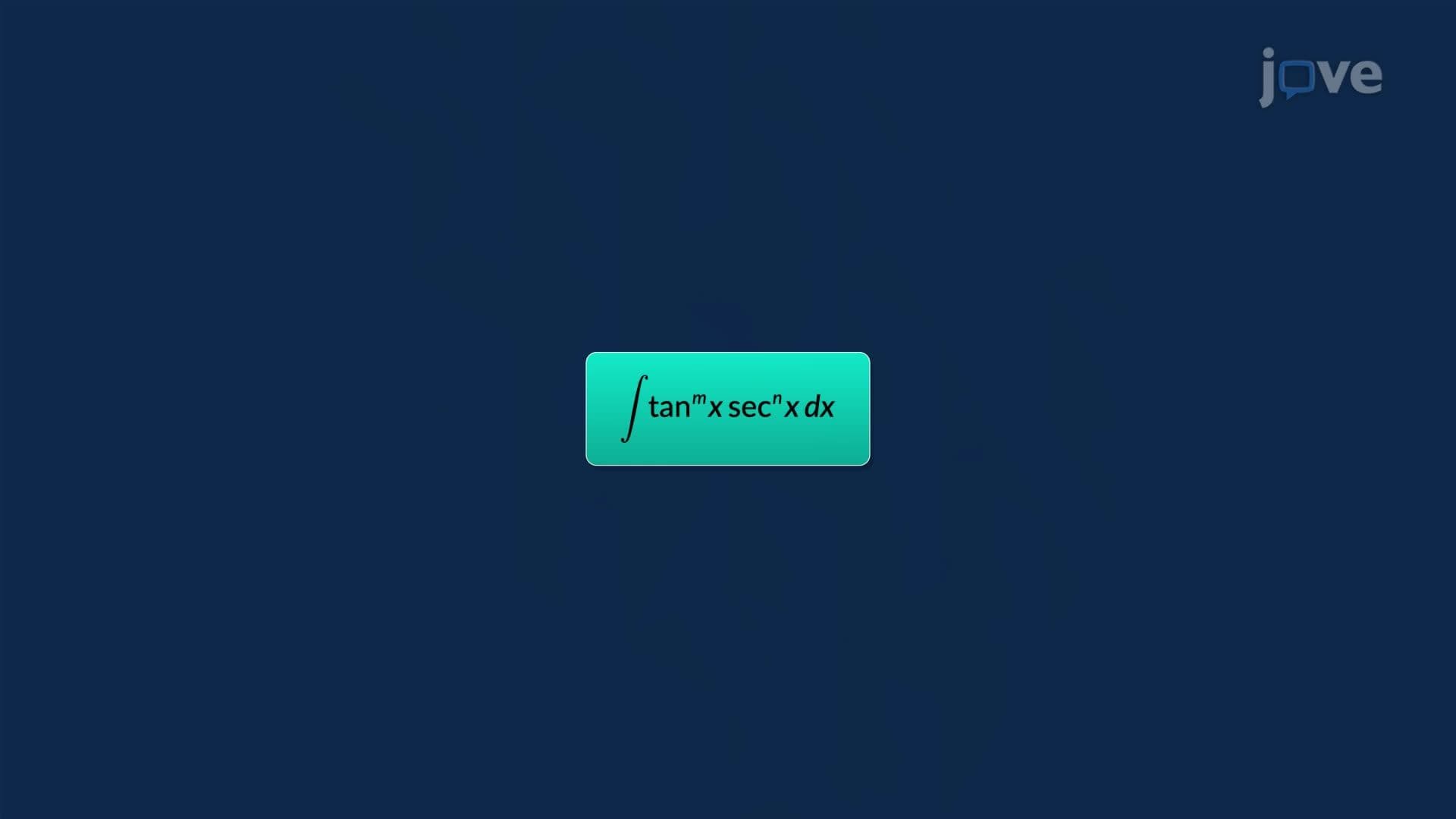

Video Summary: Integrals of Powers of Secant and Tangent Explained
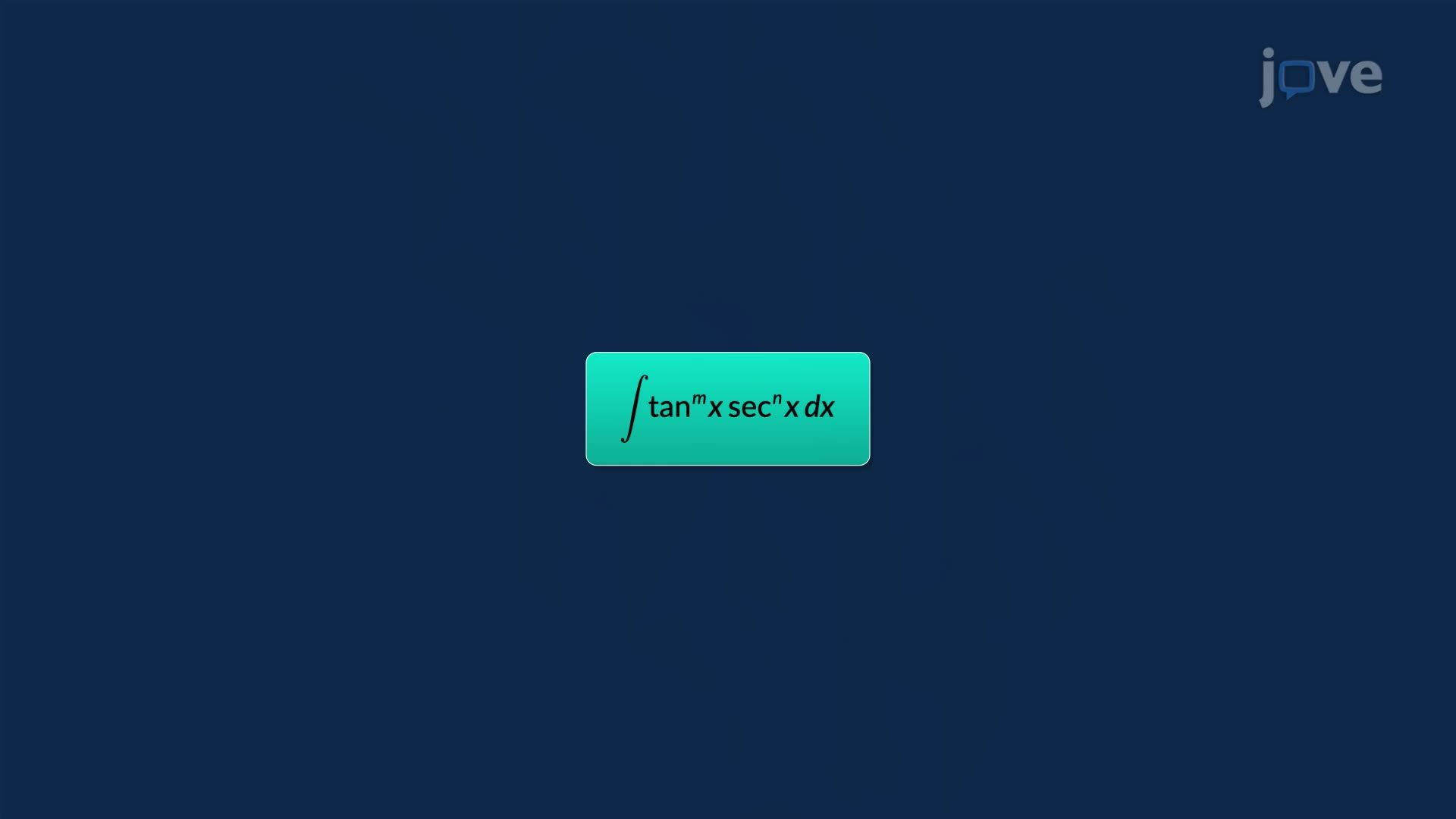
Ever wonder how engineers at NASA model oscillating wave patterns using calculus? The answer often comes down to mastering integrals of powers of secant and tangent. This concept, formally called *Integrals of Powers of Secant and Tangent Explained*, unlocks a powerful substitution strategy that transforms complex trig expressions into simple polynomials. Watch the full video on JoVE Coach to master this concept with expert-led visuals and step-by-step explanations.
Trigonometric integrals appear throughout Calculus II coursework at US universities and are a fixture in AP Calculus BC free-response sections. Among the most nuanced are integrals of powers of secant and tangent, where the standard antiderivative rules fall short. Rather than guessing or memorizing dozens of formulas, calculus students can rely on two clean, logic-driven strategies tied directly to the structure of the integrand. Understanding *why* each strategy works, not just *how* to apply it, is what separates confident problem-solvers from students who freeze on exams.
The entire method hinges on a single idea: choose a substitution variable whose derivative already appears (or can be made to appear) in the integrand. This is the same logic behind u-substitution in general, but here it's shaped by two key trigonometric facts:
These facts directly determine which substitution to use in each case.
When the power of secant in the integrand is even, set u = tan(x). Because the derivative of tan(x) is sec²(x), you can always factor out one sec²(x) term to serve as du. The remaining even power of secant, now reduced by two, can be fully rewritten in terms of tangent using the Pythagorean identity:
sec²(x) = 1 + tan²(x)
This identity is the engine of the conversion. Once every secant term is rewritten in tangent form, and du replaces sec²(x) dx, the entire integral becomes a polynomial in u. Polynomial integration is straightforward, and after integrating, you substitute back to express the answer in terms of x.
For example, an integral like ∫ sec⁴(x) · tan²(x) dx becomes approachable the moment you recognize the even secant power, factor out sec²(x) as du, and convert the remaining sec²(x) using the identity above.
When the power of tangent is odd, switch strategies and set u = sec(x). The derivative of sec(x) is sec(x)·tan(x), so you factor out one sec(x)·tan(x) pair to serve as du. The remaining even power of tangent is then converted using the complementary form of the same Pythagorean identity:
tan²(x) = sec²(x) − 1
After substitution, the integrand again becomes a polynomial in u, which integrates cleanly. You then back-substitute to return to the original trigonometric variable.
In US engineering and physics programs, from MIT's 18.01 to Calculus II at state universities, trigonometric integrals are used to solve problems involving wave energy, signal processing, and oscillatory motion. On the AP Calculus BC exam, these integrals appear in both multiple-choice and free-response questions, often as part of larger problems involving area between curves or differential equations. Students preparing for college STEM majors benefit enormously from practicing these cases because they also reinforce broader skills: recognizing patterns, applying trigonometric identities, and executing multi-step substitution, all critical for success in higher-level math and physics.
Related Micro-courses