Loading video…

 14 Concepts
 4.7K views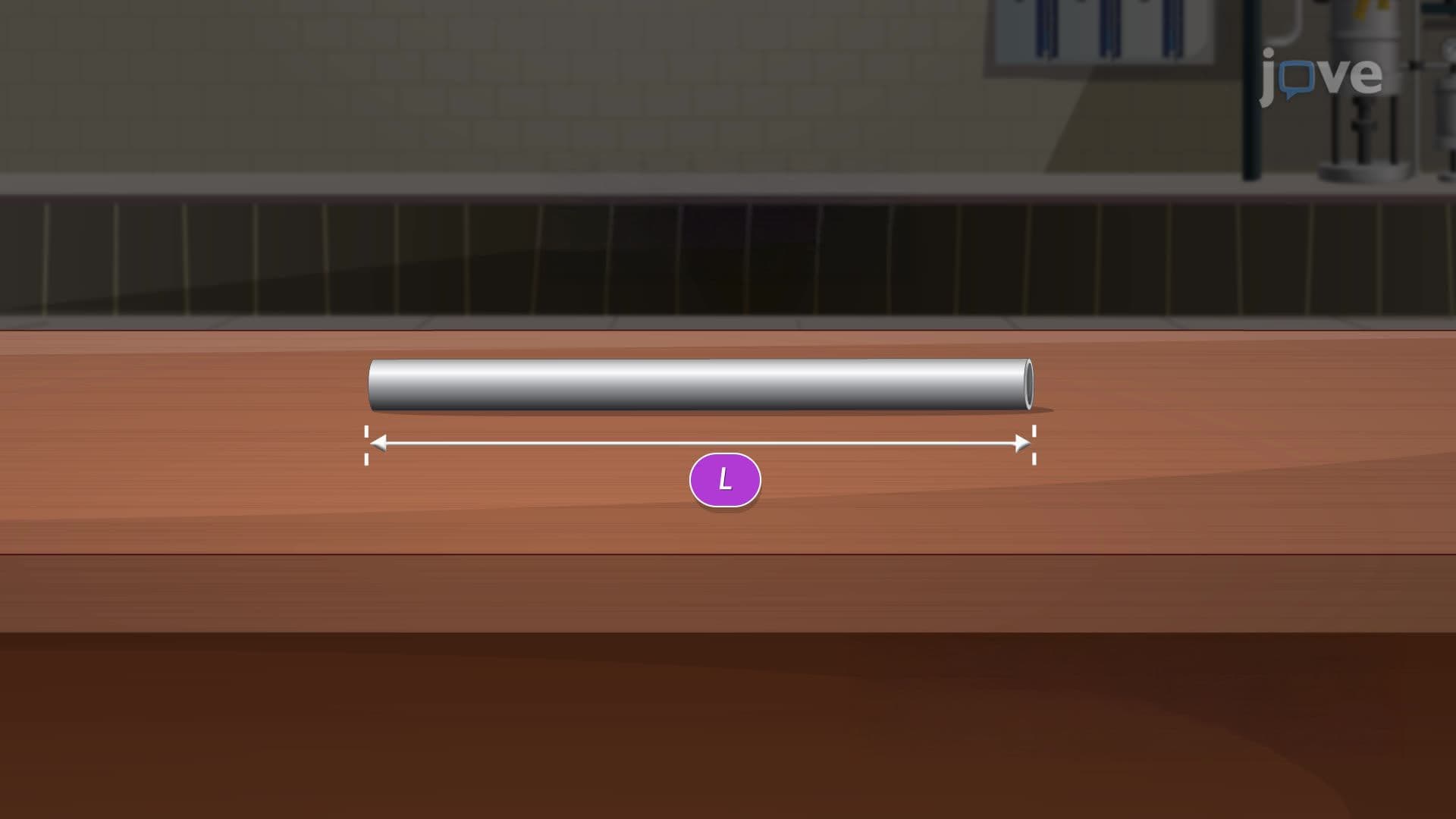

Video Summary: Rationalizing Substitutions Explained
Struggling to integrate a function with cube roots or other radicals? Rationalizing substitutions basics make these seemingly impossible integrals approachable and solvable. Imagine calculating the mass distribution of a structural rod in a US engineering lab, that real-world problem demands exactly this technique. Rationalizing Substitutions Explained shows how a smart variable swap transforms a messy radical expression into a clean polynomial. Watch the full video on JoVE Coach to master this concept with expert-led visuals and step-by-step explanations.
Some integrals simply refuse to cooperate with the standard toolkit. When a function contains a cube root, a fifth root, or any irrational expression involving a variable under a radical sign, techniques like integration by parts or trigonometric substitution may not offer a clean path forward. That is precisely where rationalizing substitutions step in. The core idea is elegant: introduce a new variable that eliminates the radical entirely, converting the integrand into a rational function that can be handled with familiar algebra and calculus tools.
A rationalizing substitution replaces the radical expression with a new variable u. For example, if an integral contains the cube root of x, you set u equal to the cube root of x, which means x equals u cubed and dx equals 3u squared du. Every part of the integral, the integrand, the differential, and the limits of integration for definite integrals, must be rewritten in terms of u. The result is a rational function integration problem, which is almost always more manageable. This substitution strategy applies equally to square roots, fourth roots, and more complex nested radicals.
Knowing how to choose an integration technique is one of the most valuable skills in a calculus course. Rationalizing substitutions are your best tool when the integral contains an nth root of a polynomial expression in x and no obvious trigonometric identity or product structure is present. By contrast, trigonometric substitution works best when the integrand contains expressions like the square root of (a squared minus x squared), which appears in problems involving circles or ellipses. Integration by parts suits products of functions such as x times the natural log of x. Partial fractions apply when you already have a rational function with a factorable denominator. Recognizing these patterns quickly is a skill tested directly on AP Calculus BC exams and college midterms across the United States.
After performing a rationalizing substitution, the resulting rational function sometimes has a numerator with a degree equal to or greater than the denominator. In that case, polynomial long division must be applied before integration. This simplifies the expression into a polynomial plus a proper fraction, each of which can then be integrated term by term. Skipping this step is one of the most common errors students make on AP Calculus BC free-response questions and college calculus midterms. Practicing polynomial long division alongside rationalizing substitutions builds both speed and accuracy.
A concrete US classroom example involves finding the total mass of a rod with a non-uniform, variable density function expressed using cube roots, exactly the type of problem that appears in introductory physics and mechanical engineering courses at universities like MIT, Caltech, and state engineering programs nationwide. The density varies along the rod's length, so integrating it requires handling the radical efficiently. A rationalizing substitution transforms the density integral into a solvable polynomial form, yielding an exact mass value. This same mathematical framework appears in thermodynamics, fluid mechanics, and structural analysis, making rationalizing substitutions a genuinely practical tool beyond the classroom.
Related Micro-courses