Loading video…

 14 Concepts
 4.7K views

Video Summary: Discontinuous Integrands in Improper Integrals
What happens when a function blows up to infinity right at the boundary of integration? Discontinuous integrands in improper integrals occur when a function is undefined or infinite at an endpoint, often due to a vertical asymptote. For example, modeling radial electric fields in US physics courses requires this exact technique. The discontinuous limit is replaced with a variable, and a limit resolves the calculation. Watch the full video on JoVE Coach to master this concept with expert-led visuals and step-by-step explanations.
A definite integral assumes the integrand is continuous and well-behaved across the entire interval. But what happens when the function shoots off to infinity at one of the endpoints, or even somewhere in the middle? That scenario defines discontinuous integrands in improper integrals. Unlike standard definite integrals, these require a modified approach: replacing the problematic point with a variable and introducing a limit to "sneak up" on the discontinuity mathematically.
This is not a rare edge case. Discontinuous integrands appear frequently in calculus courses across US colleges and AP Calculus BC curricula, and they test whether students truly understand limits and integration together.
The most common source of a discontinuous integrand is a vertical asymptote, a point where the function value increases or decreases without bound. Consider a function like 1/sqrt(x). As x approaches zero from the right, the function value grows infinitely large. If zero is one of the integration limits, the standard Fundamental Theorem of Calculus cannot be applied directly because the function is not defined there.
Functions involving rational expressions, radicals in denominators, or logarithms often produce this behavior. For instance, integrals involving 1/x^p near zero, or 1/sqrt(1 - x^2) near x = 1, are classic examples encountered in AP Calculus BC and college Calculus II courses at US universities like MIT OpenCourseWare-style curricula.
The standard technique for handling a discontinuous lower limit involves three steps:
1. Replace the discontinuous endpoint with a variable, typically "t" for a lower limit or "b" for an upper limit. 2. Evaluate the definite integral from t to R (or a to b) as you normally would, finding the antiderivative. 3. Take the limit as t approaches the discontinuous point (from the appropriate side) and determine whether the result is finite or infinite.
If the limit exists and is finite, the integral converges. If the limit is infinite or undefined, the integral diverges. This distinction matters enormously, a divergent improper integral means no finite area exists under that curve.
For example, the integral of 1/sqrt(r) from 0 to R involves replacing the lower limit of 0 with t, integrating to get 2*sqrt(r) evaluated from t to R, then taking the limit as t approaches 0+. The result is 2*sqrt(R), a finite value, so the integral converges.
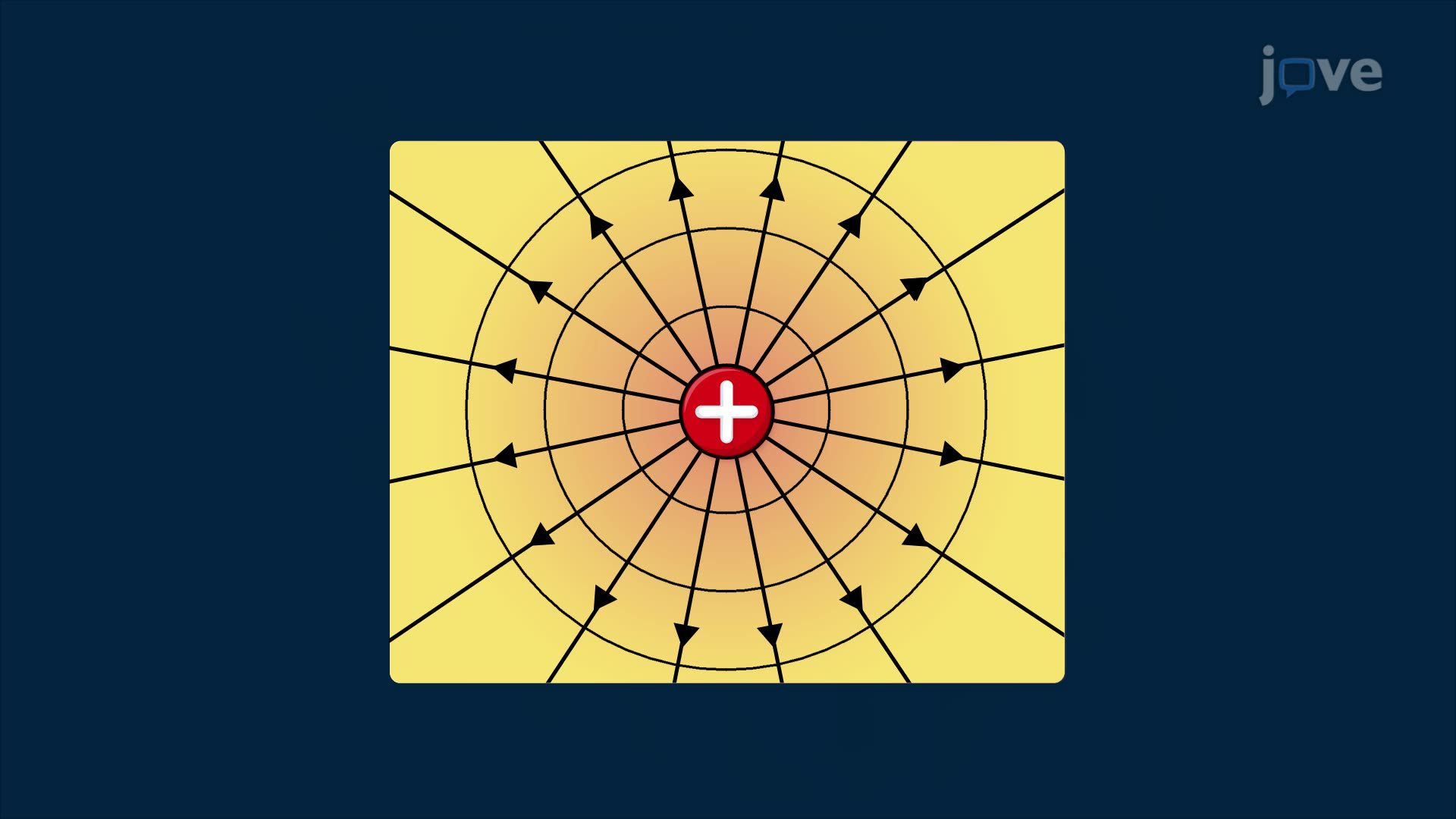
In introductory physics at US universities, particularly in calculus-based Physics II courses, electric potential difference is calculated using integrals of electric field functions. When the field behaves like 1/sqrt(r) near the origin, the integrand is discontinuous at r = 0. Applying the limit substitution method allows physicists and engineers to compute a meaningful, finite potential difference despite the apparent singularity.
Beyond physics, discontinuous integrands appear in probability density functions in statistics, fluid dynamics near boundary layers, and signal processing models. Understanding this concept also strengthens your ability to choose the right integration technique, whether that involves partial fractions for rational functions, trigonometric substitution for radical expressions, or integration by parts for products of functions. Mastery of improper integrals with discontinuous integrands is a foundational skill tested in AP Calculus BC free-response sections and college Calculus II midterms nationwide.
Related Micro-courses