Loading video…

 14 Concepts
 4.7K views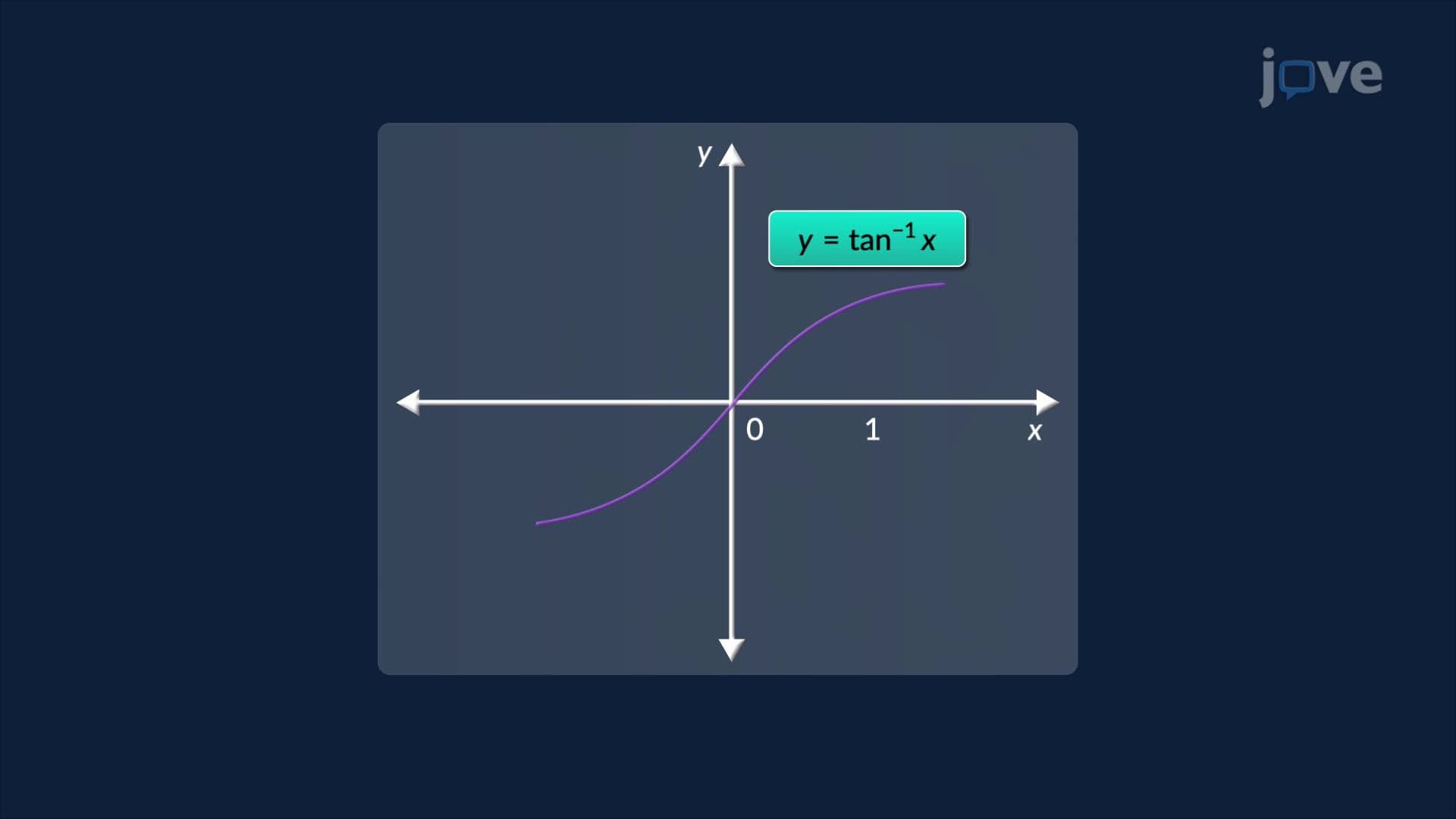

Video Summary: Definite Integrals in Integration by Parts
Ever wonder how engineers at NASA calculate the exact area under a complex curve between two fixed points? Definite integrals in integration by parts makes this possible. This powerful technique extends the integration by parts formula to evaluate integrals over specific intervals, including tricky functions like the inverse tangent. Watch the full video on JoVE Coach to master this concept with expert-led visuals and step-by-step explanations.
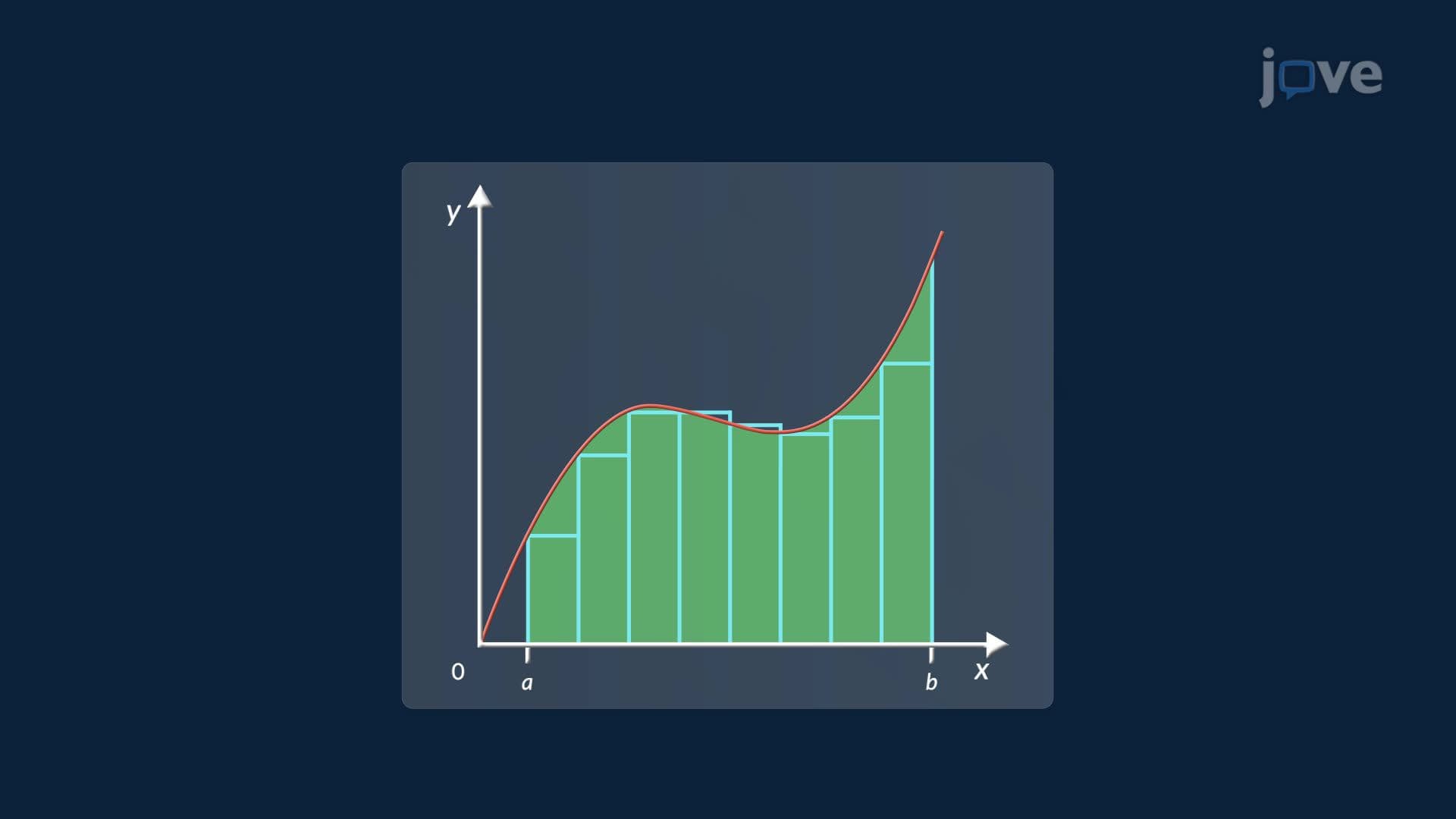
Definite integrals in integration by parts is a technique used to evaluate the integral of a product of two functions over a specific interval, say, from x = 0 to x = 1. Rather than finding a general antiderivative and stopping there, you also apply the limits of integration directly, computing an exact numerical area under a curve. This is essential in AP Calculus BC, college Calculus II courses across the US, and in fields ranging from electrical engineering to economics.
The general formula is:
Integral from A to B of u dv = [u · v] evaluated from A to B − Integral from A to B of v du
The boundary term [u · v] from A to B means you substitute the upper limit and then subtract the result at the lower limit, just like you would with any definite integral using the Fundamental Theorem of Calculus.
Choosing the right assignment for u and dv is the most critical step. The LIATE rule gives a reliable priority order: Logarithmic functions first, then Inverse trigonometric, Algebraic (polynomials), Trigonometric, and Exponential last. The function higher on this list is typically assigned as u (the one to differentiate), while the remaining function becomes dv (the one to integrate).
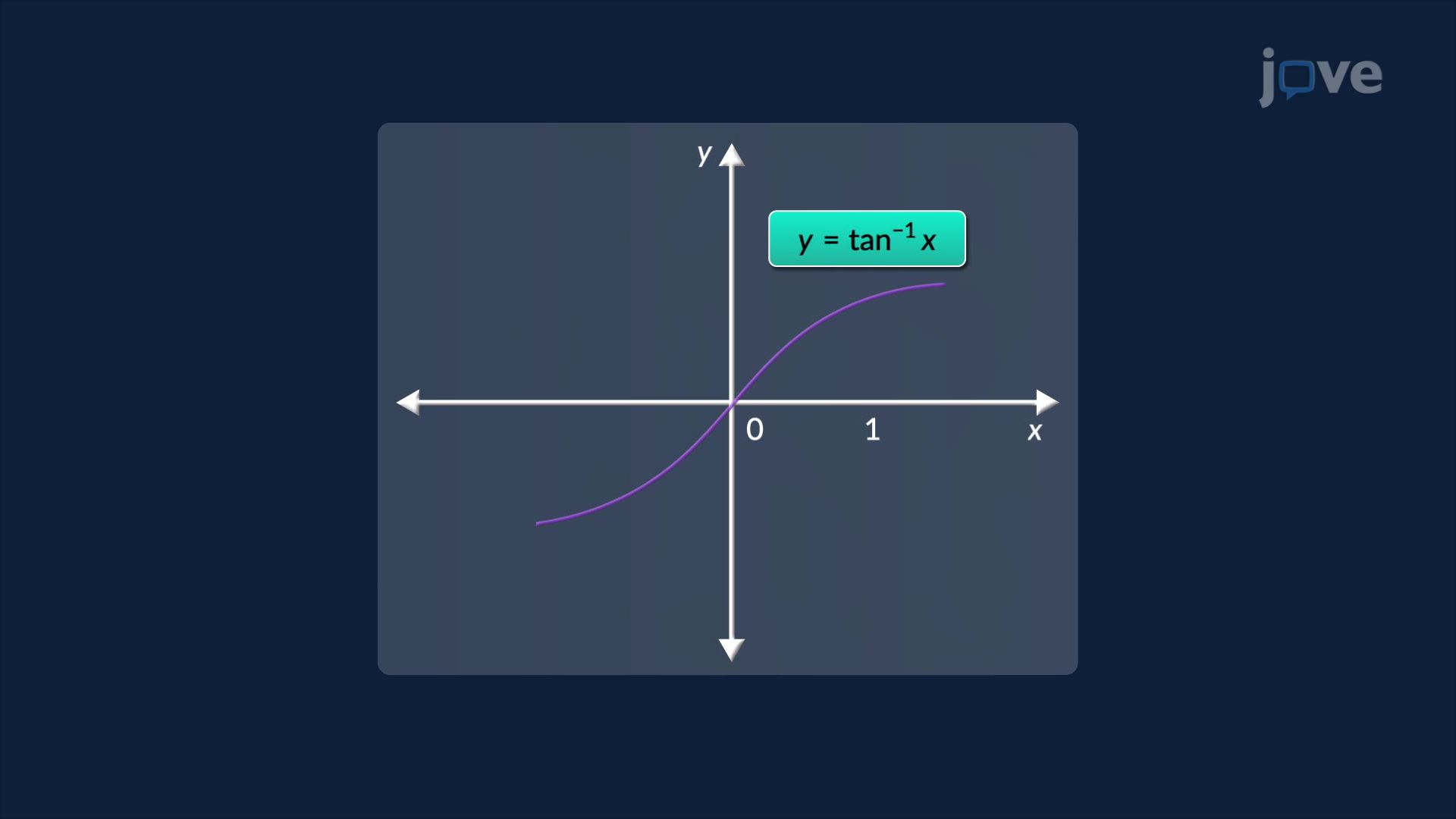
For example, when evaluating the definite integral of the inverse tangent of x from 0 to 1, the function arctan(x) has no standard antiderivative in your formula sheet. The solution is to rewrite the integrand as arctan(x) · 1, assigning u = arctan(x) and dv = 1 dx. This is a classic move tested on AP Calculus BC free-response questions and college midterm exams nationwide.
Once u and dv are assigned, the derivative du = 1/(1 + x²) dx and v = x are computed. Substituting into the formula gives:
[x · arctan(x)] from 0 to 1 − Integral from 0 to 1 of x/(1 + x²) dx
The first term is evaluated directly at the endpoints: at x = 1, the result is 1 · arctan(1) = π/4; at x = 0, the result is 0. So the boundary term contributes π/4.
The remaining integral, x/(1 + x²), is solved using substitution. Setting t = 1 + x², the derivative dt = 2x dx, which means x dx = dt/2. The limits of integration shift: when x = 0, t = 1; when x = 1, t = 2. The integral becomes (1/2) · Integral from 1 to 2 of 1/t dt, which evaluates to (1/2) · ln(2). Since ln(1) = 0, the calculation is clean and direct.
The final answer is: π/4 − (1/2) · ln(2)
This technique appears in real US academic and professional contexts far beyond the classroom. In electrical engineering programs at MIT or Georgia Tech, integration by parts with definite integrals is used to compute signal energy over time intervals. In probability and statistics, it appears when deriving expected values for continuous distributions, relevant to students preparing for actuarial exams or AP Statistics extensions.
On the AP Calculus BC exam, definite integration by parts problems frequently appear in both the multiple-choice and free-response sections. Students in college Calculus II courses at state universities across the US encounter this in unit tests and final exams. Understanding how to adjust limits during substitution, evaluate boundary terms carefully, and recognize logarithmic outcomes are the three skills that separate students who score well from those who lose partial credit.
Mastering definite integrals in integration by parts also builds the foundation for tackling improper integrals, trigonometric integrals, and rational function integration, all of which appear in upper-division math and physics courses.
Related Micro-courses