Loading video…

 14 Concepts
 4.7K views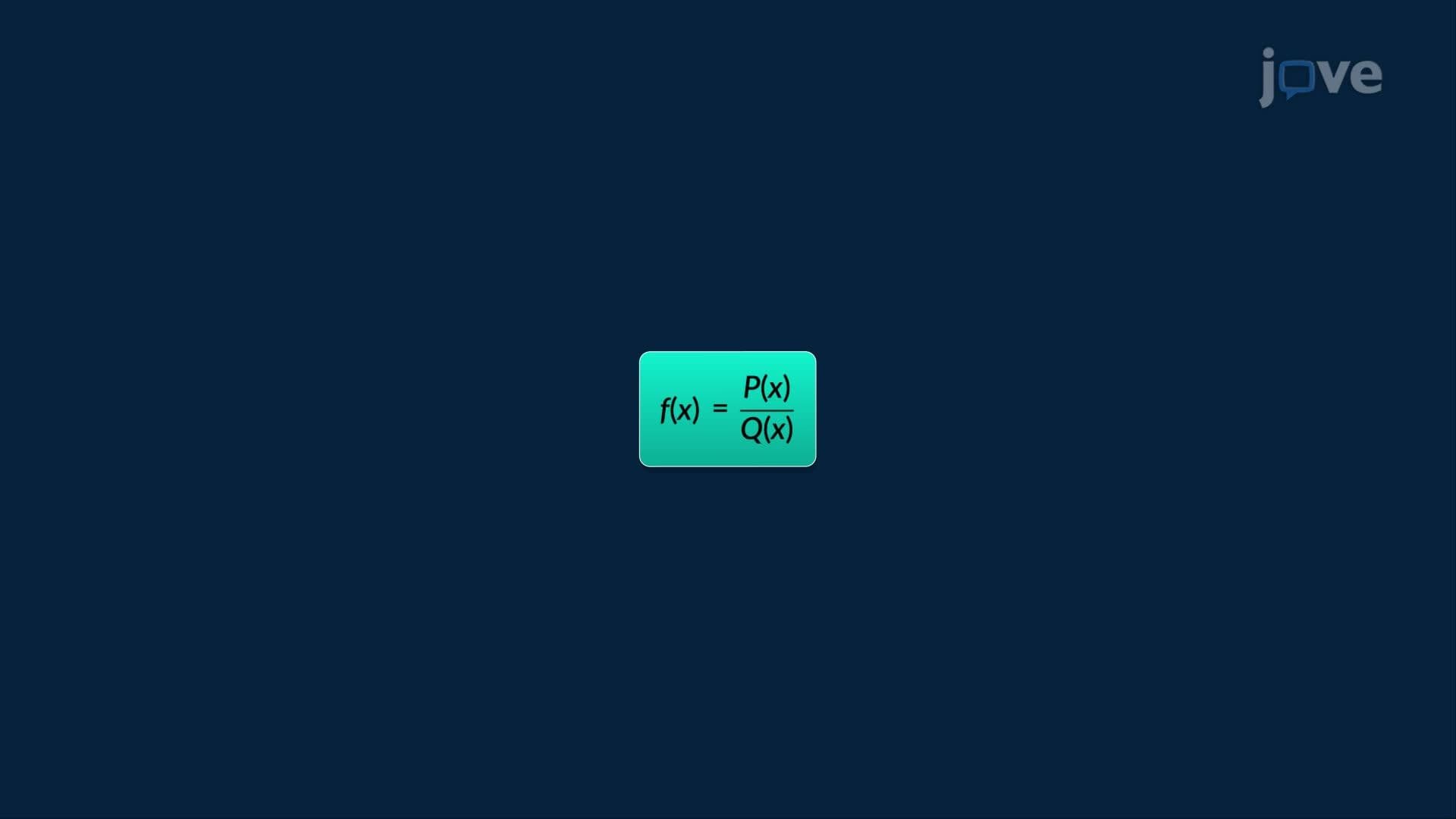

Video Summary: Integration of Rational Functions Using Partial Fractions Explained
Did you know that engineers at NASA use rational function models to analyze spacecraft trajectory data? Mastering integration of rational functions using partial fractions unlocks a powerful toolkit for solving complex integrals that appear throughout calculus. This concept, formally called *Integration of Rational Functions Using Partial Fractions Explained*, breaks down intimidating fractions into manageable, solvable pieces. Watch the full video on JoVE Coach to master this concept with expert-led visuals and step-by-step explanations.
Rational functions, expressions written as one polynomial divided by another, appear constantly in calculus courses across US high schools and universities. Whether you're preparing for the AP Calculus BC exam, a college Calculus II midterm, or simply working through homework, knowing how to integrate rational functions is non-negotiable. The central strategy is elegant: decompose a complicated fraction into a sum of simpler fractions, then integrate each piece individually using rules you already know.
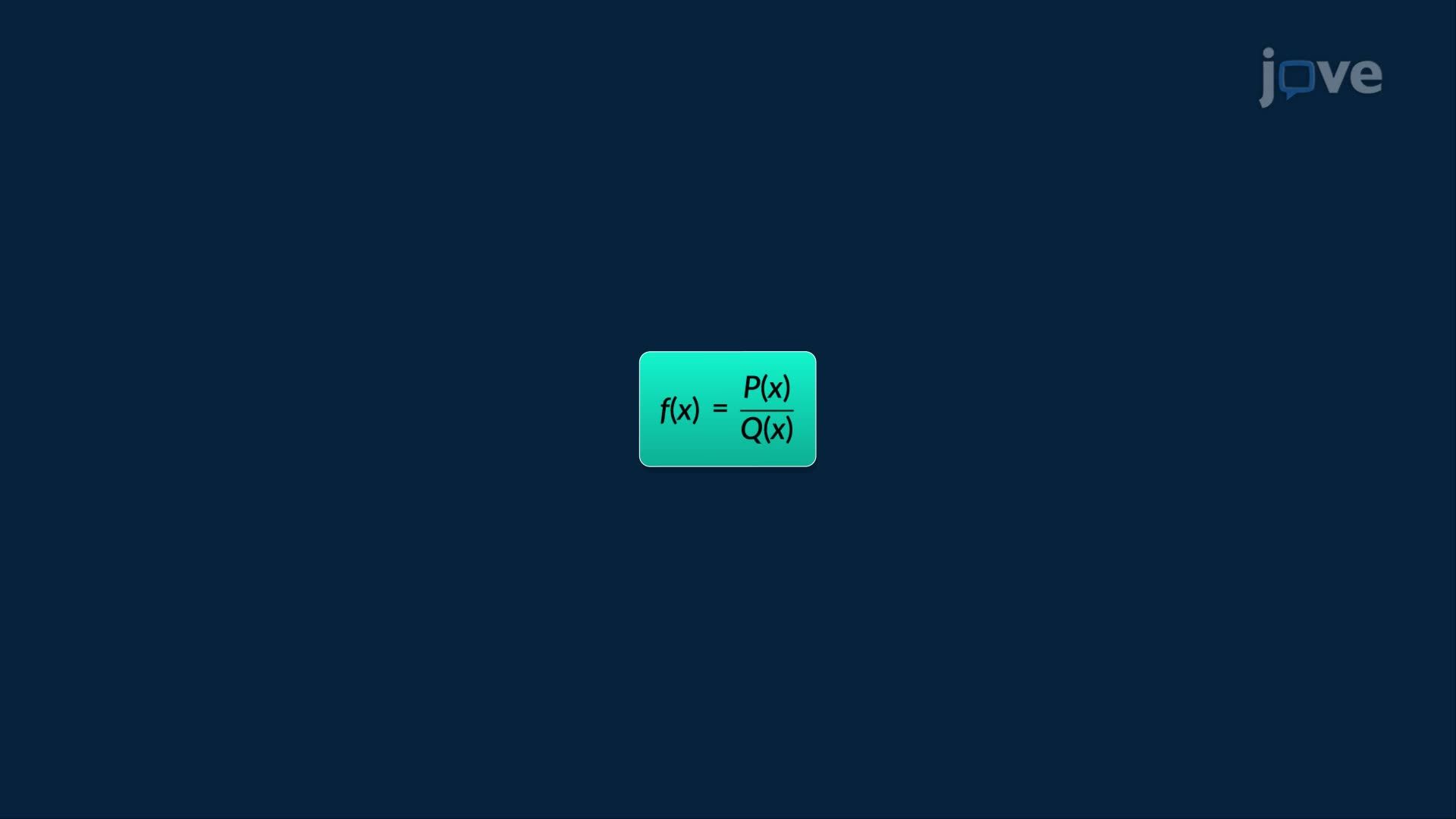
Before applying any integration technique, classify your function. A proper rational function has a numerator whose degree is strictly less than the denominator's degree, for example, (3x + 1) on (x² + 5x + 6). These are ready for partial fraction decomposition immediately. An improper rational function has a numerator degree that equals or exceeds the denominator's degree, such as (x³ + 2x) on (x² - 1). Improper functions must first undergo polynomial long division, which splits the expression into a clean polynomial plus a proper fractional remainder. Skipping this step is one of the most common errors students make on AP Calculus BC free-response questions.
Once you confirm your function is proper (or have reduced it via long division), the decomposition process follows a reliable sequence. First, factor the denominator completely. Second, write the function as a sum of unknown fractions, one for each factor. Third, multiply both sides of the equation by the original denominator to eliminate all fractions. Fourth, substitute strategic values of x that make individual terms vanish, allowing you to solve for each unknown coefficient directly. This algebraic setup transforms what looks like one hard integral into several straightforward integrals of the form (A on (x - r)), which integrate to A · ln|x - r| + C. This logarithmic pattern is the hallmark result of partial fractions and shows up repeatedly on exams.
Understanding partial fractions becomes even more powerful when you see how it fits alongside other methods. Integration by parts handles products of functions (like x · eˣ). Trigonometric substitution is ideal when square roots of quadratic expressions appear. Trigonometric integrals address powers of sine and cosine. Rational function integration via partial fractions handles algebraic fractions, a category none of those other techniques fully cover. Knowing how to choose an integration technique is itself a tested skill: AP Calculus BC multiple-choice sections regularly present students with rational expressions and expect them to immediately recognize partial fractions as the correct path.
Rational function integration isn't just an abstract exercise. Chemical engineers at US universities use it when solving differential equations that model reaction rates, where concentration over time is expressed as a rational function. In pharmacokinetics, studied in pre-med programs and tested conceptually on the MCAT, drug clearance models involve rational expressions that require integration for area-under-the-curve calculations. At the high school level, AP Calculus BC students encounter partial fractions as one of the more advanced techniques in Unit 6, and college students revisit it throughout Calculus II and Differential Equations courses. Building fluency here pays dividends across semesters.
Related Micro-courses