Loading video…

 12 Concepts
 2.3K views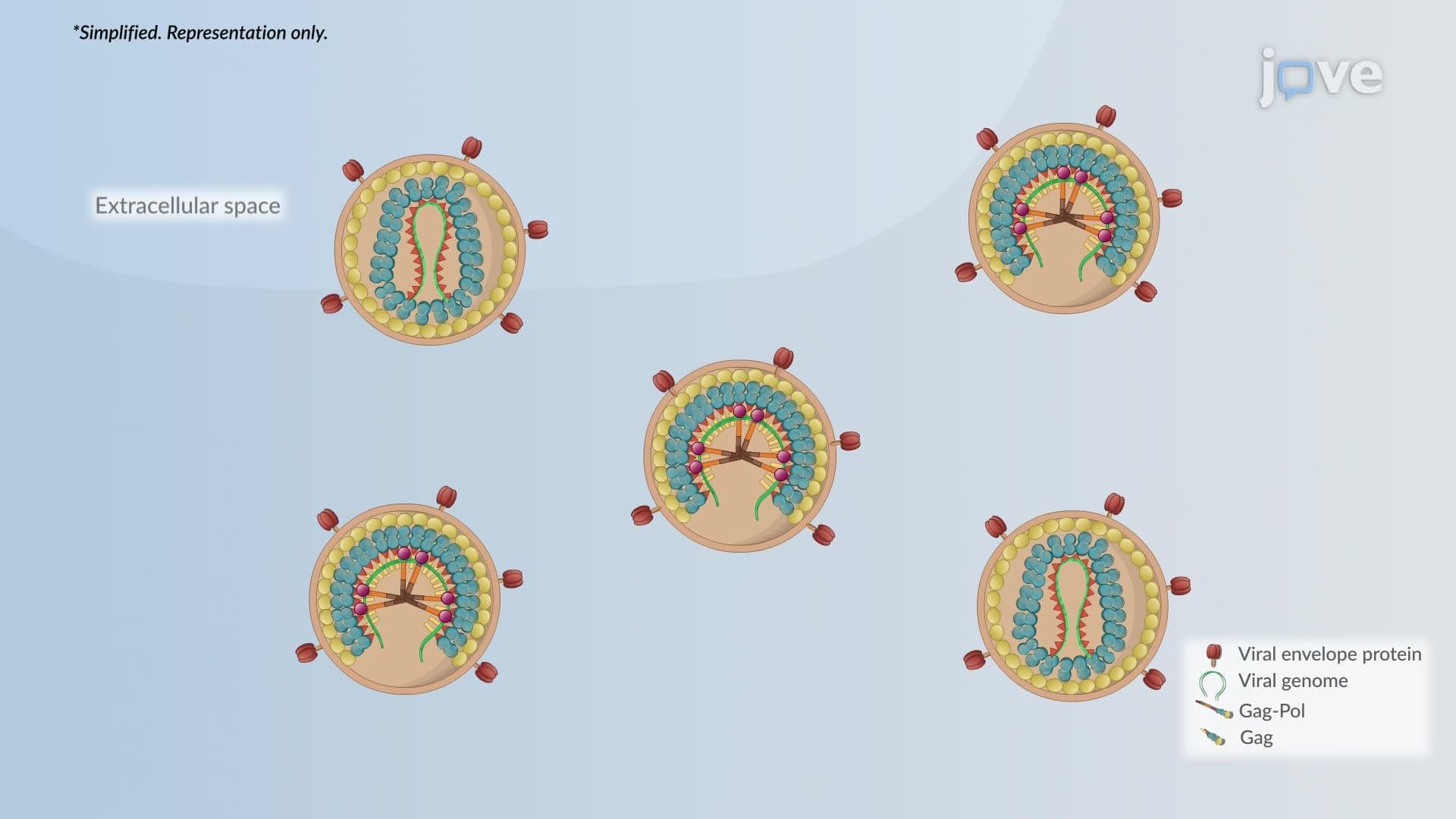

Video Summary: Inhibitors of Virion Maturation and Assembly Explained
Did you know that HIV can assemble thousands of new viral particles, yet still fail to infect new cells if one enzyme is blocked? Inhibitors of virion maturation and assembly basics explain exactly how that happens. Protease inhibitors, used in US HIV treatment regimens like HAART, prevent viral polyproteins from being cleaved into functional parts, leaving virions immature and noninfectious. Watch the full video on JoVE Coach to master this concept with expert-led visuals and step-by-step explanations.
Understanding inhibitors of virion maturation and assembly requires first appreciating how HIV hijacks a host cell's machinery and then tries to package itself into an infectious particle. This process is not automatic, it depends on a precise, enzyme-driven sequence that antiviral agents can disrupt. The viral protease sits at the center of that sequence, making it one of the most important drug targets in modern infectious disease medicine.
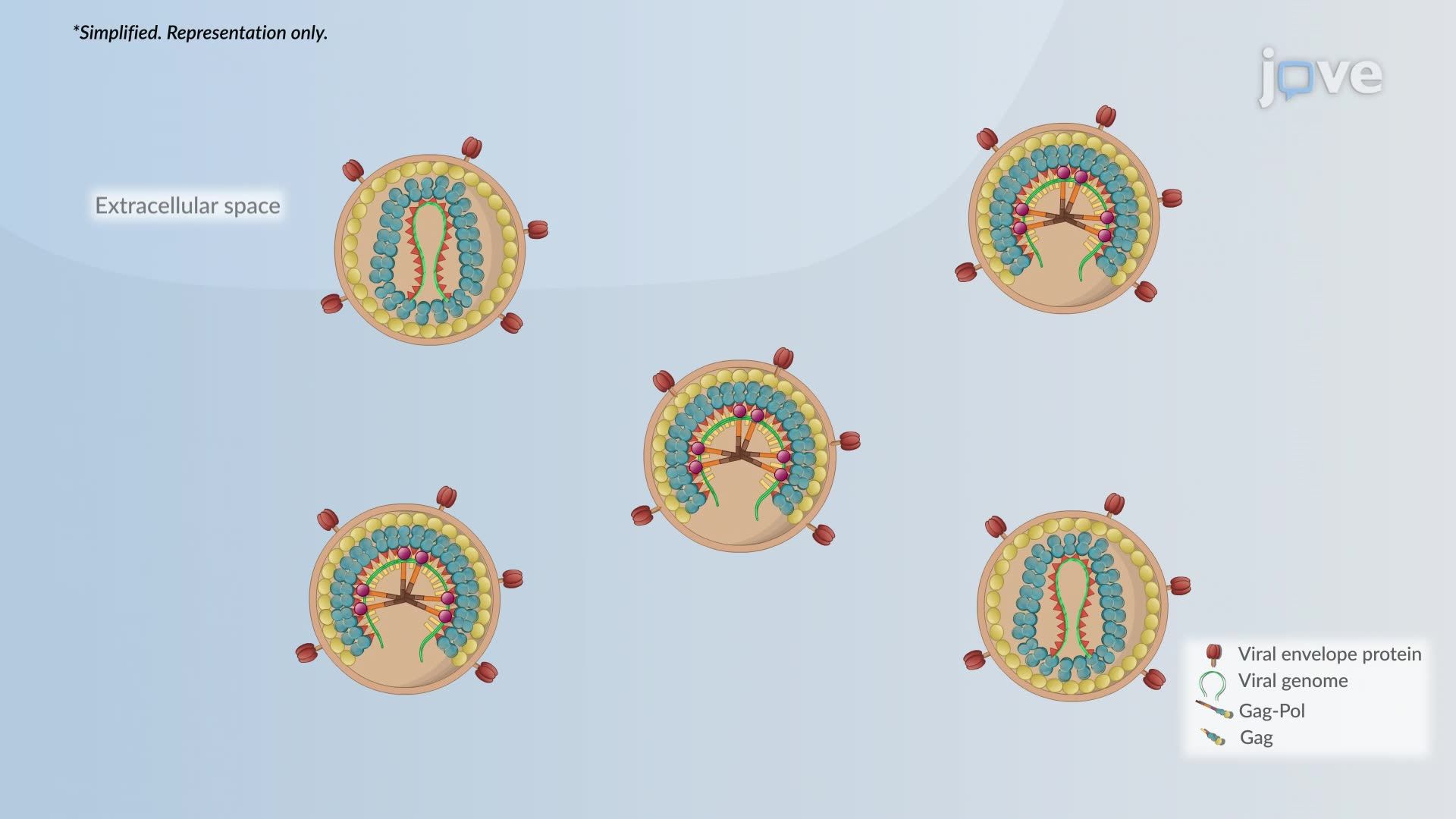
When HIV infects a human cell, the viral genome directs the cell to produce large, unprocessed protein chains called polyproteins, specifically Gag and Gag-Pol. Gag encodes the structural proteins that form the viral core, while Gag-Pol additionally encodes viral enzymes: reverse transcriptase, integrase, and, critically, the viral protease. These polyproteins migrate to the inner surface of the host cell's plasma membrane, where multiple copies begin clustering together. This self-assembly is the first stage of building a new viral particle. At this point, however, the virus is still non-functional; the proteins are bundled but unprocessed.
When enough Gag-Pol molecules accumulate, two protease regions come together and form an active dimer. As the immature viral particle buds off from the host cell membrane, this newly activated protease begins cutting, first freeing itself from the Gag-Pol chain, then systematically cleaving the remaining polyproteins into smaller, specialized proteins. These cuts trigger a dramatic structural reorganization inside the virion. The capsid condenses into its characteristic cone shape, and the virus transitions from an immature, non-infectious particle into a fully mature, infectious HIV virion capable of targeting new CD4+ T cells. Without this proteolytic processing, the virion's internal architecture remains disordered and incapable of completing the next infection cycle.
Protease inhibitors (PIs) are antiviral agents specifically designed to enter HIV-infected host cells and bind tightly to the viral protease's active site. By occupying that site, they competitively prevent the polyprotein substrates from being cleaved. The result: new viral particles still bud from the cell membrane, but they remain immature and noninfectious. US-approved protease inhibitors, including ritonavir, atazanavir, and darunavir, are cornerstones of antiretroviral therapy (ART). In clinical practice, they are almost always used in combination with other drug classes (a strategy called highly active antiretroviral therapy, or HAART) to minimize the risk of drug-resistant HIV strains emerging, a concern directly parallel to antimicrobial resistance seen with broad spectrum antibiotics.
In AP Biology, college microbiology courses, and MCAT preparation, understanding mechanisms of action for antiviral agents, and how they differ from antibiotics, antifungal agents, and bactericidal versus bacteriostatic drugs, is frequently tested. Protease inhibitors illustrate a key principle: effective antimicrobial drugs must target pathogen-specific structures while sparing host cells. Because human cells do not use viral-type polyprotein processing, viral proteases make an ideal selective target. Recognizing this selectivity helps students answer questions about why antiviral drugs are harder to develop than antibacterial drugs, a distinction that appears on MCAT biochemistry sections and college-level pharmacology exams.
Related Micro-courses