Loading video…

 12 Concepts
 2.3K views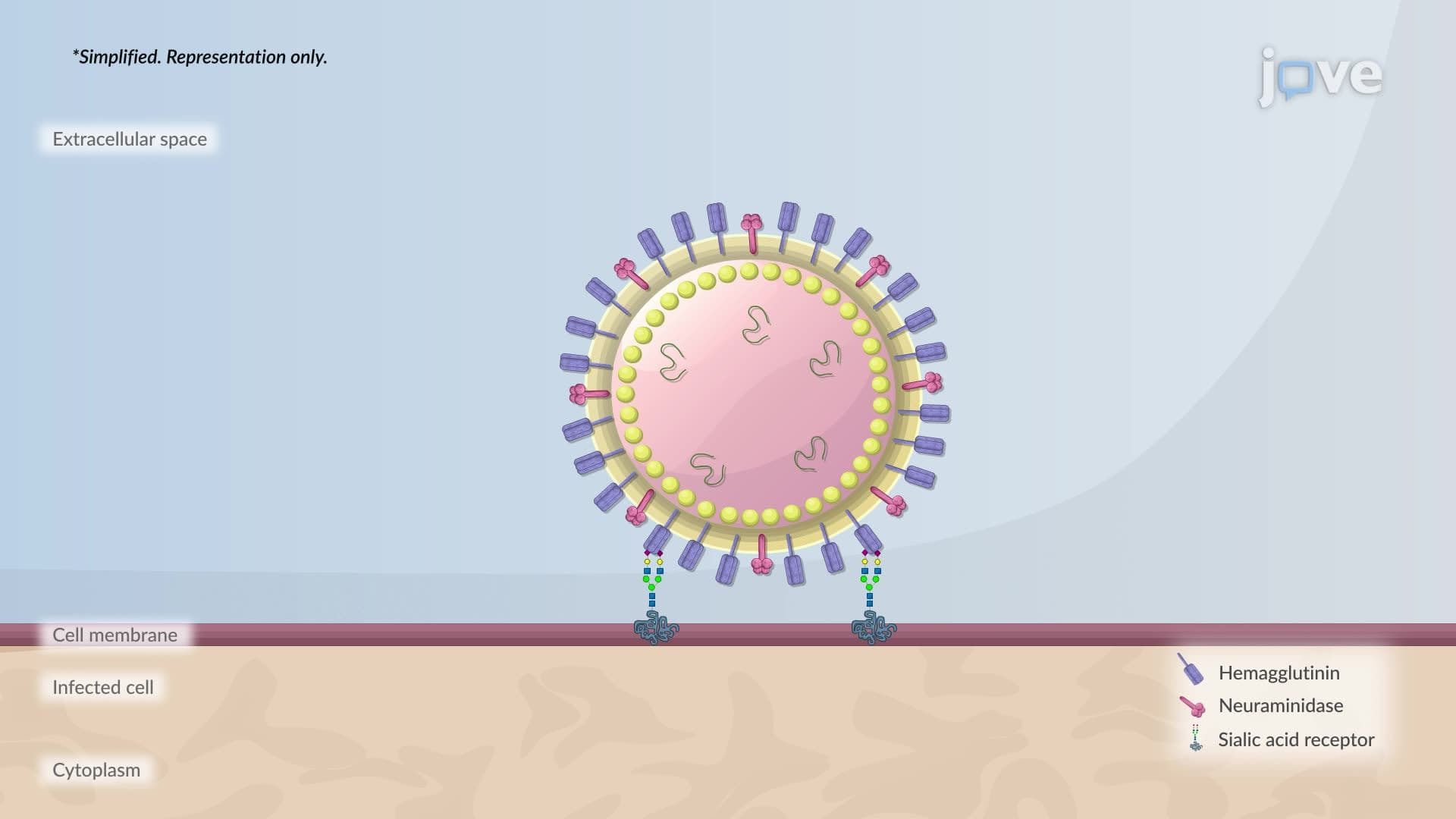

Video Summary: What are Inhibitors of Virion Release
Every flu season, millions of Americans rely on drugs like Tamiflu, but how exactly do they stop the virus from spreading? Inhibitors of virion release are antiviral agents that block neuraminidase, a key enzyme on the influenza A surface that allows newly formed viral particles to escape infected cells. Without this release step, the virus cannot spread throughout the body. Watch the full video on JoVE Coach to master this concept with expert-led visuals and step-by-step explanations.
Inhibitors of virion release are a specialized class of antiviral agents designed to stop newly assembled viral particles, called virions, from detaching from the host cell surface. Rather than preventing a virus from entering a cell or replicating inside it, these drugs interrupt the very last step of the viral life cycle: release. This makes them a unique and clinically important tool in antiviral pharmacology.
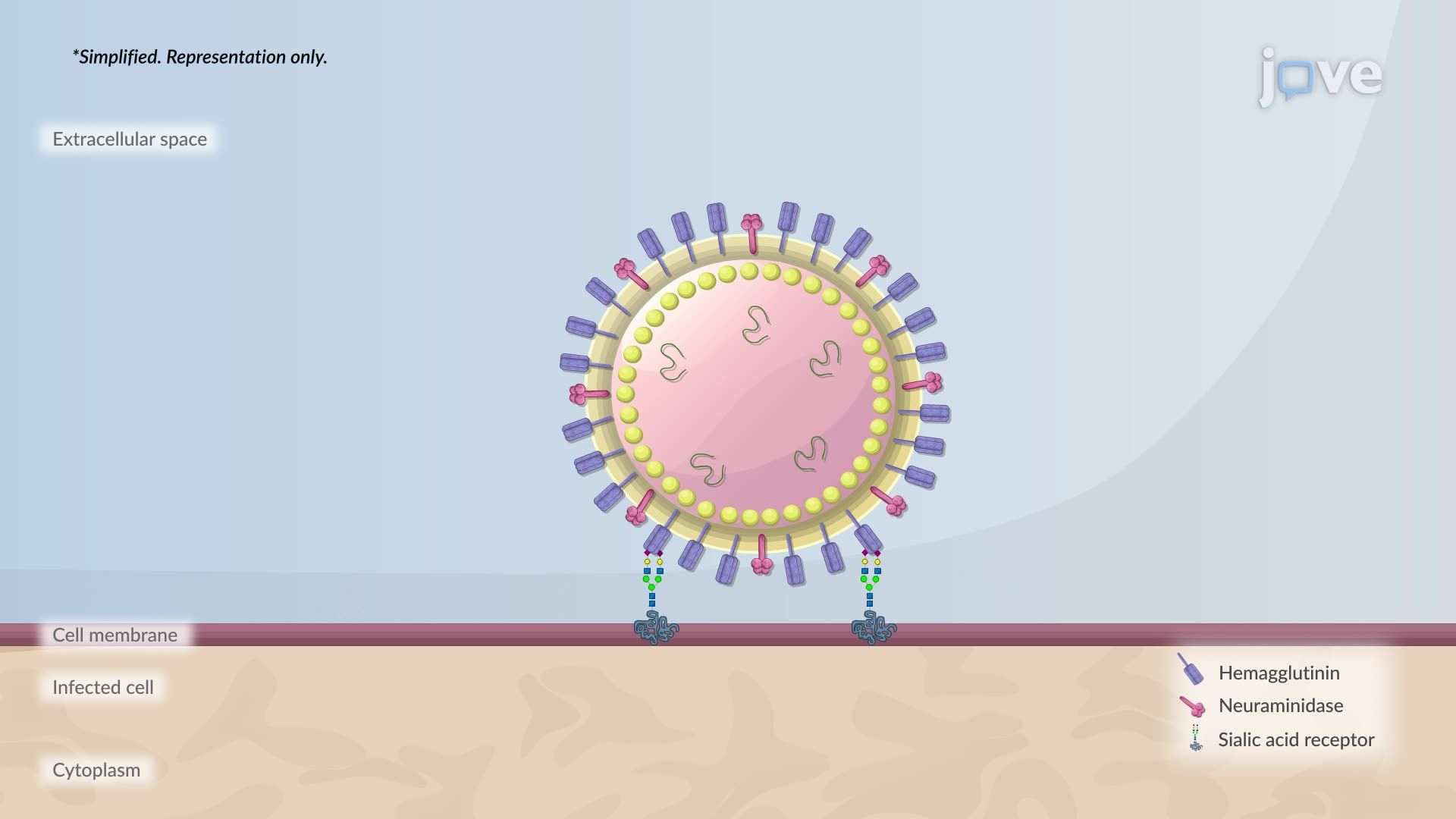
To understand how these inhibitors work, you first need to understand the mechanics of influenza A infection. The surface of the influenza A virus is studded with two critical glycoproteins: hemagglutinin (HA) and neuraminidase (NA). Hemagglutinin acts like a molecular key, binding to sialic acid receptors on the surface of human respiratory cells to gain entry. Once inside, the viral RNA hijacks the host cell's own machinery, ribosomes, enzymes, and energy systems, to manufacture new viral proteins. These proteins are assembled into fresh virions that bud outward from the host cell membrane. However, because hemagglutinin on the new virions also binds sialic acid residues on the host cell surface, the newly formed particles become temporarily stuck. This is where neuraminidase comes in: it cleaves those sialic acid residues, freeing the virions to travel to new cells and continue the infection.
Neuraminidase inhibitors, such as oseltamivir (Tamiflu) and zanamivir (Relenza), both approved by the FDA and widely used across the United States, are structural analogs of sialic acid. This means their molecular shape closely mimics the natural substrate that neuraminidase binds to. When these drugs are present, they competitively occupy the active site of neuraminidase, preventing it from cleaving sialic acid residues. As a result, newly formed virions remain anchored to the host cell surface and cannot spread to neighboring cells or tissues. The infection is effectively contained at the site of origin rather than amplifying throughout the respiratory tract.
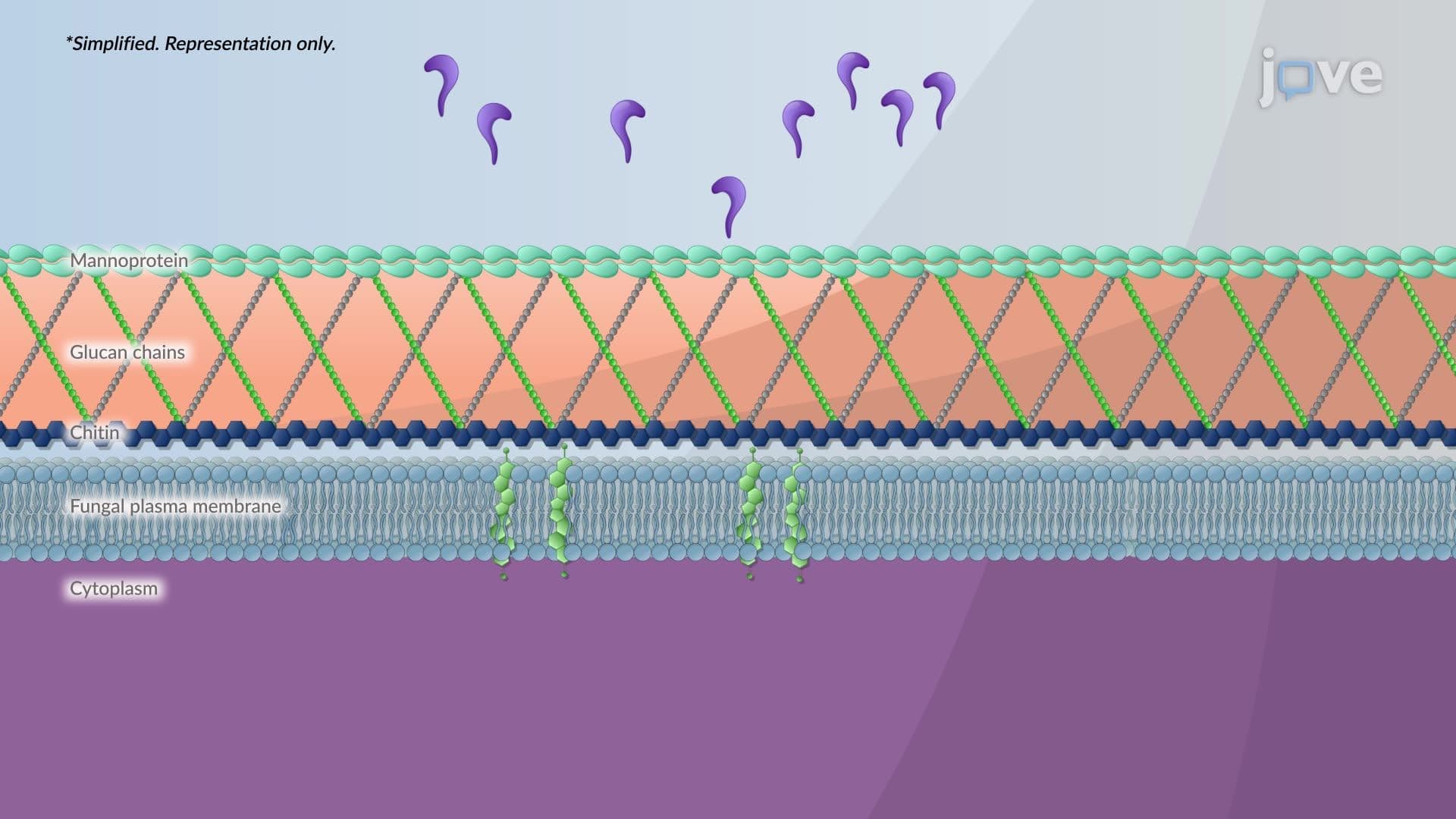
Understanding inhibitors of virion release fits naturally within the larger framework of how antimicrobial drugs work. Just as bactericidal antibiotics kill bacteria by destroying cell walls or membranes, and bacteriostatic agents simply halt bacterial growth, antiviral agents target virus-specific mechanisms that human cells do not possess, making them selective and reducing toxicity to the patient. This concept of mechanism-specific targeting also appears when studying antifungal agents, which exploit differences in fungal cell membranes. Antimicrobial resistance is another critical lens here: just as bacteria can develop resistance to antibiotics, influenza strains have shown resistance to neuraminidase inhibitors in clinical settings, which is why surveillance and responsible prescribing matter. The distinction between broad spectrum antibiotics (which target many organisms) and narrow spectrum antibiotics (which target specific ones) mirrors the precision of neuraminidase inhibitors, highly targeted to a specific enzyme in specific viral strains.
This concept appears in AP Biology, college-level Microbiology and Pharmacology courses, and is heavily tested on the MCAT and USMLE Step 1 under mechanisms of action for antiviral agents. Students are often asked to trace the viral life cycle, identify the step a given drug inhibits, and predict outcomes when that drug is used or resisted. Understanding sialic acid's role, the difference between hemagglutinin and neuraminidase functions, and the concept of competitive inhibition will give you a strong edge in both multiple-choice and free-response exam formats.
Related Micro-courses