Loading video…

 13 Concepts
 47 views

Video Summary: What are Space Curves
How does a commercial airline trace its exact path across the sky? Space curves basics explain precisely that, a space curve is a three-dimensional path traced by a moving particle, described by a vector function r(t) with x, y, and z components. A classic example is the helical ascent of a NASA rocket launch. Watch the full video on JoVE Coach to master this concept with expert-led visuals and step-by-step explanations.
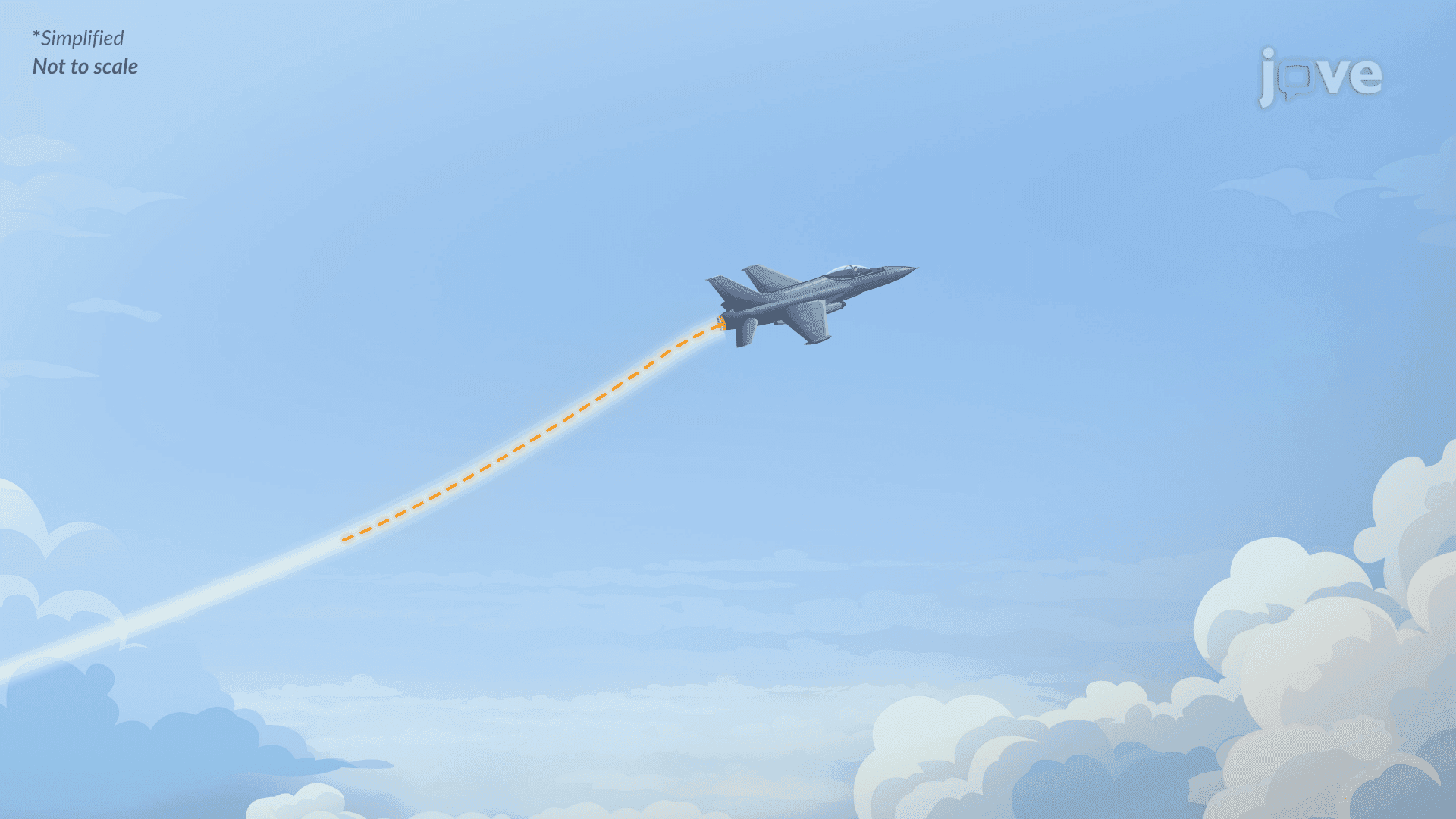
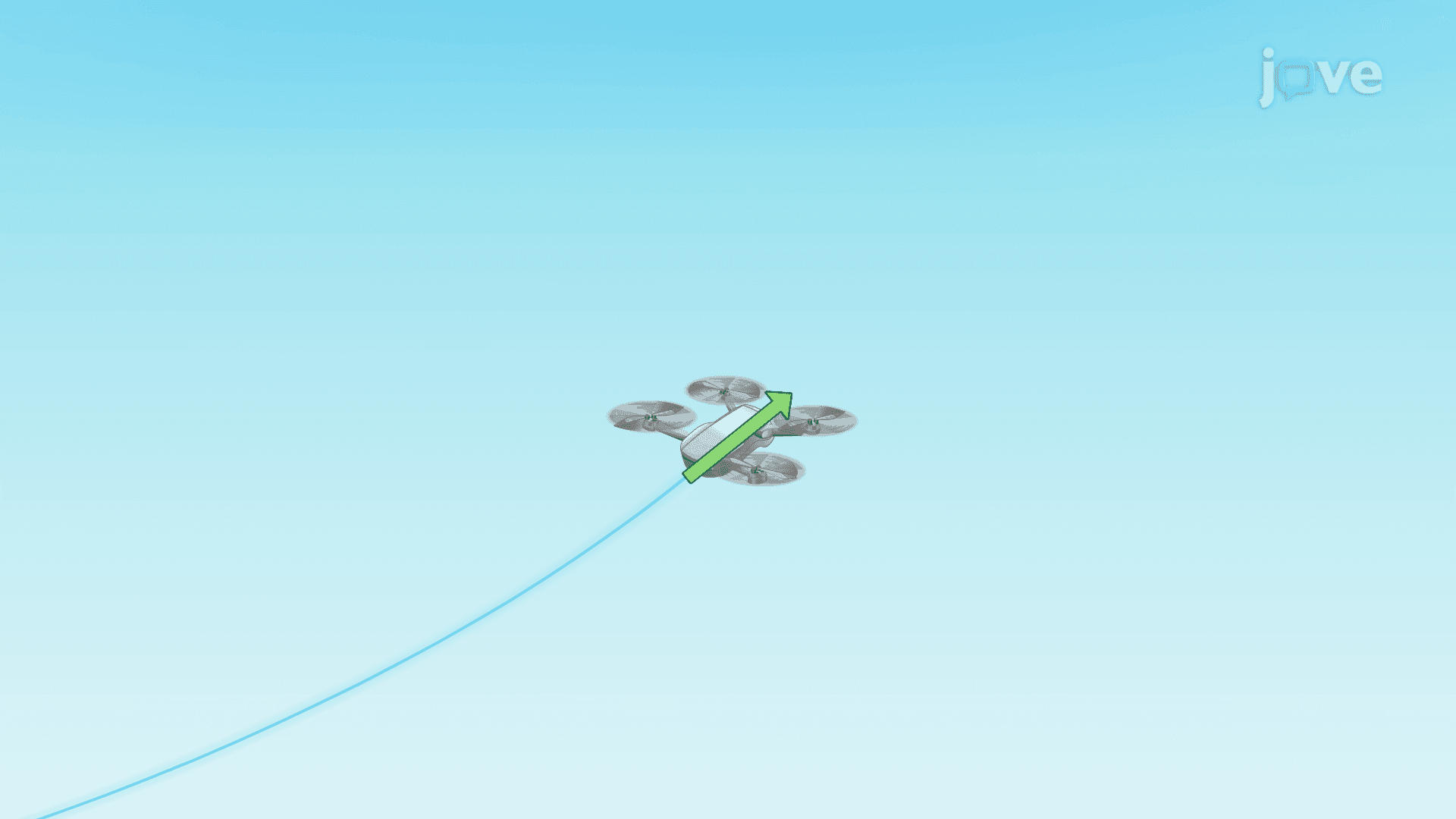
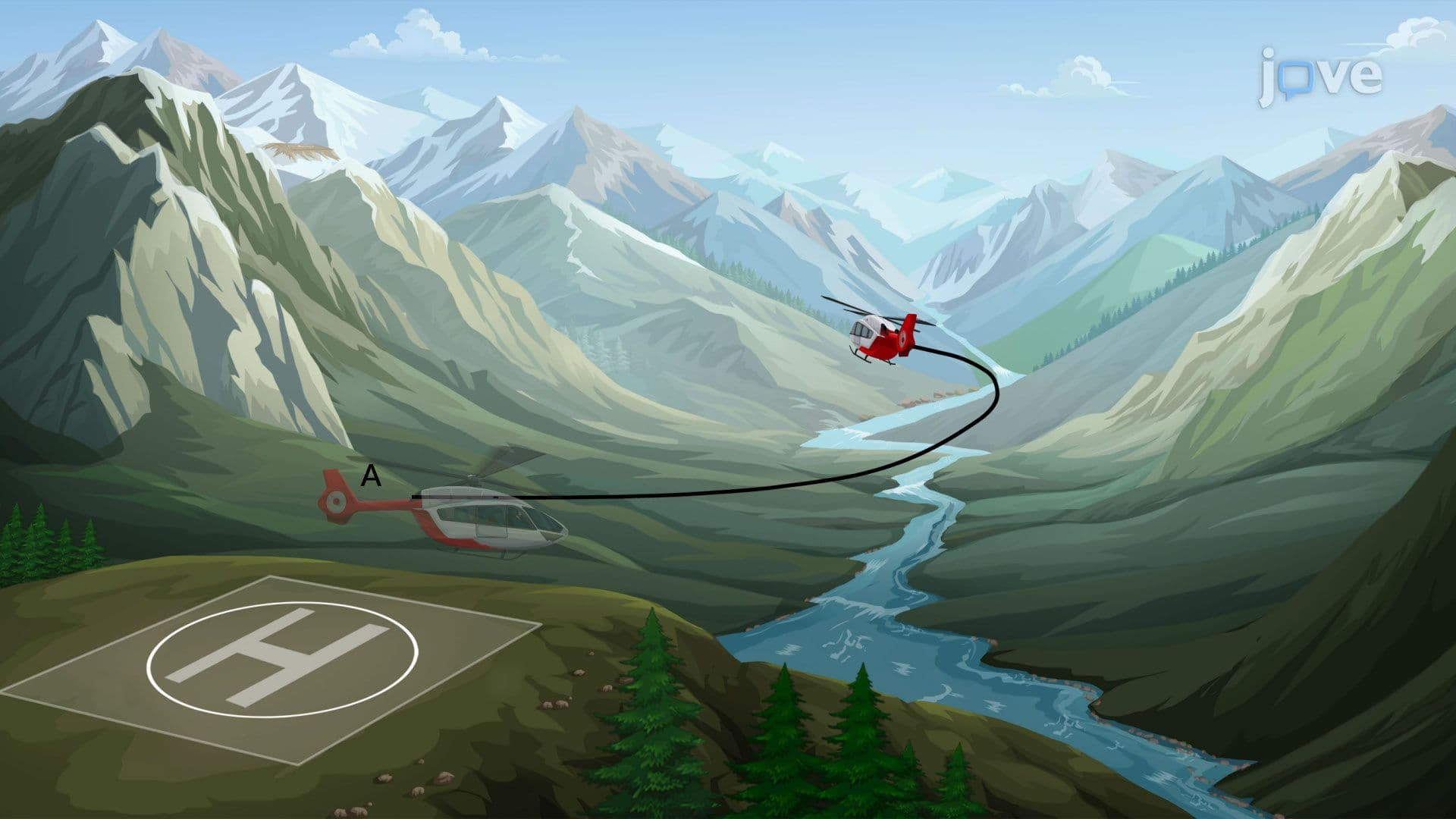
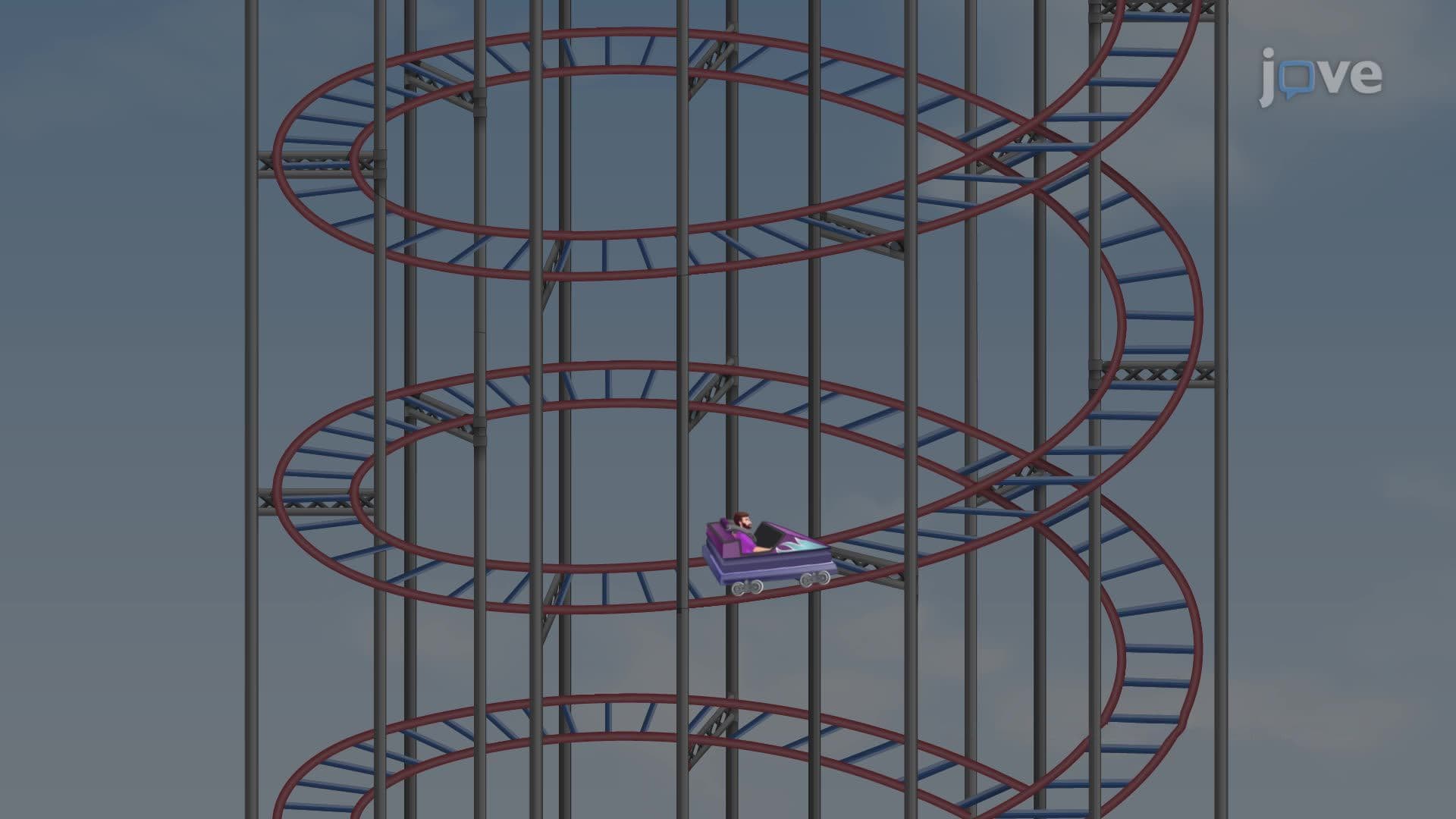
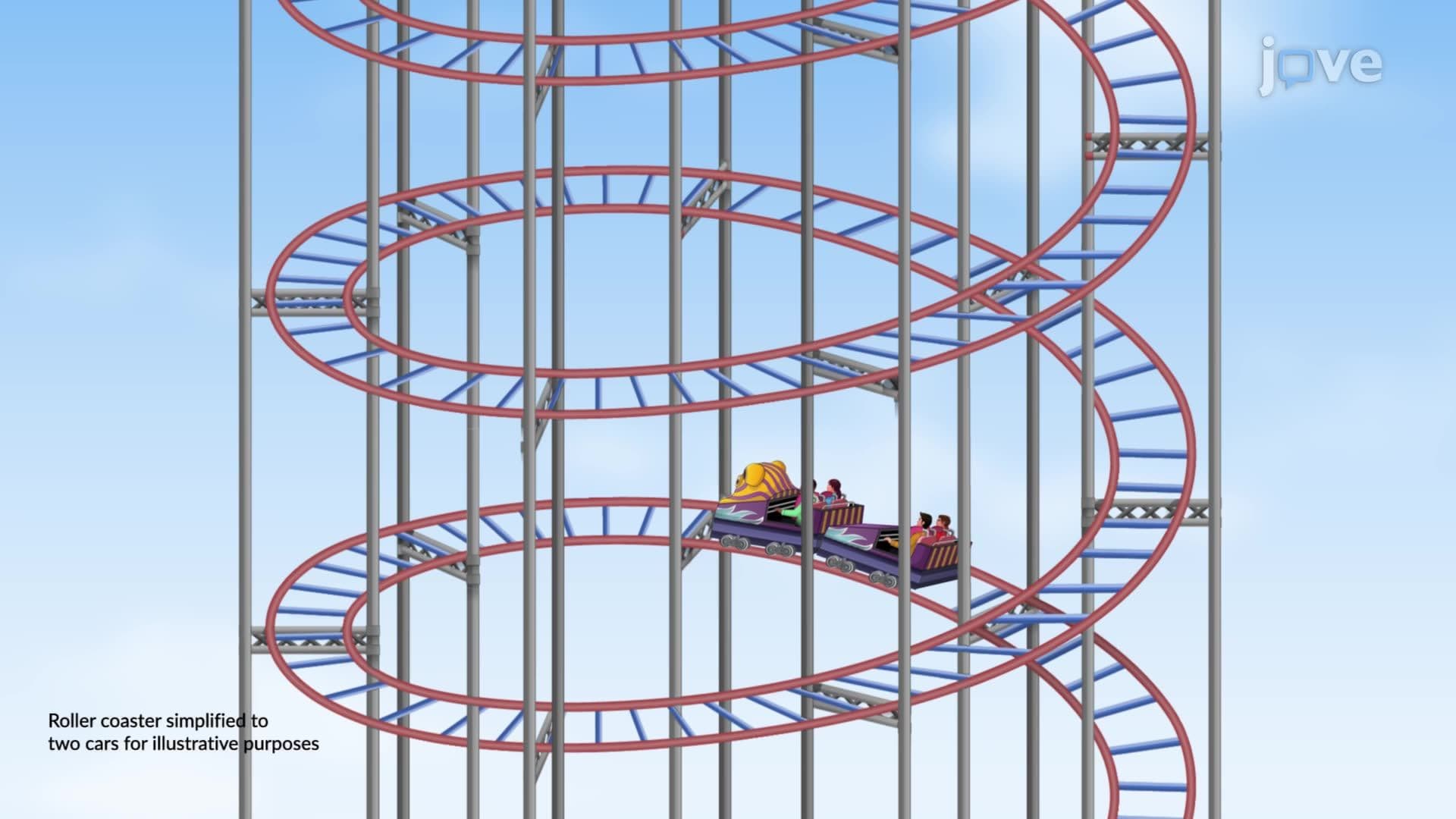
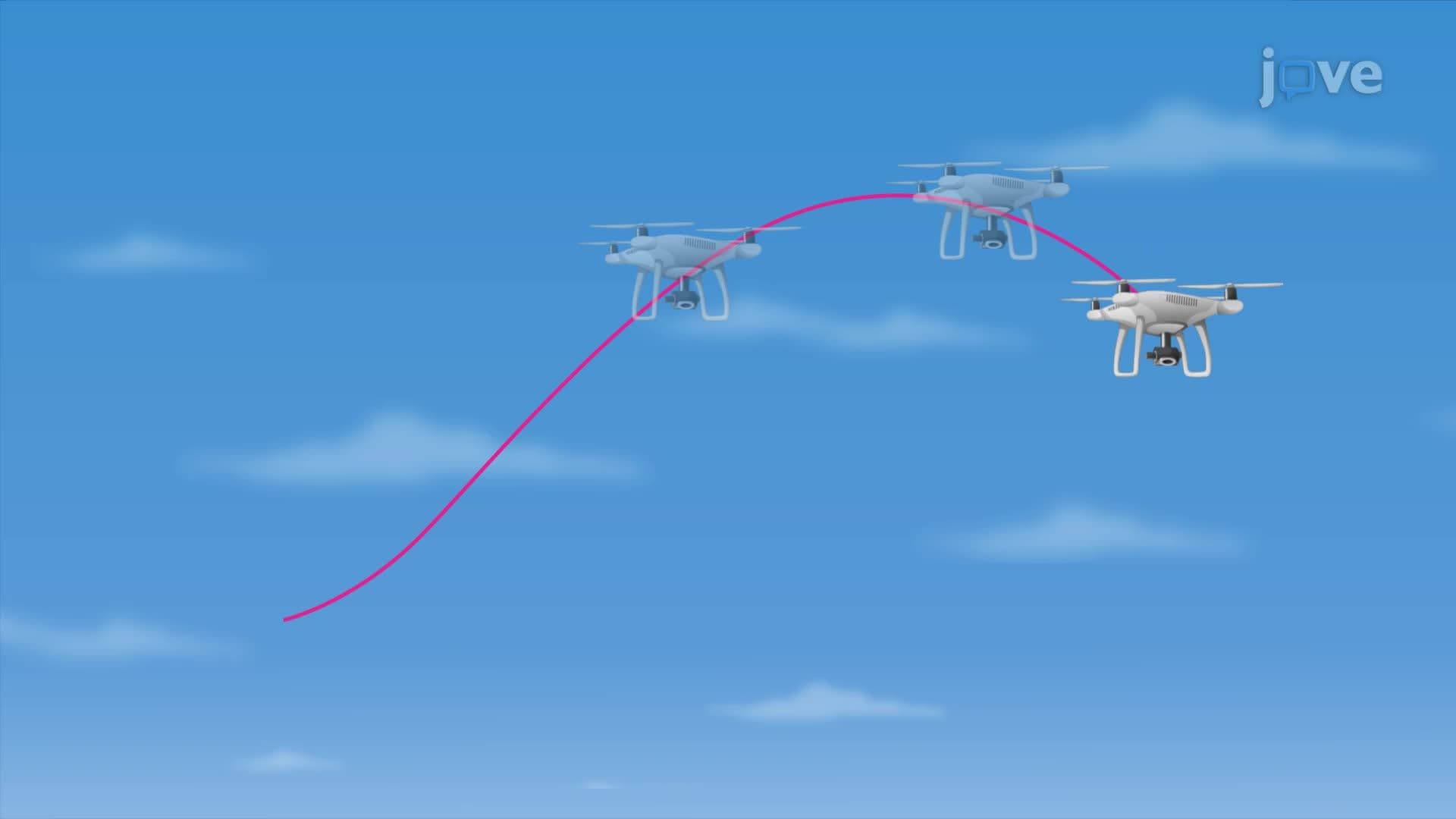
When you watch a fighter jet perform a corkscrew maneuver at an airshow, or track a rollercoaster spiraling through a loop, you are witnessing space curves in action. A space curve is the complete set of points traced by a particle moving through three-dimensional space as a parameter t changes over an interval. Unlike a flat, 2D curve drawn on a piece of paper, a space curve extends into depth, capturing real motion that happens in the world around us.
Mathematically, a space curve is defined by a vector-valued function:
r(t) = ⟨x(t), y(t), z(t)⟩
where x(t), y(t), and z(t) are each differentiable functions of the parameter t. The parameter t often represents time, making r(t) a position function that tracks where a particle is at every moment.
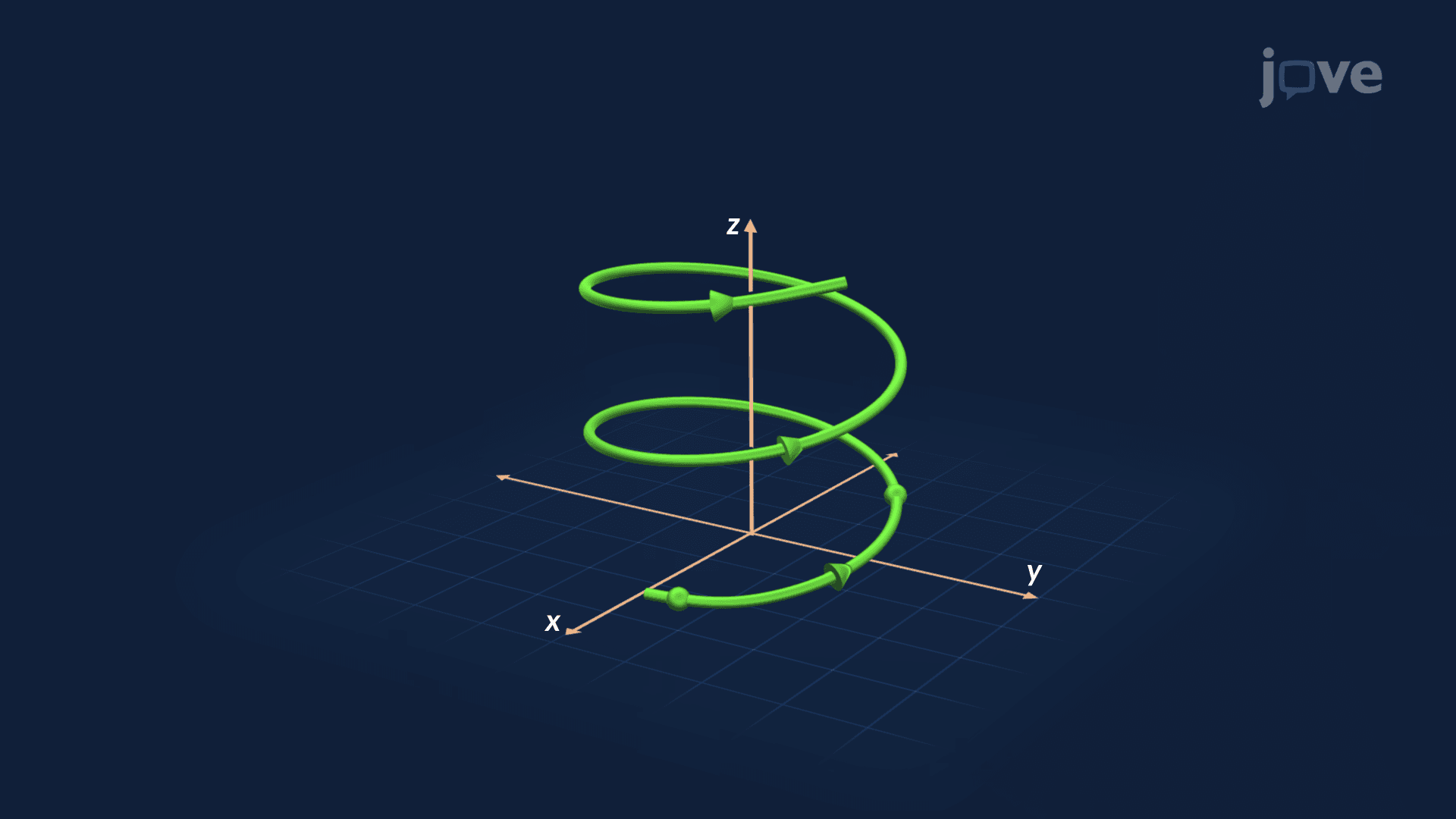
The most studied introductory example is the 3D helix, defined by:
r(t) = ⟨cos(t), sin(t), t⟩
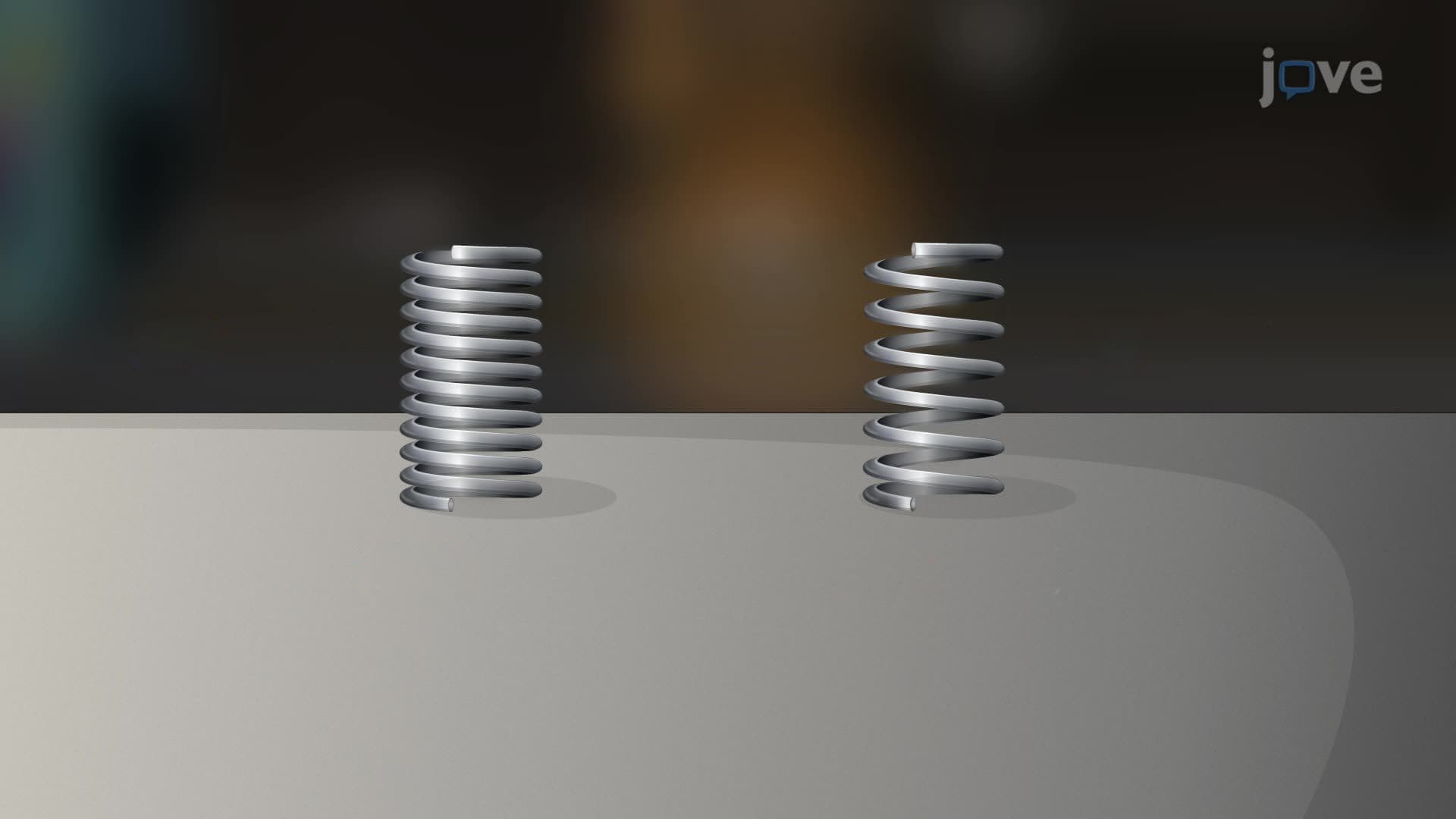
Here, the x and y components, cos(t) and sin(t), trace a perfect circle when viewed from above, because cosine and sine together parametrize circular motion. The z-component, simply t, increases at a constant rate, lifting the curve upward. The result is a smooth spiral that wraps around an invisible cylinder, exactly the shape of a spring, a spiral staircase, or a DNA double helix.
At t = 0, r(0) = ⟨1, 0, 0⟩, giving a clear starting point. As t grows, the curve climbs steadily while continuing to rotate, combining rotation and linear rise into a single elegant path.
Space curves serve as the launching point for several important calculus concepts tested in college-level Multivariable Calculus and AP Physics C courses:
In US universities, space curves appear in Calculus III (Multivariable Calculus), typically a sophomore-level course, and are foundational in physics, aerospace engineering, and computer graphics. Programs like those at MIT, Georgia Tech, and Stanford use space curves in robotics path planning and animation. In AP Physics C: Mechanics, the ideas of position, velocity, and acceleration vectors in three dimensions directly mirror the structure of space curves. Students preparing for college midterms or engineering licensing exams will encounter these ideas repeatedly, making a solid conceptual foundation essential.
Related Micro-courses