Loading video…

 13 Concepts
 47 views

Video Summary: What Is Projectile Motion
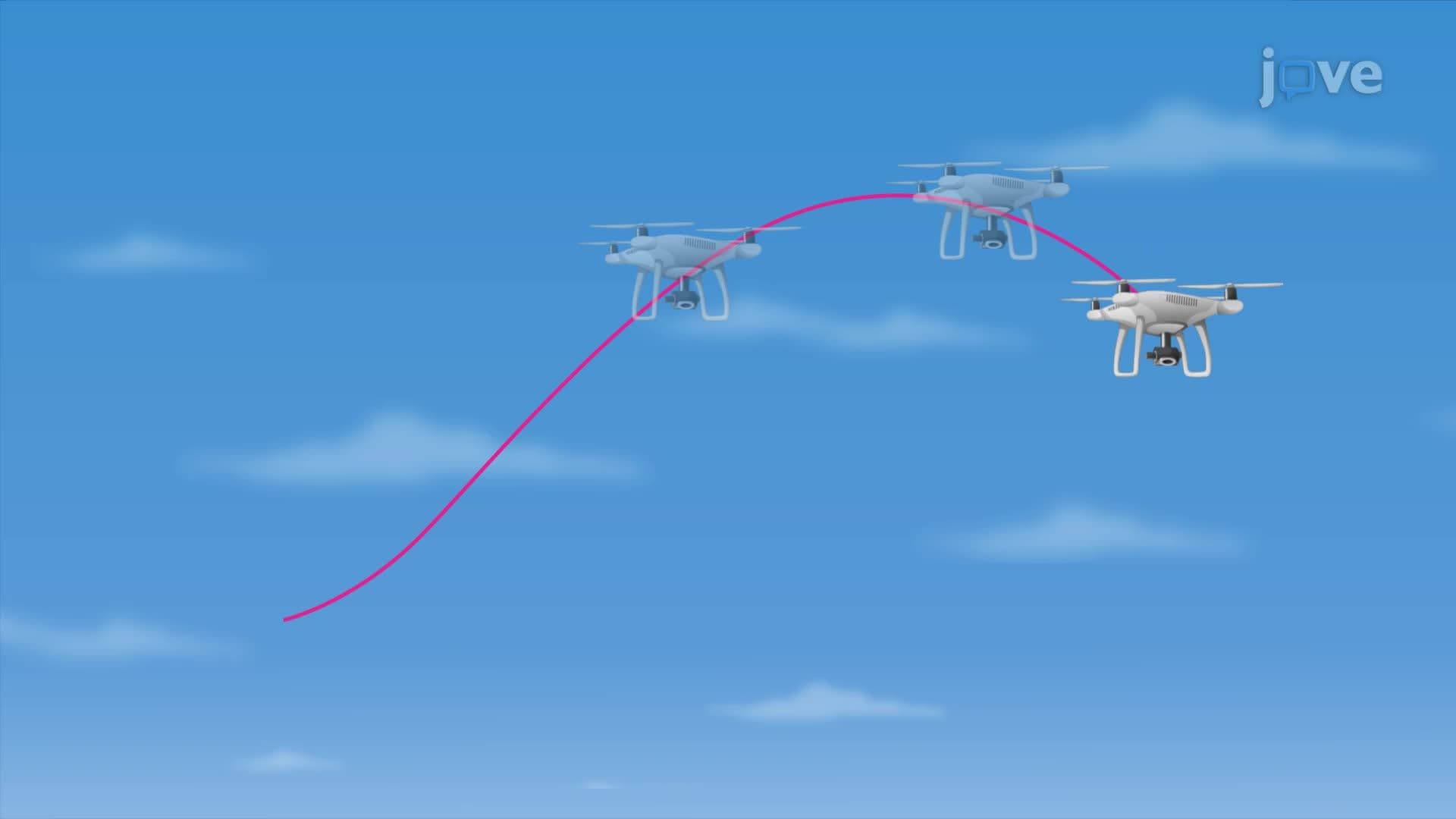
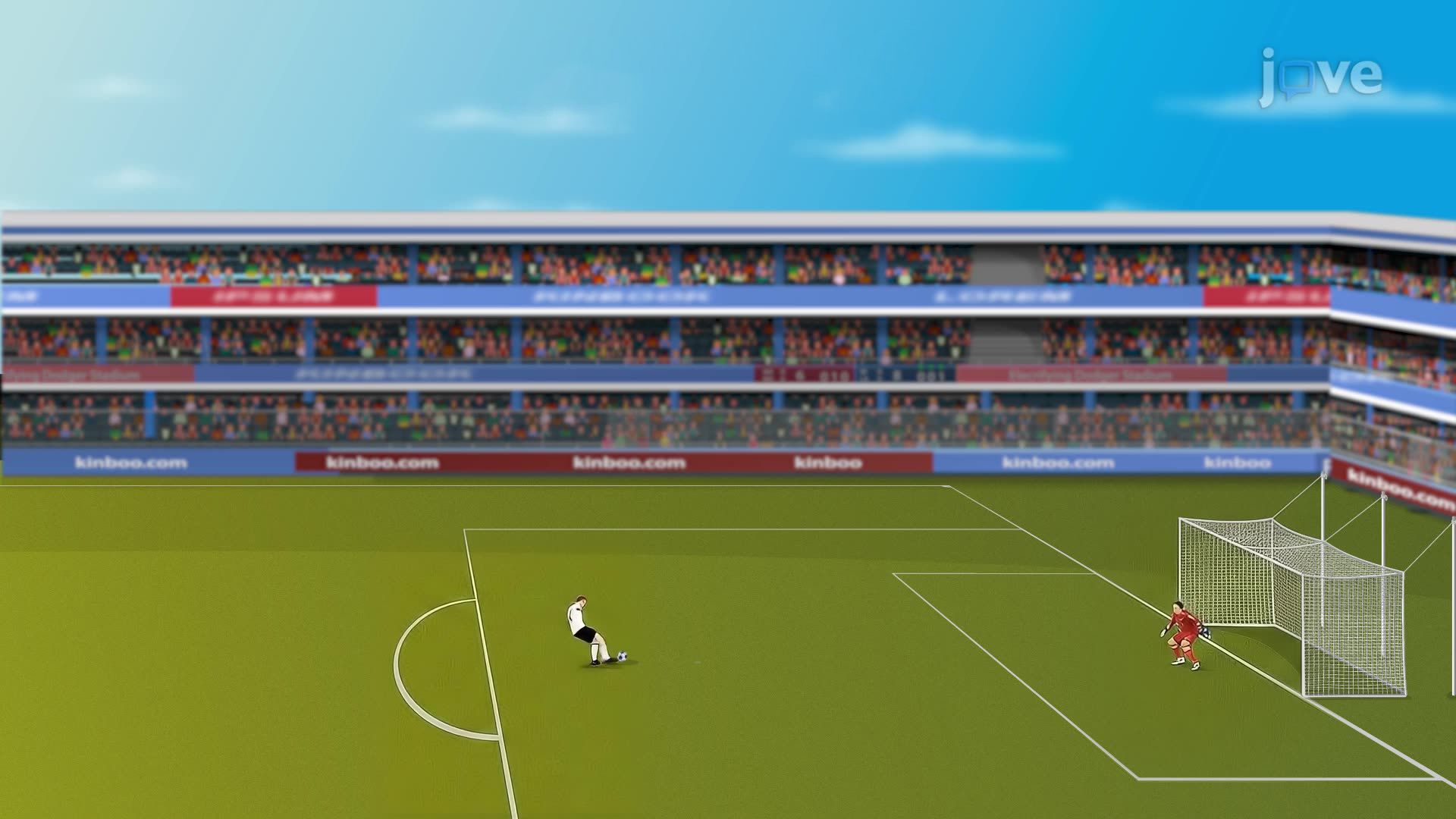
Ever wonder why a football thrown across a field curves downward instead of flying straight? That's projectile motion at work. Projectile motion basics explain how gravity continuously pulls a launched object downward while its horizontal speed stays constant, creating a graceful, parabolic arc. Think of a soccer penalty kick at a World Cup qualifier. Watch the full video on JoVE Coach to master this concept with expert-led visuals and step-by-step explanations.
Projectile motion describes the two-dimensional path of any object that is launched into the air and moves solely under the influence of gravity, with air resistance assumed negligible. From a basketball arcing toward the hoop at an NBA game to a cannonball fired during a historical Civil War demonstration, the physics is surprisingly consistent: the object follows a smooth, symmetric parabola. This concept is a cornerstone of classical mechanics and appears in virtually every introductory physics course in the United States, from AP Physics 1 to college-level Engineering Mechanics.
The key insight behind projectile motion is that horizontal and vertical motion are independent of each other. A projectile launched at angle α (alpha) above the horizontal has an initial velocity that splits into two components:
In the horizontal direction, no force acts on the object (ignoring air resistance), so acceleration is zero and horizontal velocity remains constant throughout the flight. In the vertical direction, gravity applies a constant downward acceleration of approximately 9.8 m/s². This asymmetry, zero horizontal acceleration paired with constant vertical acceleration, is what generates the parabolic shape of the trajectory. Students often find it helpful to imagine two separate "movies" playing simultaneously: one showing straight-line horizontal motion, the other showing free-fall.
For students in calculus-based physics courses (AP Physics C or college Physics II), understanding the derivation deepens the concept significantly. Starting from the acceleration vector:
Integrating the horizontal acceleration once gives constant horizontal velocity; integrating again gives horizontal position: x(t) = v₀ · cos(α) · t
Integrating the vertical acceleration once gives vertical velocity: v(y)(t) = v₀ · sin(α), g · t
Integrating a second time gives vertical position: y(t) = v₀ · sin(α) · t, (1/2) · g · t²
Because x(t) is linear in time and y(t) is quadratic, substituting and eliminating t produces a parabolic equation of the form y = A · x, B · x², confirming the curved trajectory mathematically.
Projectile motion is not just a textbook abstraction. NASA engineers use these principles when calculating spacecraft re-entry trajectories. Sports scientists apply them to optimize a quarterback's throwing angle in the NFL. Forensic ballistics experts in US law enforcement rely on projectile equations to reconstruct crime scenes.
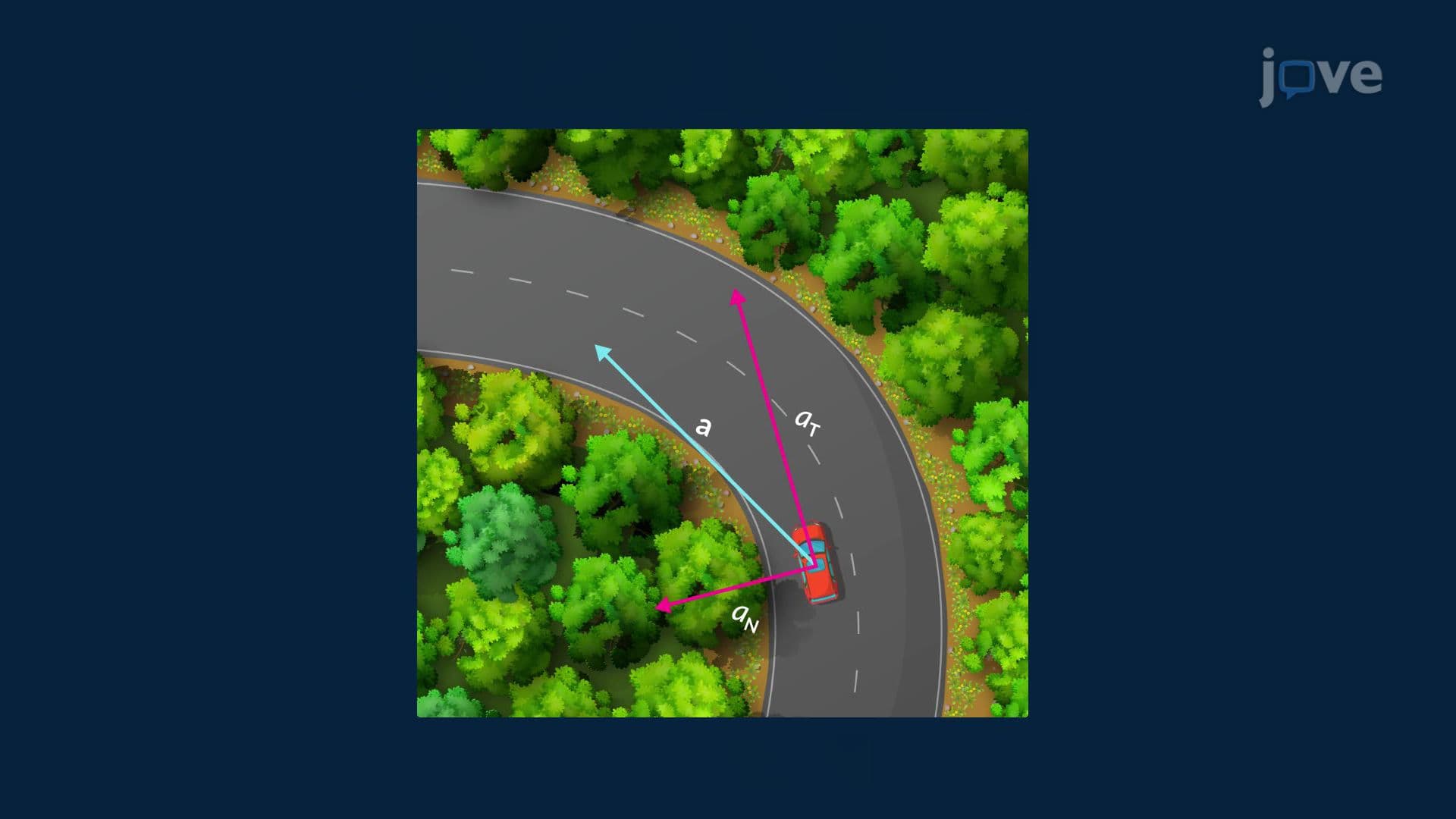
On standardized tests, projectile motion is a high-frequency topic on the AP Physics 1 and AP Physics C: Mechanics exams, where free-response questions often ask students to derive range, maximum height, or time of flight. On the SAT Subject Test (Physics) and college midterms, multiple-choice problems typically test whether students can correctly identify which component of motion is affected by gravity. Mastering both the conceptual reasoning and the mathematical derivation ensures students are prepared for any format. Building from here, students can advance to topics such as the unit tangent vector, curvature, and the tangential and normal components of acceleration, all extensions of the same vector-based framework introduced in projectile motion.
Related Micro-courses