Loading subject page…

107 views

Video Summary: Changing the Order of Integration in Triple Integrals Explained
Did you know that the same triple integral can become dramatically easier to solve just by reordering the variables? Changing the order of integration in triple integrals is a powerful strategy used in university calculus courses across the US to simplify otherwise difficult computations. When a parabolic cylinder creates a messy square-root boundary, swapping the innermost variable can transform a frustrating problem into a clean, solvable one. Watch the full video on JoVE Coach to master this concept with expert-led visuals and step-by-step explanations.
When you first encounter triple integrals in a college calculus course, typically Calculus III at US universities, the setup of limits can feel overwhelming. The region you're integrating over is three-dimensional, and the order in which you integrate (with respect to x, y, or z first) completely determines how difficult the math becomes. Changing the order of integration in triple integrals is not just a trick; it is a fundamental problem-solving strategy that skilled mathematicians rely on to make otherwise unsolvable expressions tractable.
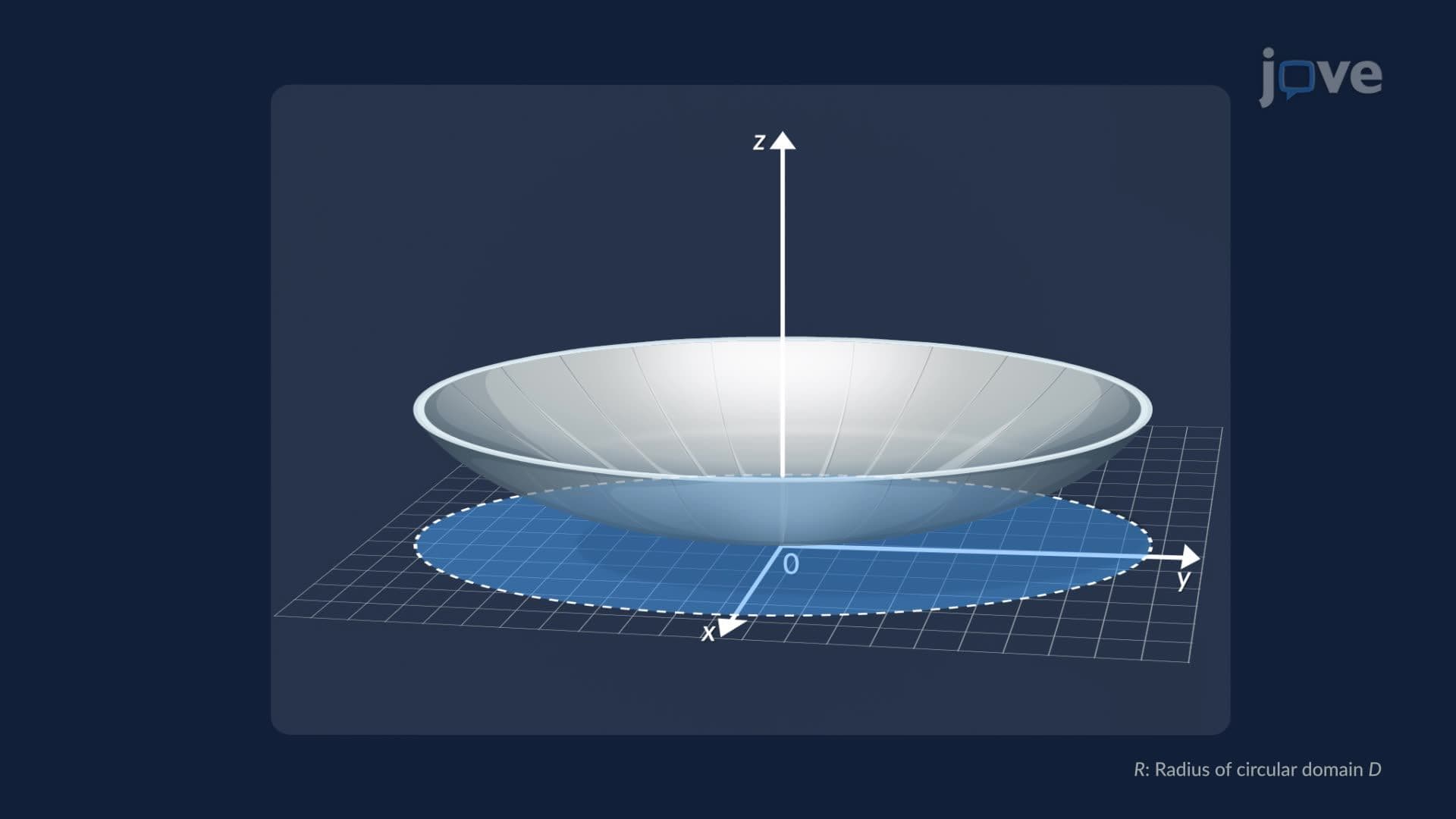
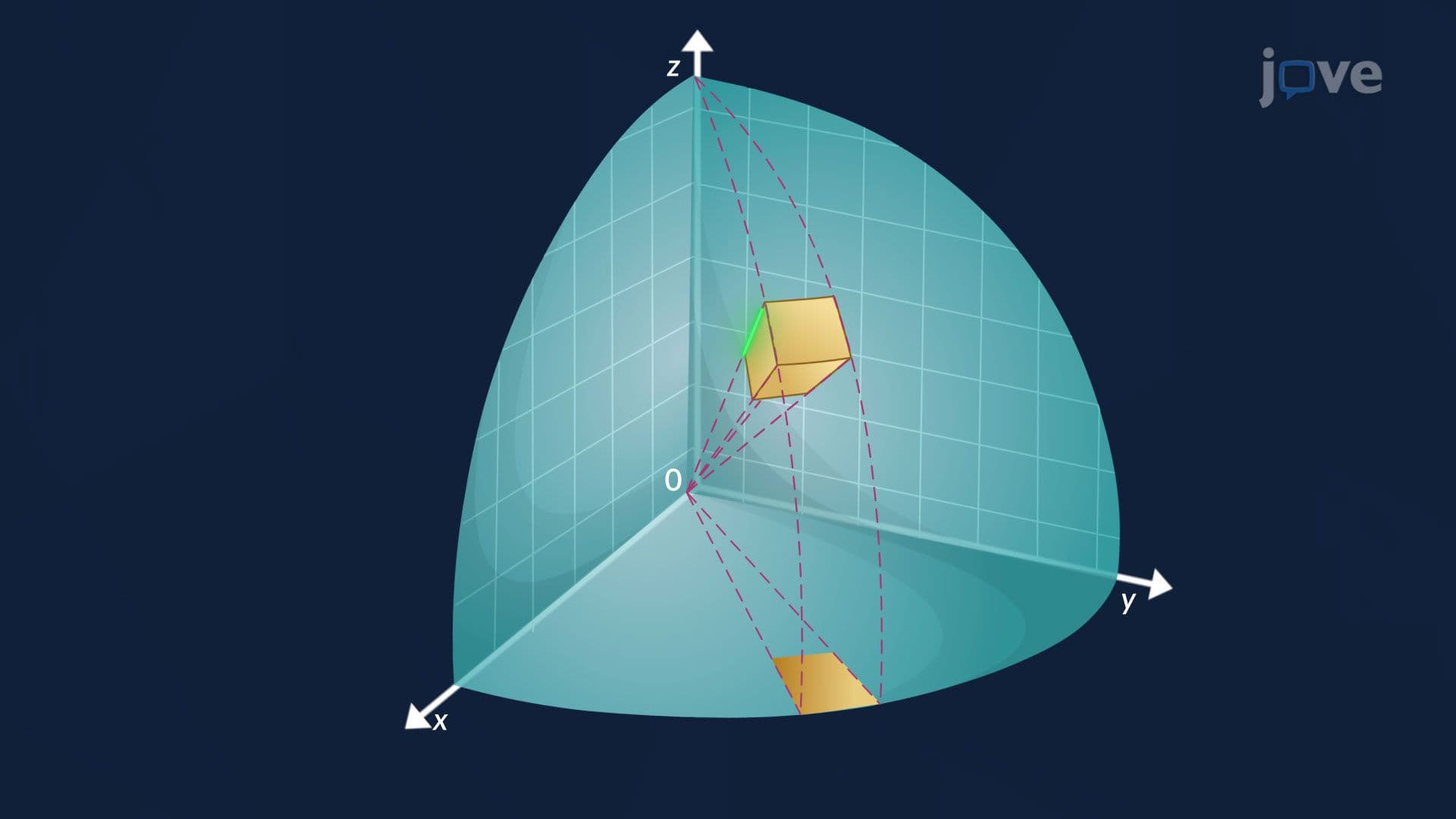
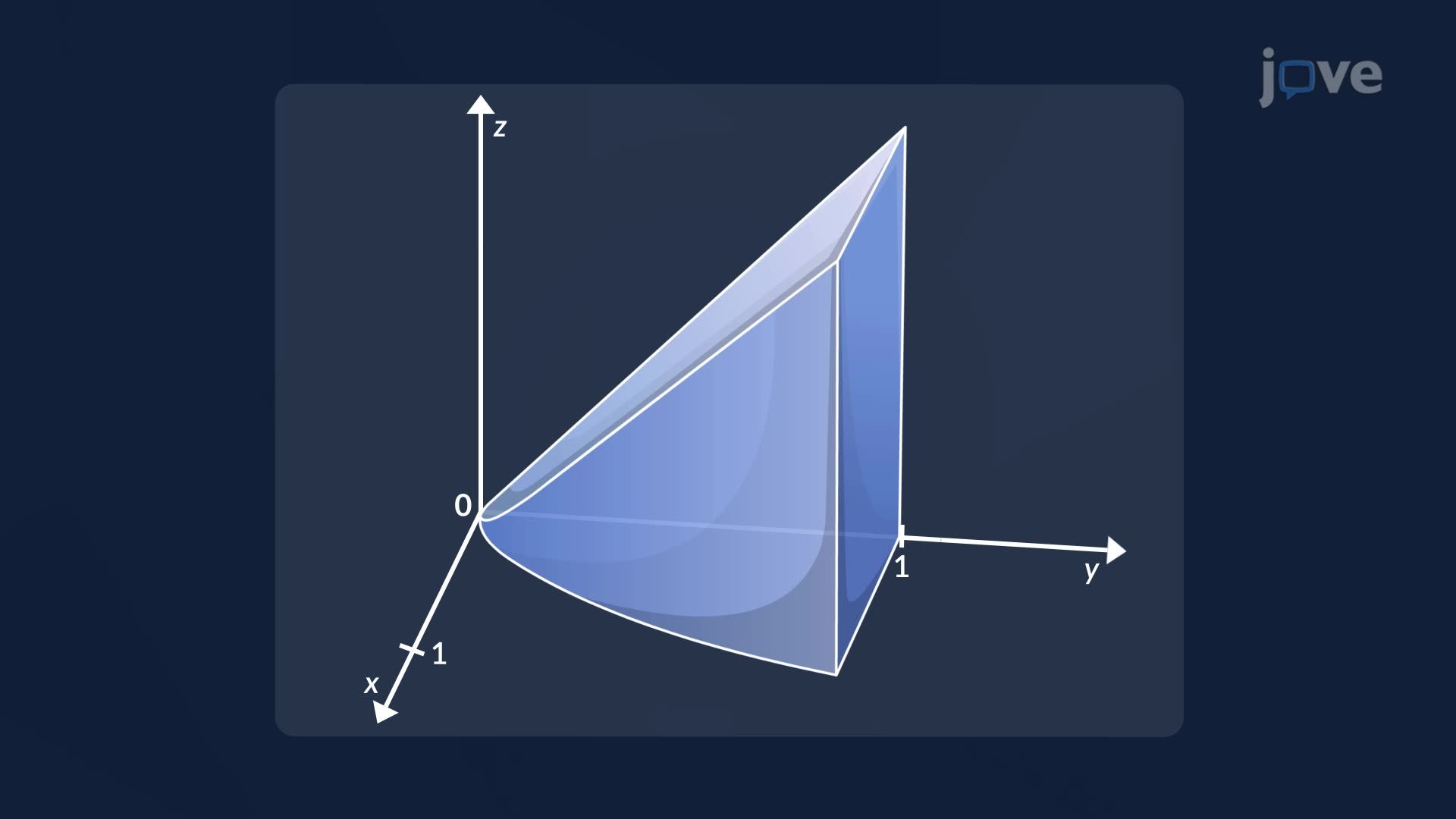
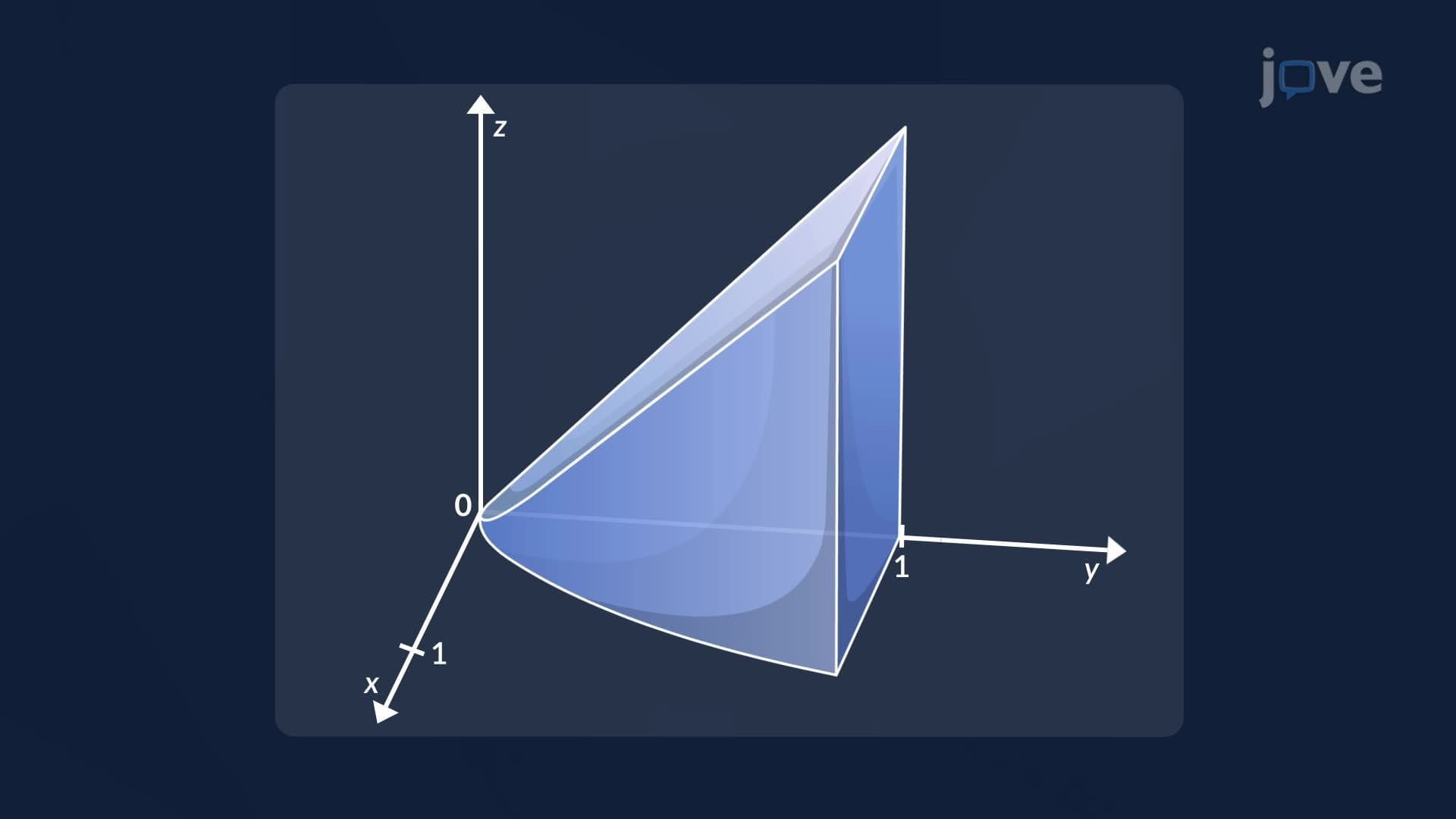
Suppose you're evaluating the triple integral of e^x over a region bounded by a flat base, a slanted plane, two vertical planes, and a parabolic cylinder. If you set up x as the innermost variable, the upper limit involves a square root, because the parabolic cylinder defines x in terms of y (for example, x = sqrt(y)). Integrating e^x when the upper limit contains a square root produces an expression that is extraordinarily difficult to evaluate analytically. Many students in AP Calculus BC or college Calculus III courses encounter exactly this kind of roadblock on exams and homework sets.
The solution is to change the innermost variable from x to z. With z as the innermost variable, the limits run vertically, from the flat base (z = 0) up to the slanted plane. These limits are clean and straightforward. Next, the outer limits are determined by projecting the solid onto the xy-plane and examining the base region. Here, the parabolic curve y = x² bounds the base, so x runs from 0 to 1, and y runs from x² to 1. Notice that flipping the x and y roles, versus keeping y as the outer variable with x from 0 to sqrt(y), is another valid reordering decision, and one that US university professors frequently ask students to justify on midterms and finals.
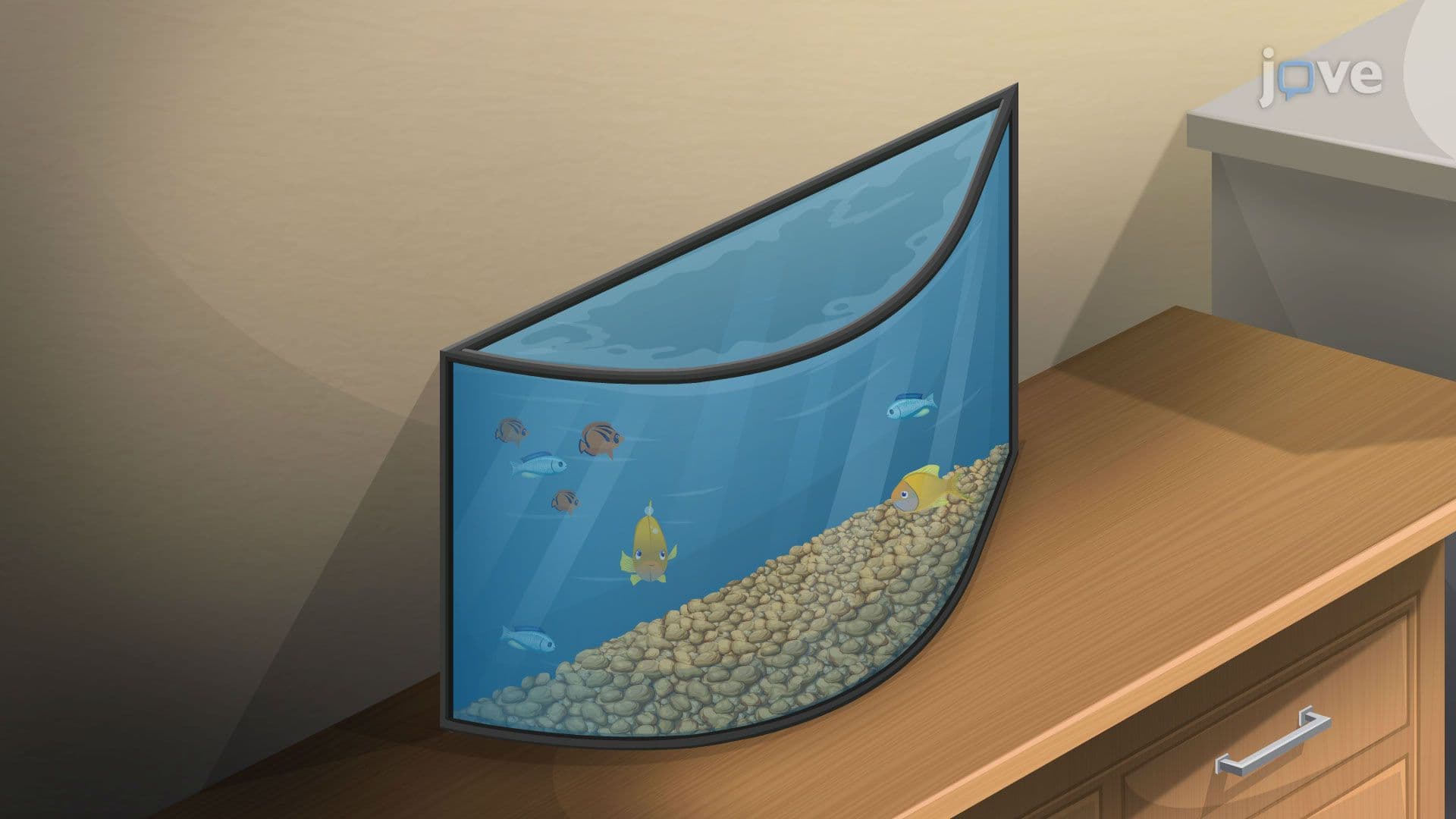
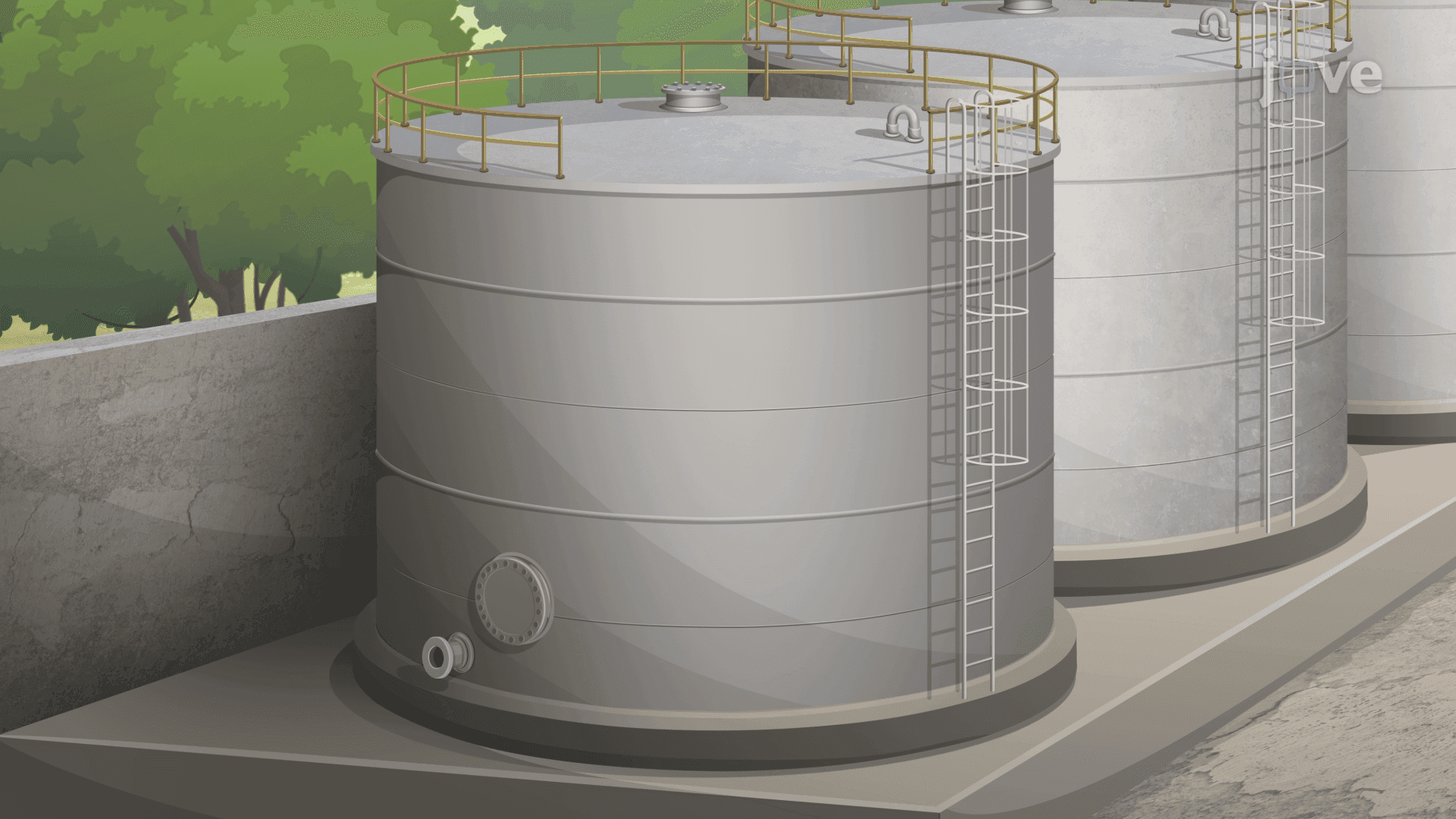
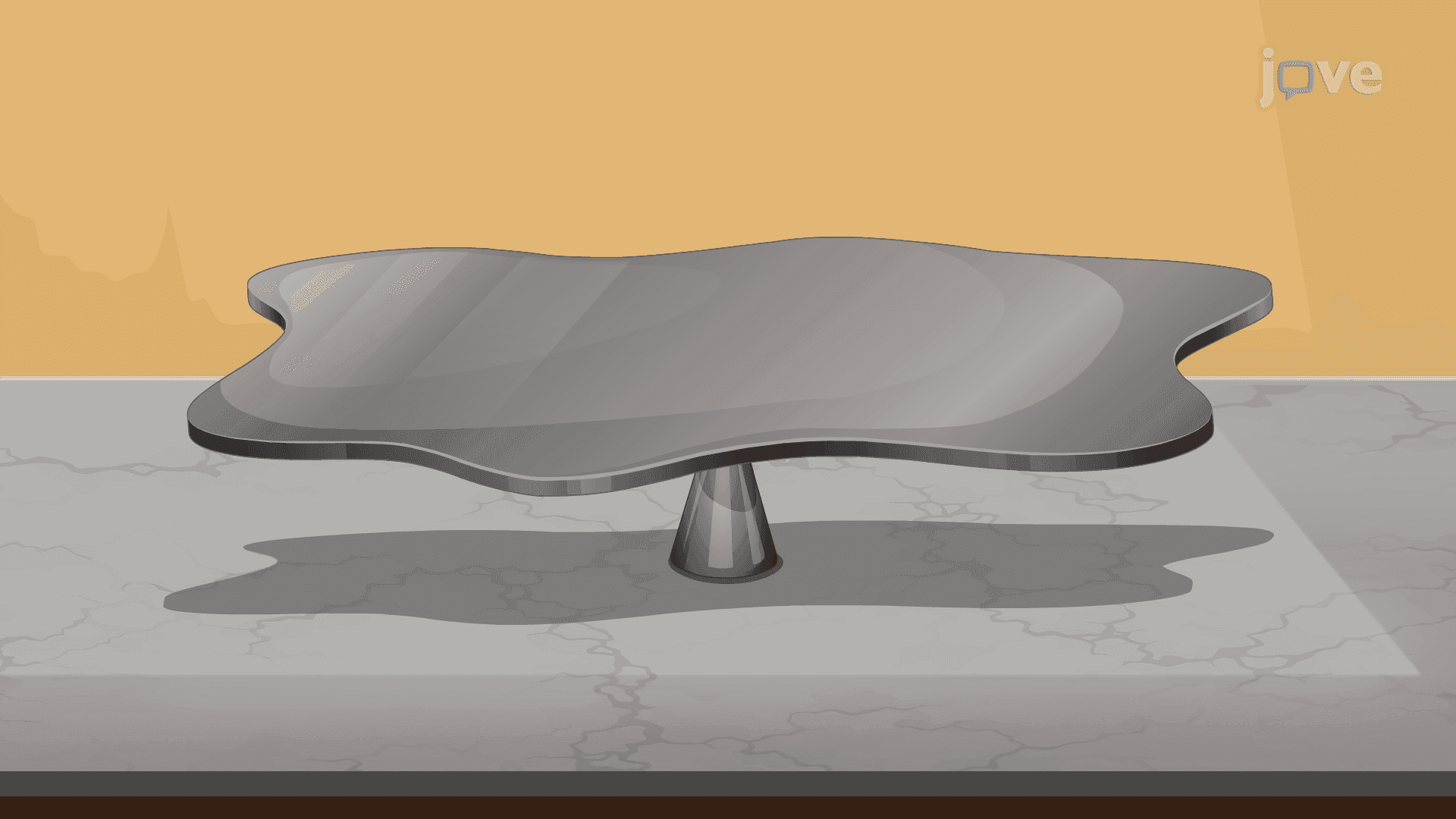
This technique has direct applications in fields like aerospace engineering, fluid mechanics, and thermodynamics, all studied extensively at US institutions such as MIT, Stanford, and Purdue. For example, calculating the mass or center of mass of an irregularly shaped fuel tank requires evaluating a triple integral over a complex three-dimensional region. If the density function involves an exponential (as with heat distribution), choosing the wrong integration order can make the problem computationally impossible. Engineers and physicists routinely reorder integration to match the natural geometry of the object they're analyzing, especially when working with iterated integrals in cylindrical or spherical coordinates.
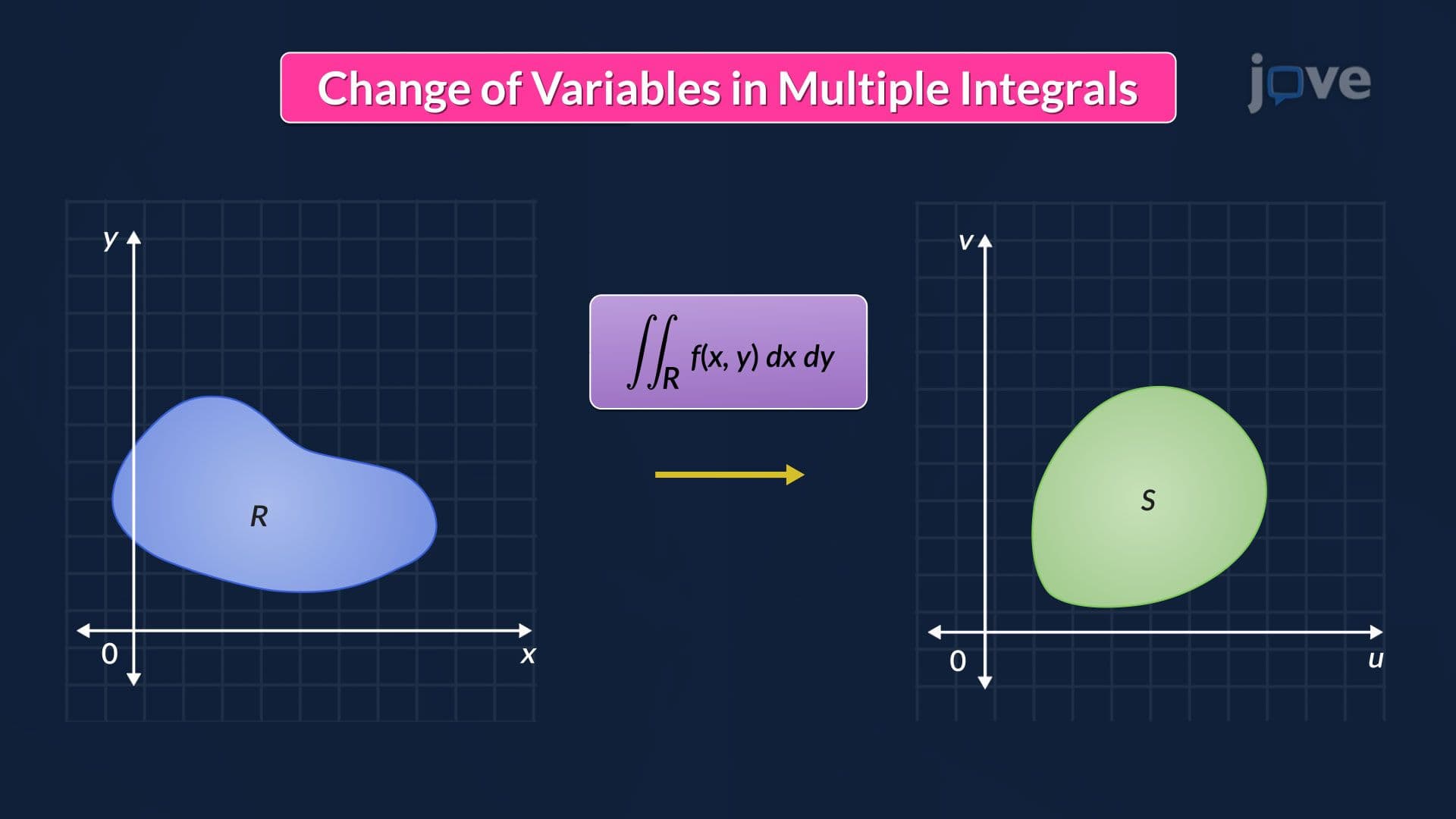
Mastering this technique prepares you for advanced topics including polar coordinates integration, cylindrical and spherical coordinate systems, the Jacobian in multiple integrals (which accounts for coordinate transformations), and calculating volume or center of mass using multiple integrals. On college midterms and final exams, questions about changing integration order frequently appear alongside problems involving Fubini's Theorem, the formal result guaranteeing that the order can be switched when the integrand is continuous. Understanding the geometry behind the region, not just the algebra, is what separates students who find these problems manageable from those who struggle.
Related Micro-courses