Loading video…

 17 Concepts
 107 views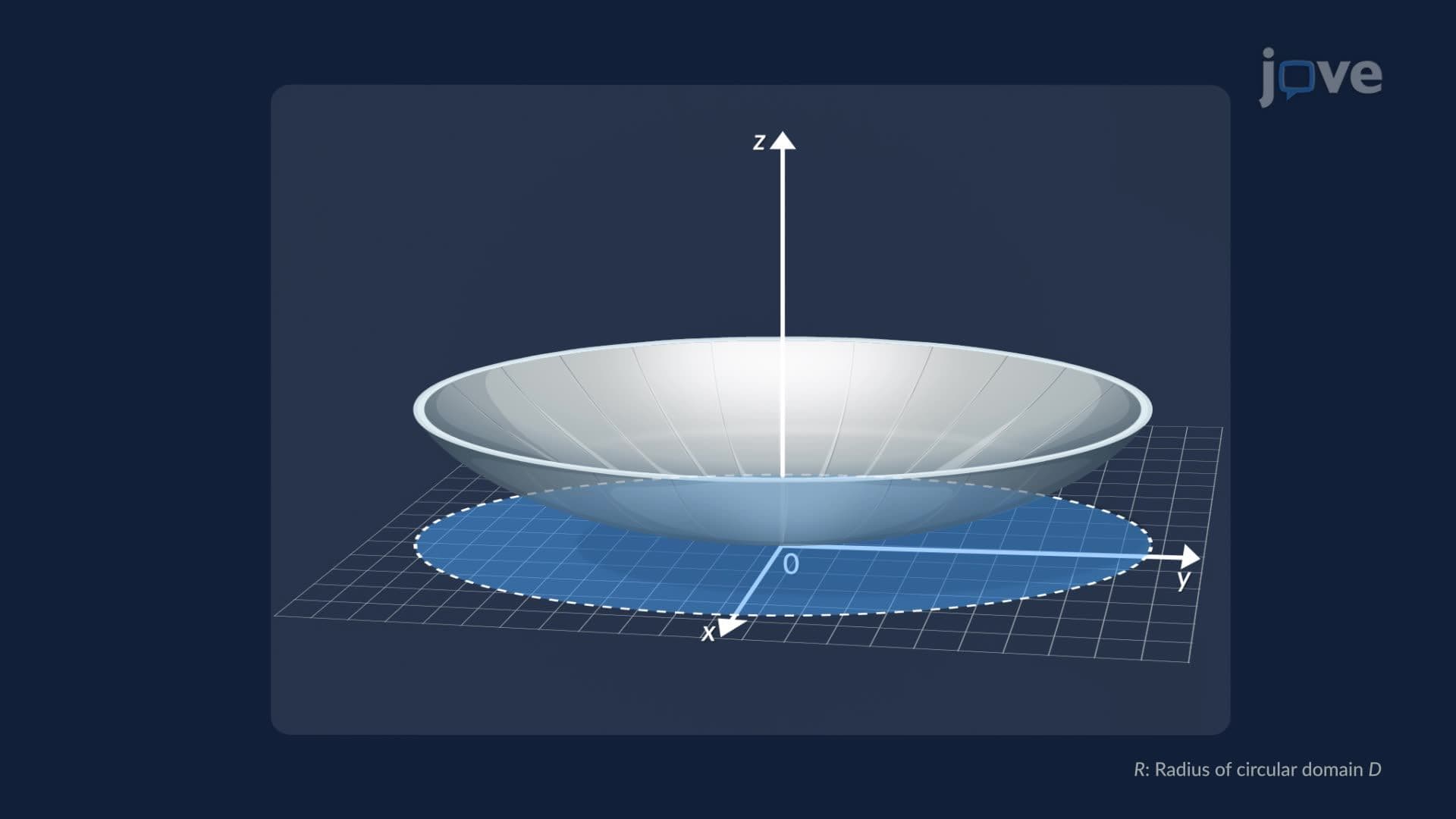

Video Summary: What are Surface Area Calculations
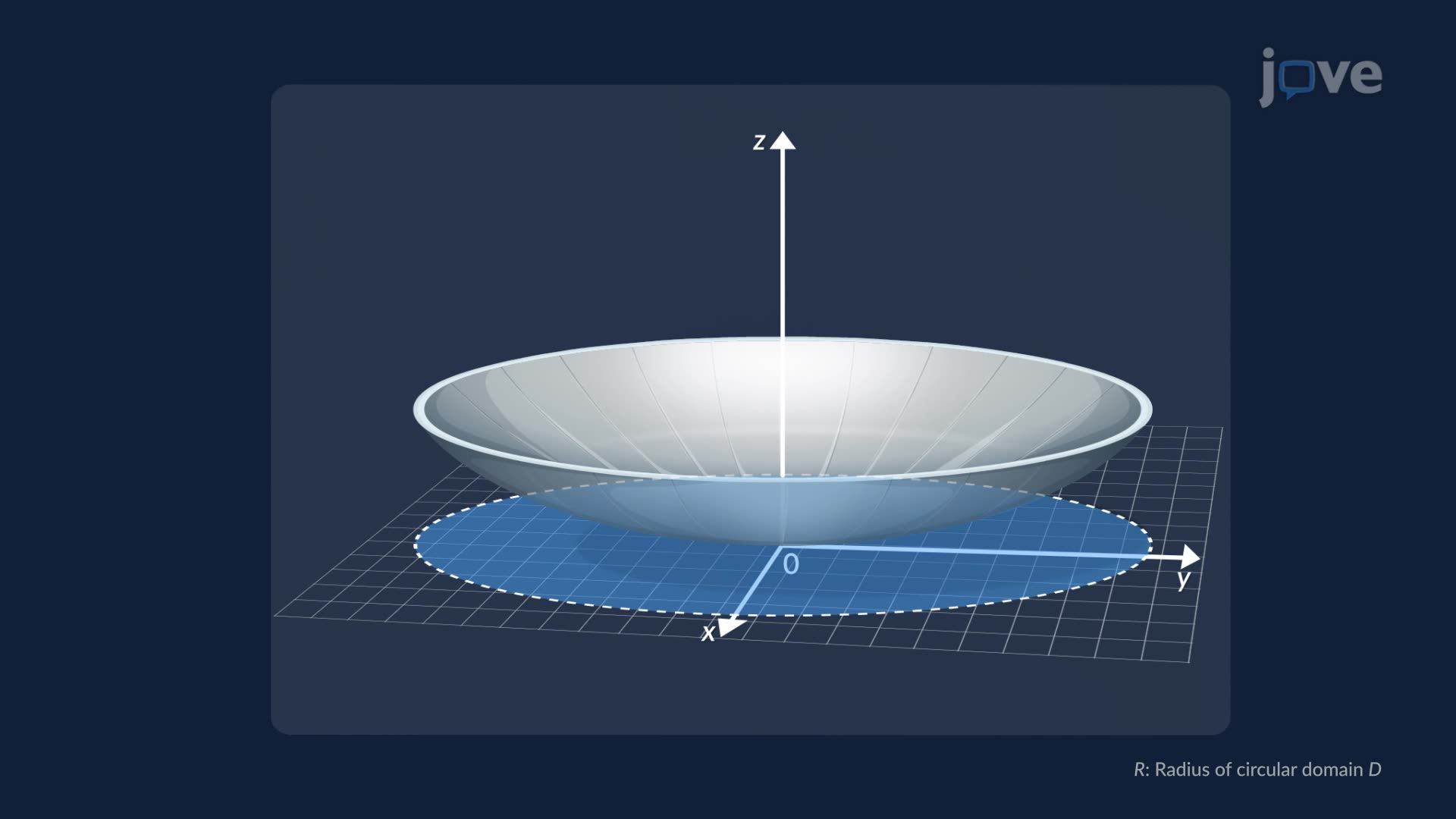
How do engineers calculate the exact amount of protective coating needed for a satellite dish? That's where surface area calculations come in. This concept uses double integrals and partial derivatives to measure curved surfaces precisely, a technique used by NASA engineers and aerospace manufacturers across the US. Watch the full video on JoVE Coach to master this concept with expert-led visuals and step-by-step explanations.
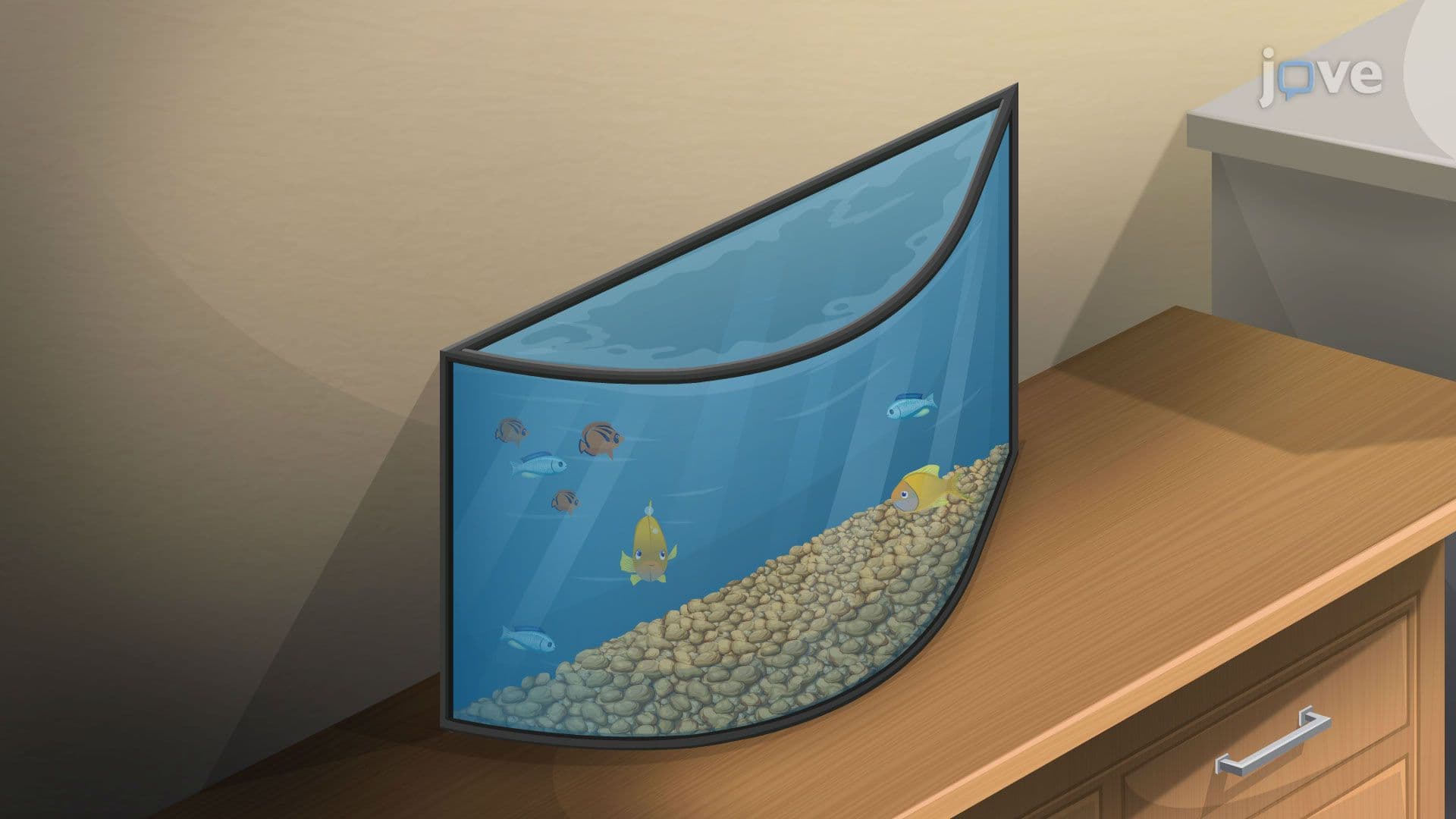
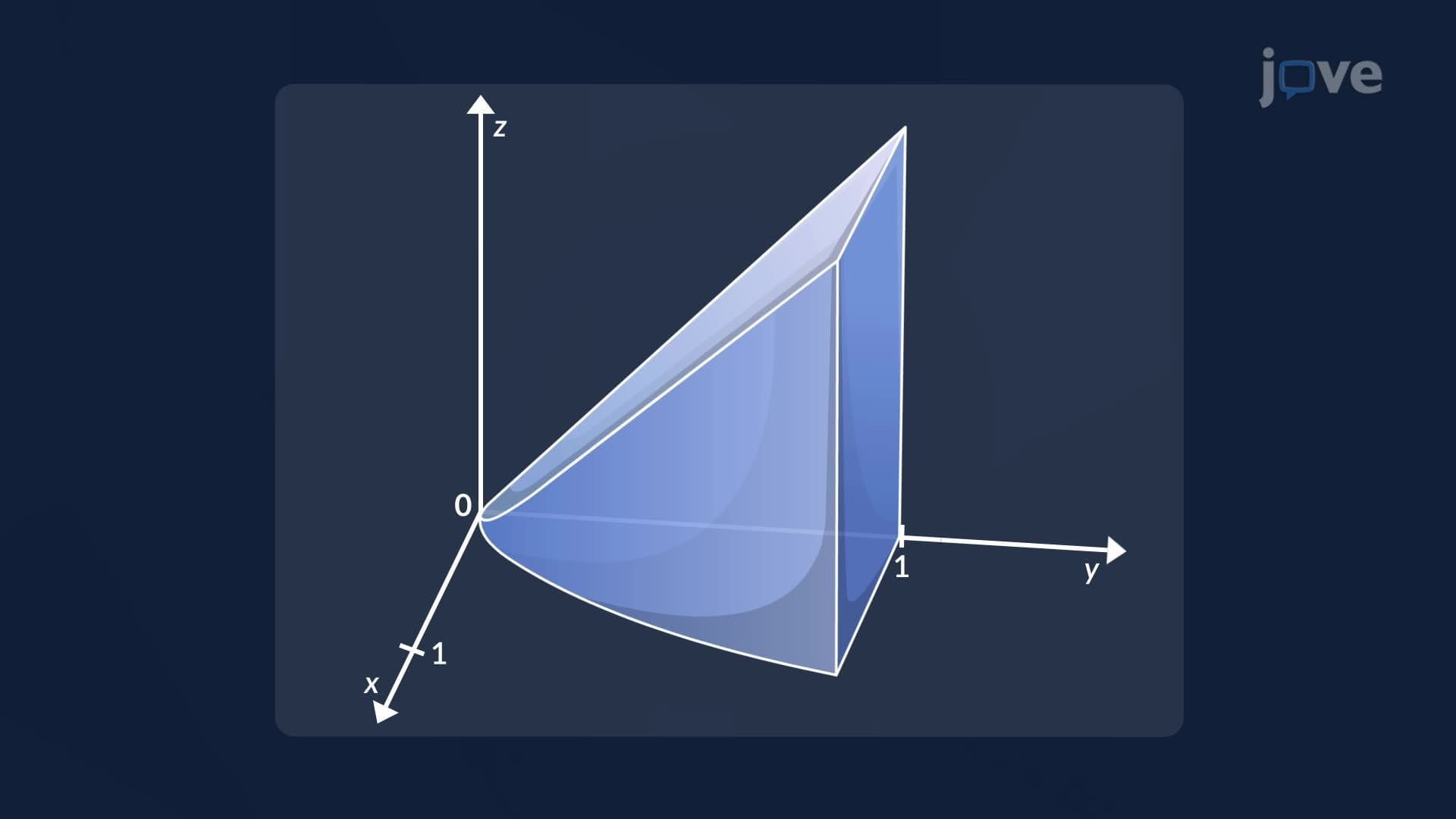
Surface area calculations in calculus go far beyond the simple formulas you learned in geometry class. While high school math gives you rules for spheres and cylinders, real-world surfaces, like a satellite dish, a car hood, or a mountain terrain map, are curved in complex ways that require a more powerful tool: the double integral. In multivariable calculus, surface area calculations let you measure the exact area of any smooth surface defined by a function z = f(x, y) over a two-dimensional region.
The core formula for surface area is:
SA = double integral over D of sqrt(1 + (del z / del x)^2 + (del z / del y)^2) dA
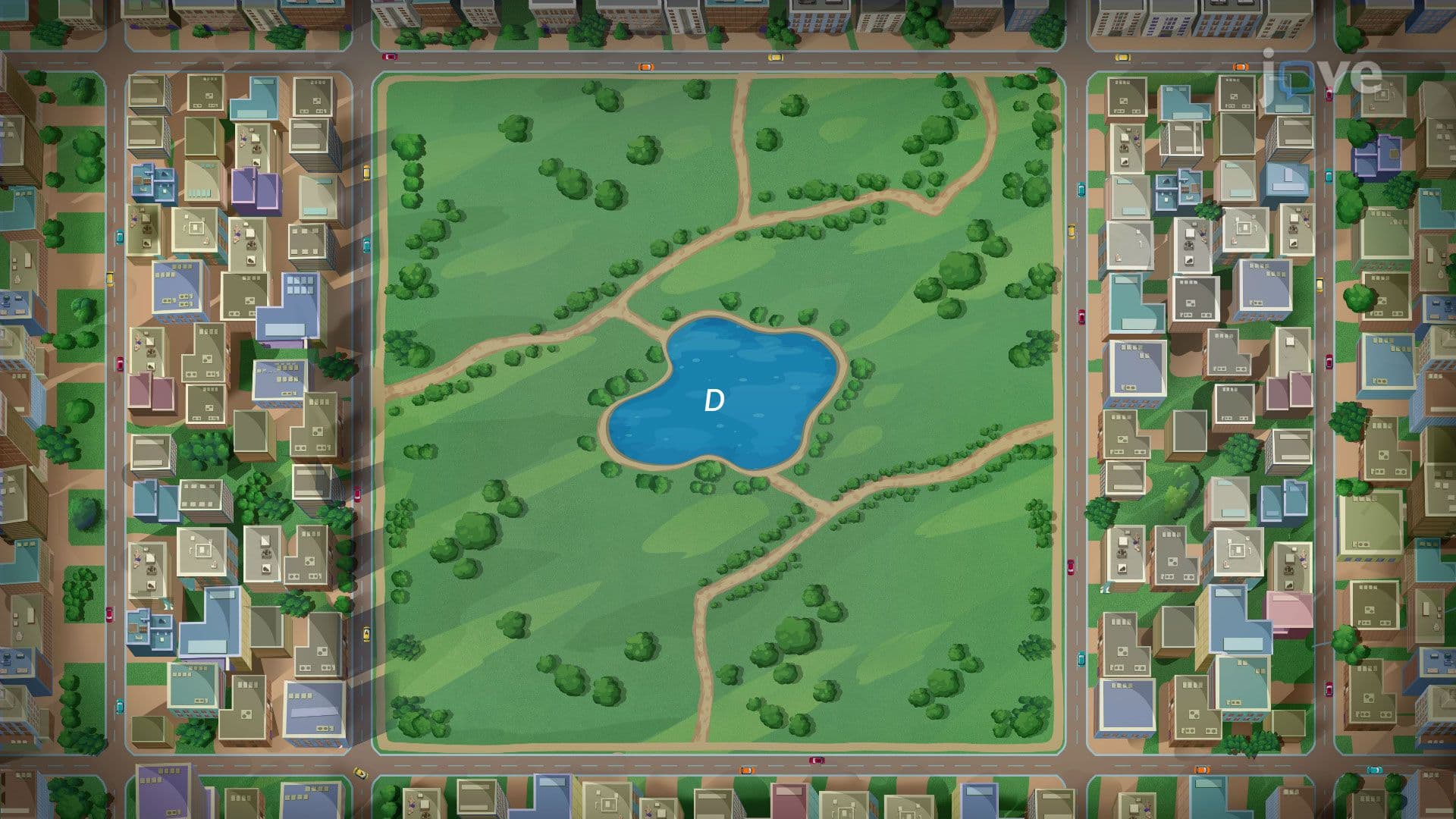
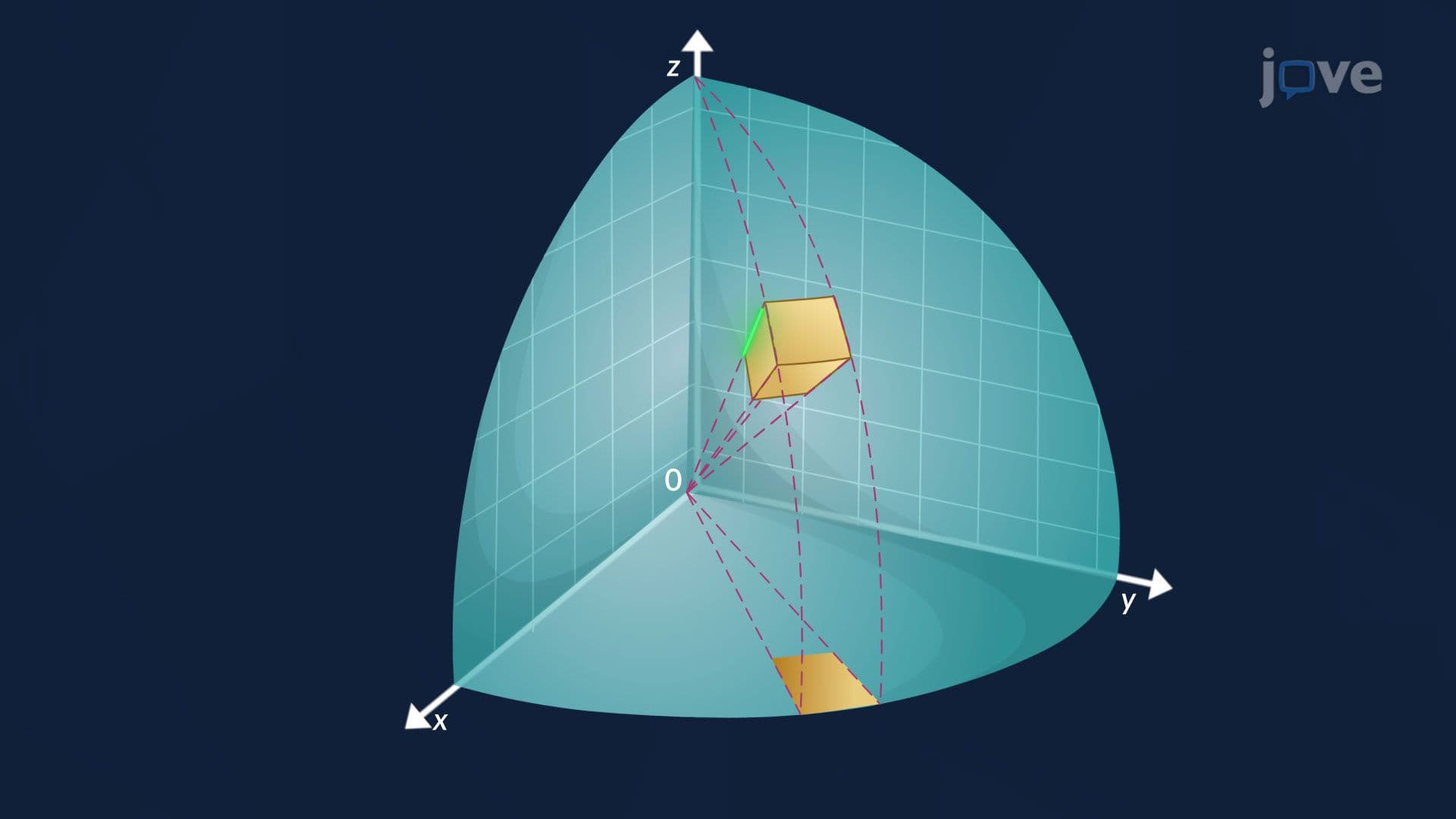
This expression works by examining the steepness of the surface at every single point. The partial derivatives, (del z / del x) and (del z / del y), capture how sharply the surface tilts in the x-direction and y-direction respectively. Adding 1, taking the square root, and integrating over the entire domain D gives the total curved surface area. Think of it as summing up tiny flat patches, each tilted at a slightly different angle, across the whole surface. This is a natural extension of arc length from single-variable calculus into two dimensions.
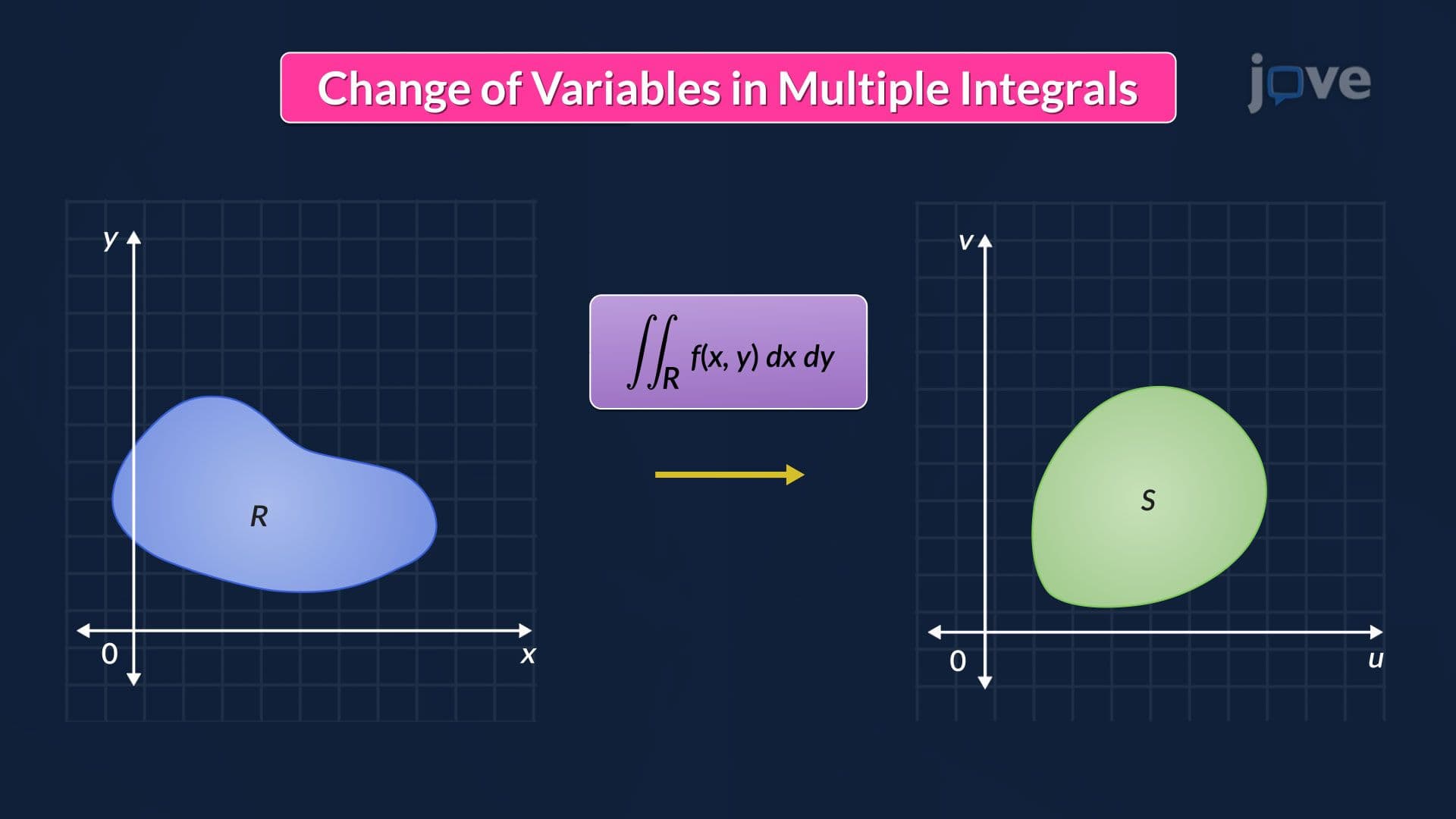
When the domain D is circular, as it is with a satellite dish or a radar antenna, switching to polar coordinates dramatically simplifies the calculation. In Cartesian coordinates, circular boundaries create complicated limits of integration. But in polar form, x = r cos(θ) and y = r sin(θ), so the circular region becomes simply 0 ≤ r ≤ R and 0 ≤ θ ≤ 2π. This transformation is a key skill in polar coordinates integration and is tested heavily in college-level Calculus 3 courses across US universities, including in AP Calculus BC curriculum extensions and university midterms.
Surface area calculations appear in a surprising range of professional fields. Aerospace engineers at companies like Boeing and Lockheed Martin use these formulas to estimate material costs for curved fuselage panels. Environmental scientists apply similar methods to calculate the surface area of terrain models for erosion studies. In medicine, biomechanical engineers model the surface area of organ structures for implant design.
In terms of academics, this topic typically appears in Calculus 3 (Multivariable Calculus) at US colleges and is foundational for understanding related concepts like iterated integrals, triple integrals, and center of mass using multiple integrals. Students preparing for engineering or physics coursework will also encounter surface integrals, the direct next step after mastering surface area calculations. Understanding the Jacobian in multiple integrals becomes essential when you move into more advanced coordinate transformations beyond polar form. Building a solid grasp of this topic now sets you up for success across STEM disciplines.
Related Micro-courses