Loading video…

 17 Concepts
 107 views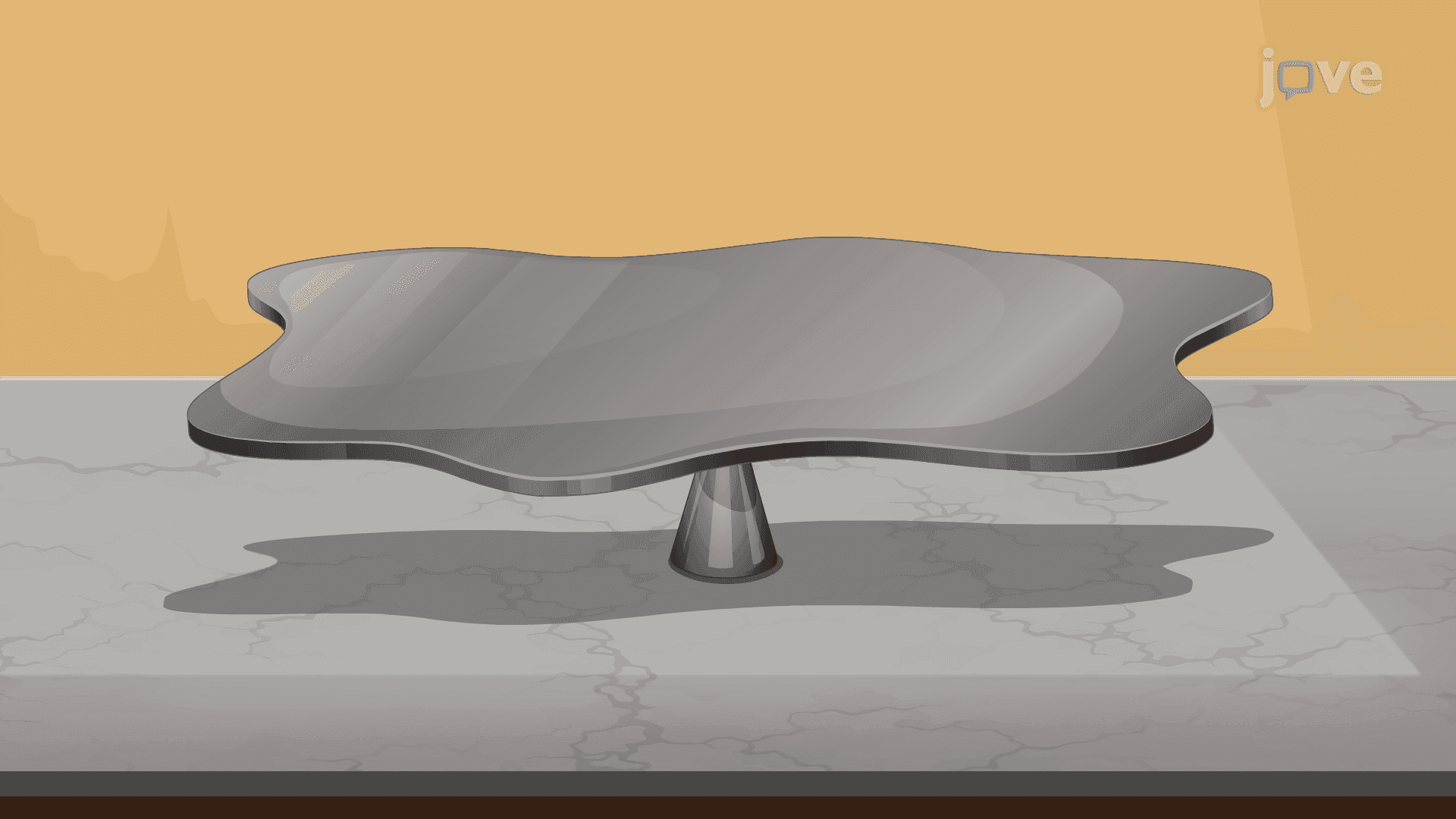

Video Summary: Moments and Centers of Mass Explained
Ever wonder why a spinning figure skater can balance perfectly on one skate? That secret lies in moments and centers of mass. Understanding moments and centers of mass basics reveals how mass distribution determines balance, a principle NASA engineers apply when designing spacecraft. A flat plate's center of mass acts as its perfect balancing point, calculated using weighted averages across both coordinates. Watch the full video on JoVE Coach to master this concept with expert-led visuals and step-by-step explanations.
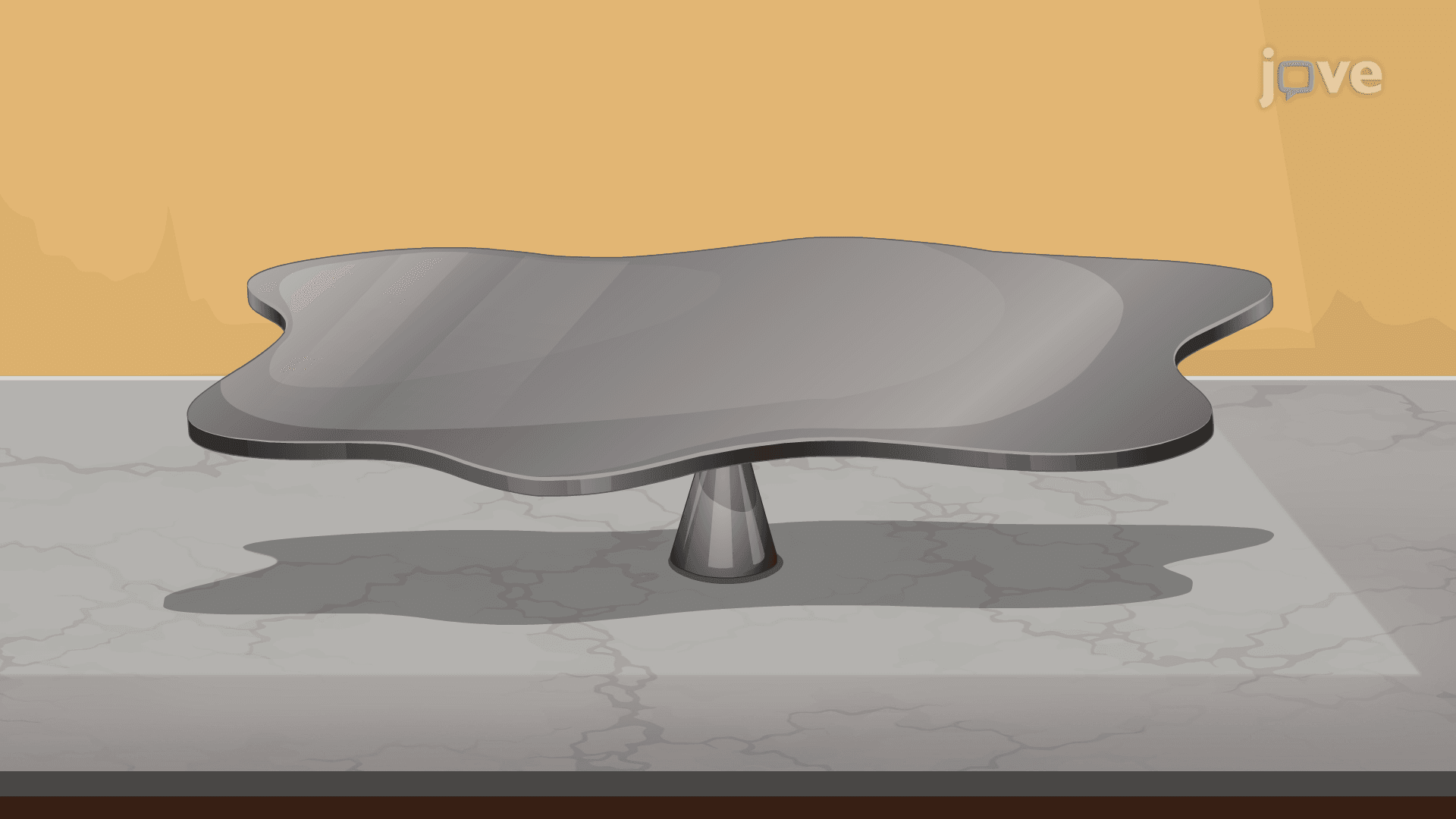
When you balance a textbook flat on one finger, you instinctively find its center of mass. But what happens when the object isn't uniform, when one side is thicker, denser, or made of a different material? This is exactly where moments and centers of mass become essential tools in calculus. Rather than guessing, mathematicians and engineers use integration to locate the precise balancing point of any two-dimensional region with variable density.
A moment measures the tendency of a mass to rotate about an axis. In two dimensions, there are two key moments: the moment about the x-axis (M(x)), which multiplies each mass element by its vertical distance from the x-axis, and the moment about the y-axis (M(y)), which multiplies each mass element by its horizontal distance from the y-axis. Think of it like a seesaw: a small child sitting far from the center can balance a heavier adult sitting close in. Distance and mass both matter.
In formal terms, if a thin plate occupies a region R with density function p(x, y), then:
Once the moments and total mass are known, the center of mass coordinates follow directly:
This process, center of mass using multiple integrals, is a standard topic in second-semester college calculus (Calculus II or Multivariable Calculus). Setting up these iterated integrals correctly over a general region is the key skill. Students must identify the limits of integration based on the geometry of the region, then evaluate the inner integral before the outer one, the same process used in calculating volume with double integrals.
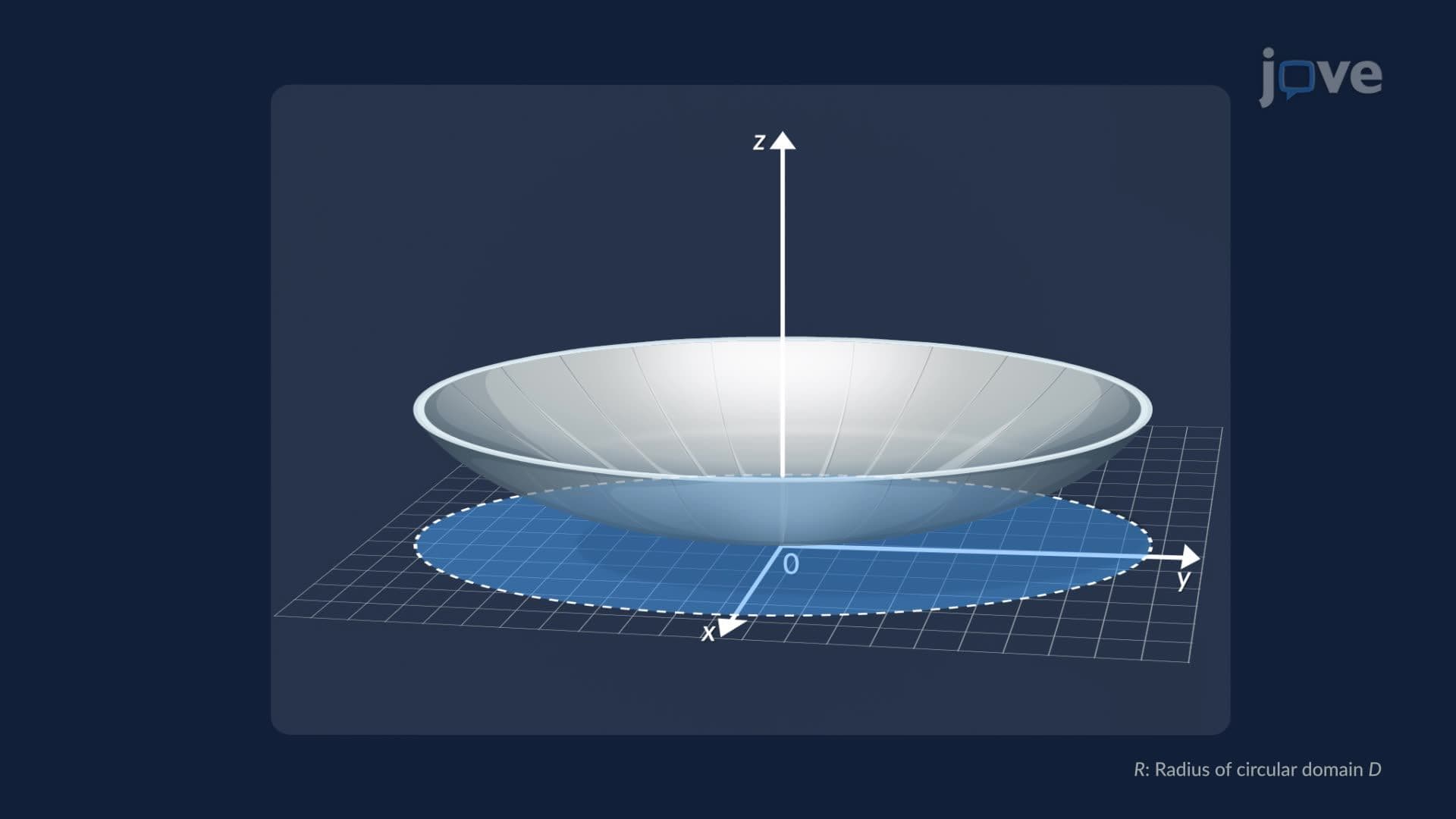
For regions defined in curved boundaries, switching to polar coordinates integration can dramatically simplify the setup. This is especially useful for circular plates or semicircular fins, where Cartesian limits become messy.
US aerospace and mechanical engineering programs apply this concept constantly. For example, Boeing engineers calculating the center of gravity of a wing panel with non-uniform composite materials rely on exactly this mathematical framework. In structural engineering, bridge designers use moments to ensure load-bearing supports are positioned at the correct balance points.
In academic settings, this topic appears on AP Calculus BC exams in the context of accumulation and weighted averages, and it is a cornerstone of college Calculus III midterms and finals. Students preparing for engineering programs will also encounter it in physics courses tied to torque and rotational equilibrium.
Mastering moments and centers of mass also builds the intuition needed for more advanced topics: triple integrals, cylindrical and spherical coordinates, and the Jacobian in multiple integrals, all of which extend these same balancing principles into three dimensions and curved coordinate systems.
Related Micro-courses