Loading video…

 17 Concepts
 107 views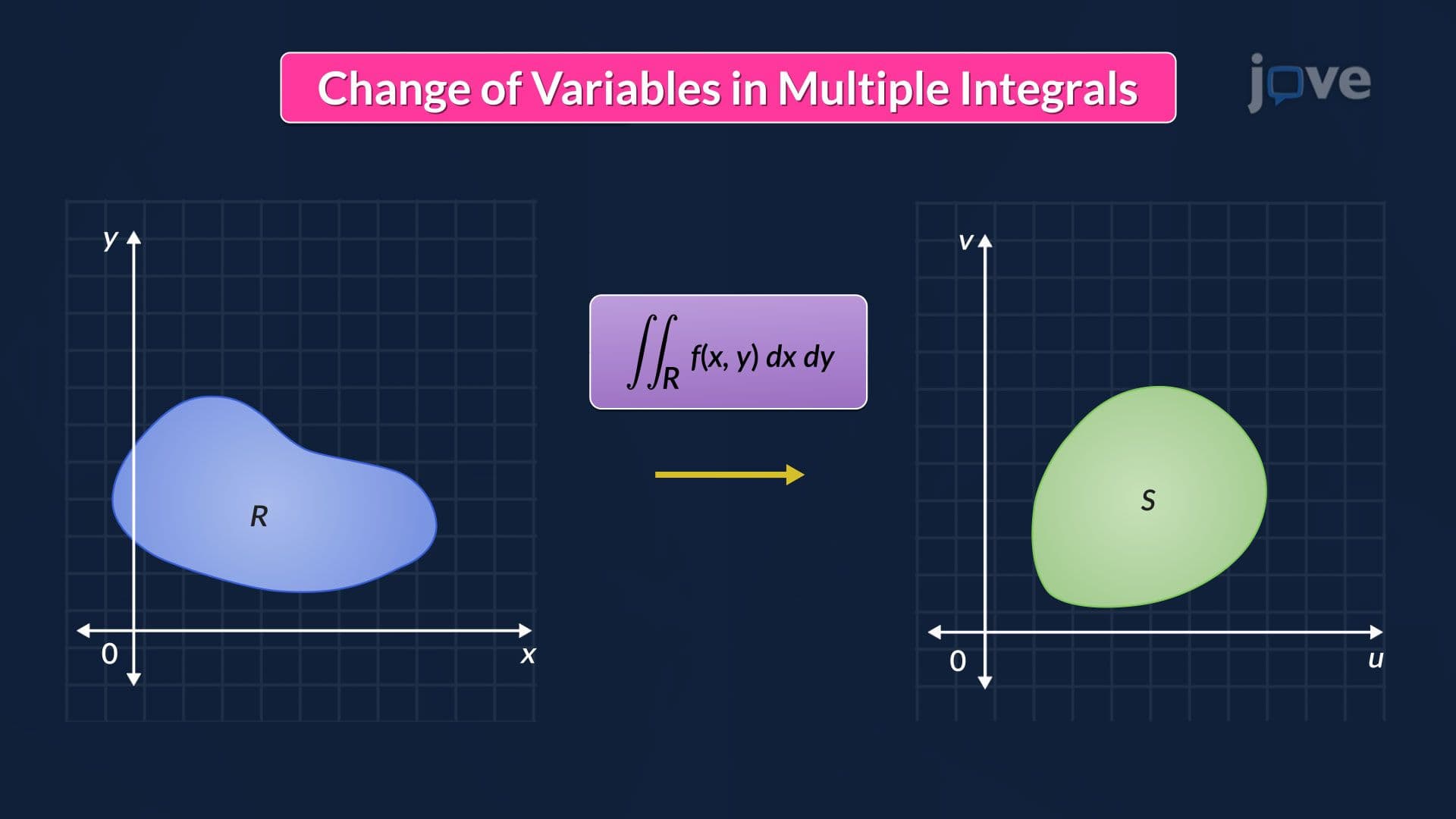

Video Summary: Change of Variables in Multiple Integrals Explained
Struggling to integrate over a region shaped like a crescent or an ellipse? Change of variables in multiple integrals basics is the powerful technique that makes these seemingly impossible problems solvable. For example, NASA engineers use coordinate transformations when calculating gravitational fields over irregularly shaped regions. Change of Variables in Multiple Integrals Explained breaks down how transforming from xy-coordinates to uv-coordinates, using the Jacobian as the conversion factor, simplifies complex boundaries into clean, workable regions. Watch the full video on JoVE Coach to master this concept with expert-led visuals and step-by-step explanations.
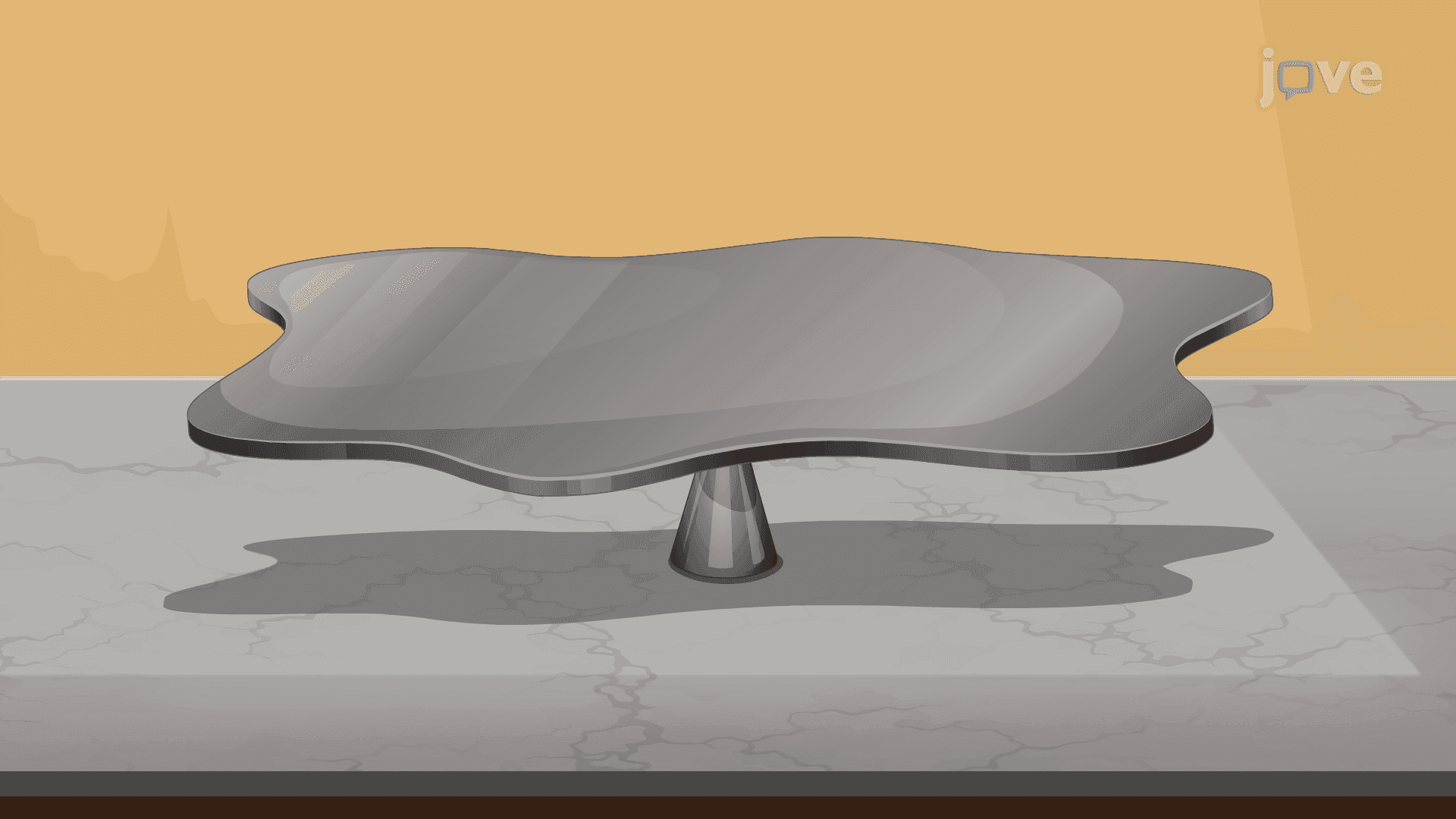
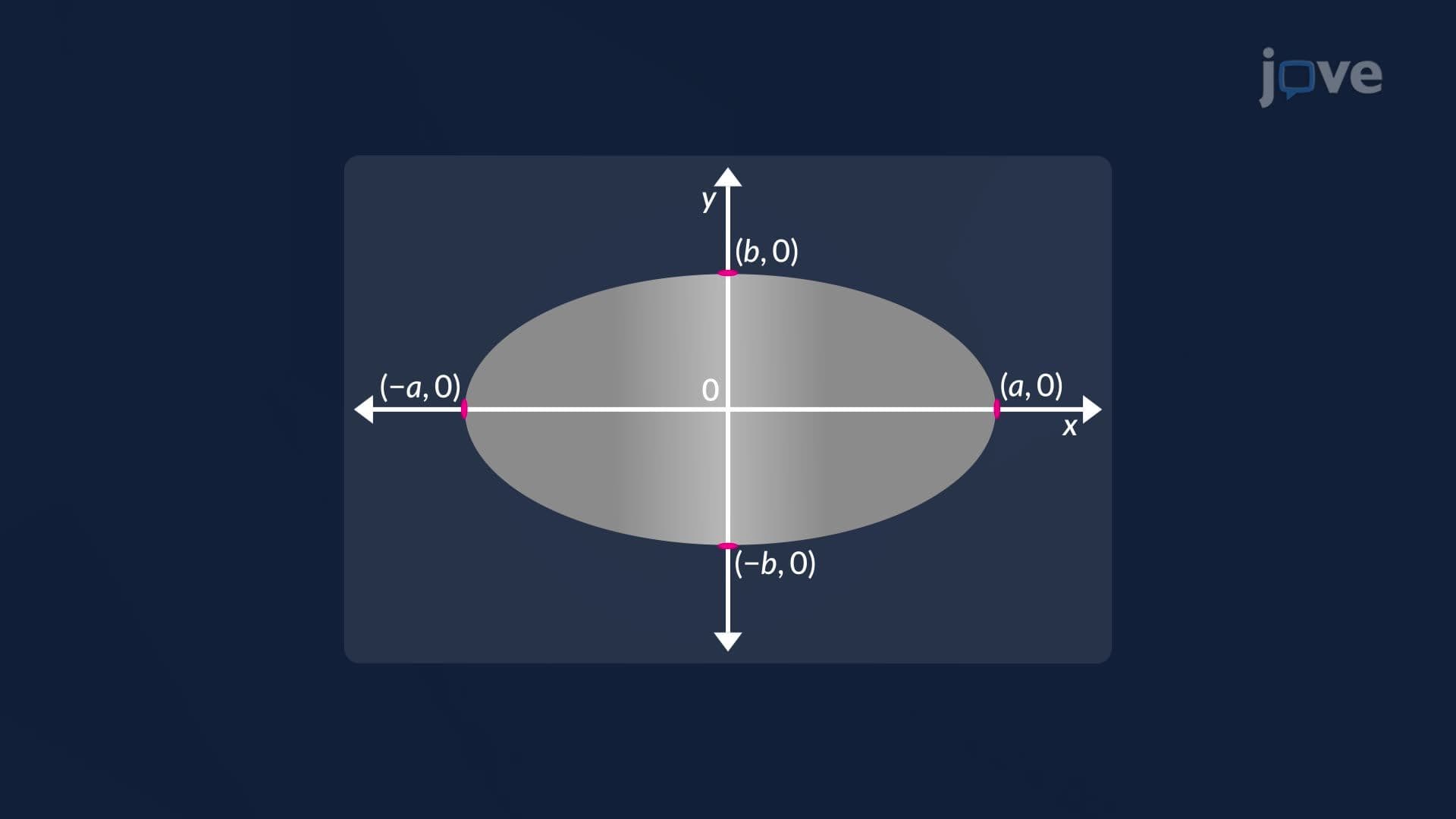
Setting up a double integral is straightforward when the region of integration is a rectangle or a simple shape aligned with the x and y axes. But real mathematical problems, and real-world applications, rarely stay that tidy. Regions shaped like ellipses, rotated parallelograms, or distorted curves make standard Cartesian integration incredibly tedious or even impossible to compute directly. Change of Variables in Multiple Integrals is the systematic method that removes this roadblock, reshaping both the region and the integrand into a form that is far easier to evaluate.
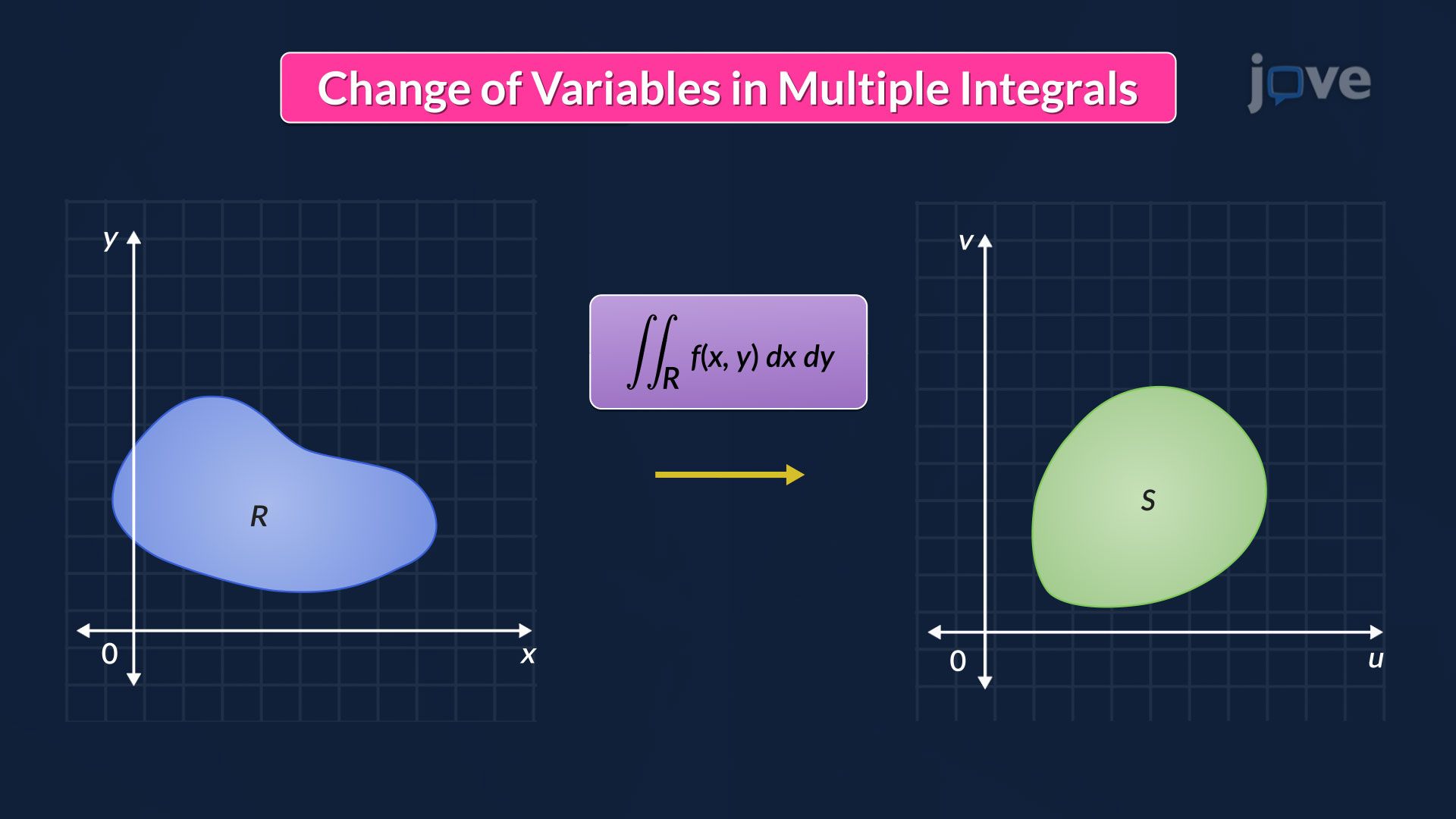
The central idea is substitution, but applied in two dimensions simultaneously. A set of transformation equations defines new variables u and v in terms of x and y (or vice versa). These equations act like a mathematical "remapping," converting the original region R in the xy-plane into a new region S in the uv-plane. The goal is to choose a transformation that turns an awkward boundary, say, the four curved sides of an ellipse, into a clean rectangle or square in the uv-plane. This is exactly how polar coordinates integration works: the transformation x = r·cos(θ) and y = r·sin(θ) turns circular regions into simple rectangular bounds in the r-θ plane, making problems that once required clever tricks into routine calculations.
When the coordinate system changes, the area element dA = dx·dy does not simply become du·dv. The two systems measure area differently, and the Jacobian accounts for exactly this difference. Formally, the Jacobian J is a 2×2 determinant built from the partial derivatives of x and y with respect to u and v. Written out: J = (∂x/∂u)(∂y/∂v) − (∂x/∂v)(∂y/∂u). This single number captures how much the transformation locally stretches or compresses area. A Jacobian greater than 1 means the transformation expands area; less than 1 means it contracts. In the integral, dx·dy is replaced by |J|·du·dv, the absolute value ensures the area element stays positive regardless of the orientation of the transformation. Skipping or miscalculating the Jacobian is one of the most common errors students make on college midterms and AP Calculus BC free-response questions.
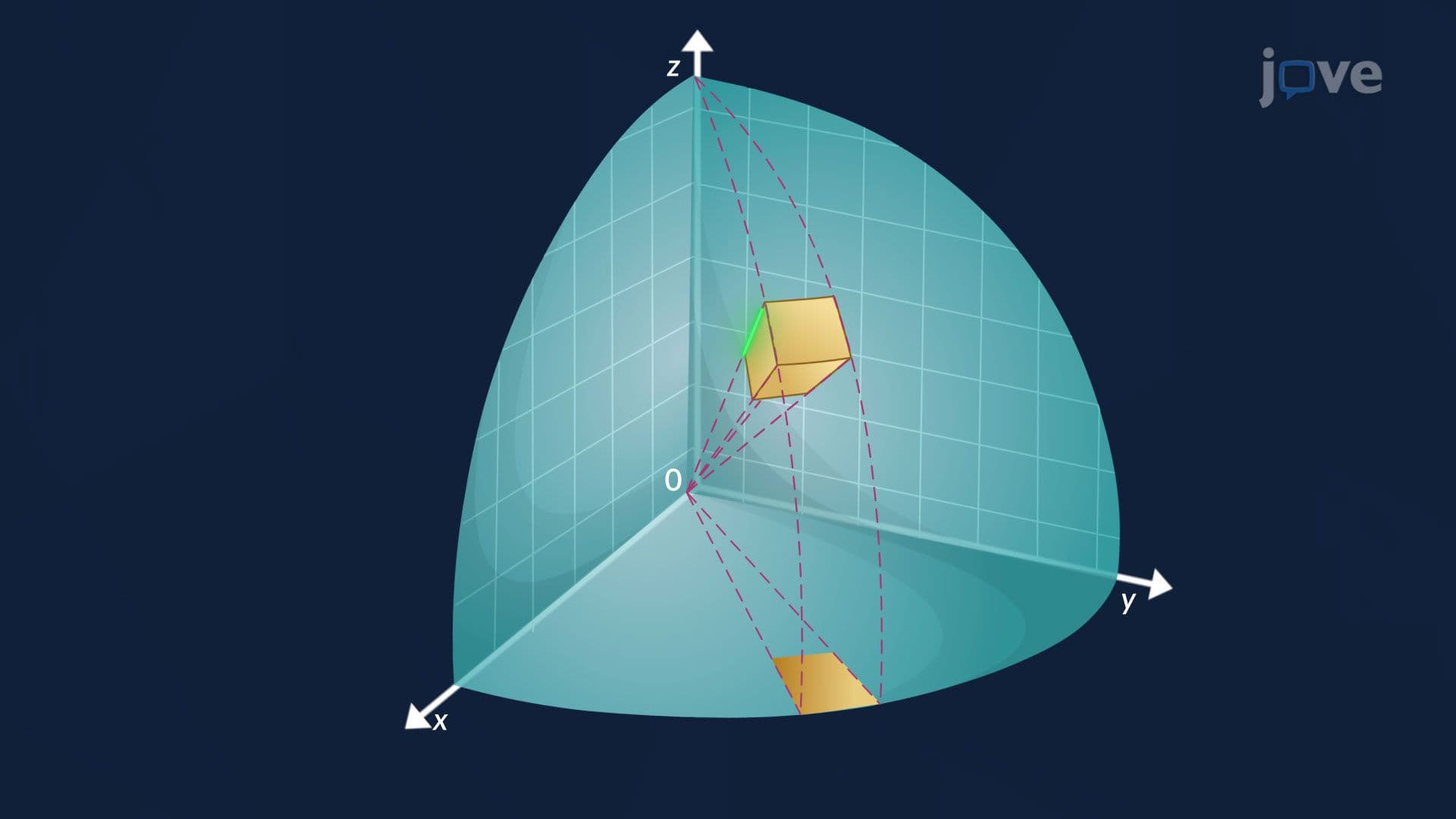
This technique appears throughout college-level STEM coursework in the US. In multivariable calculus courses at universities like MIT, UCLA, and state schools nationwide, change of variables is a core topic covered in the third semester of calculus. It underpins how to evaluate a double integral over a general region, and it is foundational for understanding cylindrical and spherical coordinates used in triple integrals. Practically, physicists use it to compute electric flux over curved surfaces, while engineers apply it when modeling heat distribution across non-rectangular materials. In AP Calculus BC, while full multi-variable transformations are not directly tested, the underlying logic of substitution and area scaling strengthens problem-solving for related-rates and integration problems. At the college level, expect this concept on midterms, finals, and in courses like Differential Equations and Mathematical Physics. Mastering it also builds the intuition needed for center of mass using multiple integrals, where density functions must be integrated over irregular physical shapes.
Related Micro-courses