Loading video…


 19 Concepts
 5.7K views

Video Summary: Application of Differentiation to Business Explained
Ever wonder how a retailer figures out the *exact* price that makes the most money? The application of differentiation to business is the mathematical tool that answers this real-world question, and it's more approachable than you'd expect. In this concept, a store uses calculus to find the ideal Smart TV price that maximizes weekly revenue. Watch the full video on JoVE Coach to master this concept with expert-led visuals and step-by-step explanations.
Most students encounter derivatives as abstract mathematical tools, but the application of differentiation to business reveals their practical power. When companies set prices, manage inventory, or plan production, they are, whether they know it or not, solving optimization problems. Calculus gives us a systematic, proven method to find the best possible outcome in these situations.
Every optimization problem in business starts with a model. In a typical pricing scenario, a company has two critical pieces of information: a known sales data point and the rate at which sales change as price changes (the slope). Using the point-slope form of a linear equation, these two pieces combine into a demand equation, a function that expresses units sold in terms of price.
Once you have the demand equation, substituting it into the revenue formula (Revenue = Price × Units Sold) produces a quadratic function in a single variable. This is the key transformation. Instead of managing two unknowns, you now have one equation describing how revenue behaves across all possible prices. This technique appears frequently in AP Calculus AB and BC curricula, as well as college-level Calculus I courses across the US.
A quadratic revenue function forms a parabola that opens downward, meaning it has one clear peak. That peak represents maximum revenue. To find it precisely, you differentiate the revenue function and set the derivative equal to zero. This approach reflects one of the most important principles in calculus: at a maximum or minimum value, the instantaneous rate of change equals zero.
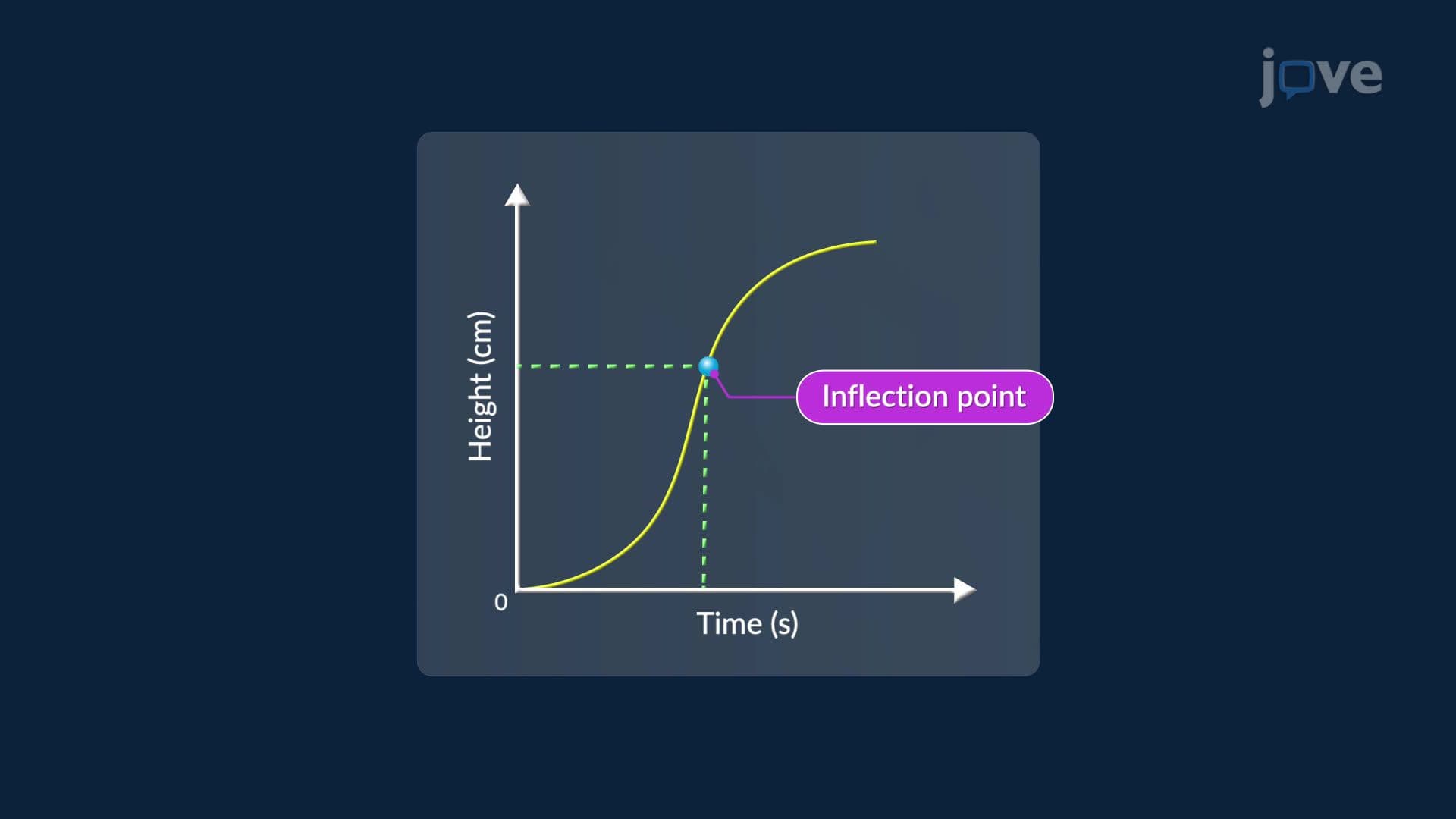
Setting the derivative to zero gives a critical point. To confirm it's a maximum (not a minimum), you can use the second derivative test: if the second derivative at that point is negative, the function is concave down, confirming a maximum. This connects directly to the concepts of concavity and inflection points that students study in standard calculus courses.
For example, a consumer electronics retailer in the US might use this exact method to set the launch price of a new Smart TV model, balancing demand sensitivity against total revenue goals.
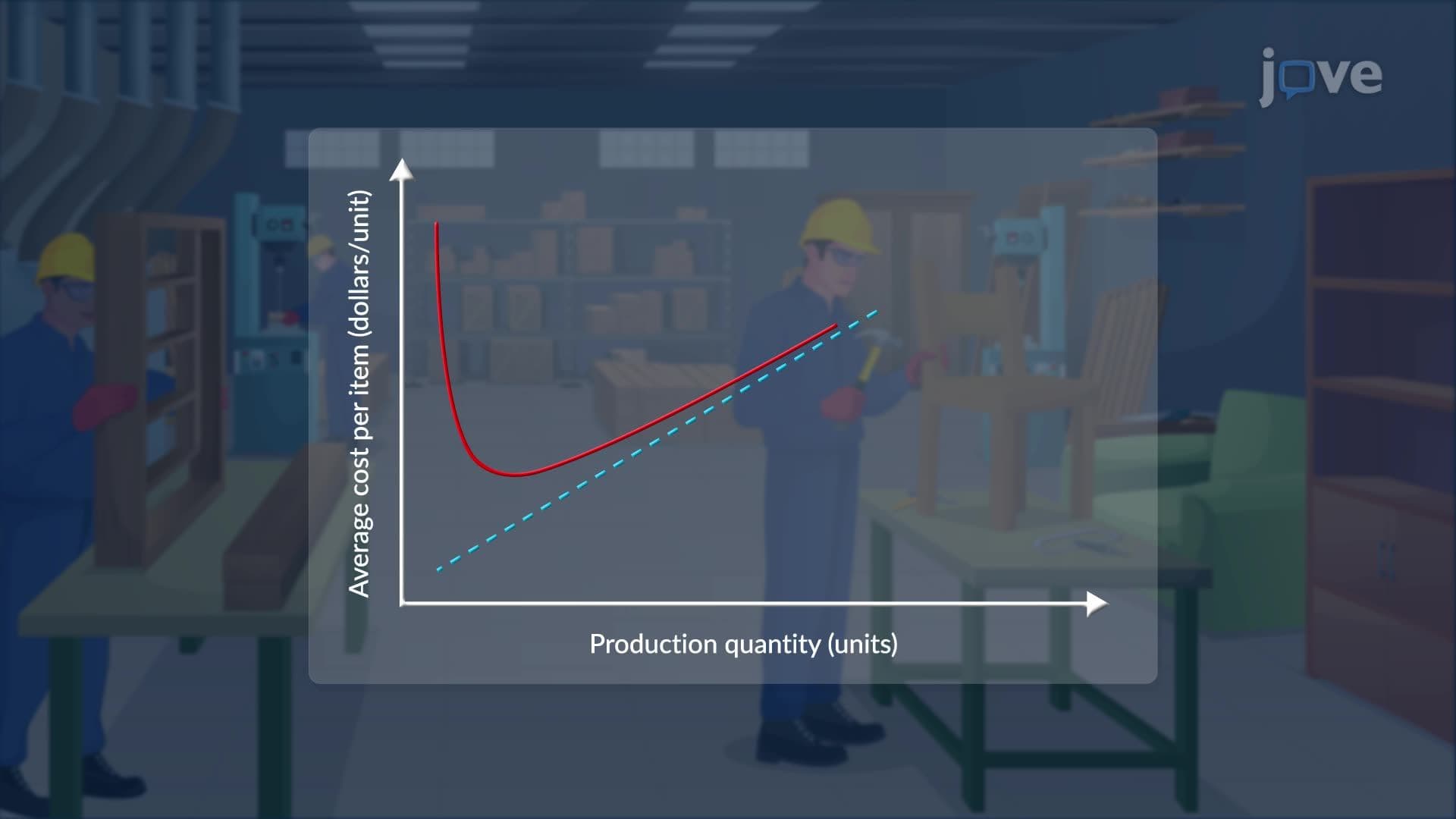
The same differentiation framework applies across a wide range of business problems. Cost minimization (finding the production level that keeps expenses lowest), profit maximization (subtracting cost from revenue and optimizing the result), and even marketing budget allocation all rely on the same core technique. In more advanced settings, related rates help businesses model how changes in one variable, like material costs, ripple through to affect profit over time.
On standardized exams like AP Calculus and college midterms, optimization problems are consistently high-priority question types. Understanding how to use derivatives for optimization and how to find the absolute maximum of a function are skills that directly raise exam scores. Practicing curve sketching alongside algebraic differentiation builds the intuition needed to solve these problems quickly and confidently.
Related Micro-courses