Loading video…


 19 Concepts
 5.7K views

Video Summary: What Is Newtons Method
Ever wondered how engineers at NASA calculate orbital trajectories when the math gets too messy for algebra alone? Newton's Method is the iterative powerhouse that makes it possible. This calculus technique finds approximate roots of complex, nonlinear equations, like estimating the interest rate buried inside a car loan repayment formula. Each iteration narrows the answer, turning an impossible equation into a solvable one. Watch the full video on JoVE Coach to master this concept with expert-led visuals and step-by-step explanations.
Newton's Method is an iterative numerical technique used to find approximate roots of real-valued, differentiable functions. A "root" is any input value x where f(x) = 0. While simple polynomial equations can be solved with factoring or the quadratic formula, most real-world equations, especially nonlinear ones, resist those clean algebraic shortcuts. That is precisely where Newton's Method steps in, using the geometry of tangent lines and the power of derivatives to zero in on a solution with remarkable efficiency.
The heart of Newton's Method is a single repeating formula:
x(n+1) = x(n) − F(x(n)) on F'(x(n))
Here, x(n) is your current estimate of the root, F(x(n)) is the function's value at that estimate, and F'(x(n)) is the derivative, or slope, at that same point. You start with an educated initial guess, plug it into the formula, and get a new, improved estimate. Repeat the process, and each cycle typically brings you closer to the true root. The tangent line drawn at each guess acts as a local linear approximation of the curve, and its x-intercept becomes your next, better guess. This elegant connection between linear approximation and iterative refinement is what makes Newton's Method both intuitive and powerful.
Newton's Method is far from a purely academic exercise. In US financial contexts, it is used to solve for the interest rate in loan amortization equations, formulas so nonlinear that no algebraic rearrangement can isolate the rate directly. Mortgage calculators, auto loan tools, and bond pricing models all rely on iterative methods like this one behind the scenes. In engineering and physics, Newton's Method appears in optimization problems, structural analysis, and even computer graphics rendering. NASA's Jet Propulsion Laboratory uses iterative numerical methods, rooted in the same logic, to compute spacecraft trajectories. Understanding this method gives students a concrete window into how theoretical calculus becomes practical computation.
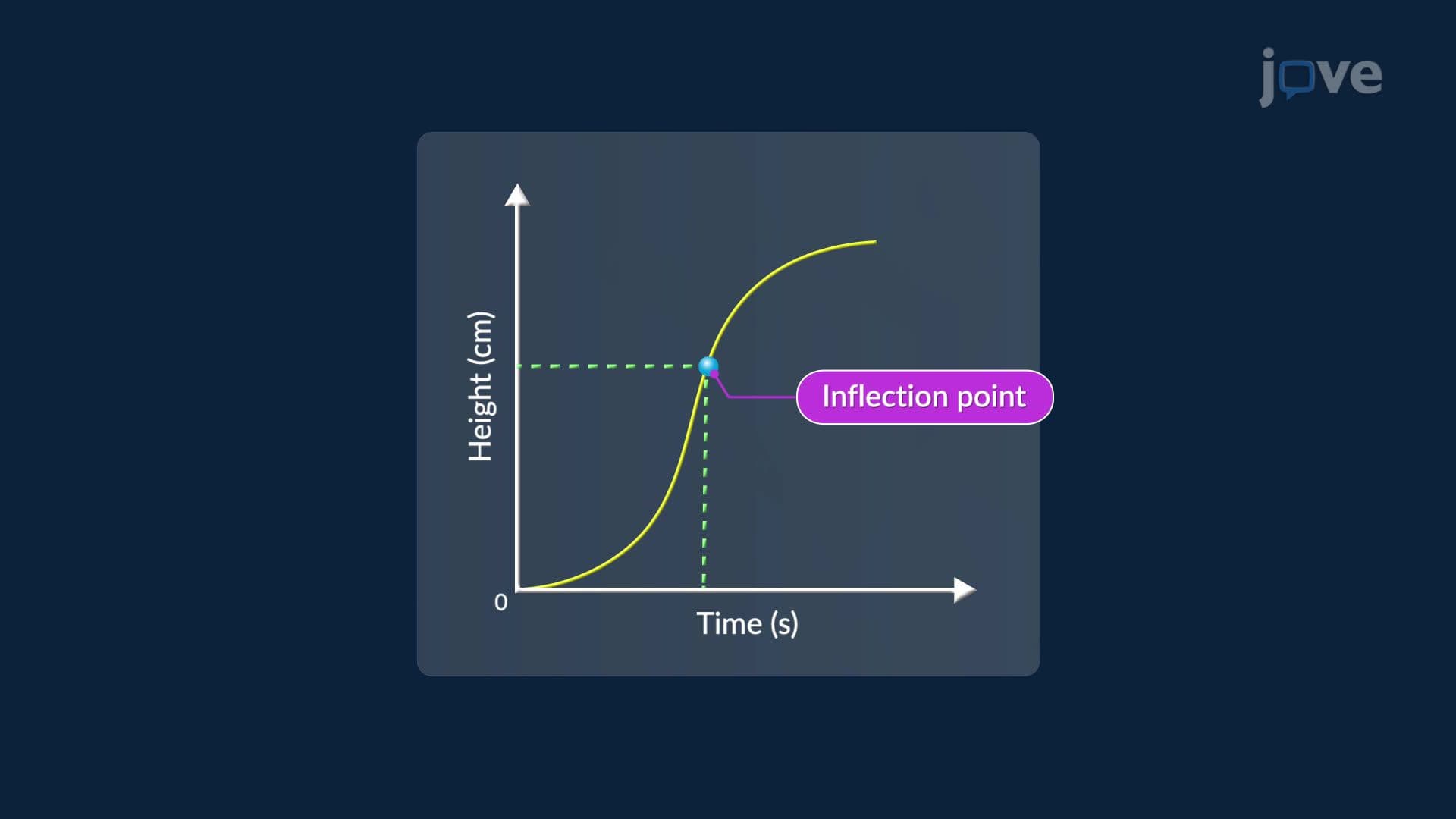
Newton's Method sits within the broader AP Calculus AB and BC curriculum under the topic of applications of derivatives. Students who are comfortable with curve sketching, understanding concavity, and identifying inflection points will find the geometric reasoning behind Newton's Method intuitive. The method also reinforces the Mean Value Theorem's insight that a function's local behavior can approximate its global behavior over small intervals. In college-level Calculus I and II courses, common at universities like UCLA, UT Austin, and MIT, Newton's Method often appears on midterms and finals as both a computational problem and a conceptual question. On the AP Calculus BC exam specifically, numerical methods are fair game, and demonstrating fluency with the iterative formula earns full credit. Mastering Newton's Method also builds readiness for topics like related rates, maximum and minimum values, and numerical analysis courses taken in sophomore or junior year.
Related Micro-courses