Loading video…


 19 Concepts
 5.7K views

Video Summary: Indeterminate Forms and Lhpitals Rule Explained
Why does plugging in a value sometimes give you 0/0, and what does that even mean? Indeterminate forms and L'Hôpital's Rule Explained tackles exactly this frustrating calculus puzzle. When direct substitution fails, L'Hôpital's Rule uses derivatives to reveal a limit's true value. A real-world example: modeling bacterial growth rates in a biology lab, where both population change and time shrink toward zero. Watch the full video on JoVE Coach to master this concept with expert-led visuals and step-by-step explanations.
Limits are the foundation of calculus, but what happens when evaluating a limit produces a result like 0/0 or ∞/∞? These expressions, called indeterminate forms, are neither zero nor infinity. They are mathematically ambiguous, meaning the limit could equal any finite value, or it may not exist at all. L'Hôpital's Rule is the systematic, elegant method that resolves this ambiguity for students tackling AP Calculus AB, AP Calculus BC, and college-level Calculus I and II courses.
An indeterminate form occurs when direct substitution into a limit expression yields a form that cannot be interpreted without further analysis. The most common are:
These forms appear frequently in optimization problems, related rates, and curve sketching, all high-priority topics on the AP Calculus exam. Recognizing an indeterminate form before applying a rule is a critical first step that students often skip, leading to avoidable errors on college midterms and standardized tests.
L'Hôpital's Rule states: if the limit of f(x)/g(x) produces 0/0 or ∞/∞ as x approaches a value, then the limit equals the limit of f'(x)/g'(x), where f'(x) and g'(x) are the derivatives of the numerator and denominator taken separately.
A critical warning: this is NOT the quotient rule. Students differentiate the top and bottom independently. For example, consider the limit of sin(x)/x as x approaches 0, a classic 0/0 form. Applying L'Hôpital's Rule gives the limit of cos(x)/1, which equals 1. This result has direct applications in signal processing and physics courses at US universities.
If one application of the rule still produces an indeterminate form, the rule can be applied repeatedly until a determinate result emerges. However, both functions must remain differentiable at each step for the rule to be valid.
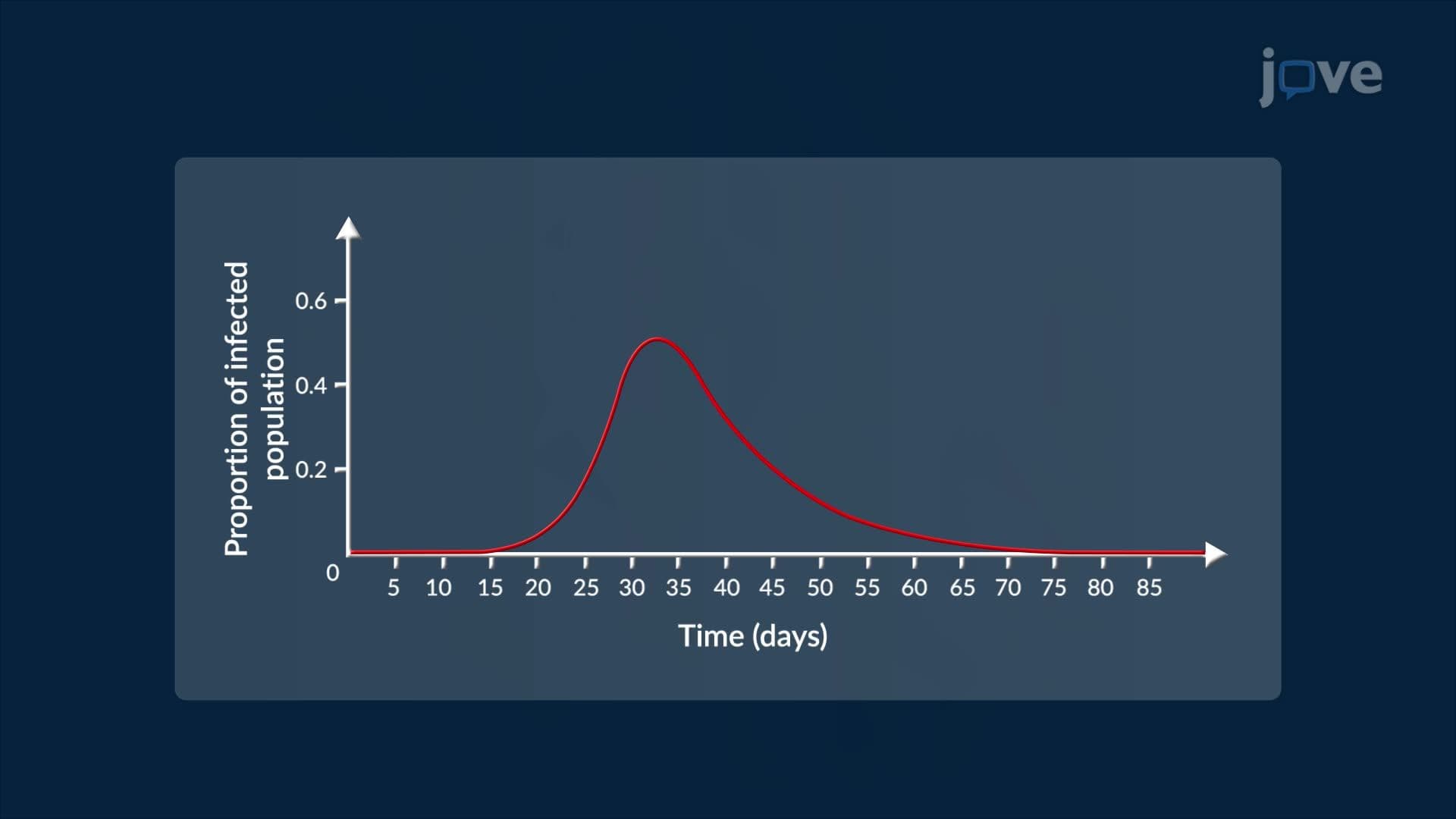
Consider a microbiology lab at a US research university studying bacterial population growth. Scientists use the average rate of change, the change in population divided by the change in time, to approximate growth. As the time interval shrinks toward zero, both the numerator and denominator approach zero, creating a 0/0 indeterminate form. L'Hôpital's Rule resolves this by substituting derivatives, revealing the instantaneous growth rate precisely. This same logic underlies how engineers and economists model instantaneous rates of change across industries.
L'Hôpital's Rule does not exist in isolation. Mastering it strengthens your ability to work with:
On the AP Calculus BC exam and in college Calculus II, students regularly encounter multi-step limit problems where L'Hôpital's Rule is one part of a larger solution strategy. Building this skill early creates a strong foundation for advanced topics.
Related Micro-courses