Loading concepts…


23 Concepts
21 Concepts
16 Concepts
20 Concepts
17 Concepts
14 Concepts
11 Concepts
7 Concepts
9 Concepts
 17 Concepts
 5.3K Views
 Popular topics












Cash flow statement preparation is a critical financial skill that separates managers who lead with data from those who rely on instinct alone. When a profitable team or business unit suddenly struggles to meet operational commitments, the cash flow statement reveals why. JoVE Coach equips working managers to read, build, and interpret these statements, turning financial reports into confident, strategic decisions.
1. Introduction to the Cash Flow Statement and Its Importance
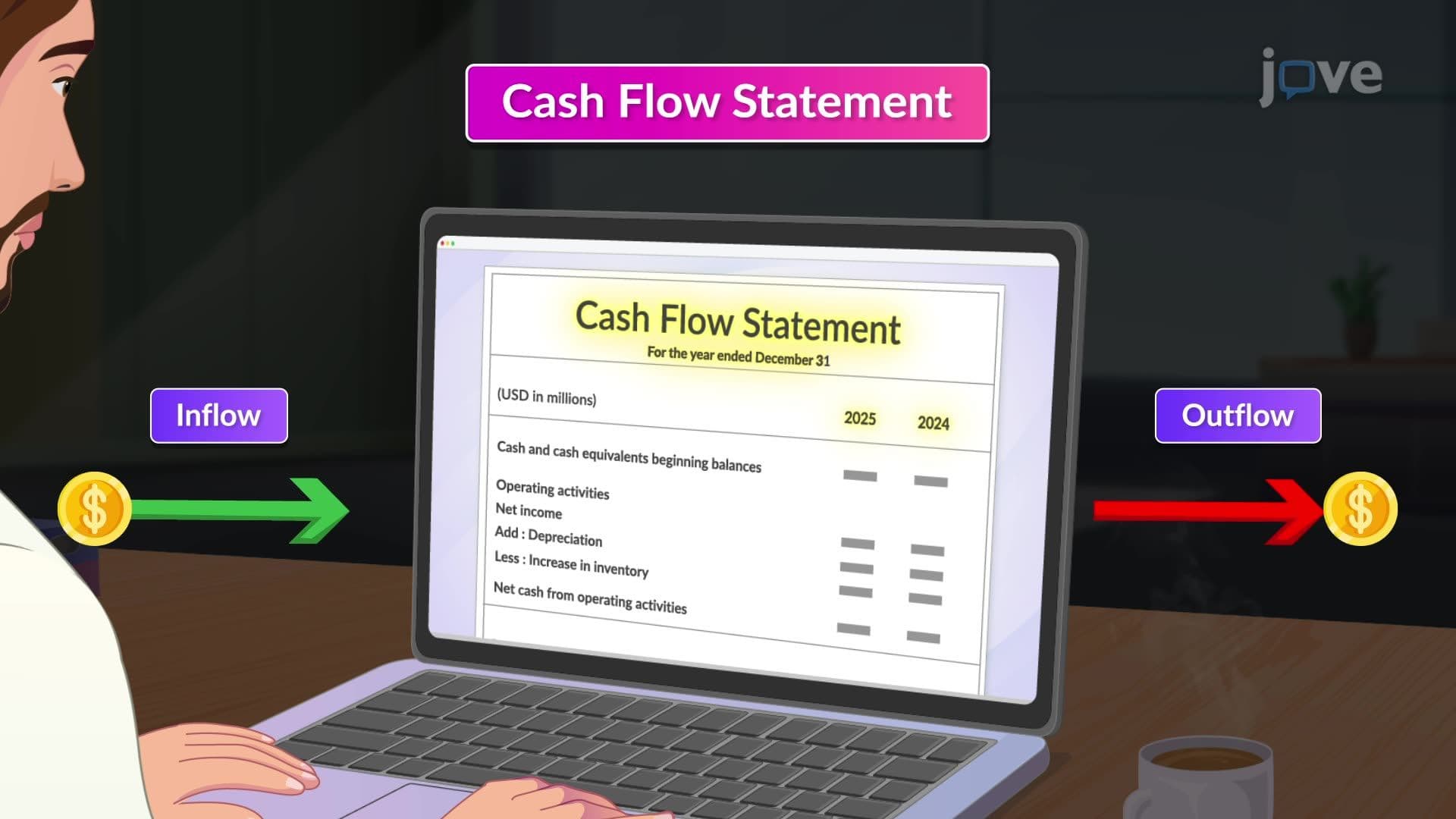
The cash flow statement is a financial report that tracks real cash moving into and out of a business during a defined period. Unlike profit figures, it reflects what is actually available to spend. For managers, this distinction is critical, a department can appear profitable while facing a genuine liquidity problem. When a business unit reports strong sales but struggles to pay vendors on time, the cash flow statement surfaces that gap. Understanding its structure and purpose helps leaders make informed decisions about spending, investment, and financial sustainability without waiting for month-end surprises to escalate into operational crises.
2. Components of the Cash Flow Statement
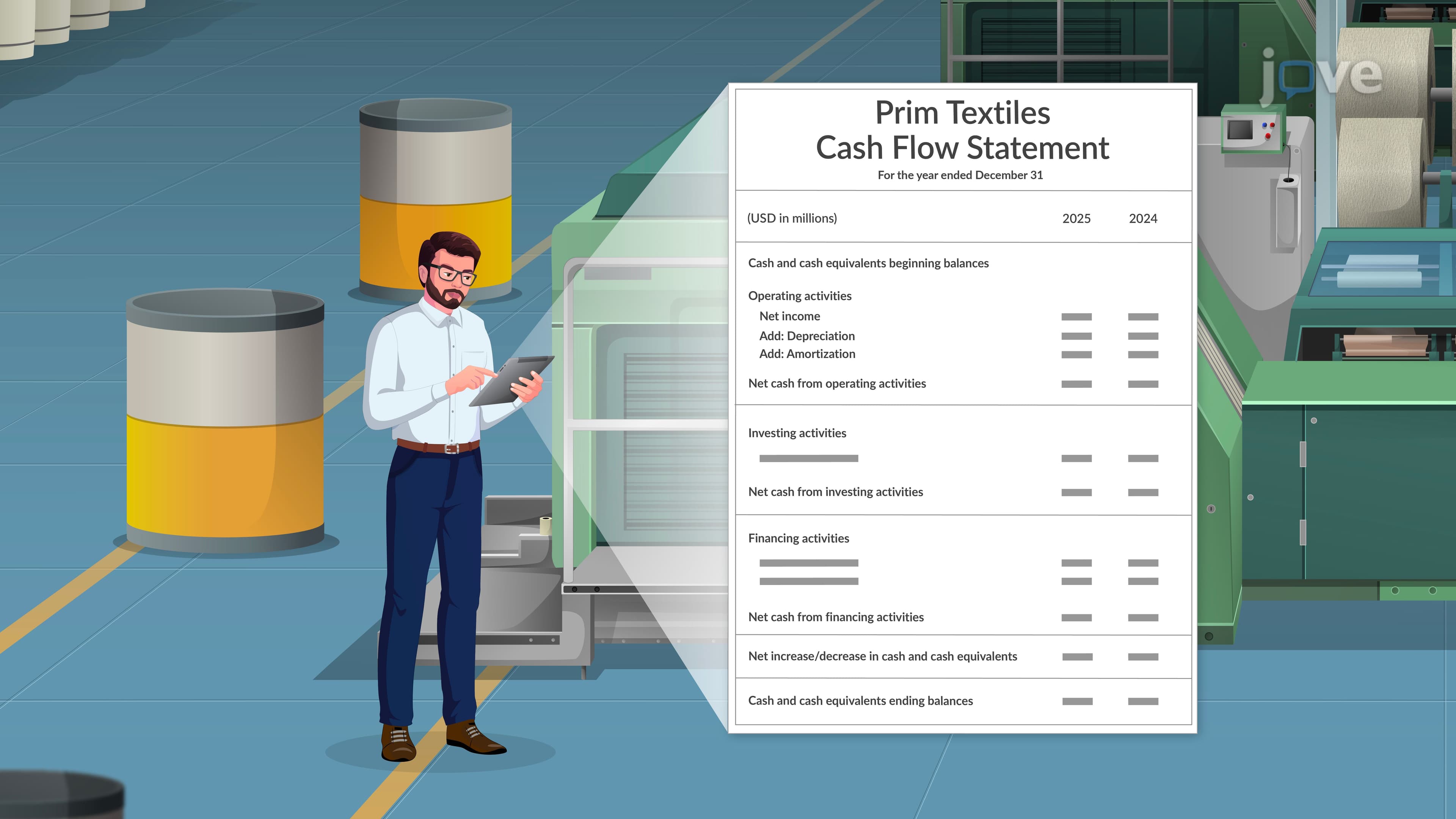
The cash flow statement is organized into three sections: operating, investing, and financing activities. Operating activities capture day-to-day cash transactions tied to core business functions. Investing activities reflect cash spent or received on long-term assets. Financing activities show how a business raises or repays capital. For a manager overseeing a growing team, understanding these three components clarifies where cash is coming from and where it is being allocated. When a department head reviews a cash flow report, these sections provide an immediate, structured view of financial health, far more actionable than reading a profit and loss statement alone.
3. Relationship Between the Cash Flow Statement and Other Financial Statements
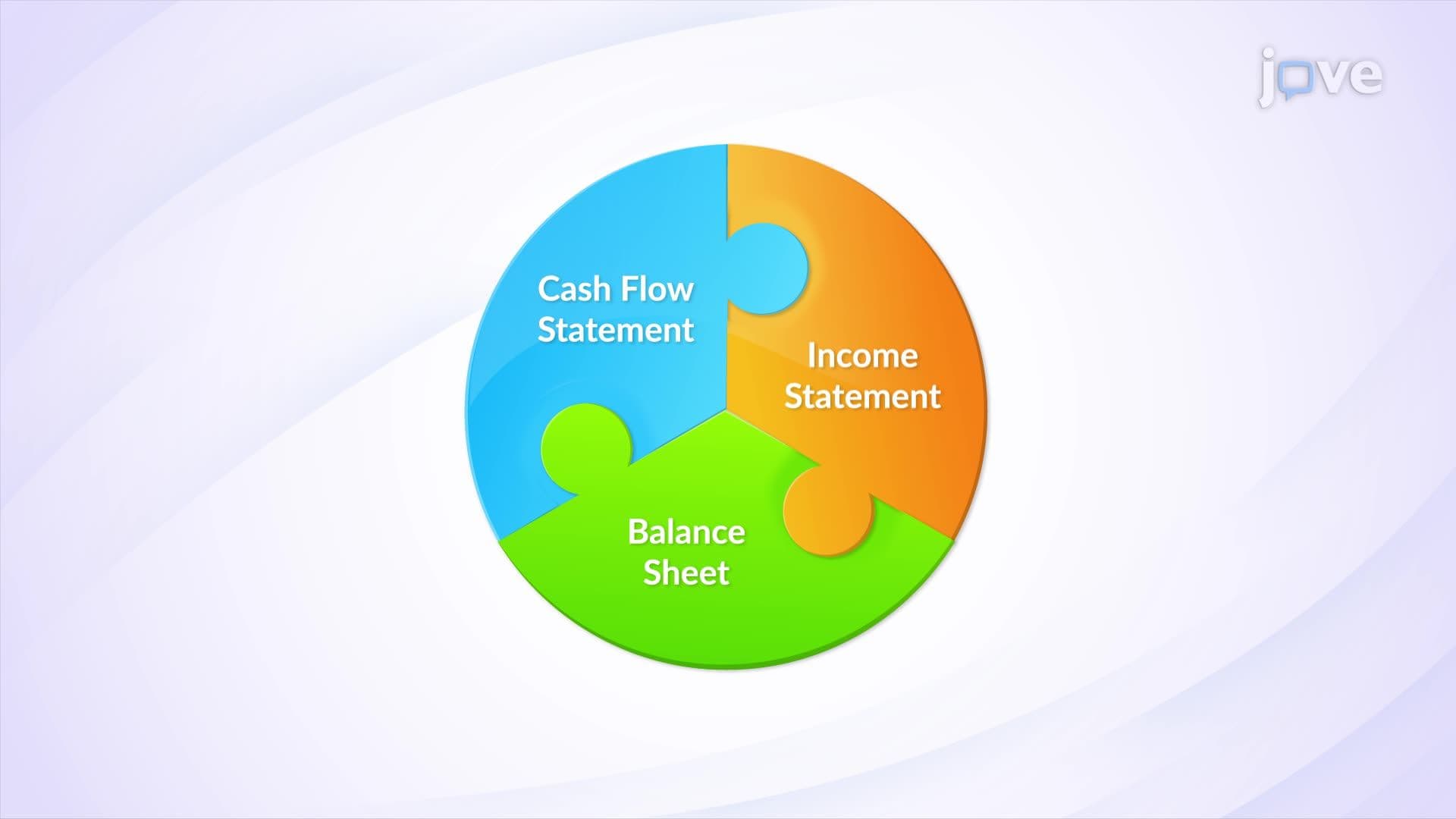
The cash flow statement does not exist in isolation, it connects directly to the income statement and balance sheet. Net income from the income statement serves as the starting point for operating cash flow under the indirect method. Changes in assets and liabilities from the balance sheet feed into cash flow adjustments. For a senior manager presenting financial performance, understanding these linkages prevents misreading one statement in isolation. When accounts receivable rises on the balance sheet, it signals that revenue has been recognized but cash has not yet been collected, a nuance that shapes how leaders plan for near-term obligations and commitments.
4. Understanding and Preparing Operating Activities
Operating activities represent the cash generated or consumed by a company's core business functions, sales, wages, supplier payments, taxes, and interest. Under the indirect method, the calculation begins with net income, then adjusts for non-cash expenses such as depreciation and changes in working capital. For a manager responsible for day-to-day operations, positive cash flow from this section signals that the business generates enough cash internally to sustain itself. Consistently negative operating cash flow, even alongside reported profits, is a red flag. Managers who can read and prepare this section are better equipped to respond early to cash pressure before it affects team delivery or vendor relationships.
5. Understanding and Preparing Investing Activities
Investing activities record cash flows related to acquiring or disposing of long-term assets such as equipment, property, or other capital investments. Cash outflows in this section typically reflect growth-oriented decisions, purchasing new infrastructure or expanding production capacity. Cash inflows arise when assets are sold. For a department head approving capital expenditure or equipment upgrades, understanding the investing section clarifies how those decisions appear on the cash flow statement and affect overall cash position. A period of significant investment may show a large negative figure in this section, which is not inherently alarming if the organization's operating cash flow remains strong and the investments align with strategic goals.
6. Understanding and Preparing Financing Activities
Financing activities cover transactions between a business and its capital providers, including lenders and shareholders. Issuing shares, taking out loans, repaying debt, and distributing dividends all appear in this section. For managers involved in budget planning or strategic expansion discussions, this section reveals how an organization funds its ambitions. Sustained reliance on financing inflows to cover operational shortfalls is a warning sign worth escalating. Conversely, a period of significant financing inflows followed by strong operating cash flow suggests responsible growth capital management. Understanding this section allows managers to engage more credibly in conversations with finance leadership about funding strategy and organizational sustainability.
7. Direct vs. Indirect Method of Cash Flow Preparation
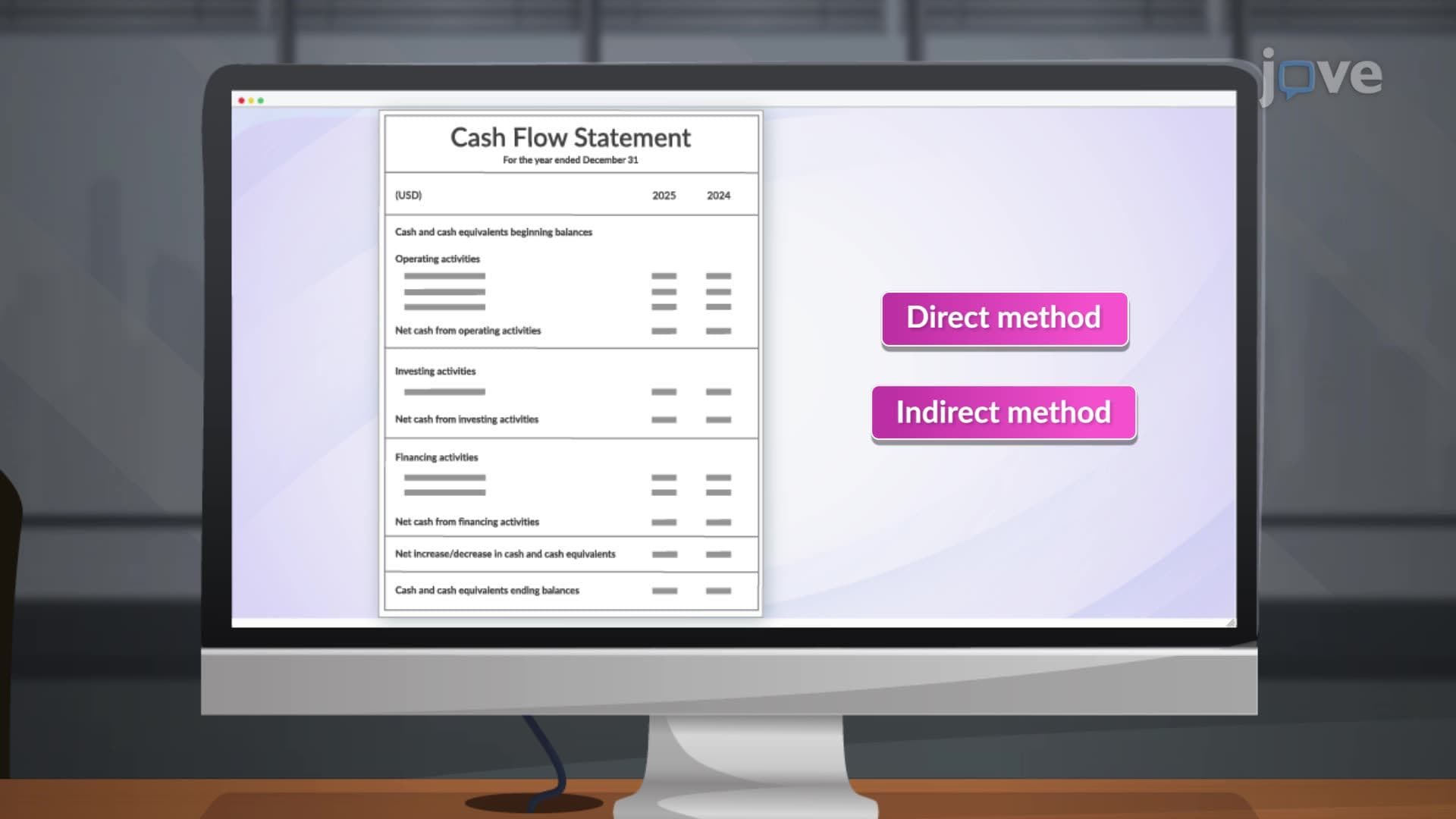
The cash flow statement can be prepared using either the direct or indirect method, with the difference applied specifically to operating activities. The direct method lists actual cash receipts and payments, cash collected from customers, cash paid to suppliers and employees. The indirect method starts with net income and adjusts for non-cash items and working capital changes. While the direct method offers greater transparency into cash movements, the indirect method is more widely used because it aligns with accrual accounting systems that most organizations already maintain. Managers who understand both approaches can interpret cash flow reports more accurately and engage constructively when finance teams walk through operating performance.
8. Non-Cash Transactions and Adjustments for Non-Cash Items
Non-cash transactions are financial events that affect a company's financial position without involving an actual exchange of cash, such as acquiring equipment through a share issuance or converting debt into equity. These do not appear within the three main sections of the cash flow statement but must be disclosed separately. Under the indirect method, non-cash expenses like depreciation and amortization are added back to net income because they reduce reported profit without reducing actual cash. For managers reviewing financial reports, recognizing these adjustments prevents misinterpretation. A team lead who understands why depreciation is added back can engage far more confidently in financial reviews and budget conversations with senior leadership.
9. Analyzing Changes in Working Capital
Working capital, the difference between current assets and current liabilities, directly affects how much cash is available for operations. In the cash flow statement, increases in current assets such as receivables or inventory reduce operating cash flow, while increases in current liabilities such as payables improve it. For a manager overseeing procurement, sales cycles, or inventory management, these movements reveal how operational decisions translate into real cash impact. A spike in receivables may indicate slow collections, while rising payables may reflect extended payment terms. Monitoring working capital changes gives operational leaders an early signal of liquidity pressure well before it disrupts day-to-day function.
10. Preparing the Cash Flow Statement and Free Cash Flow Analysis
Bringing all three sections together into a complete cash flow statement enables managers to see the full cash picture for a reporting period. Beyond the statement itself, free cash flow, calculated by subtracting capital expenditures from operating cash flow, measures how much cash remains after maintaining or expanding the asset base. This figure is a practical indicator of financial strength and flexibility. A positive free cash flow signals that the organization can pay down debt, fund new initiatives, or return value to shareholders without relying on external financing. For leaders involved in growth planning or investment decisions, free cash flow is one of the most important metrics to understand and monitor.
11. Interpreting and Analyzing the Cash Flow Statement
Reading a cash flow statement is not just a finance function, it is a leadership competency. Strong operating cash flow alongside negative investing cash flow often indicates a company actively reinvesting profits into future growth, which is a healthy pattern. Dependence on financing inflows to cover operational shortfalls, however, signals risk. For a manager presenting performance data to an executive team or board, the ability to interpret cash flow trends, rather than simply report numbers, demonstrates genuine financial acumen. Understanding what the statement reveals about organizational sustainability, growth trajectory, and liquidity risk transforms a manager from a report reader into a strategic contributor.