Loading…
Loading video…

134,508 views
Ever wonder why some medications like insulin work immediately while others take hours to show effect? Compartment models two compartment systems explain how drugs distribute unevenly throughout your body based on blood flow differences between organs. The Compartment Models Two Compartment Model Explained concept reveals why your heart receives drugs faster than your fat tissue, creating a bi-exponential decline pattern seen in FDA pharmacokinetic studies. Watch the full video on JoVE Coach to master this concept with expert-led visuals and step-by-step explanations.
The compartment models two compartment approach revolutionizes how we understand drug distribution in the human body. Unlike the oversimplified one-compartment model, this sophisticated framework acknowledges that your body isn't a uniform mixing tank. Instead, it recognizes the stark reality: your heart receives blood every few seconds, while your fat tissue might take hours to equilibrate with circulating drug concentrations.
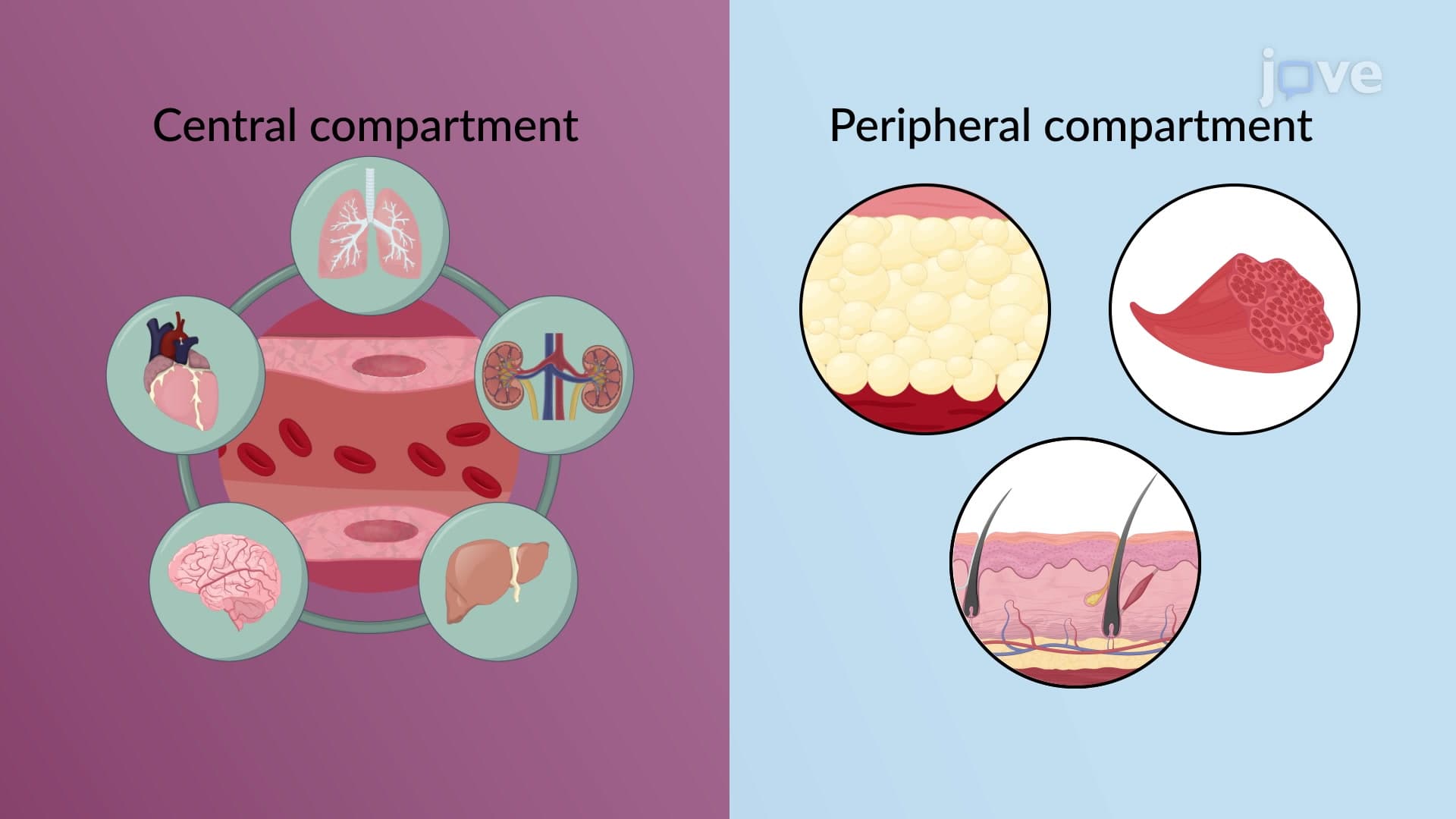
The central compartment represents your body's "fast lane" – blood plasma and highly perfused organs including the heart, liver, kidneys, lungs, and brain. These tissues receive approximately 75% of cardiac output despite comprising only 10% of body weight. When you receive an IV medication at Massachusetts General Hospital, this central compartment shows immediate, high drug concentrations.
The peripheral compartment encompasses slower-equilibrating tissues: muscle, skin, fat, and bone. These tissues receive limited blood flow but represent the majority of body mass. This compartment acts like a drug reservoir, slowly filling during distribution and slowly releasing during elimination.
The movement between compartments follows first-order kinetics, described by transfer constants (micro constants). The rate constant k12 governs drug movement from central to peripheral compartments, while k21 describes the reverse process. Elimination occurs primarily from the central compartment with rate constant k10.
For MCAT preparation, remember the key equation: Rate of change = k × Amount in compartment. This principle appears frequently in biochemistry and pharmacology sections.
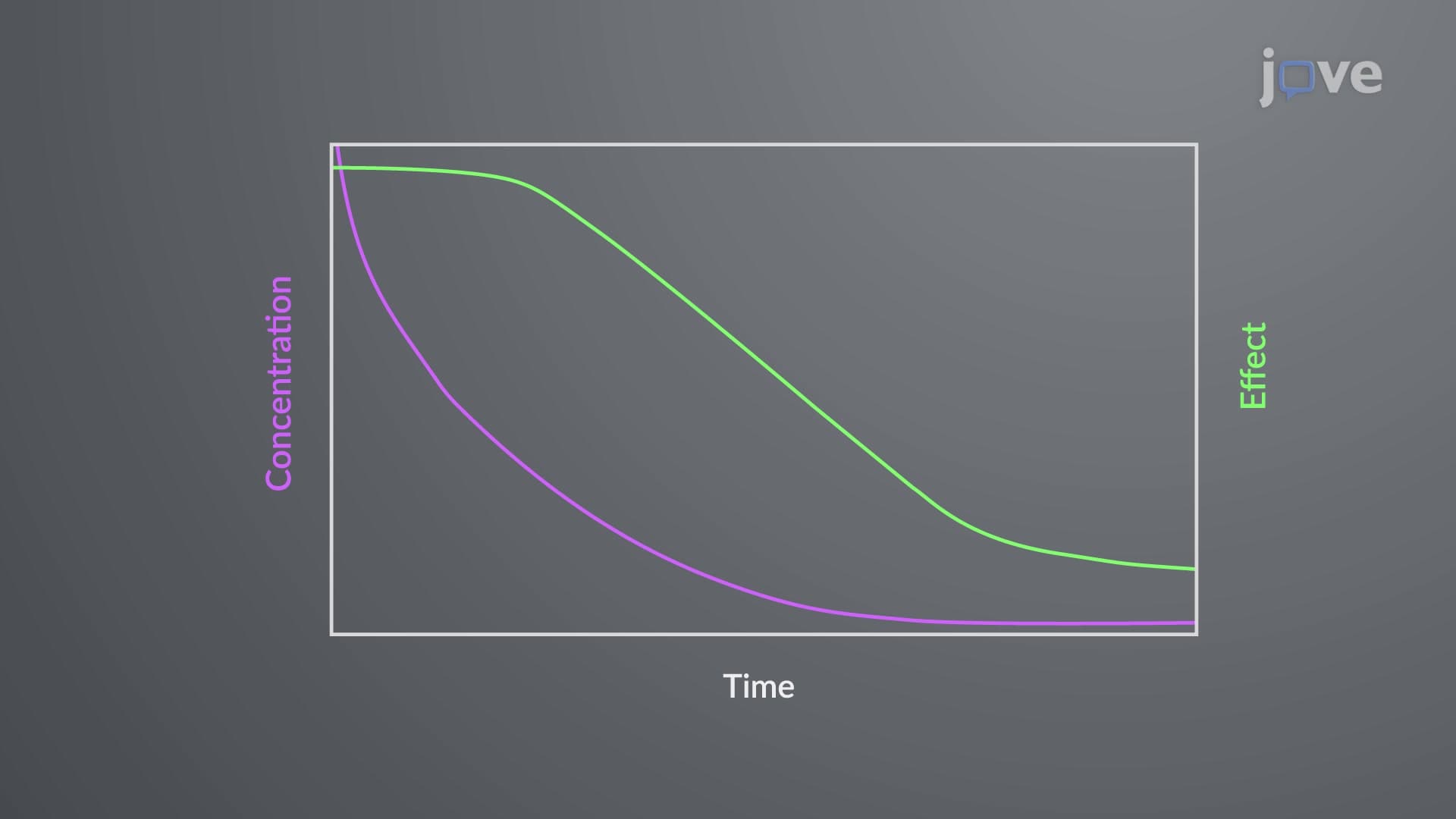
Following IV bolus administration, plasma concentrations show a characteristic bi-exponential decline. The initial rapid drop (distribution phase, alpha phase) reflects drug movement into peripheral tissues. The slower subsequent decline (elimination phase, beta phase) represents drug elimination from the body.
This pattern appears in FDA pharmacokinetic studies for drugs like propranolol and lidocaine. Understanding this concept helps predict therapeutic duration and design appropriate dosing regimens in clinical practice.
US medical schools emphasize compartment modeling in pharmacology courses. The USMLE Step 1 frequently tests students' ability to interpret concentration-time curves and predict drug behavior. Nursing students encounter these principles in NCLEX questions about medication timing and patient monitoring.
Frequently Asked Questions
The compartment models two compartment model divides the body into central (blood and highly perfused organs) and peripheral (slowly perfused tissues) compartments to predict drug distribution. This model explains why plasma drug concentrations decline bi-exponentially after IV administration. It's essential for understanding how medications like antibiotics distribute throughout your body and helps determine optimal dosing strategies.
The central compartment includes blood and rapidly perfused organs (heart, liver, kidneys, brain) that receive drugs immediately after administration. The peripheral compartment consists of slowly perfused tissues (muscle, fat, bone) that equilibrate gradually with drug concentrations. This distinction explains why some organs show immediate drug effects while others require time to reach therapeutic levels.
MCAT pharmacology passages often present concentration-time graphs requiring students to identify distribution and elimination phases. Questions may ask you to calculate transfer constants, predict drug accumulation, or explain why certain tissues show delayed drug effects. Practice interpreting bi-exponential decline curves and understanding first-order kinetics principles for success.
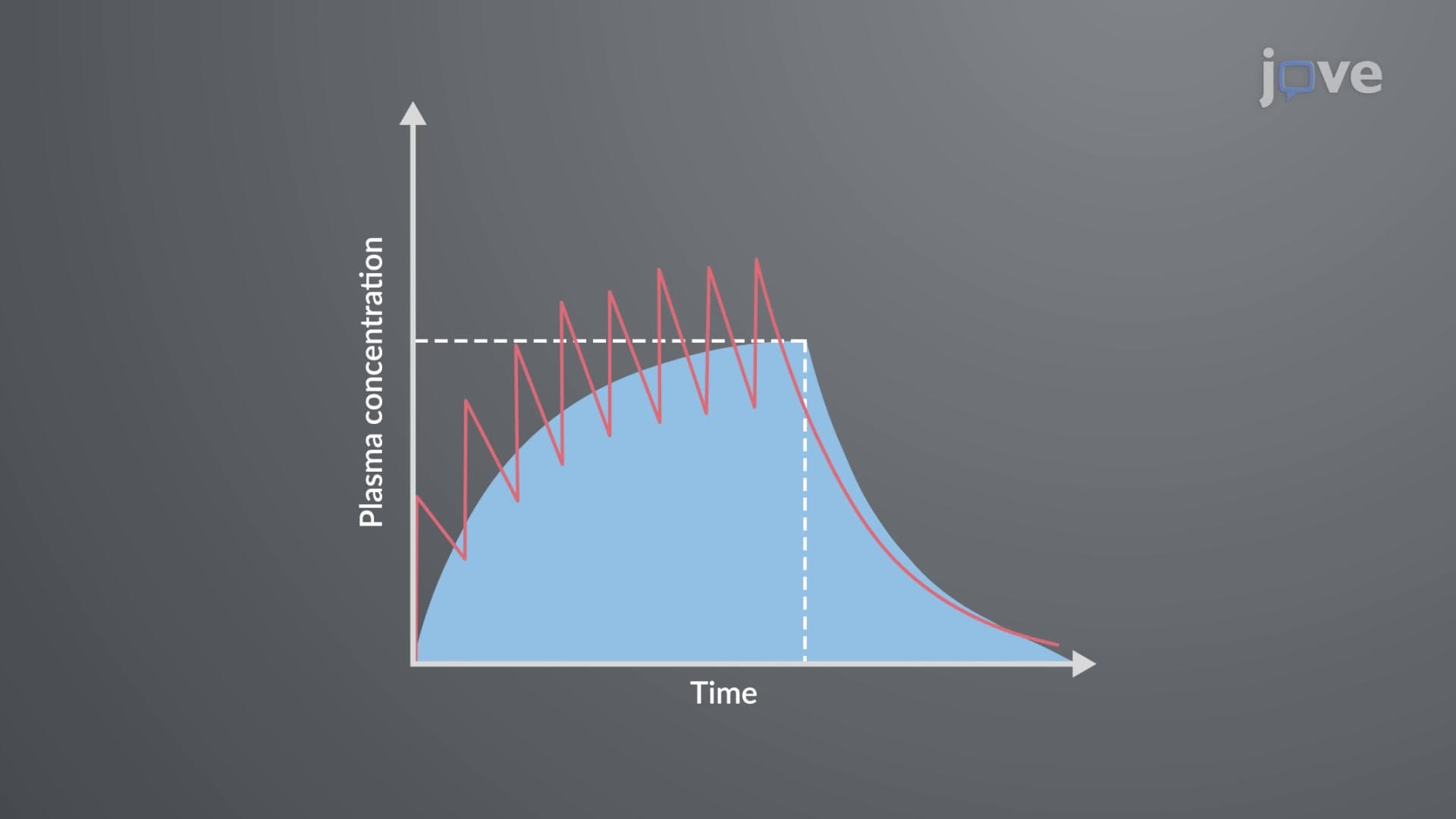
NCLEX examinations test practical applications like understanding why loading doses are necessary for some medications, predicting when steady-state occurs, and recognizing signs of drug accumulation. You'll encounter scenarios about timing medication administration and monitoring patients for therapeutic and toxic effects. Focus on clinical implications rather than complex mathematical calculations.
Common examples include digoxin (long distribution phase into heart muscle), propranolol (rapid distribution to highly perfused organs), and certain antibiotics like gentamicin. Understanding these patterns helps healthcare providers predict when peak effects occur and how long medications remain effective. This knowledge directly impacts patient safety and treatment success.
No advanced calculus is required for basic understanding. High school algebra and exponential functions provide sufficient mathematical foundation. Focus on conceptual understanding: drugs move between compartments at predictable rates, and plasma concentrations decline in two distinct phases. The mathematical complexity increases in graduate-level pharmacokinetics, but undergraduate courses emphasize practical applications.
Create visual diagrams showing drug movement between compartments, practice interpreting concentration-time graphs, and connect concepts to real medications you encounter in clinical settings. Use active recall by explaining the bi-exponential decline pattern without looking at notes. Form study groups to discuss how different drugs behave according to two-compartment principles and quiz each other on transfer constant relationships.
Progress to multi-compartment models, physiologically-based pharmacokinetic (PBPK) modeling, and population pharmacokinetics used in drug development. Explore how compartment models guide personalized medicine approaches and precision dosing in clinical practice. Consider studying pharmacogenomics to understand how genetic variations affect drug distribution and elimination patterns.
Related Micro-courses
Related Subjects
 Pharmacokinetics and Pharmacodynamics 13 micro-courses›