Loading video…

 19 Concepts
 95 views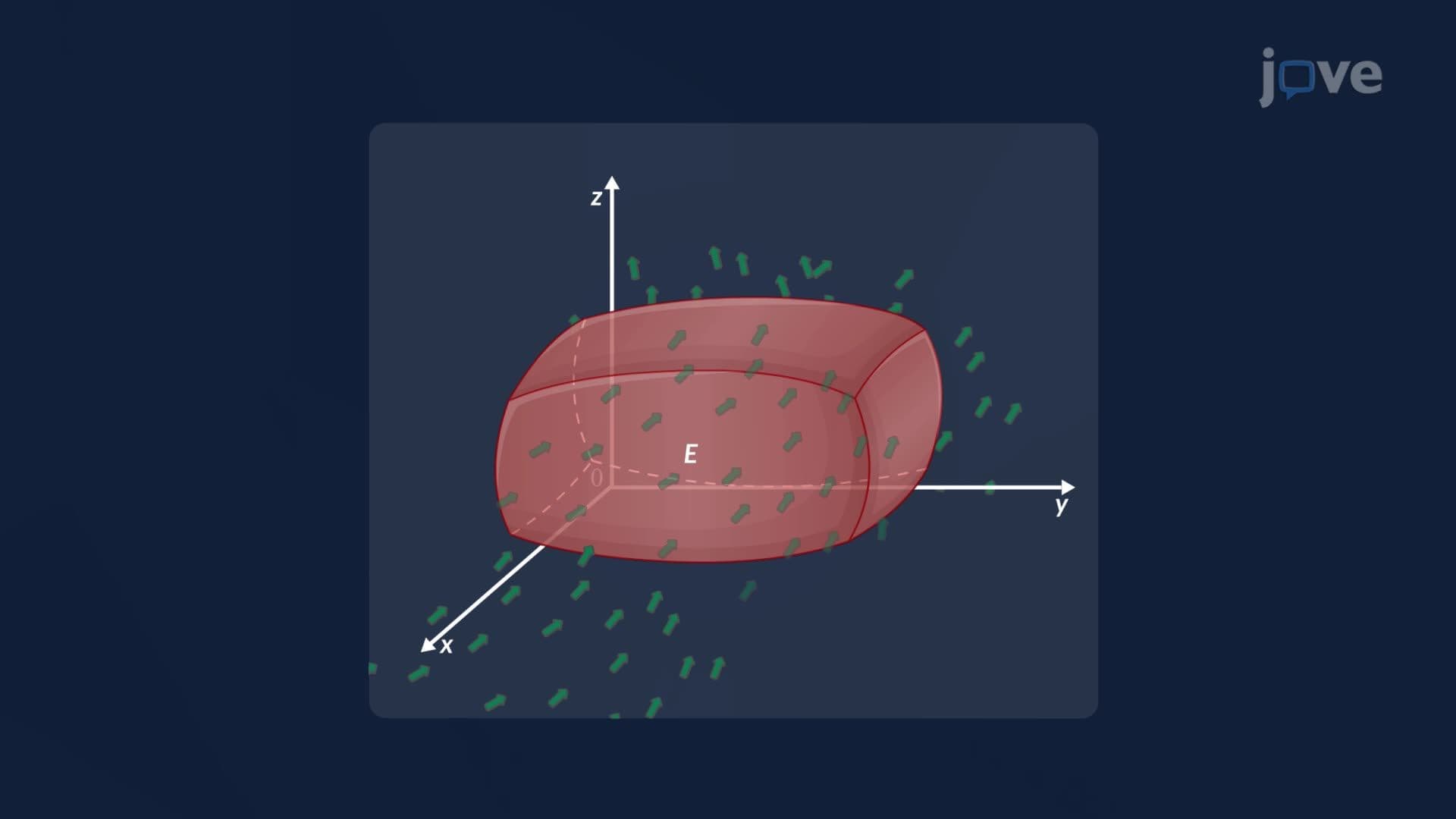

Video Summary: Divergence Theorem in 3d Space Explained
Did you know the shape of a surface doesn't always matter when calculating how much a field flows through it? The divergence theorem in 3D space reveals a powerful shortcut: instead of computing flux across every point of a complex surface, you can evaluate a volume integral inside it. A classic US physics classroom example involves Gauss's Law, the electric flux around a point charge stays constant regardless of whether the surrounding surface is a perfect sphere or a wildly irregular shape. Watch the full video on JoVE Coach to master this concept with expert-led visuals and step-by-step explanations.
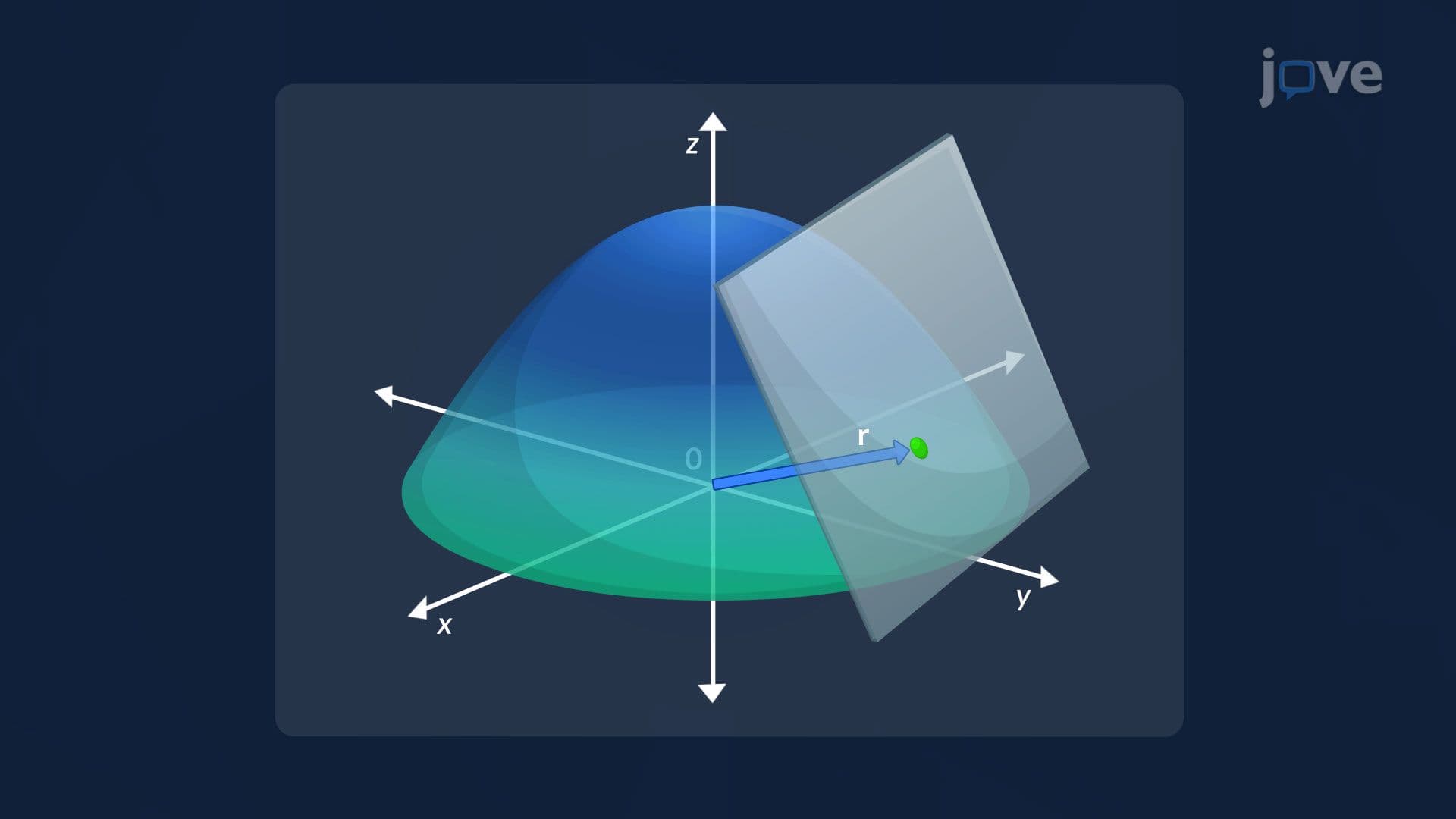
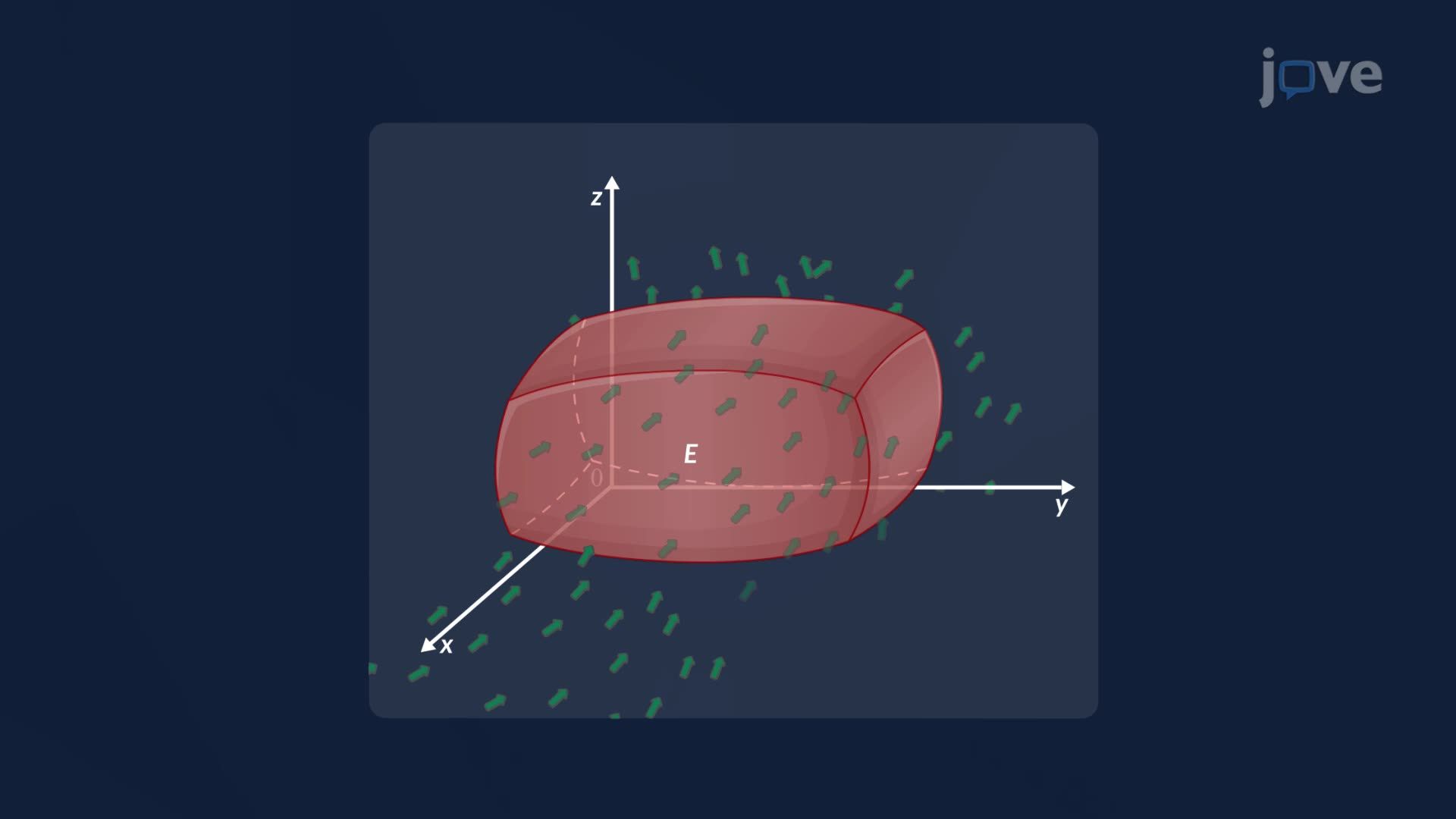
The Divergence Theorem in 3D Space is one of the most elegant results in vector calculus. Formally, it states that the total outward flux of a vector field F through a closed surface S equals the volume integral of the divergence of F over the region V enclosed by that surface. In clean notation: Flux through S = ∭(div F) dV. This transforms a potentially nightmarish surface calculation into a more tractable volume calculation, or vice versa, depending on which side is simpler to compute.
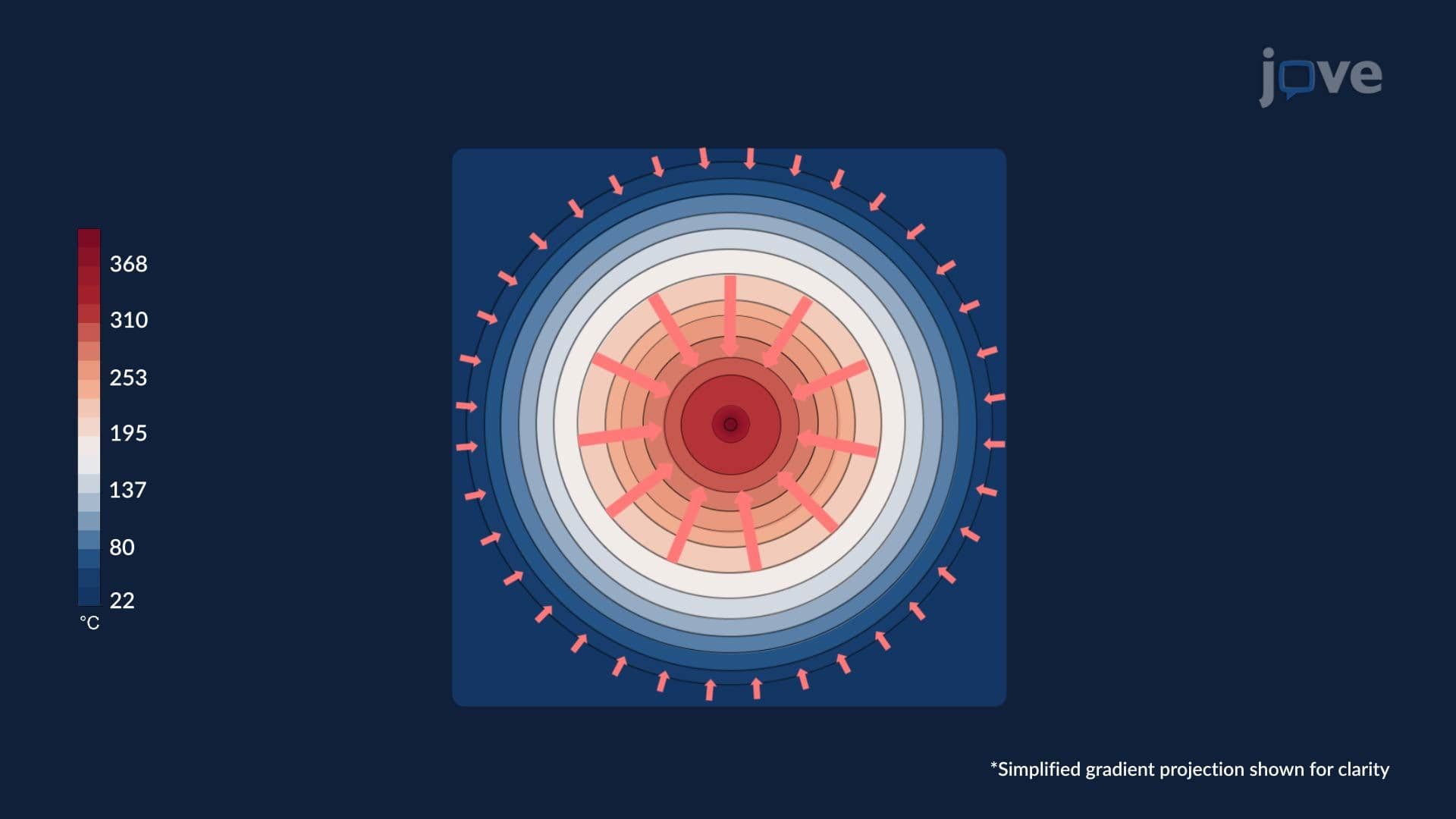
Before applying the theorem, it's essential to understand divergence itself. The divergence of a vector field measures how much the field "sources" or "sinks" at each point in space. A positive divergence at a point means the field spreads outward from that location, like heat radiating from a furnace. A negative divergence signals convergence, fluid flowing into a drain, for example. A divergence of exactly zero means the field is neither creating nor destroying flow at that point. This physical intuition is what makes the divergence theorem so powerful: if no source exists inside a volume, the net flux through its surface must be zero, regardless of the surface's shape.
One of the most instructive applications involves a hollow region, the space between two surfaces, such as an inner sphere and an irregular outer boundary surrounding a central point charge. Because the point charge sits inside the inner sphere (not inside the hollow region itself), the electric field has zero divergence throughout the hollow volume. By the divergence theorem, the total flux through the combined boundary of this hollow region is zero. Since the inner and outer surfaces have opposing outward normals, the flux through the irregular outer surface exactly equals the flux through the inner sphere. This is the mathematical backbone of Gauss's Law, a cornerstone of AP Physics C and introductory college electromagnetism courses, and it proves that net electric flux depends solely on enclosed charge, not on the shape of the enclosing surface.
The divergence theorem belongs to a powerful family of theorems that generalize the Fundamental Theorem of Calculus to higher dimensions. Green's theorem handles 2D regions and relates a line integral around a closed curve to a double integral over the enclosed area. Stokes' theorem extends this idea to 3D surfaces, linking a surface integral of curl to a line integral around the surface's boundary, and it answers the question "What is Stokes' theorem used for?" by addressing circulation and rotation in 3D fields. The divergence theorem takes the next step, relating a closed surface integral to a full volume integral. Understanding all three, alongside concepts like conservative vector fields, curl and divergence, line integrals, and surface integrals, is essential for success in Calculus III (Multivariable Calculus), AP Calculus BC problem extensions, and engineering courses like fluid mechanics and electrodynamics at US universities.
Related Micro-courses