Loading video…


 23 Concepts
 13.7K views

Video Summary: What Is the Accounting Equation
The accounting equation basics become critical when a new manager is suddenly responsible for budget decisions, headcount justification, or interpreting financial reports without a finance background. What is the accounting equation? It's the foundational principle that keeps every financial decision balanced: Assets = Liabilities + Owner's Equity. Watch the full video on JoVE Coach to master this concept with expert-led visuals and step-by-step explanations.
Picture this: your department just received approval to hire two new team members. Finance sends over a budget update, and suddenly you're looking at a spreadsheet with columns labeled assets, liabilities, and equity. You understand the headcount, but not why adding salaries shifts numbers across three different sections of a report. This is the exact moment where understanding the accounting equation stops being a finance team problem and starts being a leadership competency.
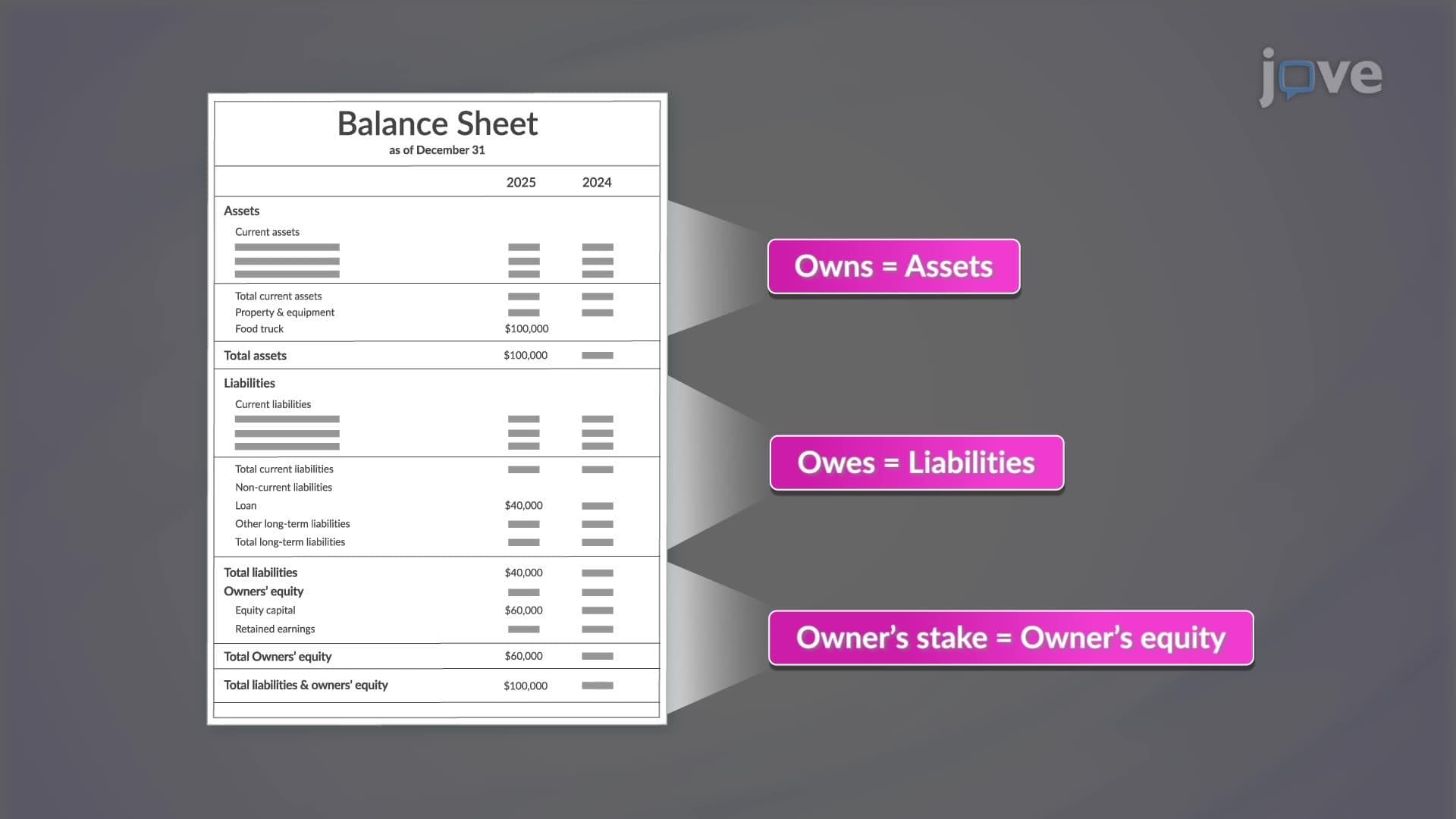
The accounting equation, Assets = Liabilities + Owner's Equity, is not just an accounting rule. It is the operating logic behind every financial conversation you will have as a manager. Assets are the resources your organization controls: cash, equipment, inventory, even intellectual property. Liabilities are the obligations it carries: loans, vendor payables, outstanding payroll. Owner's equity, or shareholders' equity in a corporate context, is what's left when you subtract what's owed from what's owned.
When you request new tools, headcount, or a budget increase, you are proposing an increase to assets. Finance will immediately ask: how will this be funded? Through debt (a liability) or through existing reserves (equity)? Understanding this dynamic lets you anticipate their questions before the meeting starts.
Double-entry bookkeeping, the system built on the accounting equation, operates on one non-negotiable principle: every financial event affects at least two accounts simultaneously, and the equation must always remain balanced. Managers can apply this as the Dual-Impact Rule when evaluating any resource decision.
Ask two questions before presenting any financial proposal: 1. What does this add or change on the asset side? (A new hire adds productive capacity; a software license adds operational capability.) 2. What obligation or equity reduction does this create? (A new hire creates a recurring salary liability; a capital purchase may draw down cash reserves.)
This mirrors the RACI framework in project management, it forces clarity about who carries the cost and who benefits. When you frame requests this way, you demonstrate financial literacy that distinguishes operationally strong managers from those who only manage people.
The most frequent error is treating a budget update as a single-column story, focusing only on spend versus budget, without understanding what the underlying asset or liability movement means. A department that appears "under budget" may have deferred obligations that will surface as liabilities next quarter.
A second mistake is misreading equity as profit. Owner's equity reflects the cumulative financial position of the business, retained earnings plus initial investment, not current-period performance. When a senior leader says, "we're protecting equity," they mean preserving the long-term financial foundation of the organization, not just cutting costs this month.
The fix is straightforward: before your next financial review, map each line item in your departmental budget to one of the three components, asset, liability, or equity impact. This single habit transforms you from a passive budget-watcher into a manager who understands the financial consequences of operational decisions.
Related Micro-courses