Loading video…

 24 Concepts
 93 views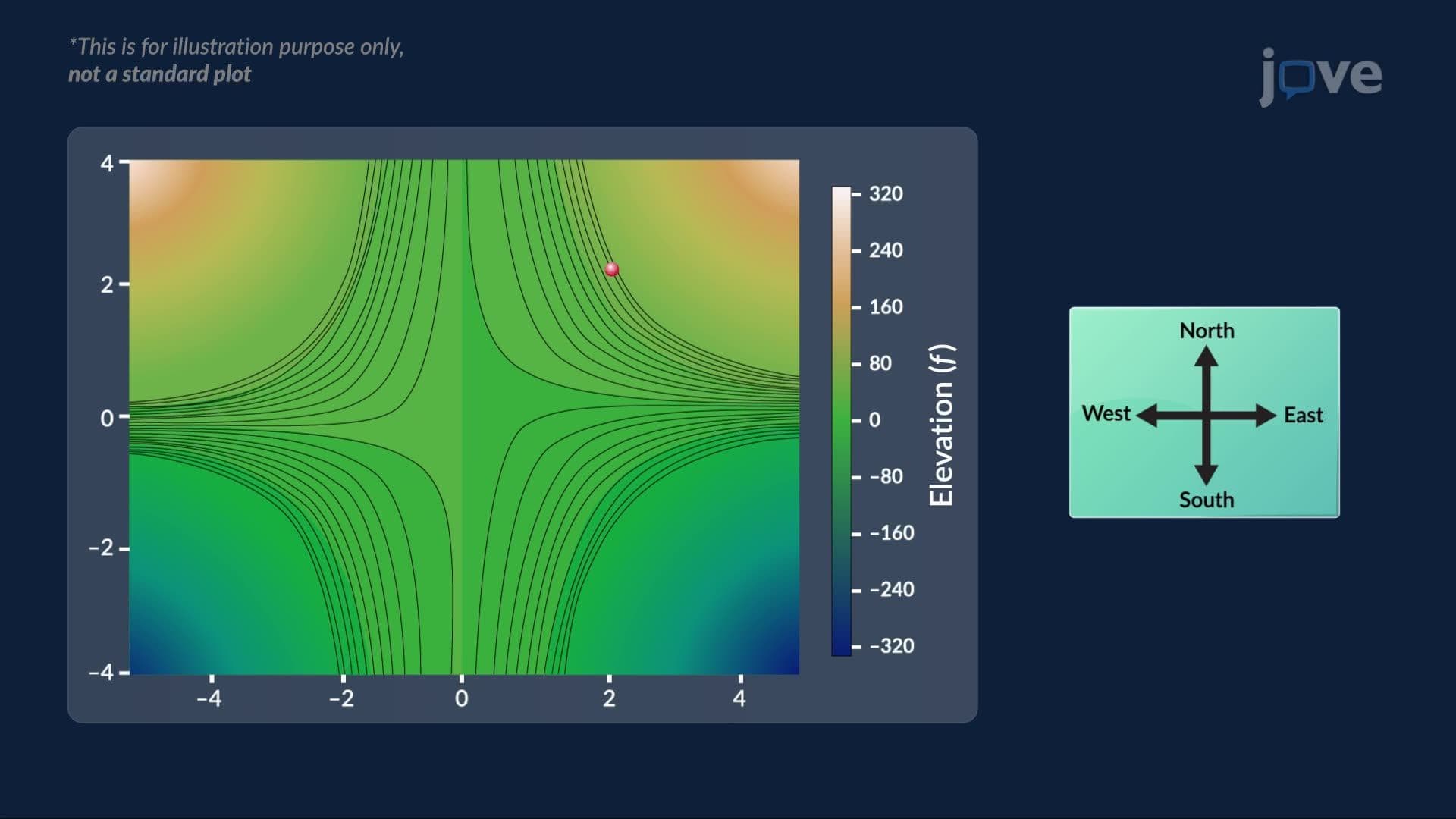

Video Summary: Gradient Vectors and Their Applications Explained
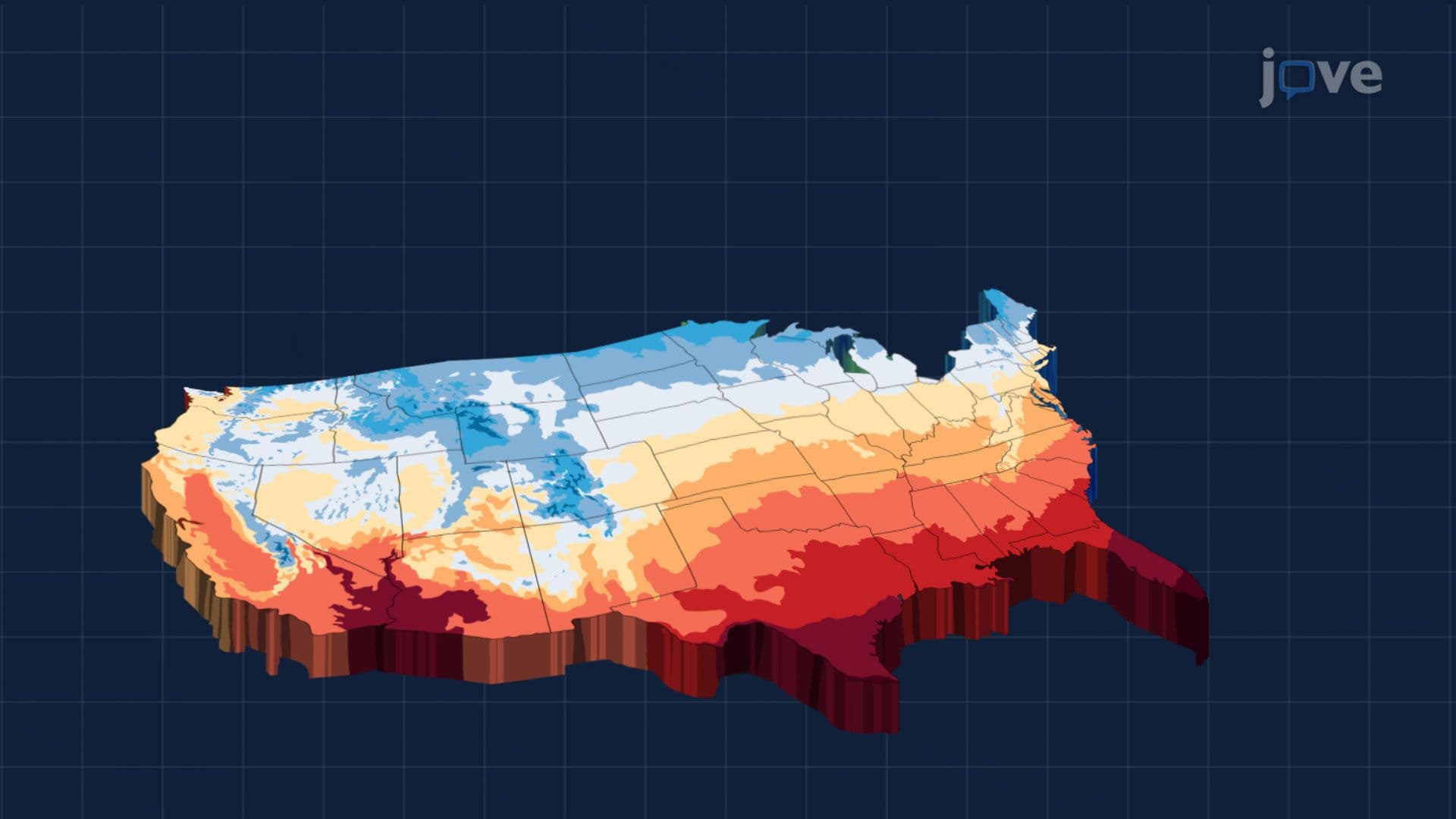
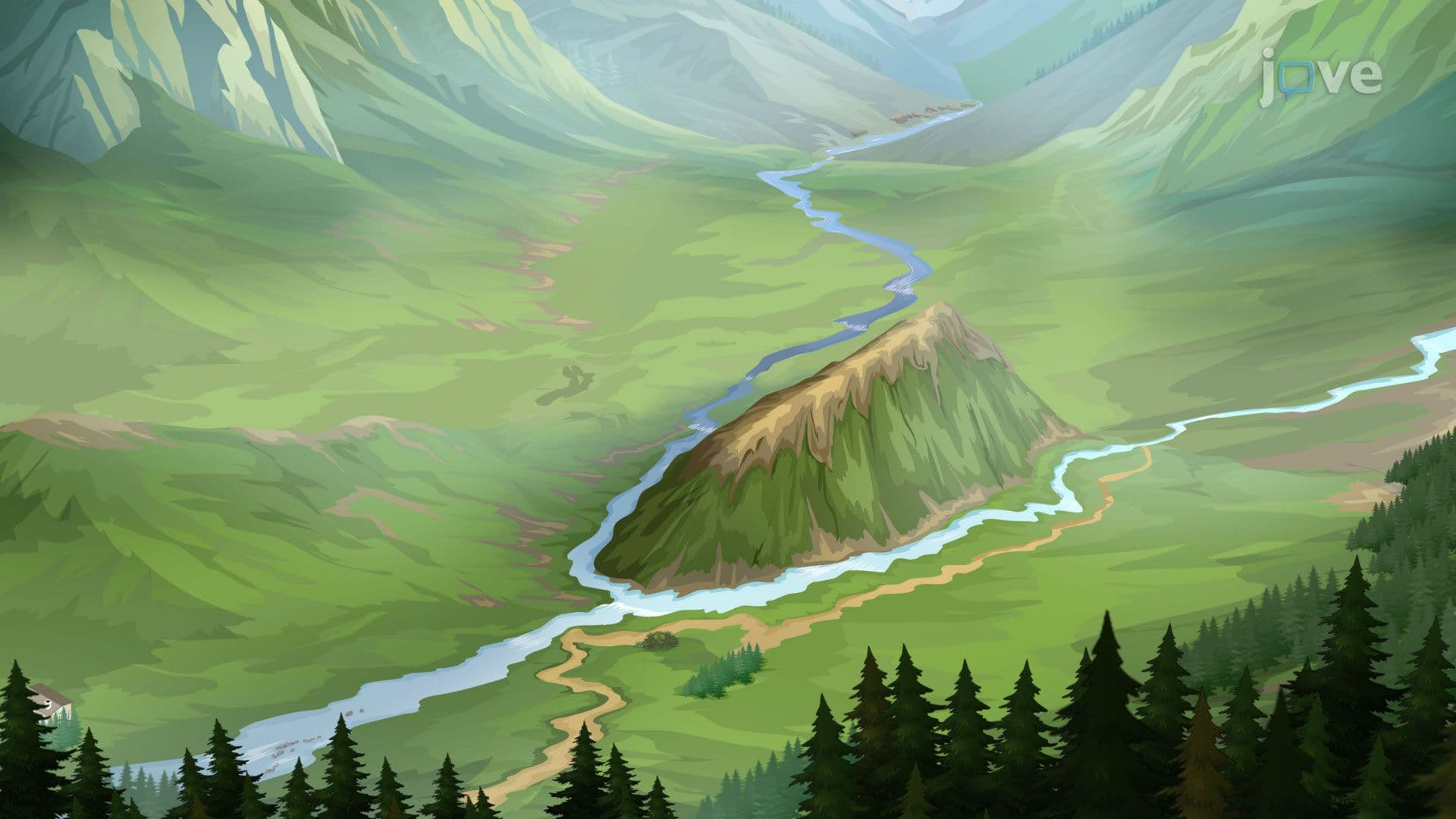
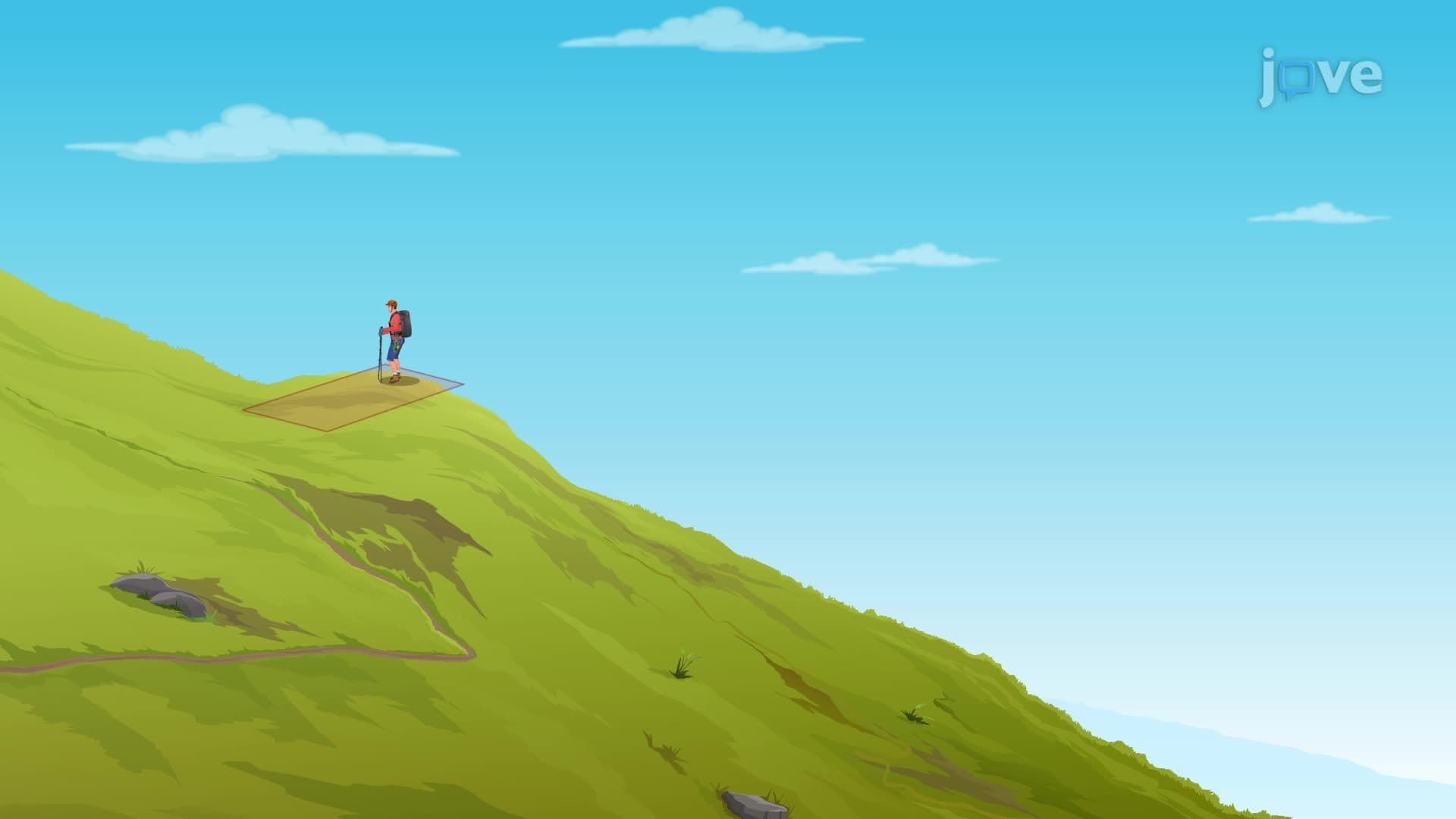
Did you know a hiker's GPS can mathematically calculate the steepest uphill route using calculus? Gradient vectors and their applications explain exactly how, by combining partial derivatives into a single directional arrow pointing toward maximum increase. At any point on a terrain map, like those used by US National Park trail planners, the gradient vector reveals both direction and steepness instantly. Watch the full video on JoVE Coach to master this concept with expert-led visuals and step-by-step explanations.
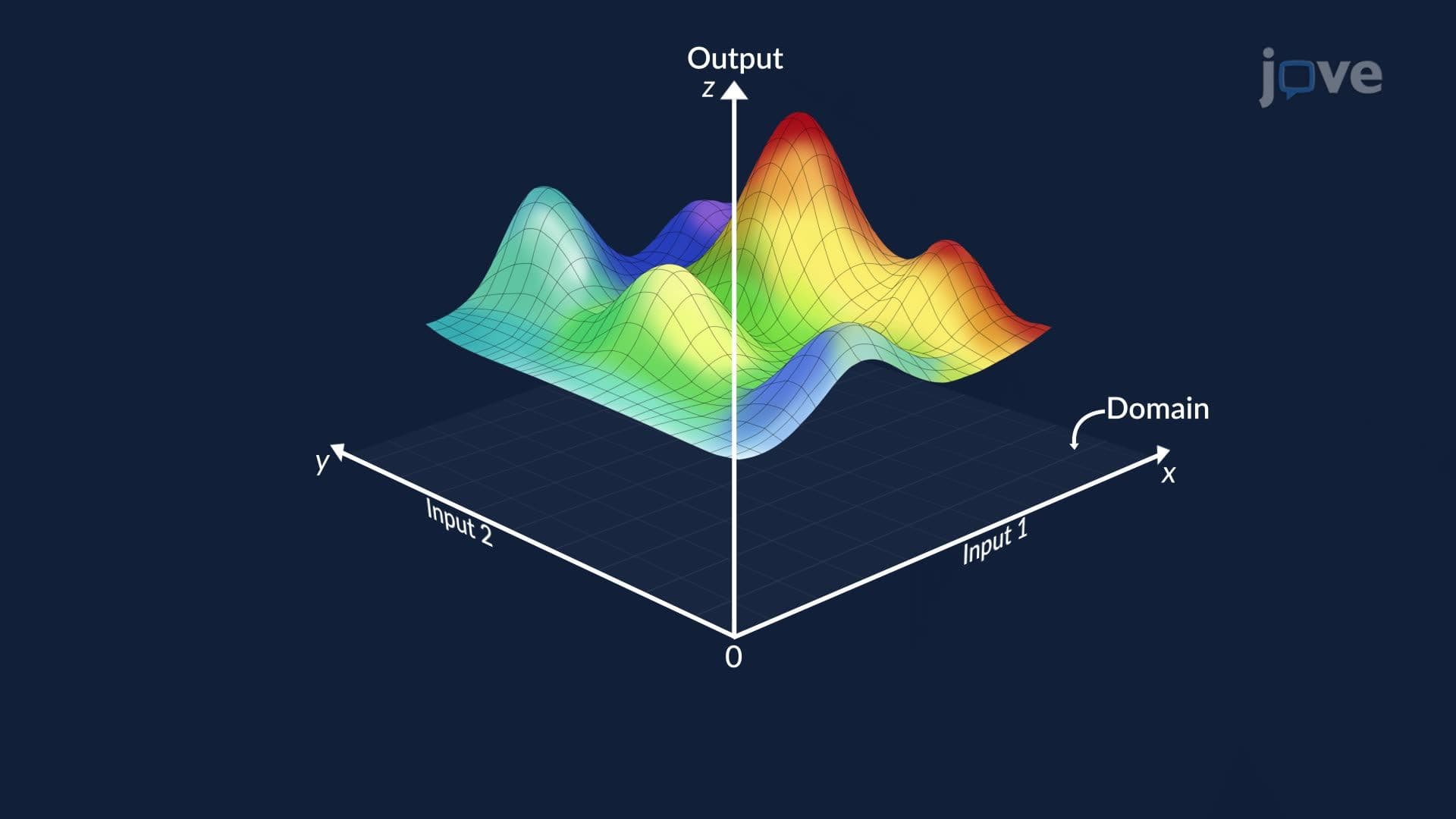
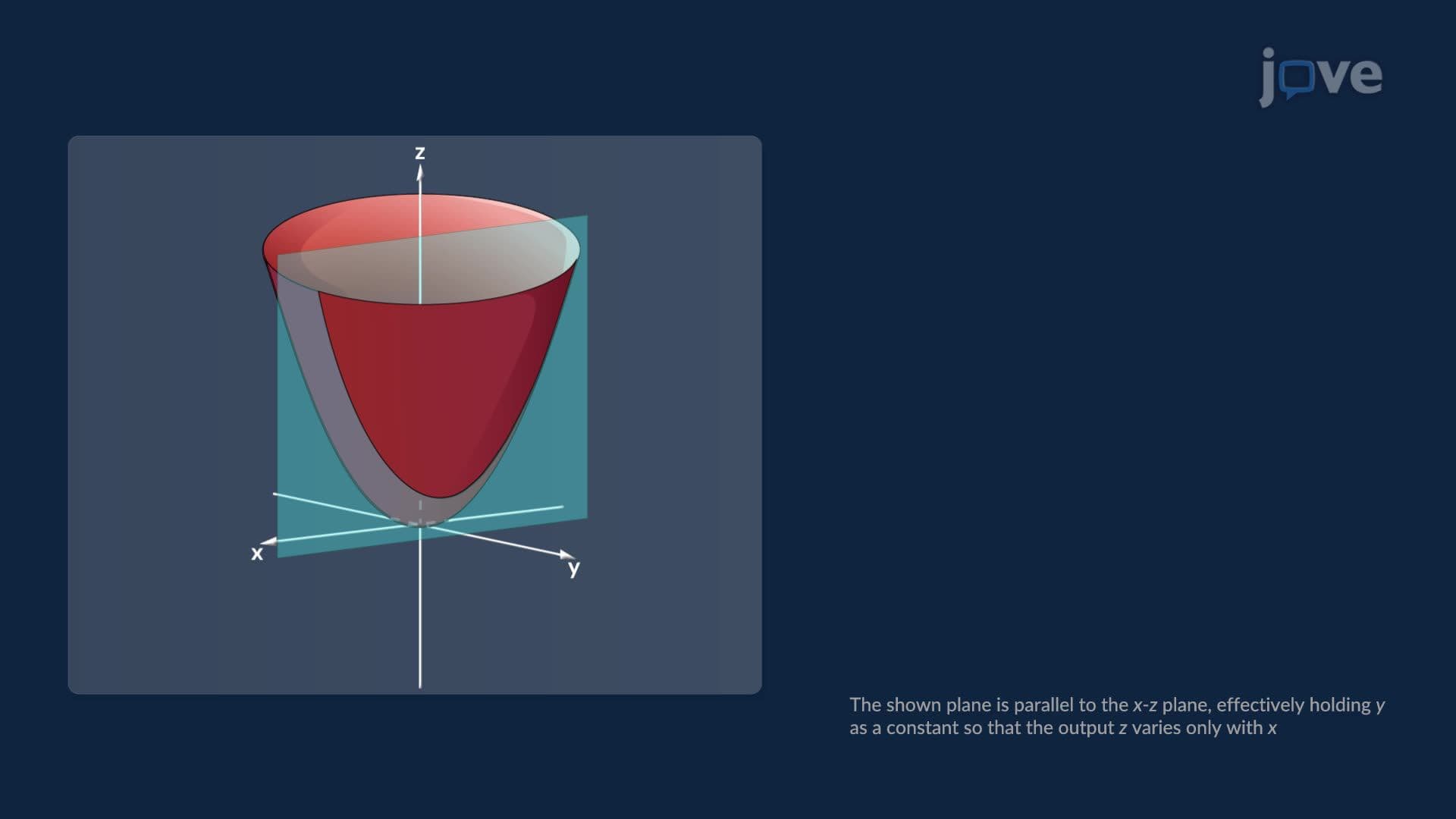
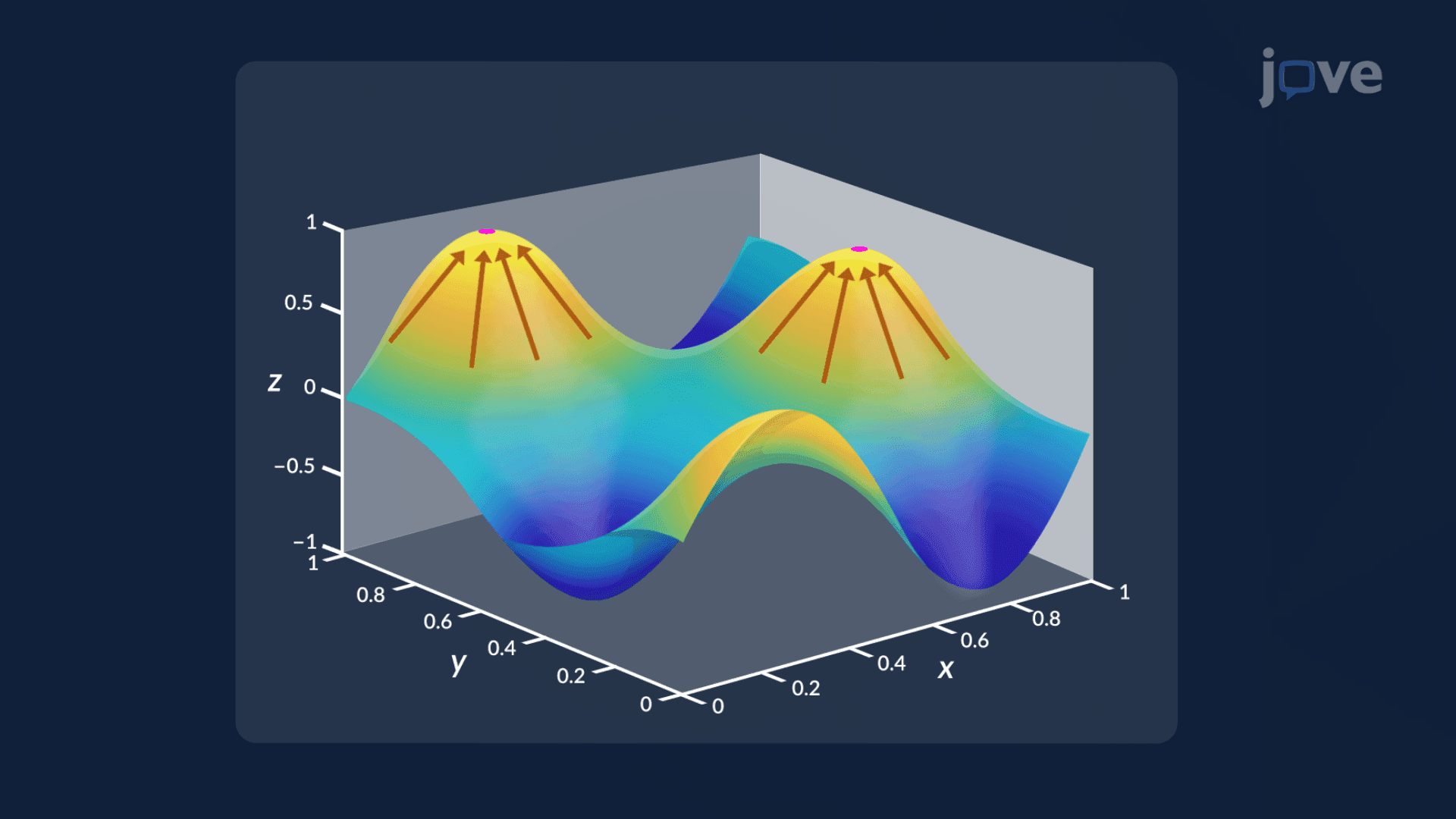
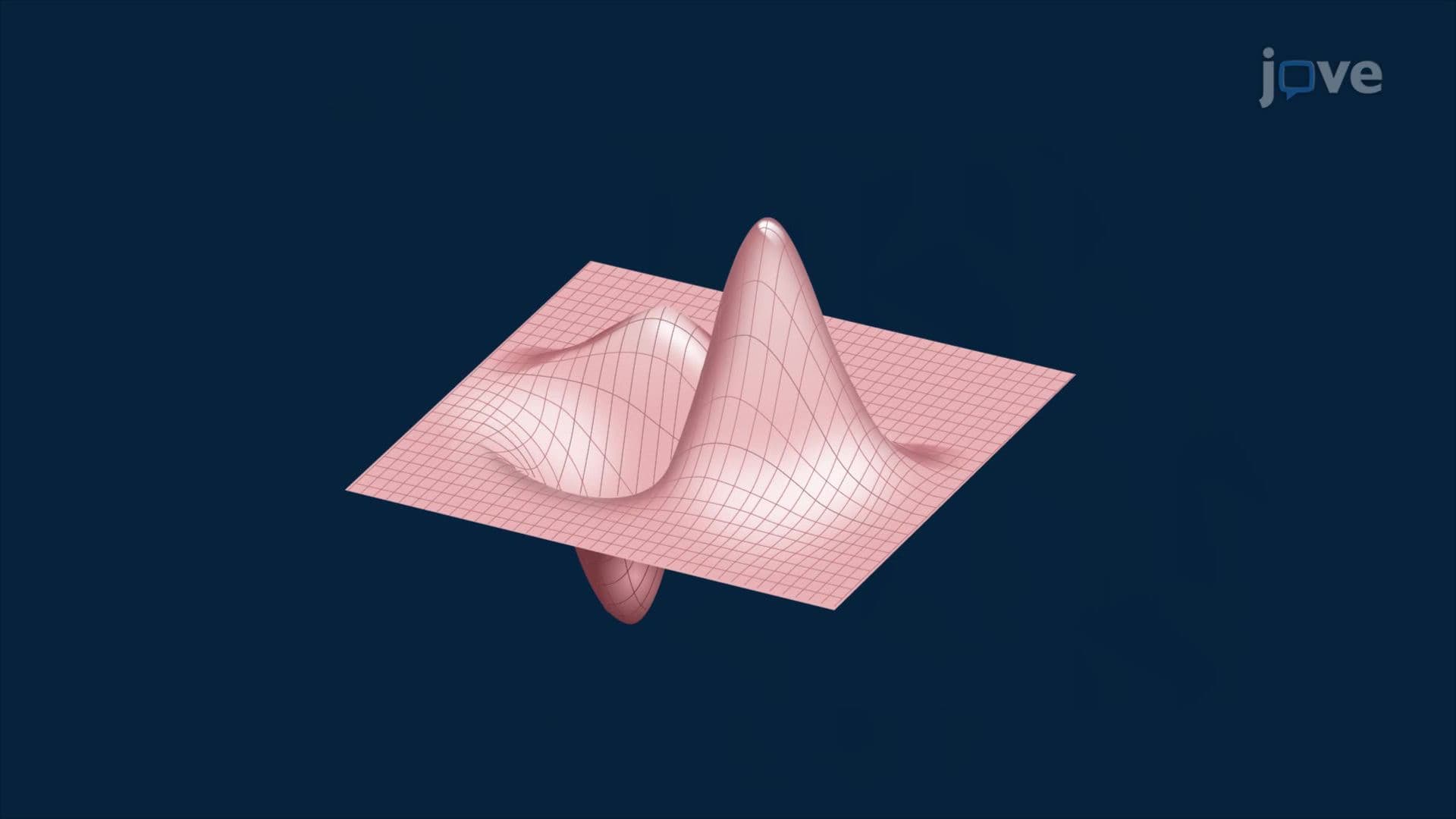
The gradient vector is one of the most powerful tools in multivariable calculus. Given a function of two variables, F(x, y), the gradient is a vector whose components are the partial derivatives of F: specifically, (∂F/∂x, ∂F/∂y). This vector always points in the direction of the greatest rate of increase of the function at any given point. Its magnitude tells you exactly how steep that increase is. Rather than being an abstract mathematical object, the gradient vector has direct, intuitive meaning: it is the mathematical equivalent of a compass needle that always points "most uphill."
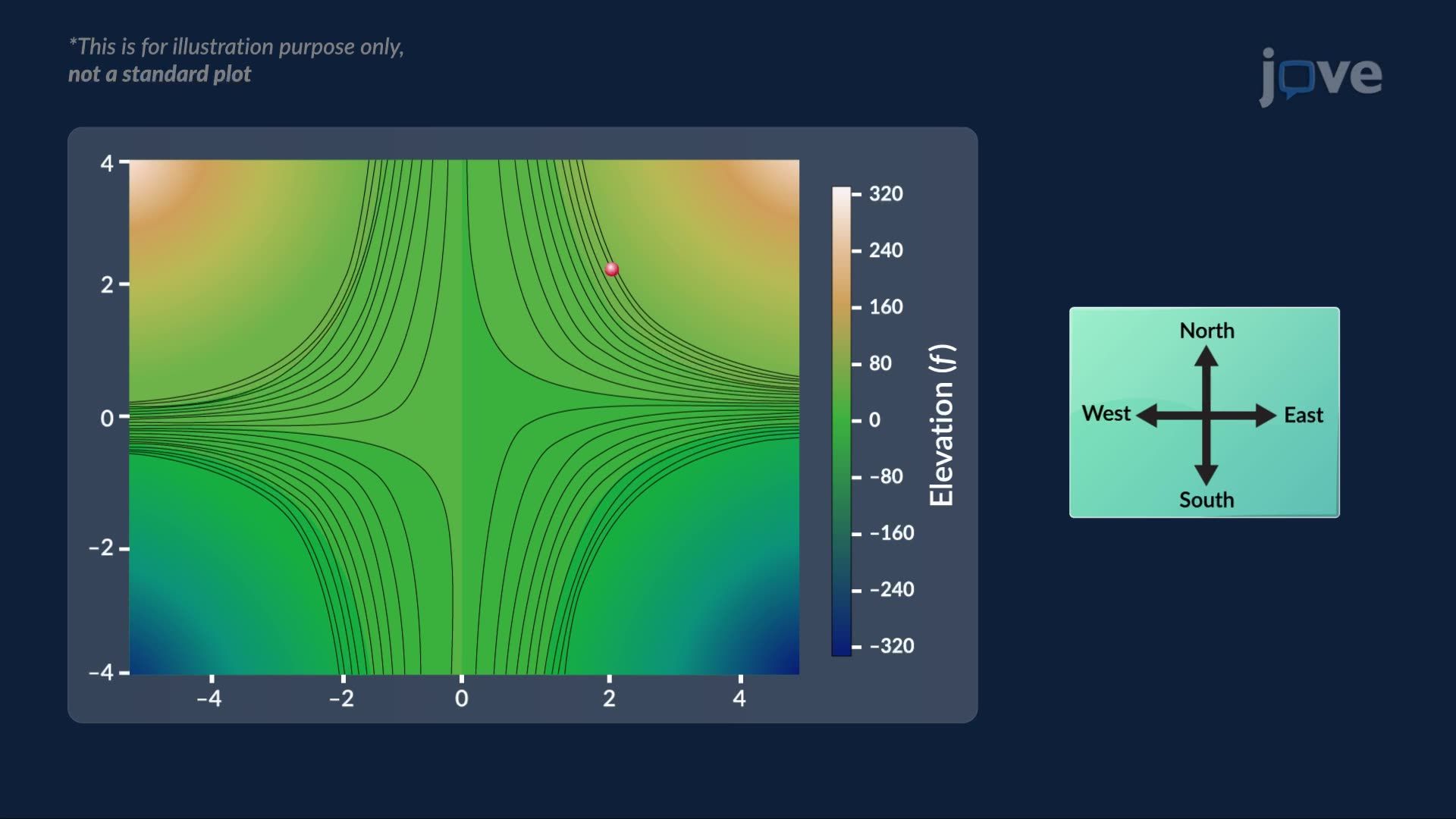
To find the gradient at a specific point, you calculate each partial derivative separately, treating the other variable as a constant, then evaluate both at your chosen coordinates. For example, if an elevation function yields partial derivative values of -74 and 48 at a specific point, the resulting gradient vector has a westward horizontal component and a northward vertical component. The magnitude is calculated using the Pythagorean theorem: √((-74)² + (48)²) ≈ 88.2. This number represents the steepness of the hill along the path of steepest ascent. In AP Calculus BC and college-level Calculus III courses across US universities, computing and interpreting gradients is a core skill tested on midterms and finals.
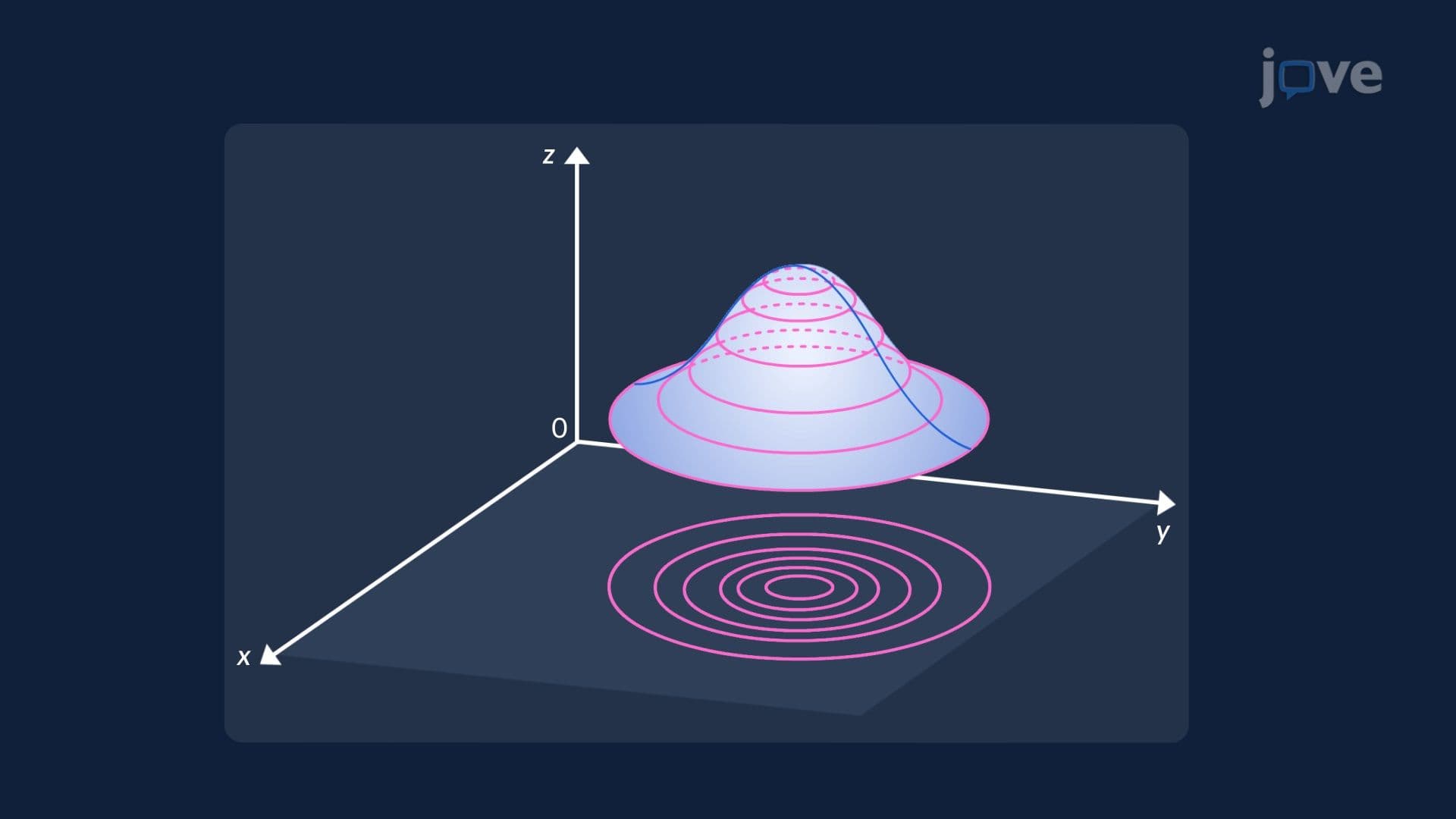
The gradient vector is intimately connected to the concept of directional derivatives. The directional derivative of F in the direction of a unit vector u equals the dot product of the gradient of F and u. This means the directional derivative is maximized precisely when u points in the same direction as the gradient, confirming that the gradient points toward the steepest ascent. Geometrically, the gradient vector is always perpendicular to the level curves of the function. On a topographical map, level curves are contour lines of equal elevation; the gradient arrow crosses these lines at a right angle, pointing toward higher ground.
Gradient vectors appear throughout science and engineering in the United States and beyond. Civil engineers at firms like AECOM use gradient analysis when designing road grades and drainage systems. Meteorologists use gradient fields to model pressure changes and wind direction. Most importantly, gradient descent, a direct application of the gradient vector, powers modern machine learning algorithms used by companies like Google and OpenAI. In gradient descent, an algorithm repeatedly moves opposite to the gradient to minimize a loss function, essentially "walking downhill" on a mathematical surface. Understanding gradient vectors also supports deeper study of tangent planes, higher-order partial derivatives, and the maximum and minimum values of functions of two variables, all topics that appear in college-level Calculus III and on exams like AP Calculus BC and university midterms.
Related Micro-courses