Loading subject page…


92 views


Video Summary: What Is Multivariable Chain Rule
Ever wonder how scientists track a weather balloon's temperature as it climbs through shifting humidity and altitude, simultaneously? The multivariable chain rule makes that calculation possible. This core concept in multivariable calculus shows how a dependent variable changes when multiple intermediate variables all shift at once. NASA engineers and meteorologists rely on exactly this logic daily. Watch the full video on JoVE Coach to master this concept with expert-led visuals and step-by-step explanations.
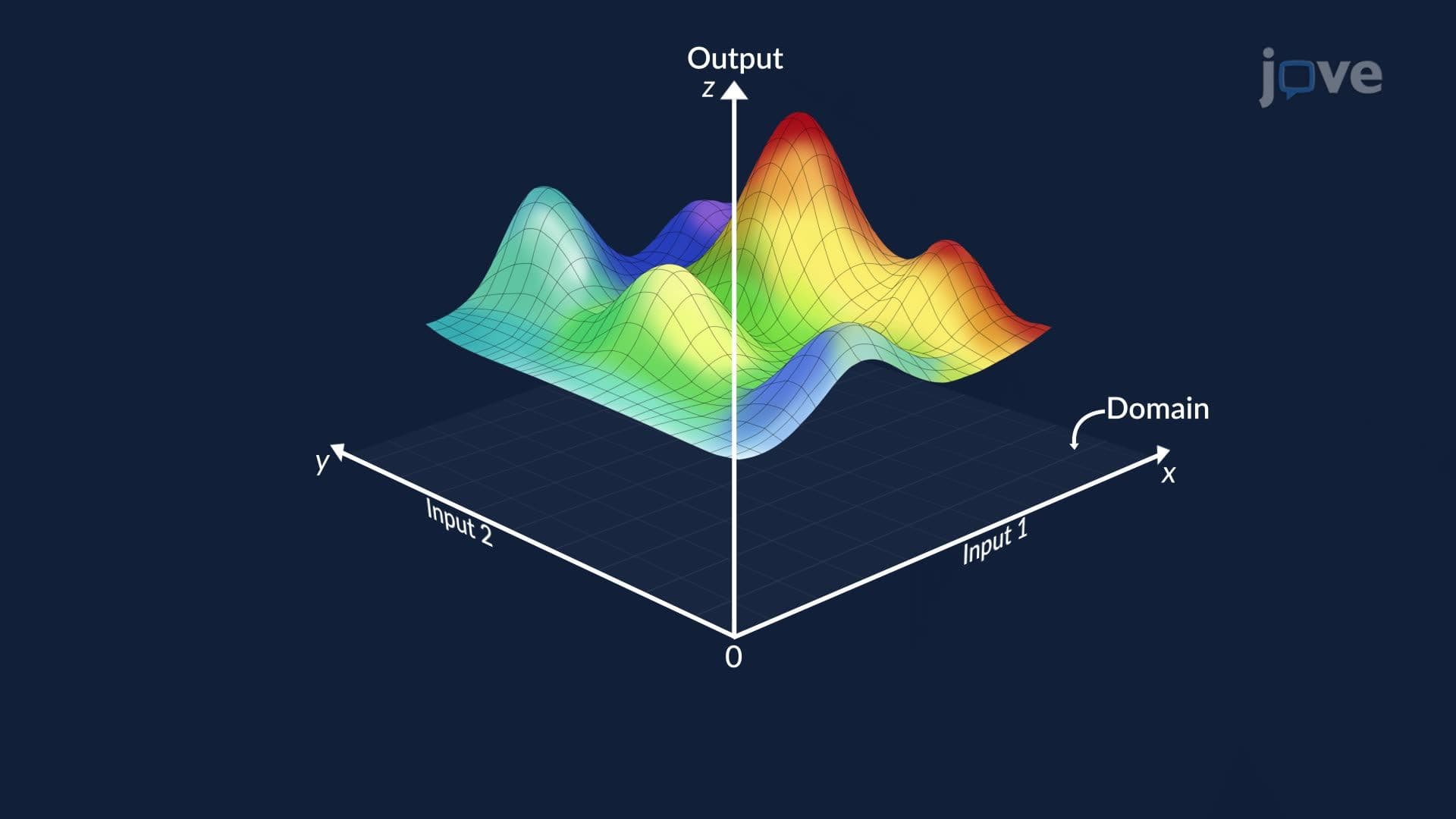
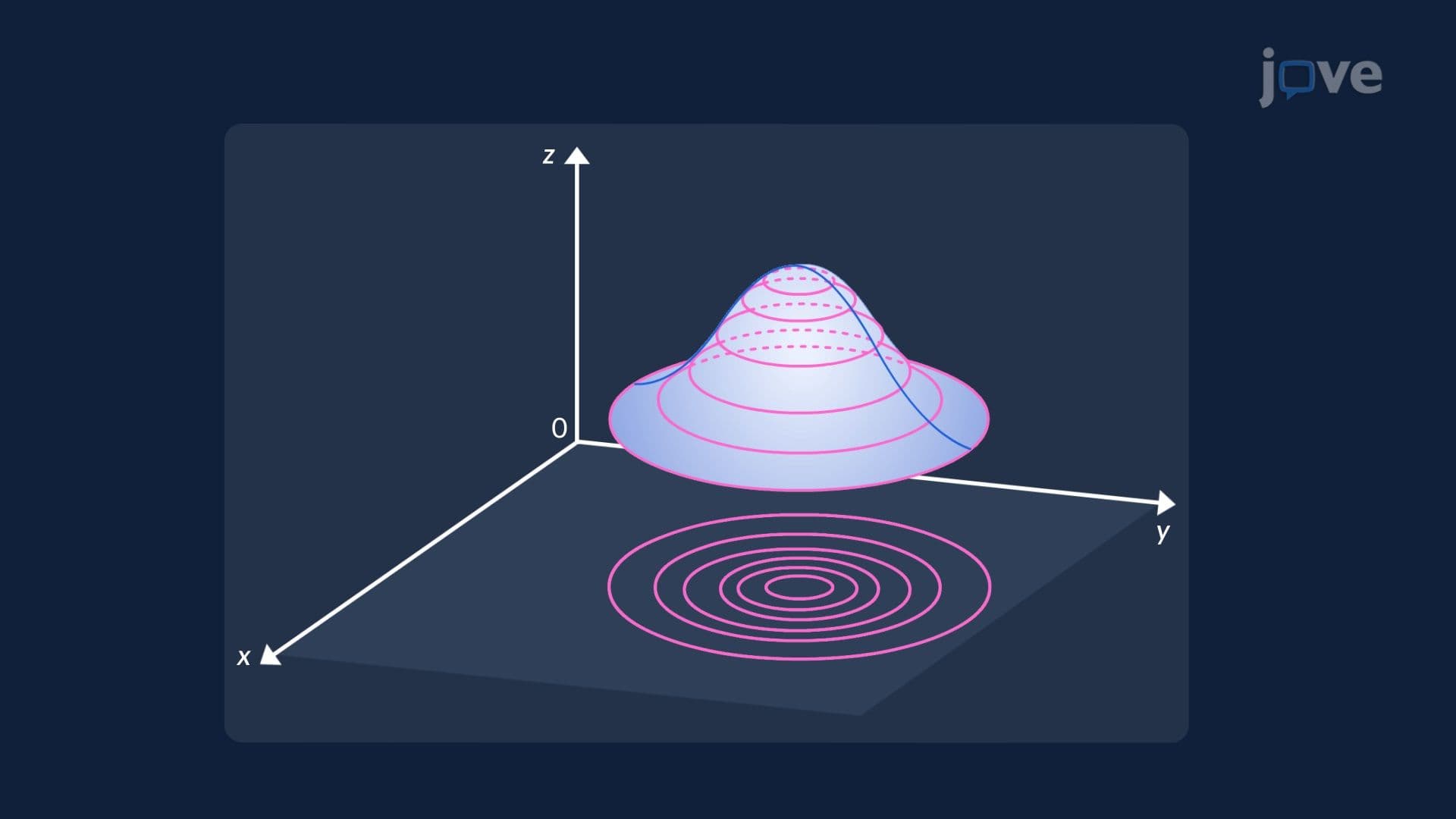
The multivariable chain rule is one of the most important tools in multivariable calculus. It allows you to find the total rate of change of a function when that function depends on multiple variables, and those variables themselves depend on another variable, like time. In single-variable calculus, the chain rule handles one layer of dependency. The multivariable version extends that logic to functions of two, three, or more intermediate variables, making it indispensable in science, engineering, and economics.
Suppose z depends on both x and y, and both x and y depend on t. Even though t doesn't appear explicitly in the expression for z, a change in t ripples through x and y and ultimately changes z. The multivariable chain rule captures this by expressing the total derivative as:
dz/dt = (∂z/∂x)(dx/dt) + (∂z/∂y)(dy/dt)
In plain terms: the total rate of change of z with respect to t equals the partial derivative of z with respect to x, multiplied by how fast x changes with t, plus the partial derivative of z with respect to y, multiplied by how fast y changes with t. Each term accounts for one "pathway" through which t influences z. This additive structure is what makes the rule both powerful and elegant.
The mathematical justification comes from taking the total differential of z, the sum of all partial changes, and dividing through by a small change in t (Δt), then taking the limit as Δt approaches zero. This process converts finite differences into derivatives. The result confirms what intuition suggests: if z has two routes through which t can affect it, the total effect is the sum of both routes. This is directly analogous to how total cost in economics is the sum of cost contributions from each input variable.
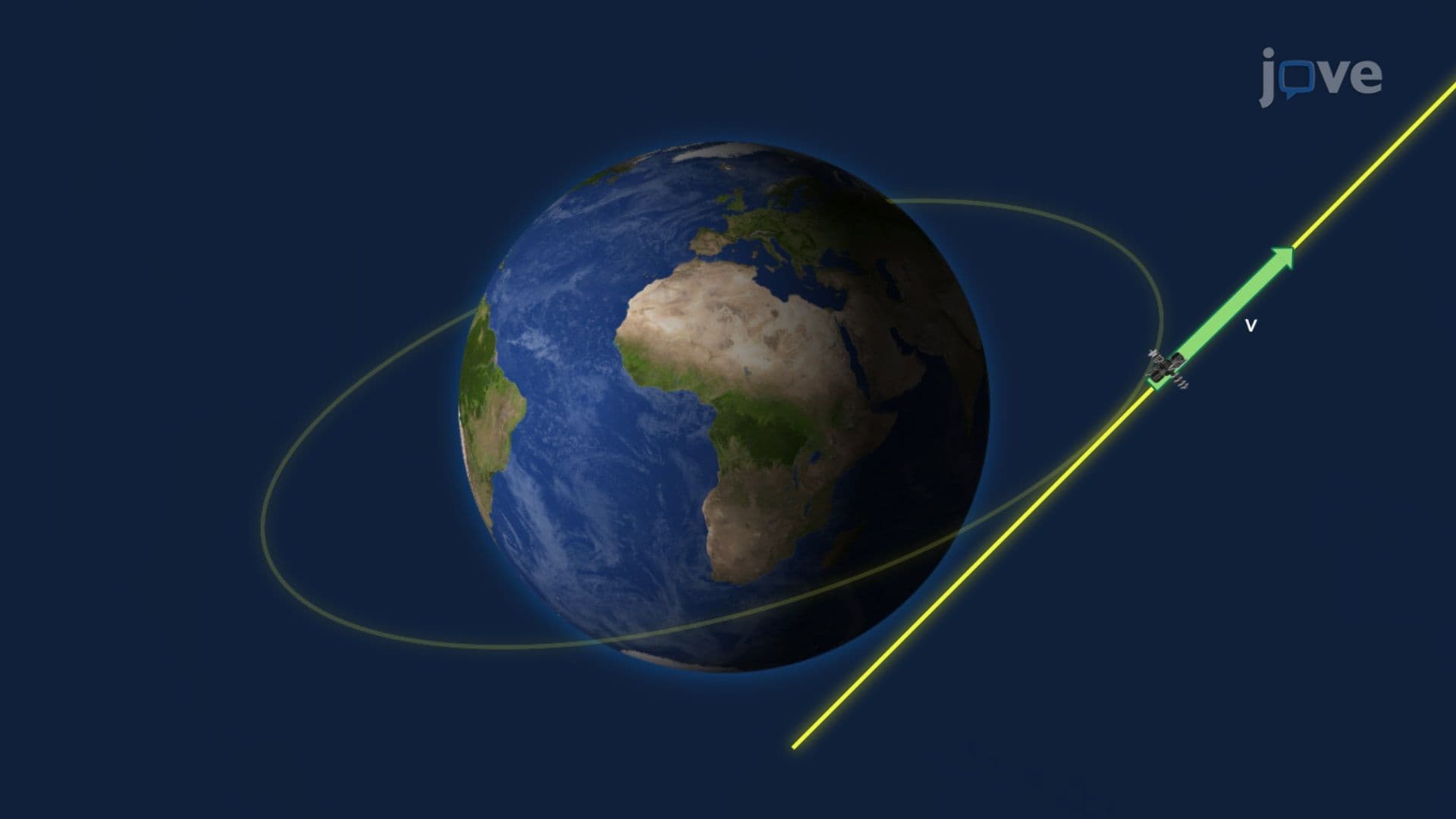
Consider a NASA atmospheric probe launched over the Gulf of Mexico. Its onboard sensors measure temperature, which depends on both altitude and air pressure, and both altitude and pressure change as time passes during the flight. Engineers use the multivariable chain rule to compute the total rate of temperature change per second, enabling real-time adjustments to data collection. Similarly, in US medical research, drug concentration in the bloodstream may depend on metabolic rate and body weight, both of which vary with a patient's age, another direct application of this rule.
The multivariable chain rule appears prominently in college-level Calculus III courses at US universities and in advanced placement coursework. It serves as a conceptual bridge to deeper topics: understanding the gradient of a function becomes clearer once you see how partial derivatives combine to track directional change. The rule also underpins directional derivatives, tangent planes, and methods for finding local extrema of multivariable functions, all of which appear on college midterms and final exams. Students in physics, engineering, and economics programs encounter this rule repeatedly, making early mastery a significant academic advantage.
Related Micro-courses