Loading subject page…

92 views

Video Summary: What are Partial Differential Equations
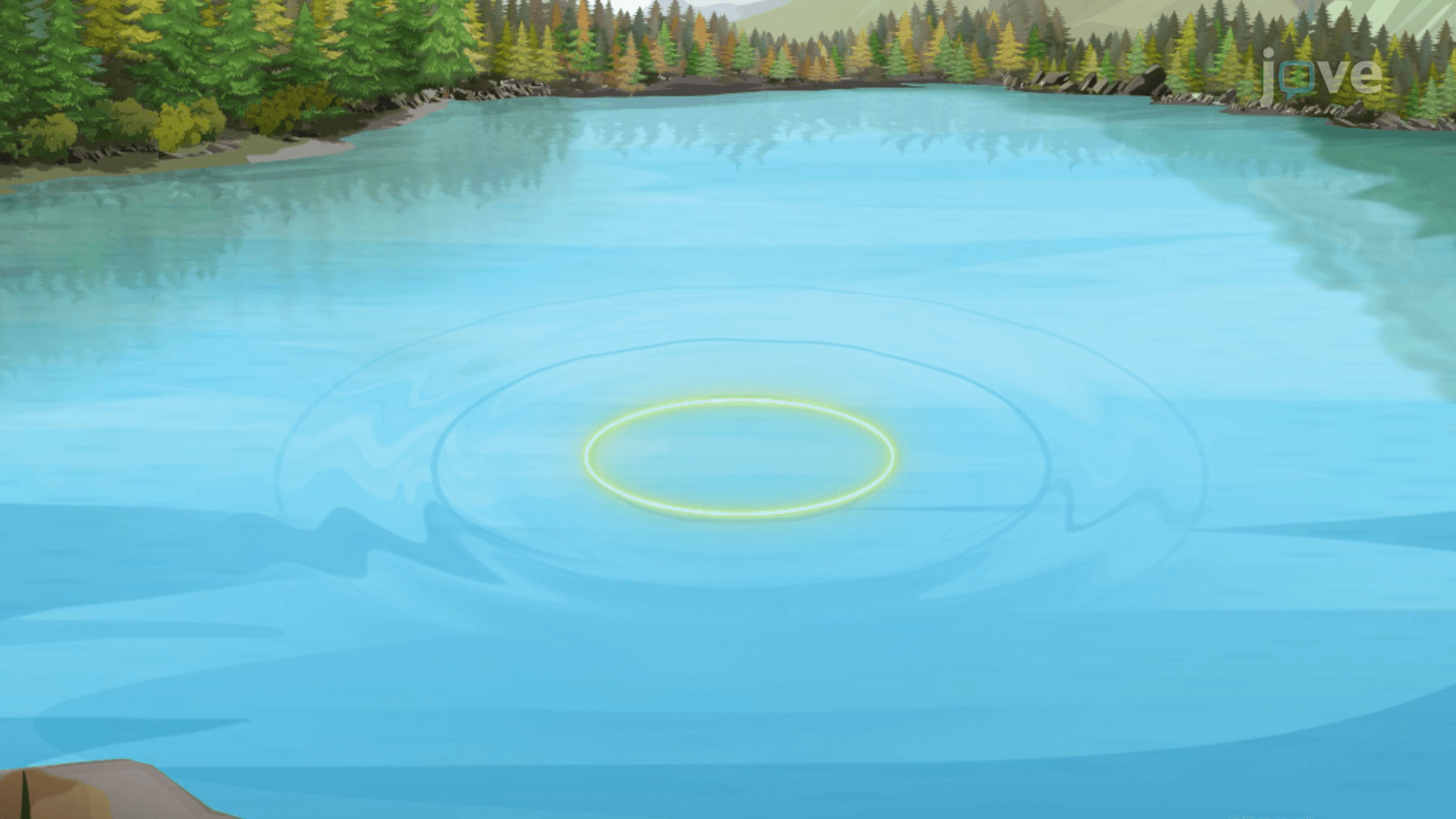
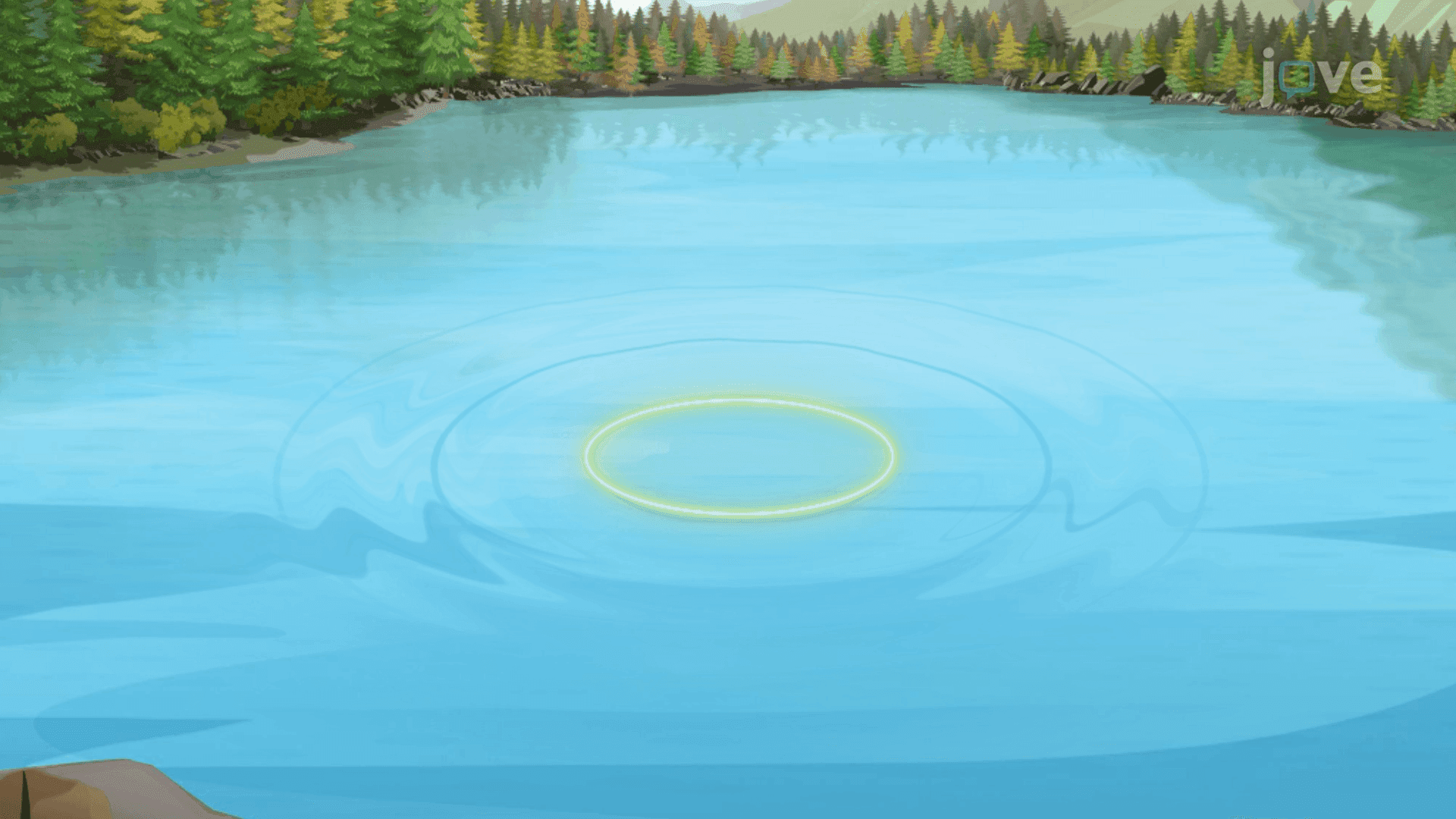
Why can a ripple in a still pond reveal one of the most powerful tools in mathematics? Partial differential equations form the mathematical backbone of wave motion, heat flow, and fluid dynamics, and understanding partial differential equations basics starts with recognizing that most real-world systems change across *multiple* variables at once. Think of how ocean waves off California's coastline vary across both distance and time simultaneously. Watch the full video on JoVE Coach to master this concept with expert-led visuals and step-by-step explanations.
To understand partial differential equations (PDEs), you first need to appreciate a simple but profound idea: most physical systems do not change along just one dimension. Temperature across a metal rod changes with both position and time. Sound pressure in a concert hall varies across three dimensions of space plus time. Whenever a quantity depends on *two or more* independent variables simultaneously, a partial differential equation is the natural mathematical language for describing it.
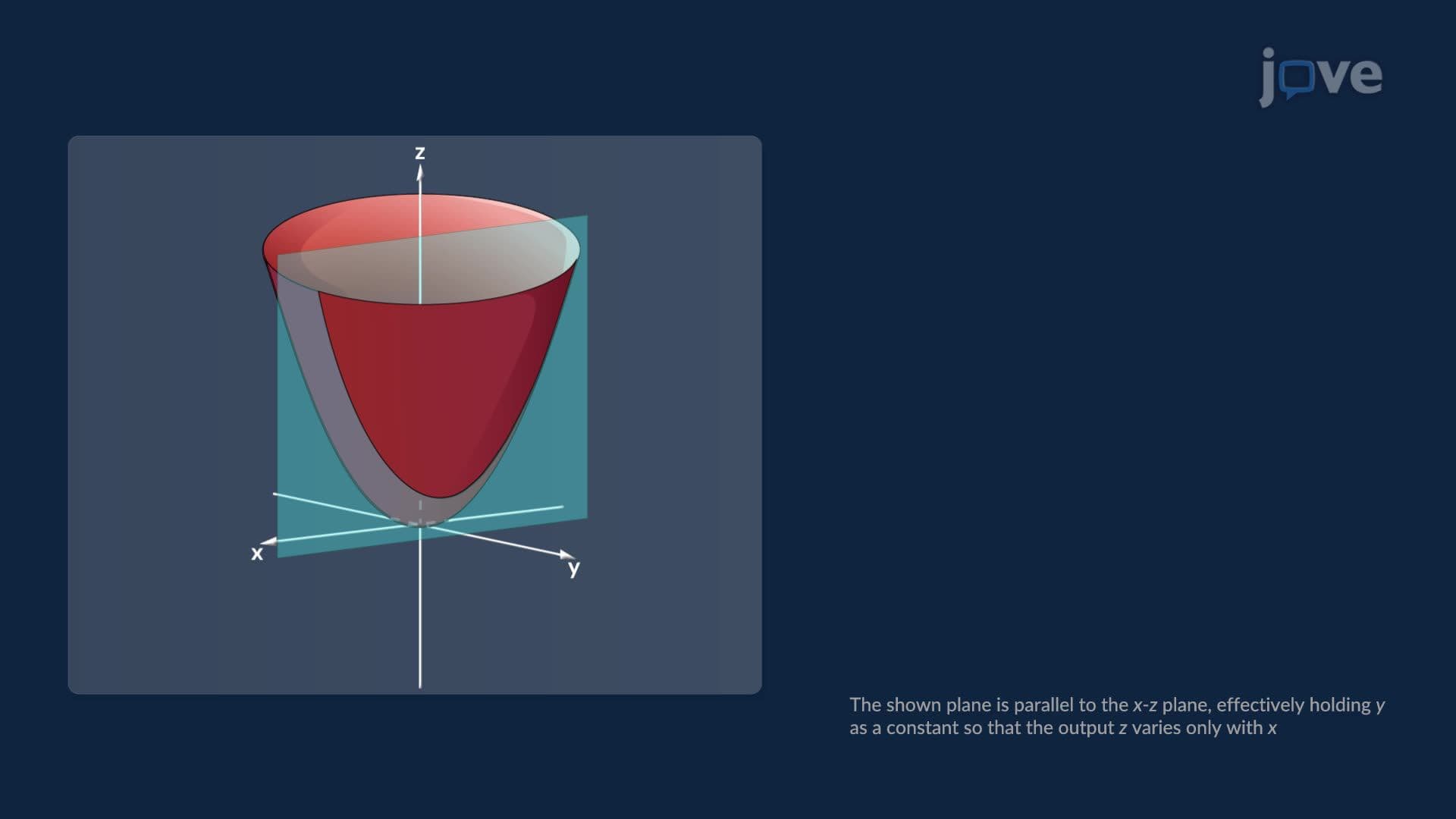
A partial differential equation is an equation that contains one or more partial derivatives of an unknown function with respect to two or more independent variables. For example, if a function u depends on position x and time t, then a PDE expresses a relationship between ∂u/∂t, ∂²u/∂t², ∂u/∂x, ∂²u/∂x², and u itself.
An ordinary differential equation (ODE) involves derivatives with respect to only *one* variable. If you track how a population grows only over time, that's an ODE. A partial differential equation steps in the moment a second independent variable enters the picture.
Consider the classical wave equation, one of the most studied PDEs in introductory college math and physics:
∂²u/∂t² = c² · (∂²u/∂x²)
Here, ∂²u/∂t² captures acceleration, how quickly the wave's displacement is speeding up or slowing down at a given point in time. The term ∂²u/∂x² captures spatial curvature, how sharply the wave bends at a fixed moment in space. The constant c represents wave speed. This single equation encodes the entire motion of a vibrating guitar string, a seismic wave traveling through Earth's crust, or a radio signal propagating through the atmosphere.
Partial differential equations are built entirely on the foundation of multivariable calculus. Before tackling PDEs, students should be comfortable with:
In US college curricula, these topics typically appear in Calculus III (Multivariable Calculus), often as a prerequisite to a formal PDE course. Students in AP Calculus BC will encounter early ideas about rates of change that directly scaffold this understanding.
PDEs are not abstract curiosities, they are the engines behind some of the most consequential technologies and scientific models in the US today.
For college students, PDEs appear prominently in courses like Differential Equations, Mathematical Physics, and Engineering Mathematics. Mastering the concept early, starting with the intuitive wave and heat equation examples, creates a strong conceptual bridge to advanced STEM coursework and research.
Related Micro-courses